Artwork
Dancers in the Wings
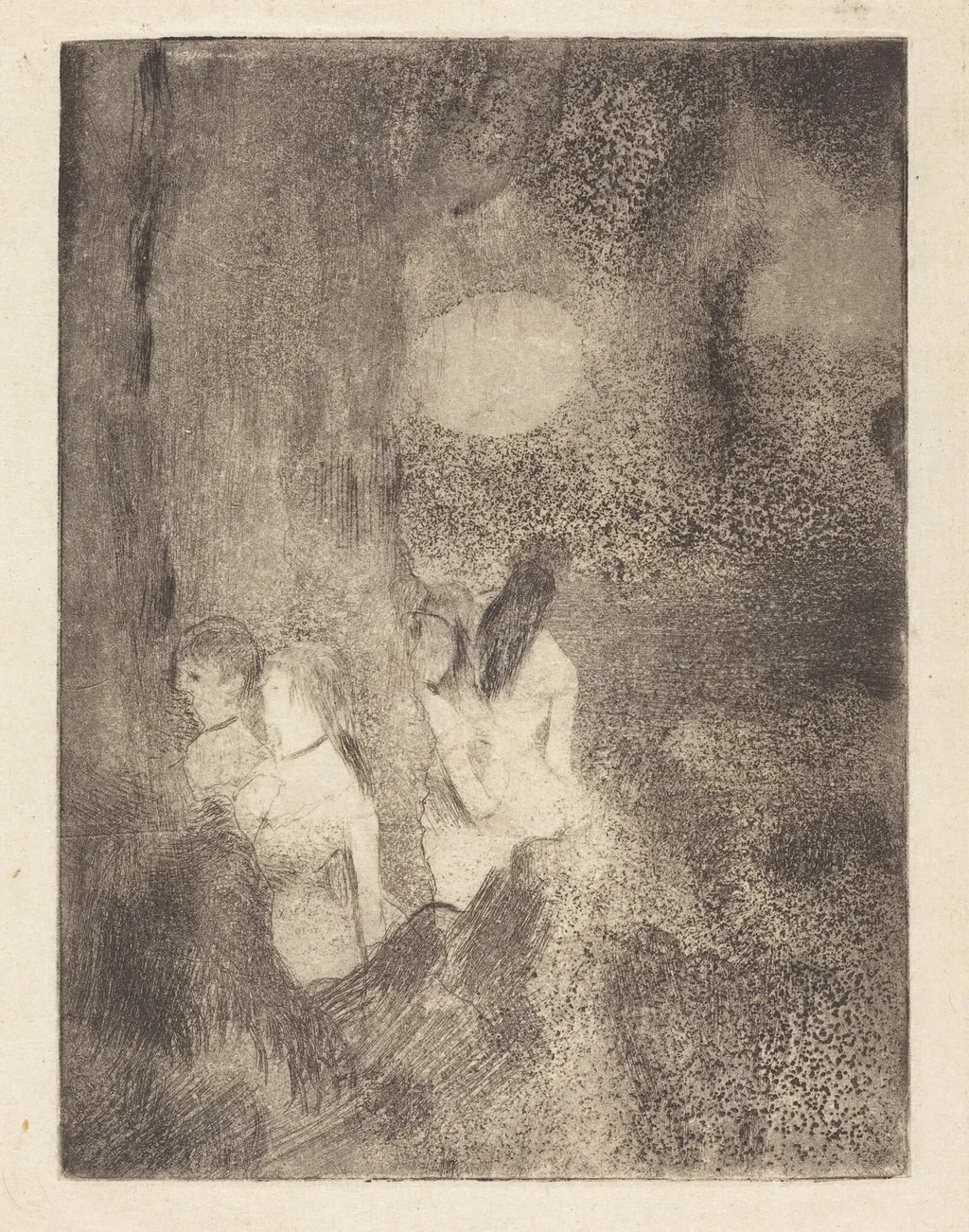
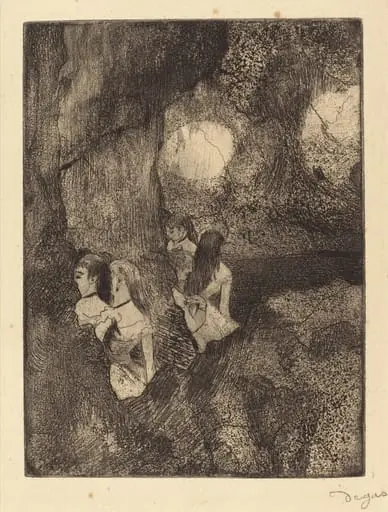
Dancers in the Wings is an ink print by the Impressionist artist Edgar Degas. It dates from 1880 and is held in the collection of the National Gallery of Art.
About this work
Overview
Created in 1880, *Dancers in the Wings* is a print by Edgar Degas executed in etching, aquatint, and drypoint on chine-like laid paper.
Created in 1880, *Dancers in the Wings* is a print by Edgar Degas executed in etching, aquatint, and drypoint on chine-like laid paper. Though often linked to Impressionism, Degas identified more closely with realism. This work belongs to a phase in his career when he turned increasingly to printmaking, using its technical possibilities to explore form, light, and movement beyond the constraints of painting and pastel.
Subject & Meaning
The scene captures two ballet dancers in a backstage setting, caught in quiet, unguarded moments between performances. One raises her arms, the other rests against a wall, turned away in fatigue or contemplation. Degas avoids theatricality, focusing instead on the physicality and solitude of rehearsal life. The figures are not idealized; their postures reveal the labor behind artistry, grounding the image in everyday reality.
Technique & Style
Degas employed etching for fine lines, aquatint for tonal gradations, and drypoint for rich, velvety textures. The rough grain of the paper enhances the sense of atmosphere, while layered shading renders fabric folds and shadow with tactile precision. The background is deliberately muted—wooden panels and a dark curtain dissolve into near-abstract forms—directing attention to the dancers’ gestures and the subtle play of light on their bodies.
History & Provenance
This print emerged during a period of intense experimentation in Degas’s printmaking practice, roughly between 1875 and 1885. He produced limited editions, often reworking plates over time. *Dancers in the Wings* was likely printed in small numbers and circulated among collectors and fellow artists. Its survival in museum collections today reflects its significance as a key example of his late 19th-century graphic work.
Context
Degas’s fascination with ballet dancers was sustained over decades, with over half his oeuvre devoted to the subject. His access to the Paris Opéra allowed him to observe rehearsals and backstage life, which he rendered without sentimentality. This print aligns with broader 19th-century interests in documenting modern urban culture, particularly the hidden routines behind public spectacle.
Legacy
The work exemplifies Degas’s influence on modern printmaking, demonstrating how traditional techniques could be adapted to convey psychological depth and transient movement. His integration of sketch-like immediacy with meticulous craftsmanship inspired later artists to treat printmaking not merely as reproduction, but as a primary medium for expressive exploration.
Artist & collection
Artist
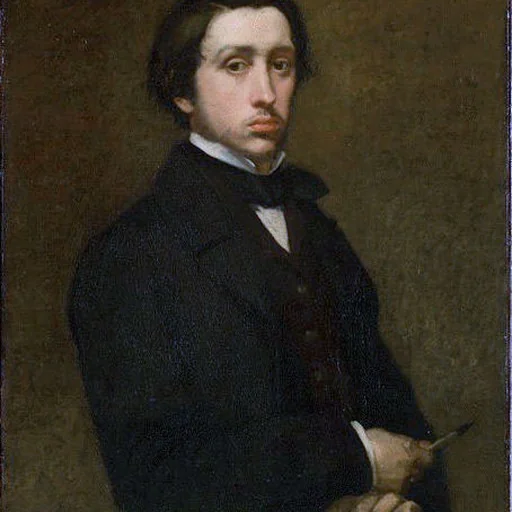
Born Hilaire-Germain-Edgar De Gas on 19 July 1834 in Paris, Edgar Degas came from an affluent banking family with aristocratic roots and spent his childhood among the cultivated circles of the French capital.

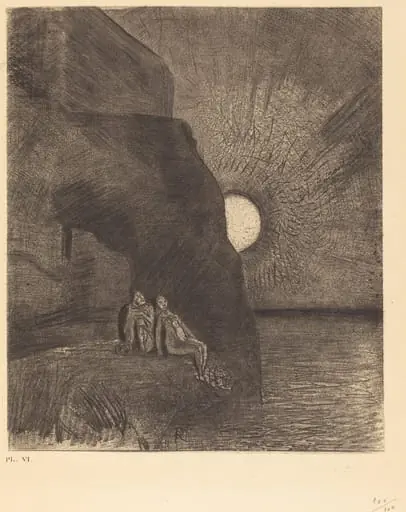 Sans cesse a mes cotes s'agite le demon (Ceaselessly by my side the demon stirs)
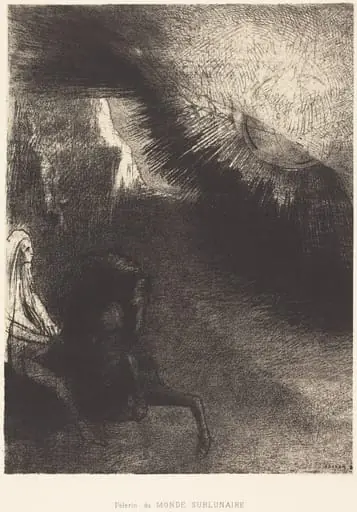 Pélerin du monde sublunaire (Pilgrim of the sublunary world)
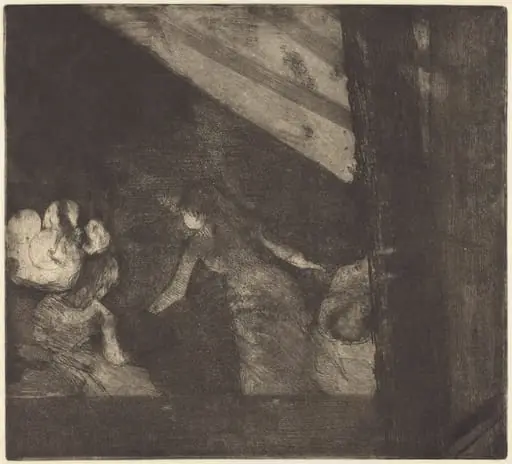 At the Cafe des Ambassadeurs (Aux Ambassadeurs)
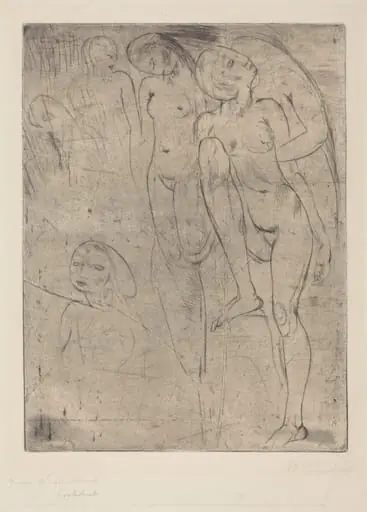 Large Resurrection (Grosse Auferstehung)
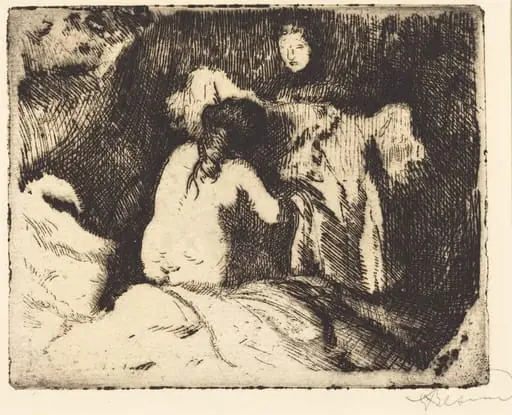 Getting Up (Le lever)
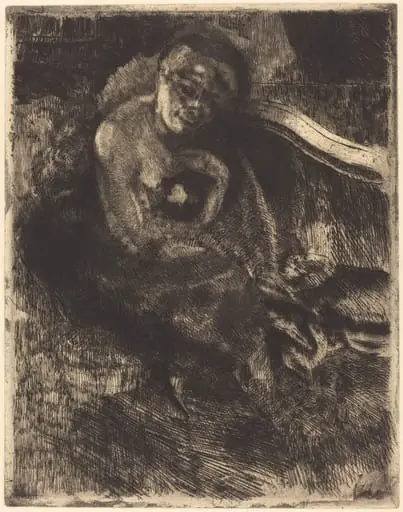 A Nude Woman in a Fur Wrap
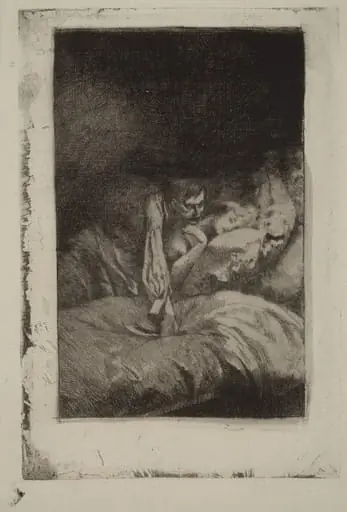 The Murder (Le Meurtre)
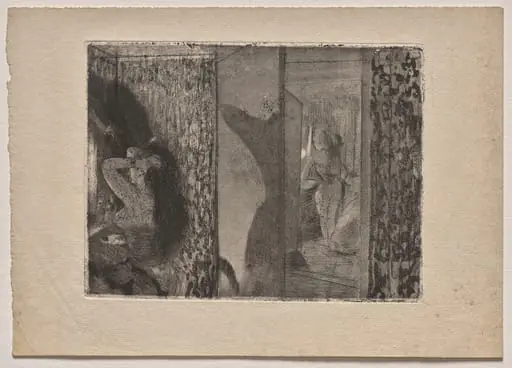 Actresses in Their Dressing Rooms
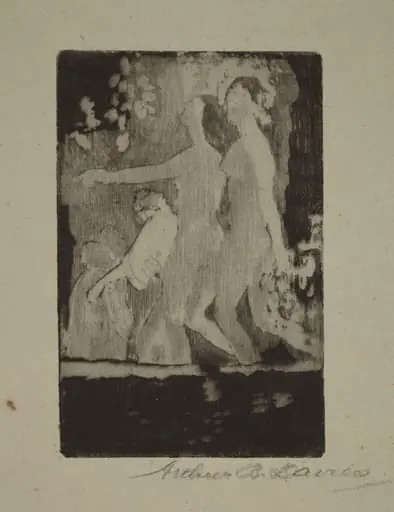 Nocturne
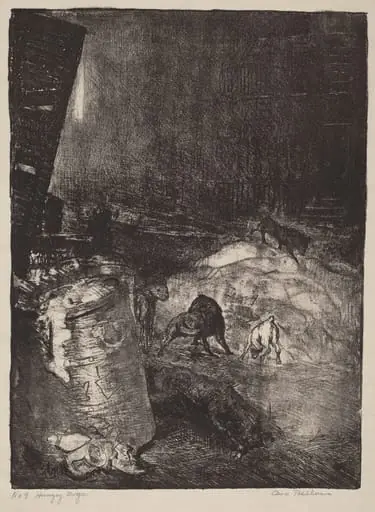 Hungry Dogs, second stone
 Passage of a Soul
 Dancers in the Wings