Artwork
Dancers in the Wings
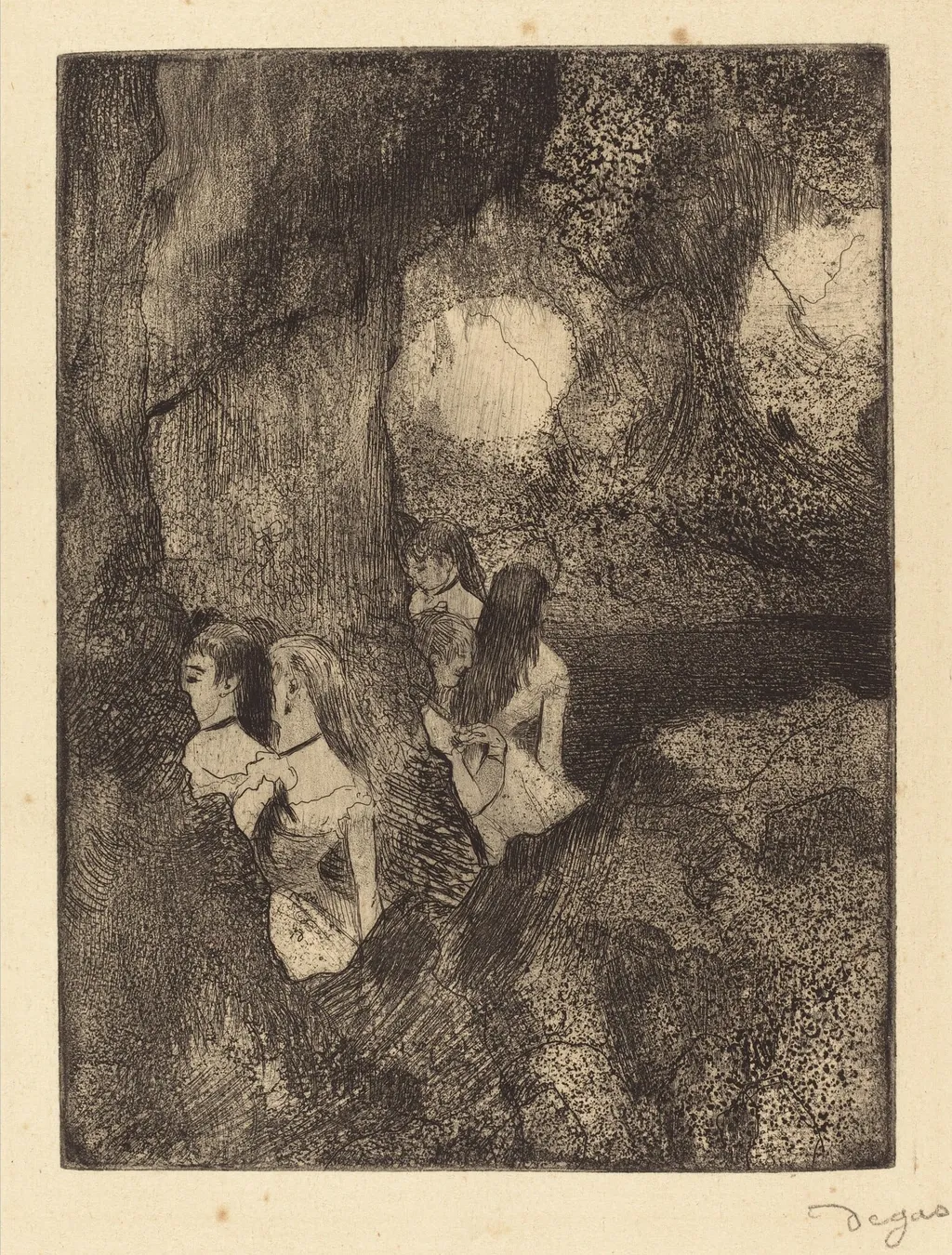
Dancers in the Wings is an ink print by the Impressionist artist Edgar Degas. It dates from 1880 and is held in the collection of the National Gallery of Art.
About this work
Overview
Dancers in the Wings is a 1880 print by Edgar Degas, executed in etching, aquatint, and drypoint on wove paper. While associated with Impressionism, Degas identified as a realist. The work exemplifies his penchant for depicting dancers in unposed, behind-the-scenes moments.
Subject & Meaning
The print captures three dancers in a dimly lit space, their backs turned, engaged in a quiet, intimate scene. One dancer is frozen in a raised-arm pose, while two others stand closely together. The composition conveys a sense of candid observation, characteristic of Degas' approach to his favored subject.
Technique & Style
Degas combined etching, drypoint, and aquatint to achieve a nuanced visual language. Sharp lines delineate the dancers' movements, suggesting mid-action poses, while aquatint creates deep, shaded backgrounds. The soft lighting emphasizes the dancers' silhouettes over detailed rendering.
History & Provenance
Created in 1880, Dancers in the Wings is part of Degas' extensive oeuvre focused on dancers, which constitutes over half of his works. The piece showcases his mastery of multiple printmaking techniques.
Context
Within the broader context of late 19th-century French art, Dancers in the Wings reflects Degas' unique blend of realist observation and innovative printmaking techniques, distinguishing him from his Impressionist contemporaries.
Legacy
This print contributes to Degas' lasting impact on the representation of dancers in art, emphasizing everyday, unguarded moments. His work influenced subsequent generations in capturing the beauty of mundane, behind-the-scenes realities.
Own this work as a print
Artist & collection

Artist
Born Hilaire-Germain-Edgar De Gas on 19 July 1834 in Paris, Edgar Degas came from an affluent banking family with aristocratic roots and spent his childhood among the cultivated circles of the French capital.


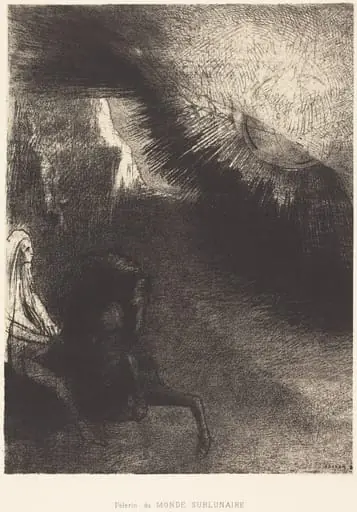 Pélerin du monde sublunaire (Pilgrim of the sublunary world)
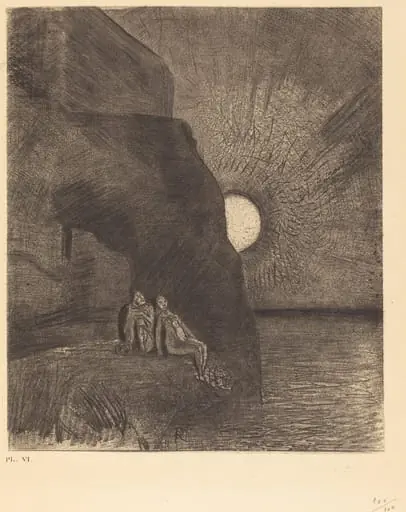 Sans cesse a mes cotes s'agite le demon (Ceaselessly by my side the demon stirs)
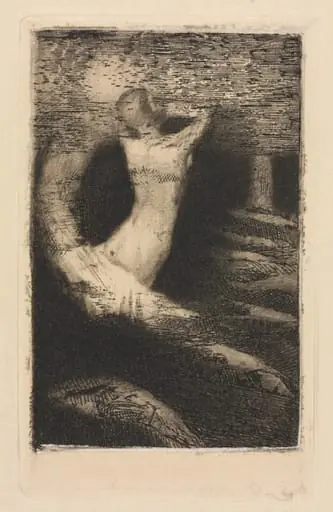 Passage of a Soul
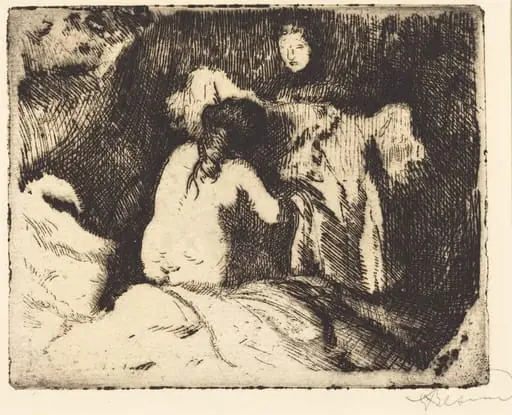 Getting Up (Le lever)
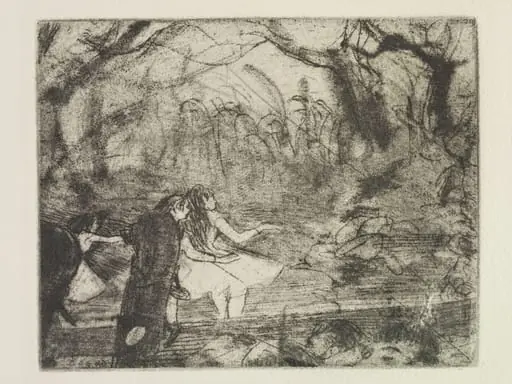 Sur la Scène
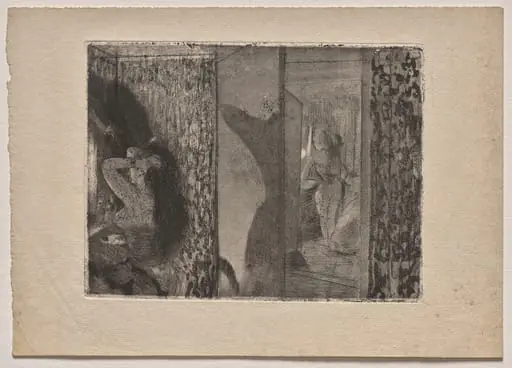 Actresses in Their Dressing Rooms
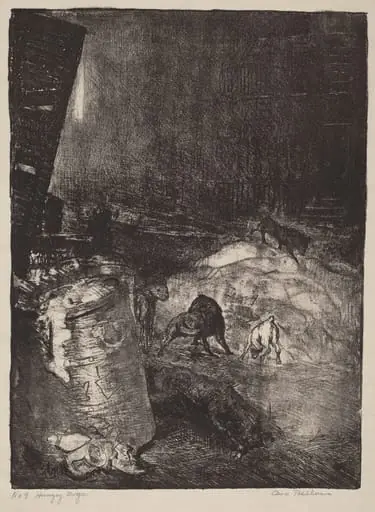 Hungry Dogs, second stone
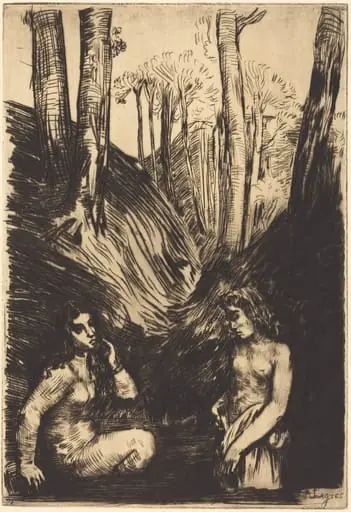 Bathers (Les baigneuses)
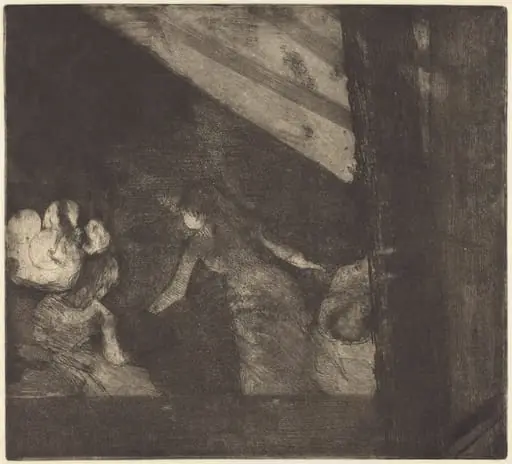 At the Cafe des Ambassadeurs (Aux Ambassadeurs)
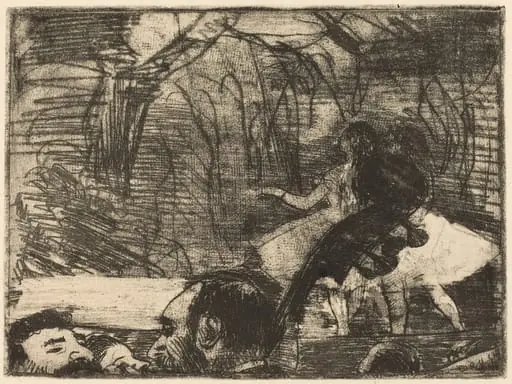 On Stage I
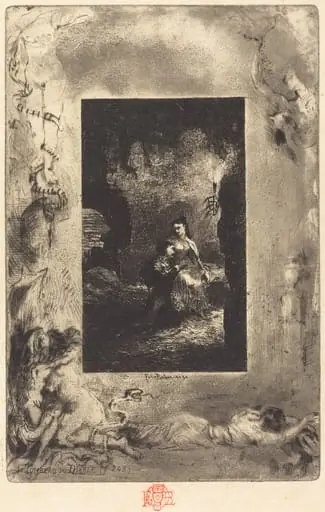 Le Tombeau du Diable (The Devil's Tomb)
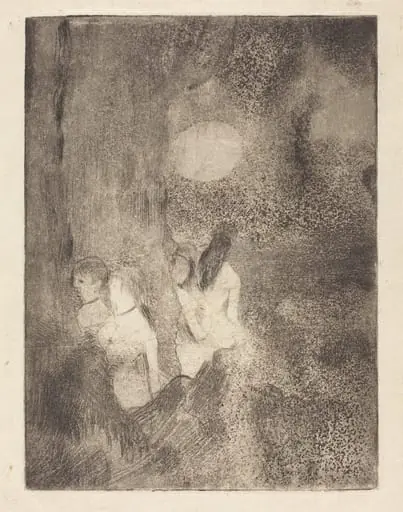 Dancers in the Wings