Artwork
Large Resurrection (Grosse Auferstehung)
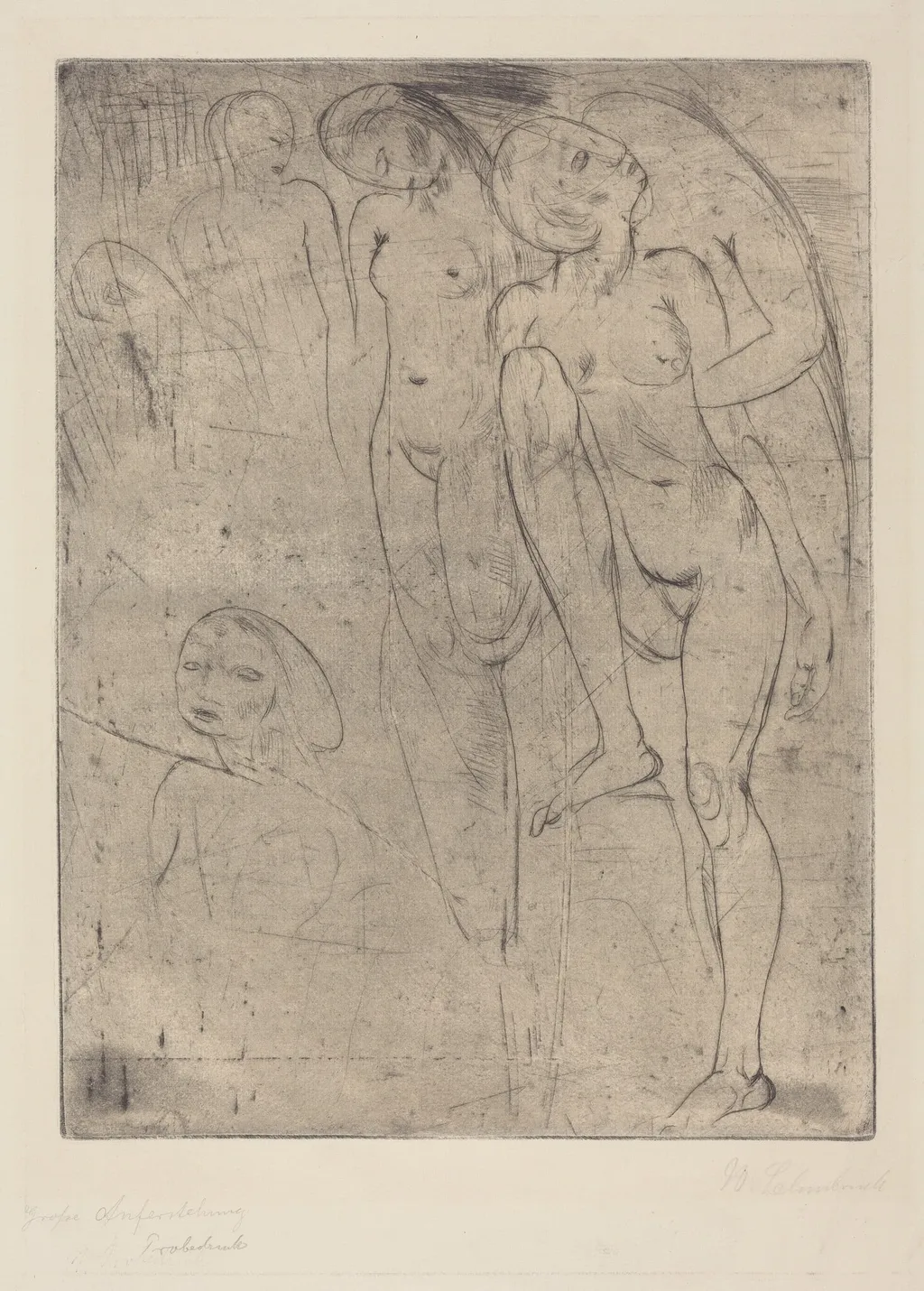
Large Resurrection (Grosse Auferstehung) is an ink print by Wilhelm Lehmbruck. It dates from 1913 and is held in the collection of the National Gallery of Art.
About this work
Overview
Created in 1913, *Large Resurrection* (German: *Grosse Auferstehung*) is a dry‑point proof by Wilhelm Lehmbruck, a German artist chiefly known for his sculpture. The work exists as a single‑sheet print and presents a group of nude figures in a dynamic composition that suggests emergence and ascent.
Subject & Meaning
The central motif shows a human form rising from a tomb, surrounded by other nude bodies in varied poses. The upward movement and the act of emergence convey themes of rebirth and transcendence, echoing the title’s reference to resurrection while retaining Lehmbruck’s focus on the expressive potential of the human body.
Technique & Style
Lehmbruck employed dry‑point, a intaglio method in which a sharp needle incises lines directly onto a copper plate. The resulting burr produces bold, sketch‑like strokes and a rich, velvety texture. Minimal shading and the prominence of line give the figures a sense of immediacy and kinetic energy, aligning the print with the artist’s expressionist leanings.
History & Provenance
The proof was executed shortly before Lehmbruck’s shift toward more abstracted sculpture, marking a rare foray into printmaking for the artist. While primarily a sculptor, he produced only a limited number of prints; this piece remains documented in several European museum collections, reflecting its role in tracing his interdisciplinary practice.
Artist & collection
Artist
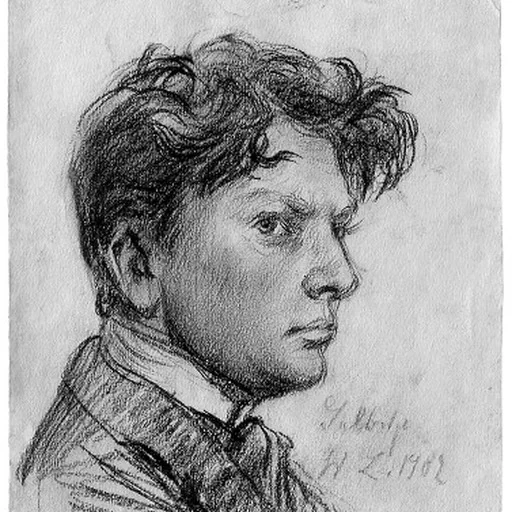
Wilhelm Lehmbruck (4 January 1881 – 25 March 1919) was a German sculptor. One of the most important of his generation, he was influenced by realism and expressionism.

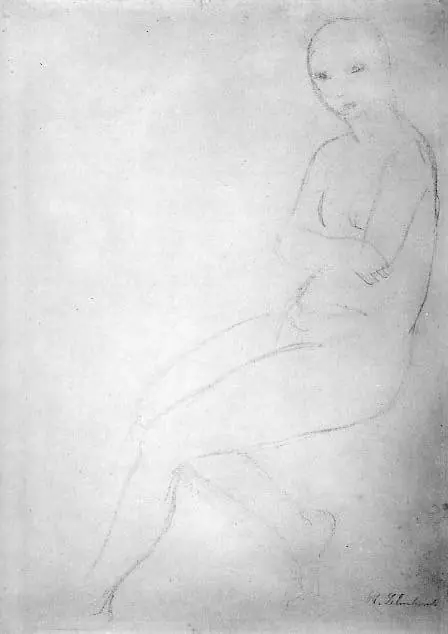
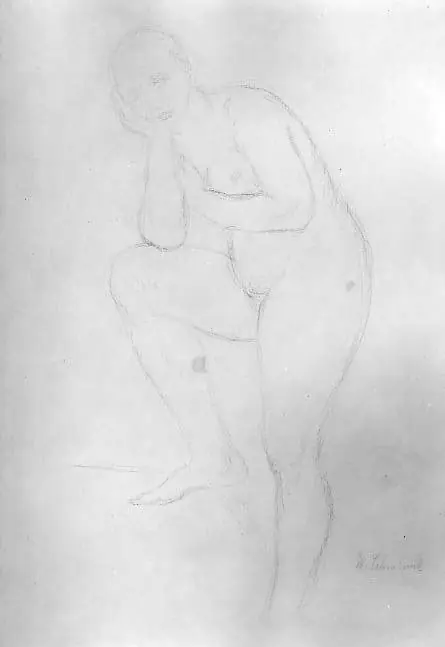
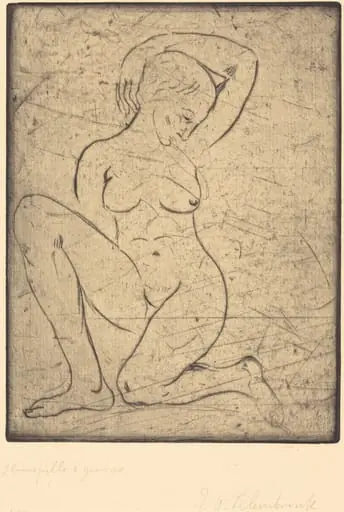
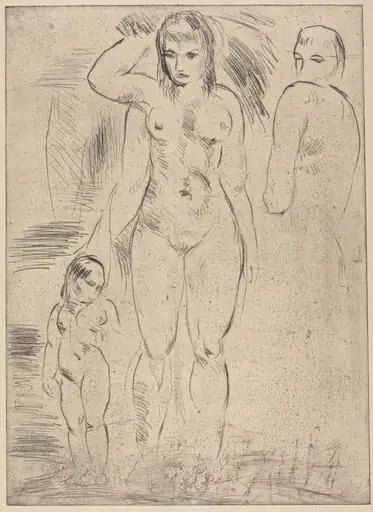
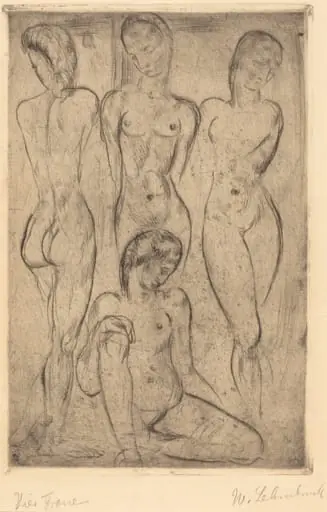 Four Women; Three Standing, One Sitting (VierFrauen; drei stehend, eine sitzend)
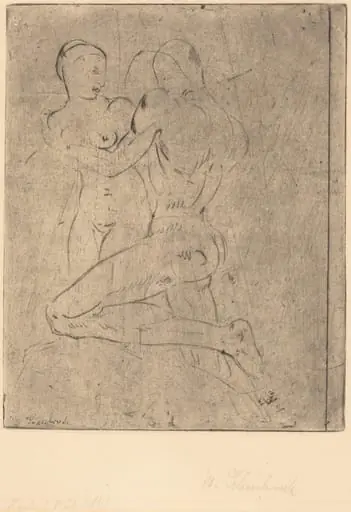 Rape II (Raub II, Weib halb)
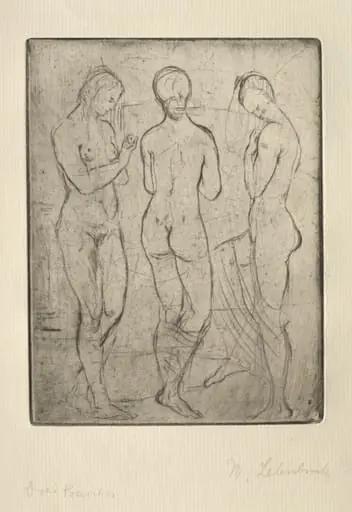 Three Women
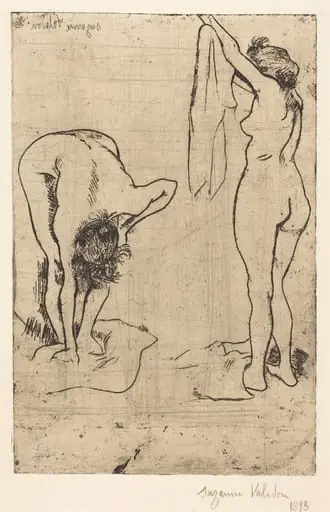 Femmes s'essuyant (Women Drying Themselves)
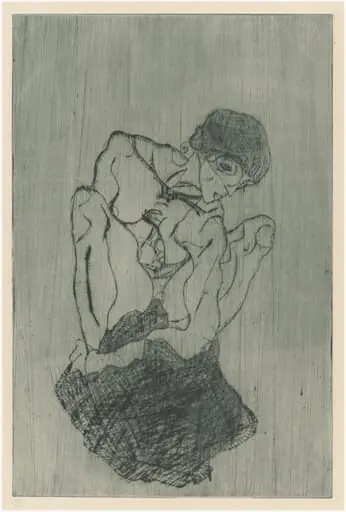 Sorrow (Kümmernis)
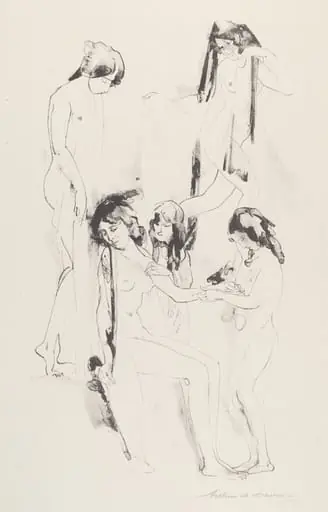 Stir of Shadowed Melodies
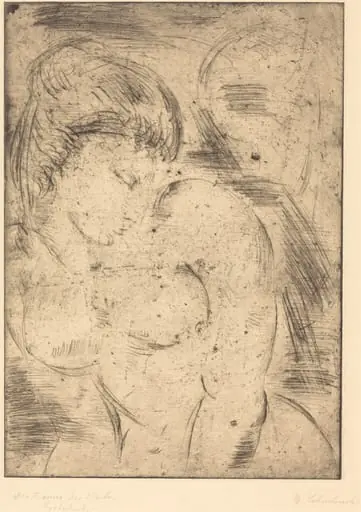 Woman's Dream (Der Traum des Weibes)
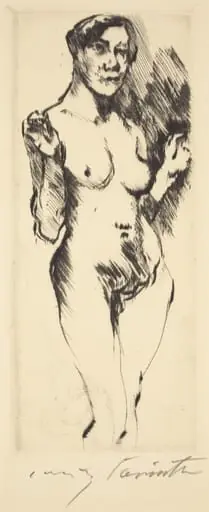 Stehende Weibliche akte (Standing Female Nude)
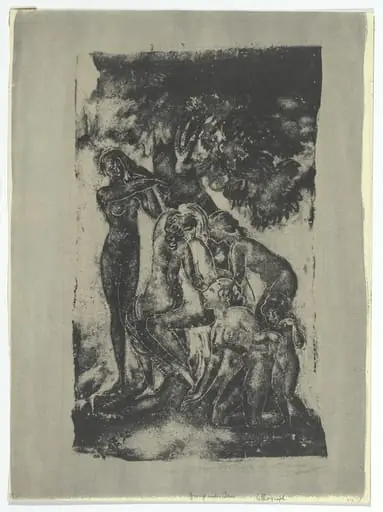 Untitled
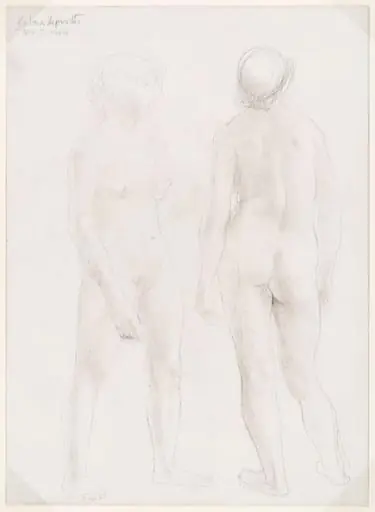 Figure study of two standing women