Artwork
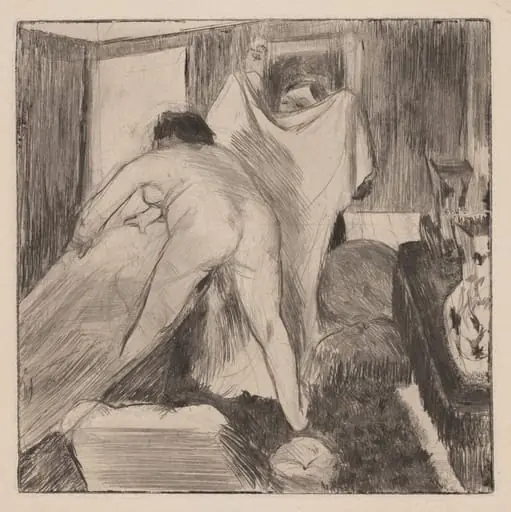
Leaving the Bath (La sortie du bain)
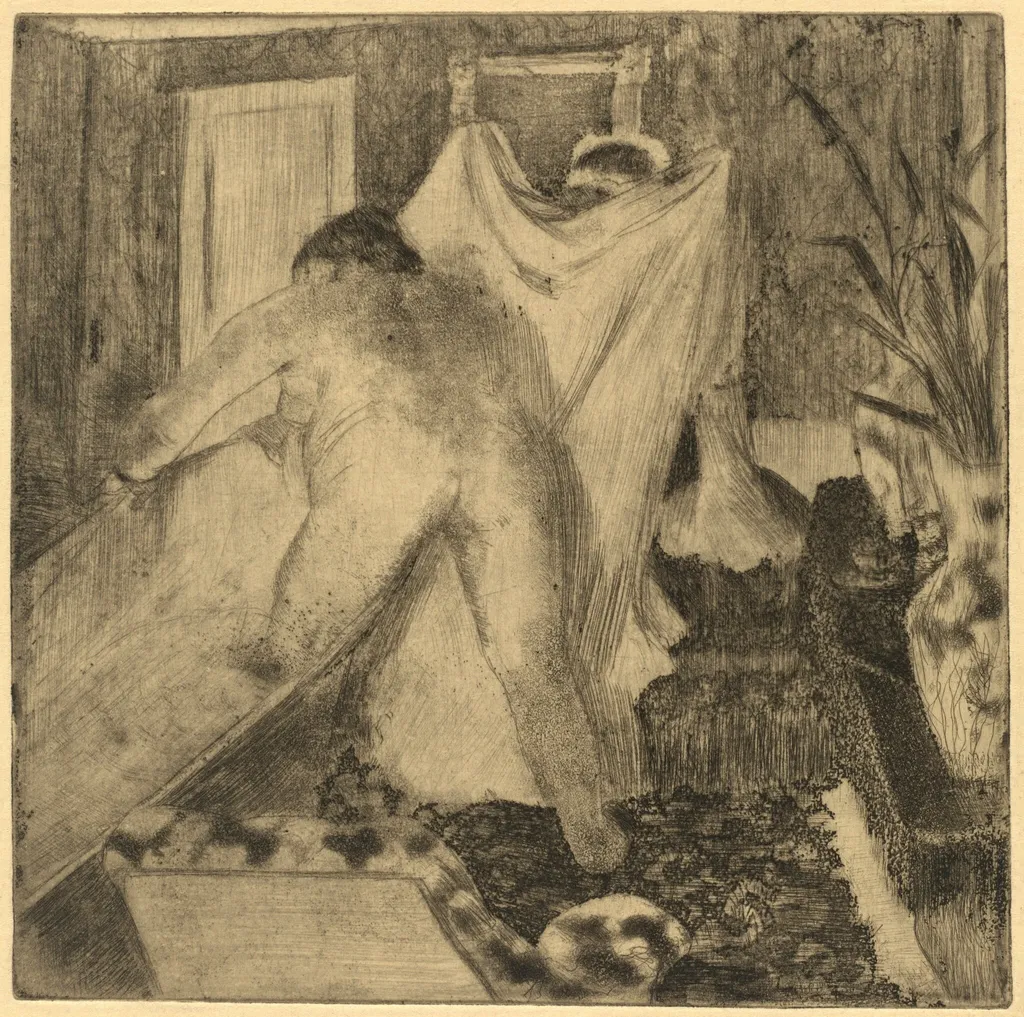
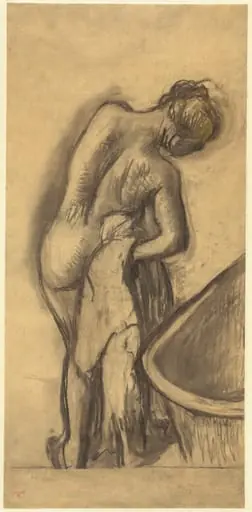
Leaving the Bath (La sortie du bain) is a crayon print by the Impressionist artist Edgar Degas. It dates from 1880 and is held in the collection of the National Gallery of Art.
About this work
Overview
Edgar Degas created *Leaving the Bath* (La sortie du bain) circa 1880, utilizing a combination of electric crayon, etching, drypoint, and aquatint techniques. This print deviates from his common subject matter of dancers, instead portraying a solitary nude figure in an everyday, intimate setting.
Subject & Meaning
The print captures a fleeting moment of a woman drying herself after bathing, emphasizing the quiet, personal nature of the scene. The composition focuses on the figure's gentle, self-contained actions, conveying a sense of vulnerability and solitude.
Technique & Style
Degas employed a mix of graphic techniques to achieve expressive, varied textures. The rough, scratchy lines, juxtaposed with nuanced dark and light marks, evoke the play of light on the figure's skin. The print's visual immediacy suggests a rapid, spontaneous execution.
History & Provenance
Created around 1880, *Leaving the Bath* reflects Degas' experimental approach to printmaking. While specific provenance details are not provided, the work aligns with Degas' broader exploration of modern life themes during this period.
Context
Though associated with Impressionism, Degas preferred the label 'realist.' *Leaving the Bath* aligns with this preference, prioritizing precise draftsmanship over purely Impressionist concerns. The work's themes and techniques place it within Degas' broader oeuvre, which spans pastels, oils, sculpture, and innovative printmaking.
Artist & collection
Artist
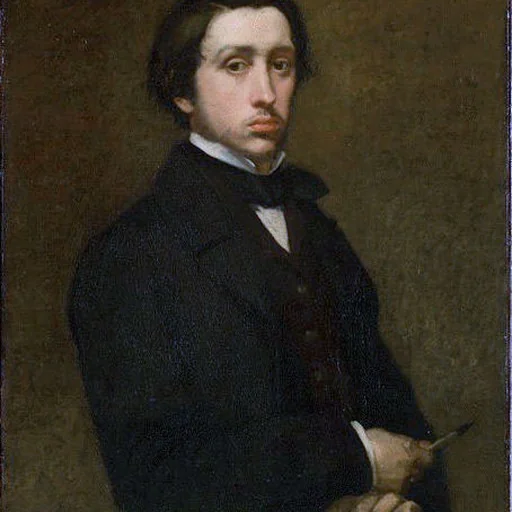
Born Hilaire-Germain-Edgar De Gas on 19 July 1834 in Paris, Edgar Degas came from an affluent banking family with aristocratic roots and spent his childhood among the cultivated circles of the French capital.

 Leaving the Bath
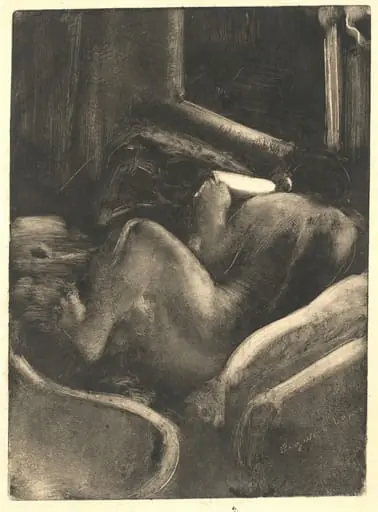 Woman Reading (Liseuse)
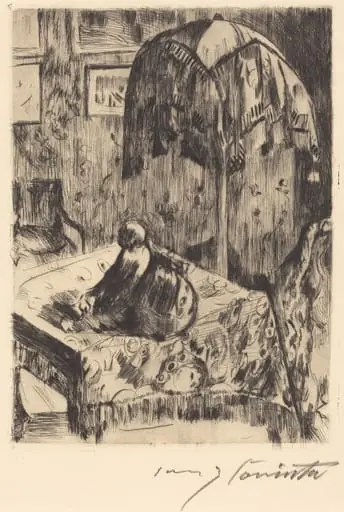 Interieur mit Stehlampe (Interior with Floor Lamp)
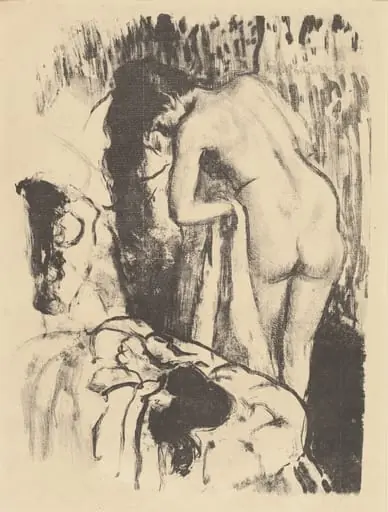 Nude Woman Standing, Drying Herself (Femme nue debout, a sa toilette)
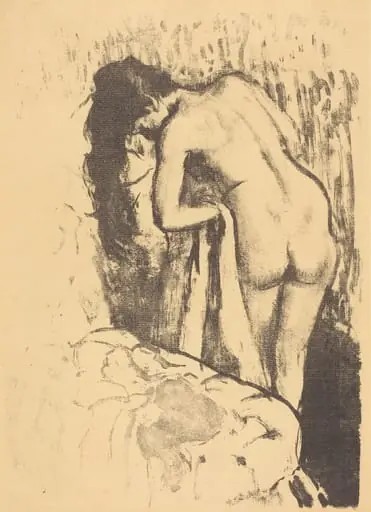 Nude Woman Standing, Drying Herself (Femme nue debout, a sa toilette)
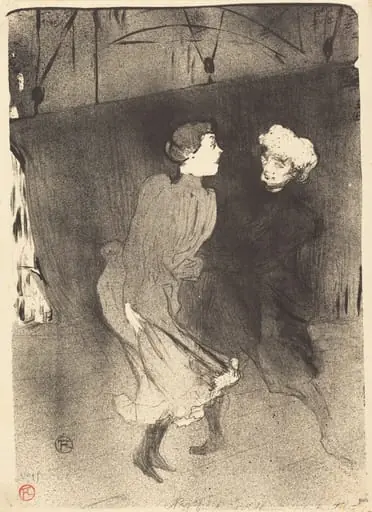 Dress Rehearsal at the Folies-Bergere (Répétition générale aux Folies-Bergère)
 After the Bath: Woman Drying Herself