Artwork
Mlle Bécat
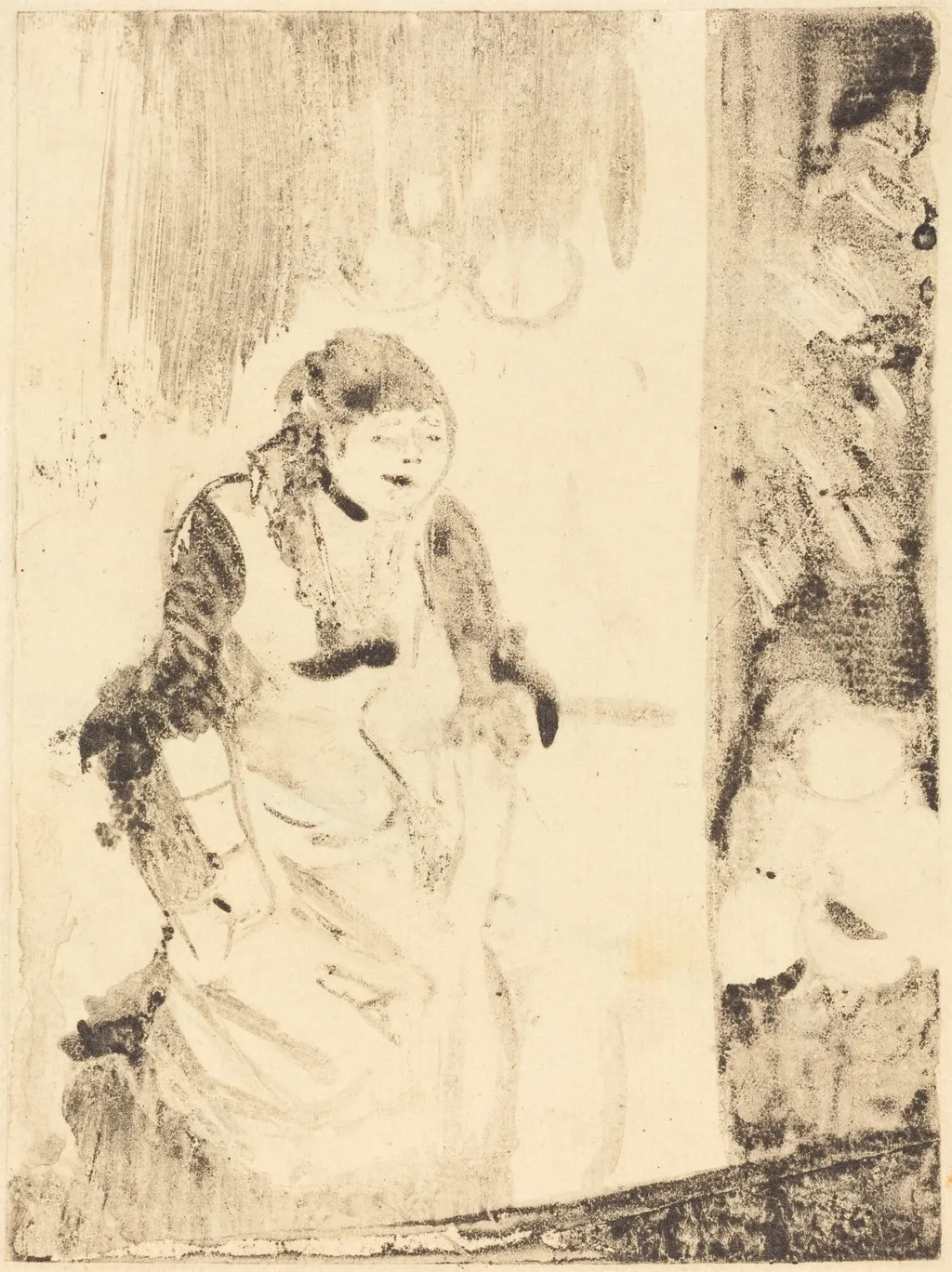
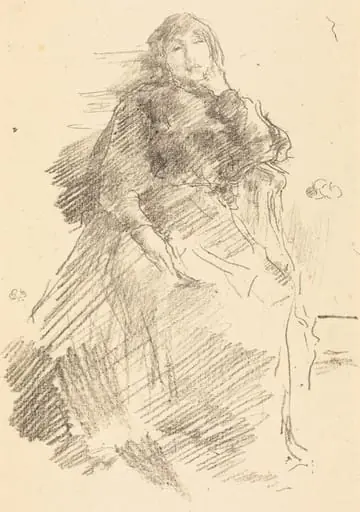
Mlle Bécat is a print by the Impressionist artist Edgar Degas. It dates from 1878 and is held in the collection of the National Gallery of Art.
About this work
Overview
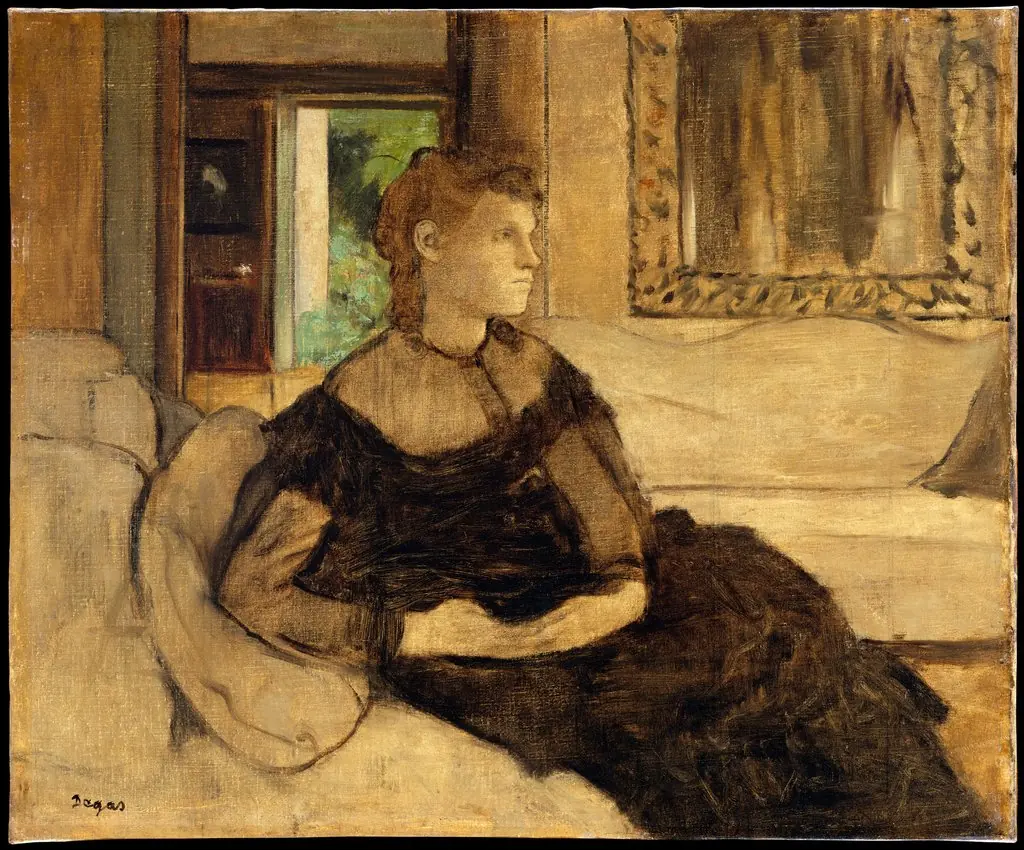
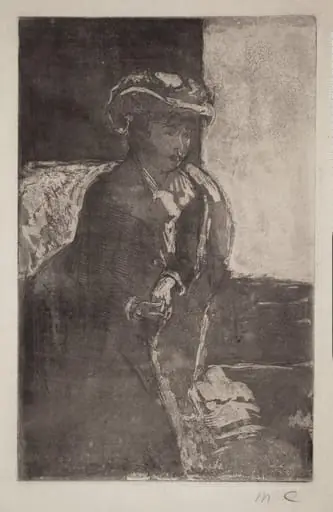
The composition presents a seated woman against a warm, golden backdrop, rendered with a soft, almost blurred quality.
Created circa 1878, *Mlle Bécat* is a monotype executed on laid paper by the French artist Edgar Degas. Though commonly linked to Impressionism, Degas identified himself as a realist, and this work exemplifies his interest in contemporary, everyday subjects rendered with nuanced tonal shifts. The composition presents a seated woman against a warm, golden backdrop, rendered with a soft, almost blurred quality.
Subject & Meaning
The image shows a woman seated in a chair, turned toward the viewer, clothed in a dark, long dress with a white collar and a hat. Her facial features are intentionally indistinct, allowing the figure to merge with the surrounding tone. This ambiguity emphasizes mood and atmosphere over precise portraiture, reflecting Degas’s focus on the fleeting impression of modern life.
Technique & Style
Degas produced the work as a monotype, a printmaking process that yields a single, unique impression. Using laid paper, he applied ink or paint with a brush and then transferred the image to paper, creating subtle gradations of tone. The resulting surface is characterized by delicate, blurred edges and a limited palette, highlighting his mastery of draftsmanship and his experimental approach to print media.
History & Provenance
The monotype dates from the late 1870s, a period when Degas was intensively exploring print techniques alongside his more familiar pastels and oils. While the work’s early ownership details are sparse, it has been catalogued among Degas’s printed oeuvre and is frequently cited in scholarly surveys of his late nineteenth‑century output.
Artist & collection
Artist
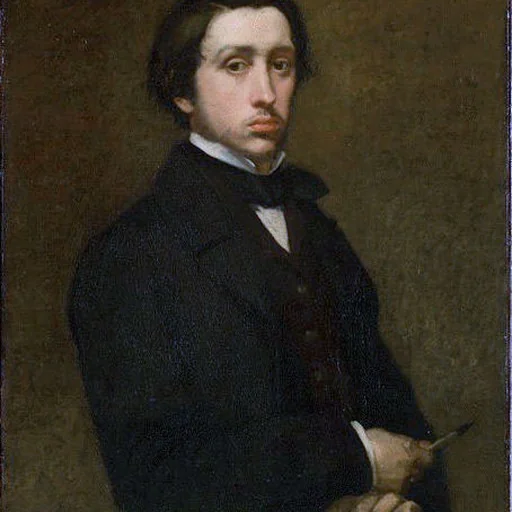
Born Hilaire-Germain-Edgar De Gas on 19 July 1834 in Paris, Edgar Degas came from an affluent banking family with aristocratic roots and spent his childhood among the cultivated circles of the French capital.