Artwork
Study for the oil painting, "The Nativity"
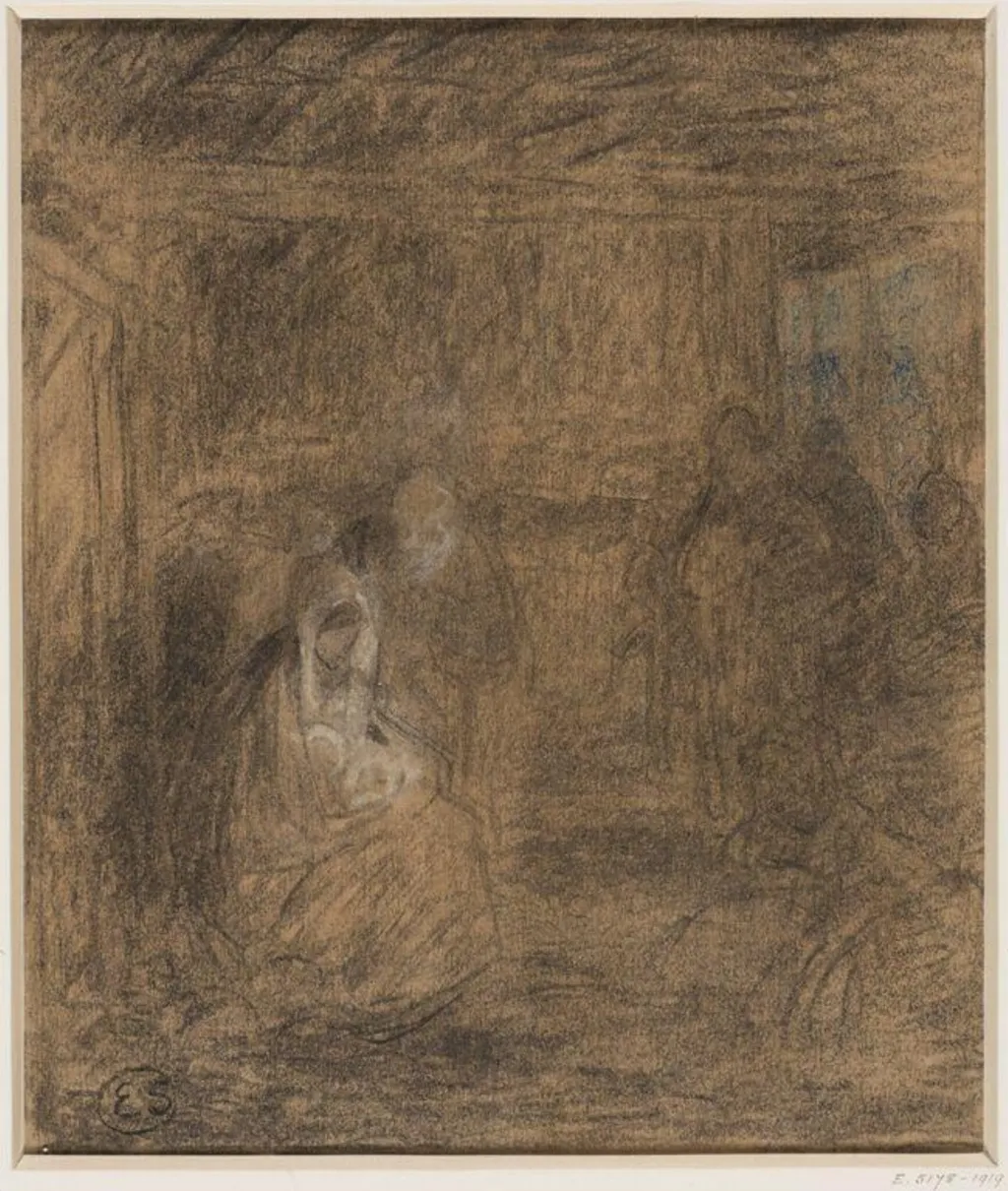
Study for the oil painting, "The Nativity" is a drawing by Edward Stott. It dates from 1910 and is held in the collection of the Victoria and Albert Museum.
About this work
Overview
Created around 1910, this drawing by Edward Stott served as a preparatory study for his oil painting The Nativity. Executed in pencil or charcoal, it is part of the Victoria and Albert Museum’s collection. Unlike the finished painting, this work focuses on form and atmosphere rather than color, capturing the emotional weight of the scene through tonal variation and texture.
Subject & Meaning
The drawing depicts a solitary, hunched figure seated on the ground, possibly the Virgin Mary, enveloped in shadow. The obscured face and tightly drawn limbs suggest introspection and vulnerability. The absence of other figures or narrative details shifts focus to solitude and quiet reverence, emphasizing a personal, intimate moment within the broader Nativity story.
Technique & Style
Stott employed dense cross-hatching to model form and depth, building shadows with layers of fine, intersecting lines. The background is rendered with agitated, scratchy strokes that evoke rough stone or bark, enhancing the tactile quality of the surface. This method avoids smooth gradients, instead creating a grainy, textured field that grounds the figure in a tangible, almost elemental space.
History & Provenance
The drawing entered the Victoria and Albert Museum’s collection as part of its broader holdings of British art and preparatory works.
The drawing entered the Victoria and Albert Museum’s collection as part of its broader holdings of British art and preparatory works. Its survival as a study rather than a finished piece offers insight into Stott’s process, revealing how he refined composition and mood before committing to oil. No earlier ownership records are widely documented, suggesting it remained in the artist’s possession until acquisition.
Context
In early 20th-century Britain, religious subjects were often treated with renewed psychological depth, moving beyond traditional iconography. Stott’s approach aligns with this trend, favoring emotional resonance over doctrinal clarity. His use of tonal drawing reflects influences from late 19th-century academic traditions, while the raw texture hints at emerging modernist interests in materiality and expression.
Legacy
Though less known than his finished paintings, this study illustrates Stott’s commitment to capturing spiritual atmosphere through disciplined draftsmanship. It remains a valuable example of how preparatory works can convey as much meaning as final compositions, offering scholars and viewers a window into the artist’s contemplative process and evolving visual language.
Artist & collection
Artist
Edward Stott spent his life in a Sussex cottage with a garden that doubled as his studio—half painter, half gardener, always in rolled-up sleeves.

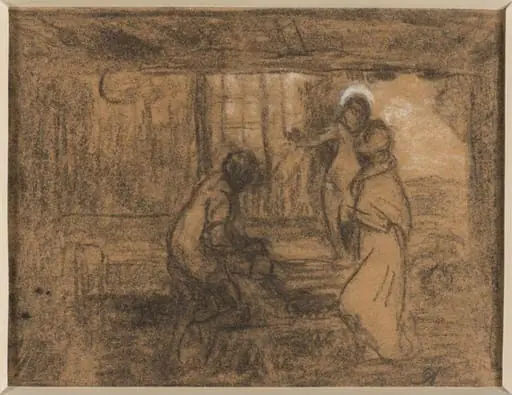 Study for the oil painting, "The Carpenter's Shop."
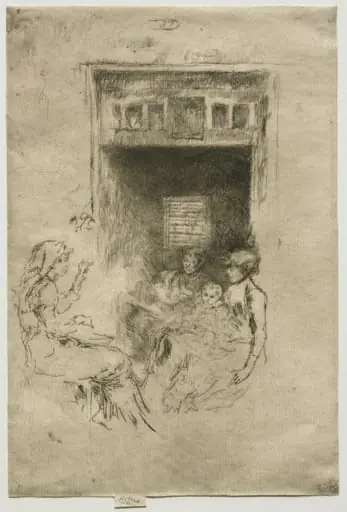 Bead Stringers
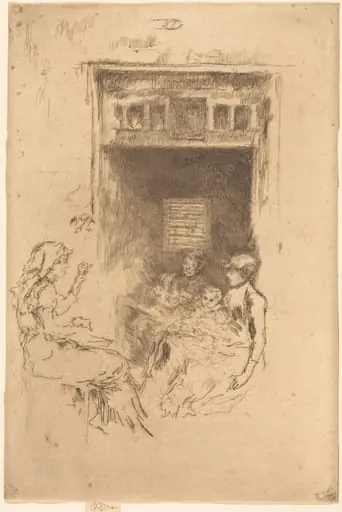 Bead-Stringers
 Mlle Bécat
 Greeting Grandmother (Le Bonjour à la Grand-mère)
 The Forge
 Cottage Door
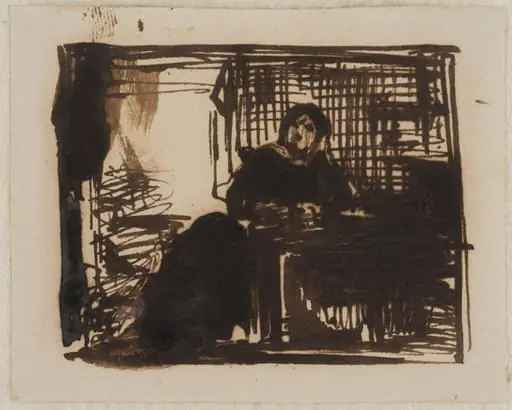 Studies for 'The Poor Teacher'
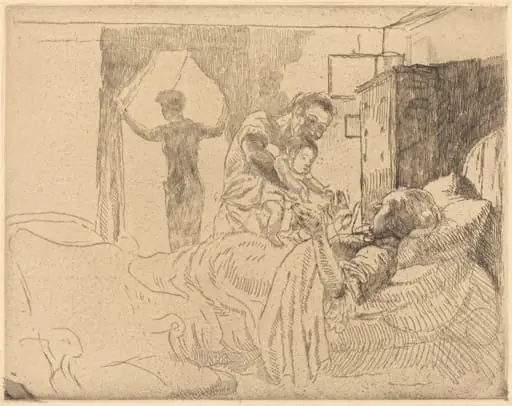 Greeting Grandmother (Le Bonjour à la Grand-mère)
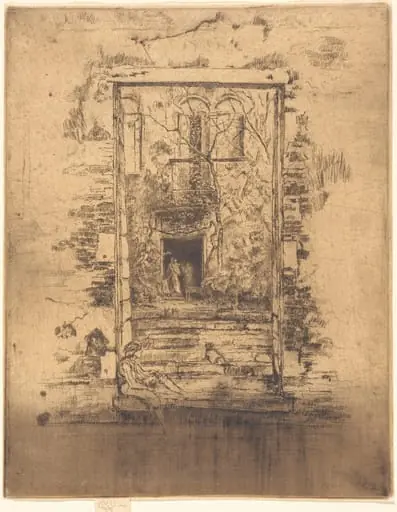 Garden
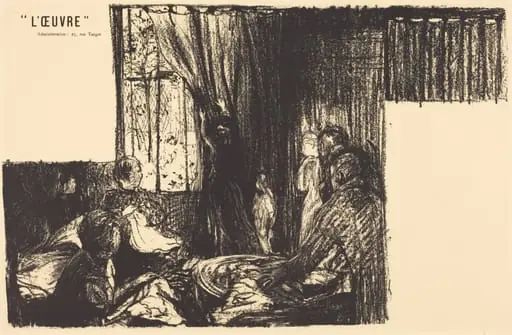 Les Soutiens de la société
 Rag Pickers, Quartier Mouffetard, Paris