Artwork
Study of a Female Nude
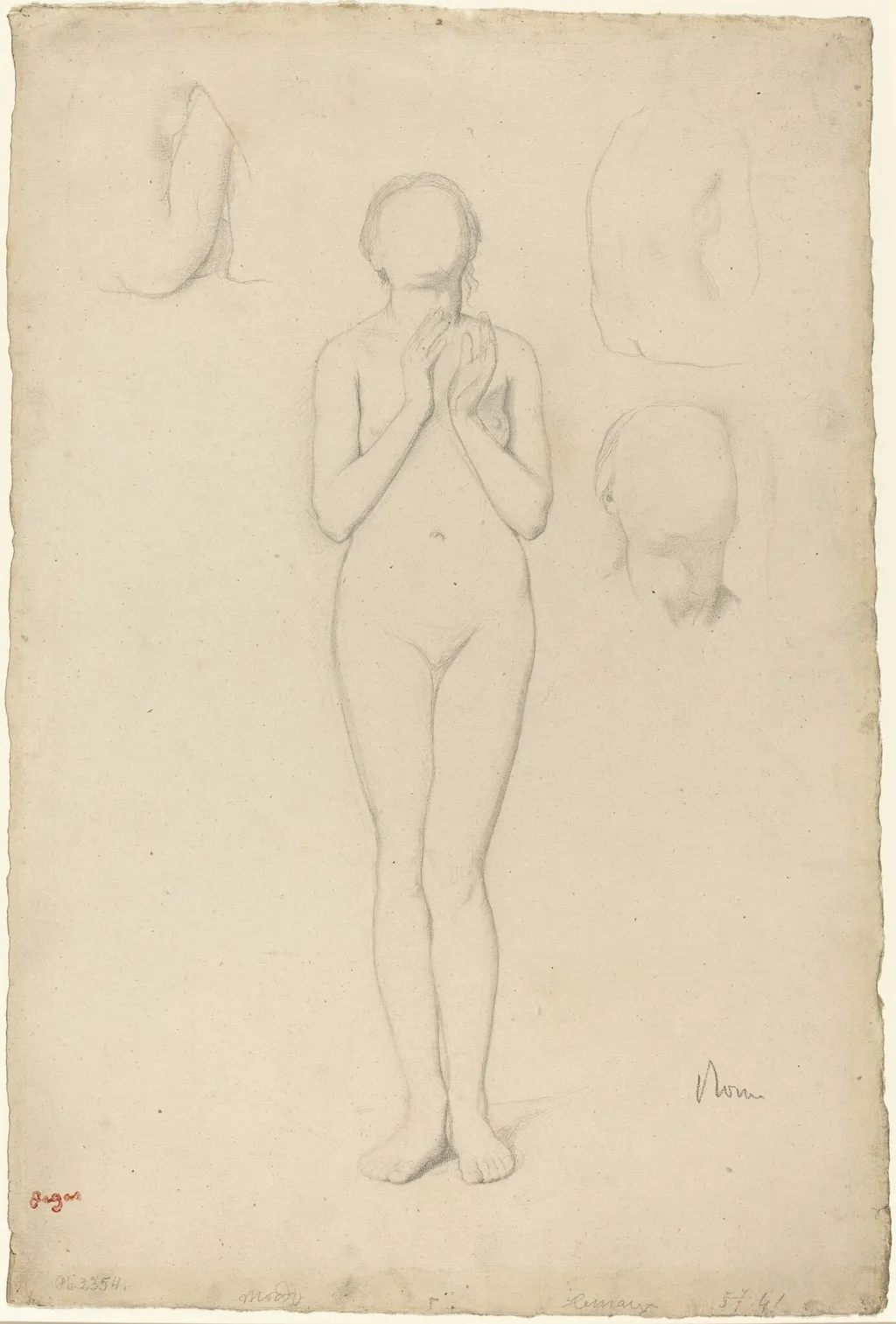
Study of a Female Nude is a graphite drawing by the Impressionist artist Edgar Degas. It dates from 1857 and is held in the collection of the National Gallery of Art.
About this work
Overview
Study of a Female Nude (1857) is a graphite drawing on wove paper created by French artist Edgar Degas, who identified as a realist despite associations with Impressionism. The work exemplifies his meticulous approach to figure drawing.
Subject & Meaning
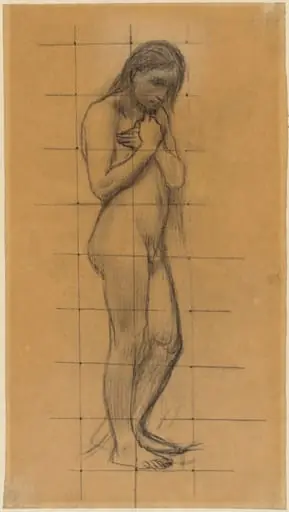
The drawing depicts a standing female nude, barefoot, with hands clasped together. The central figure is rendered in light, quick lines, suggestive of a preliminary study. Surrounding the main subject are three incomplete, sketchy renderings of heads or shoulders, lacking in detail.
Technique & Style
Executed solely in graphite on plain wove paper without color or background, the drawing showcases Degas' emphasis on draftsmanship. The visible, unpolished quality of the lines and the inclusion of unfinished ancillary sketches highlight the work's likely status as a preliminary study.
History & Provenance
Created in 1857, the drawing bears Degas' signature in the corner. The paper's yellowish tint indicates aging, consistent with its mid-19th-century origin. Specific provenance details beyond the artist's creation are not provided.
Context
While Degas is often linked to Impressionism, this work aligns more closely with his self-described realist approach, focusing on the accurate representation of the human form—a common theme in his practice, though more frequently associated with his depictions of dancers.
Artist & collection

Artist
Born Hilaire-Germain-Edgar De Gas on 19 July 1834 in Paris, Edgar Degas came from an affluent banking family with aristocratic roots and spent his childhood among the cultivated circles of the French capital.



![Standing Female Nude Holding a Bowl [recto], by James McNeill Whistler](https://artifactworldgallery.com/img/james-mcneill-whistler--standing-female-nude-holding-a-bowl-recto--5735c897b3eb1bb8-w320.webp)