Artwork
Carmen
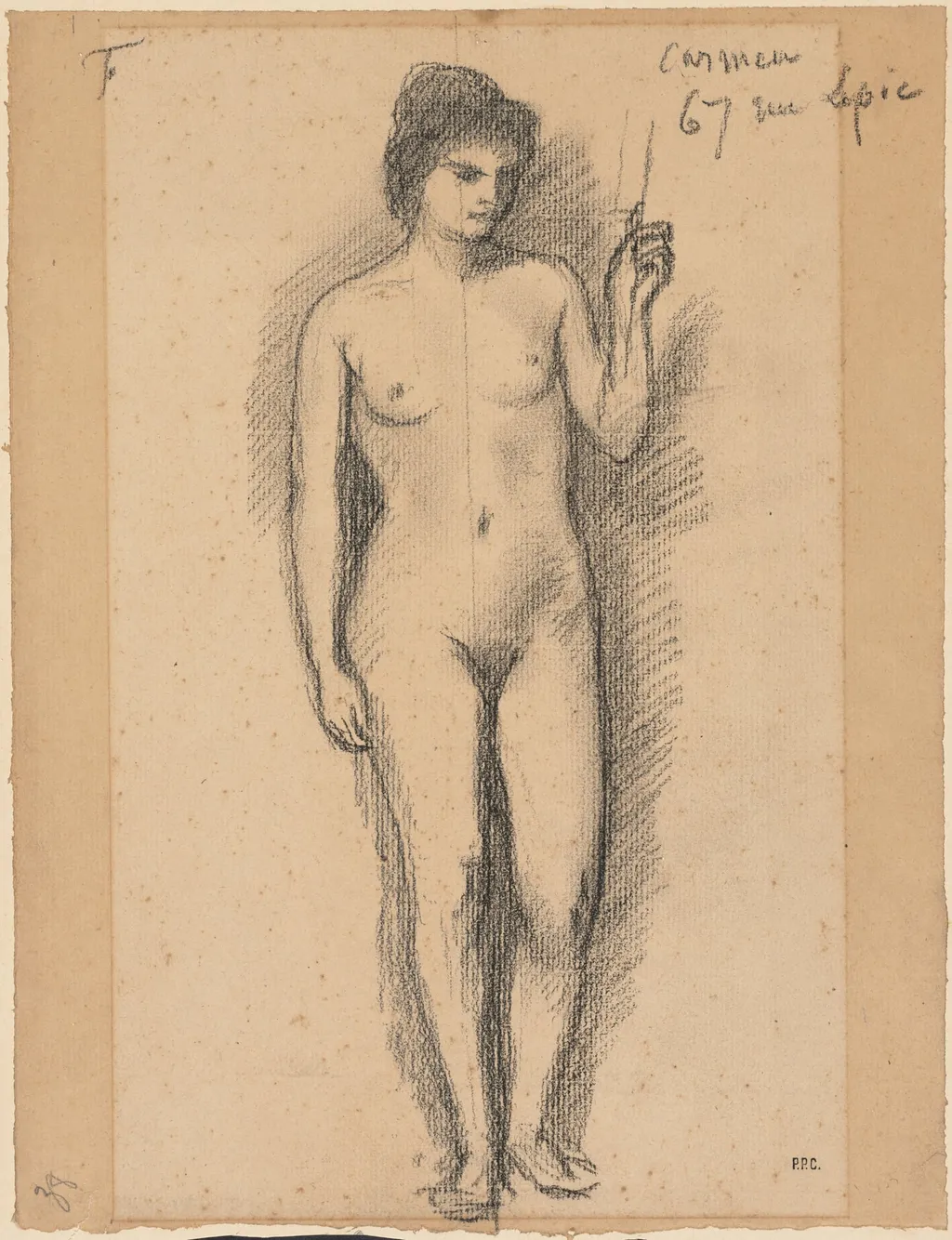
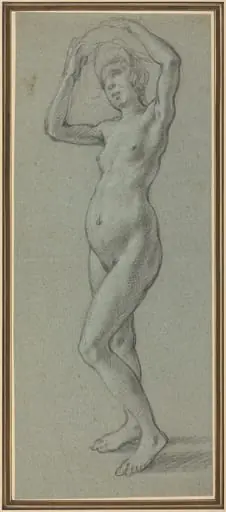
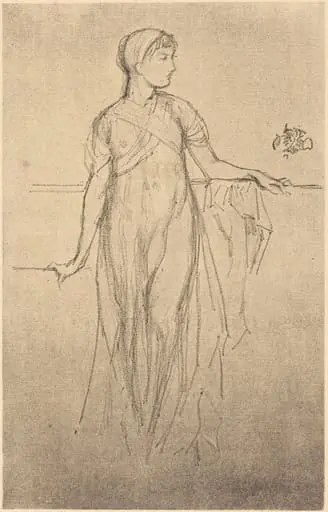
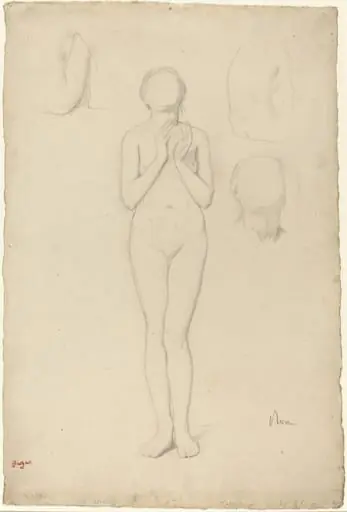
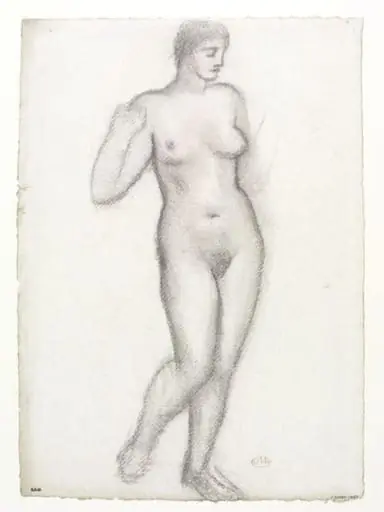
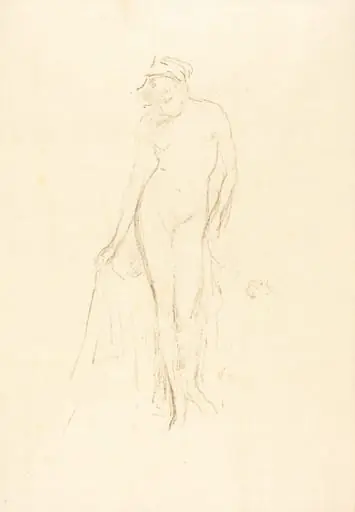
Carmen is a drawing by the Romanticist artist Pierre Puvis de Chavannes. It dates from 1804 and is held in the collection of the Cleveland Museum of Art.
About this work
Overview
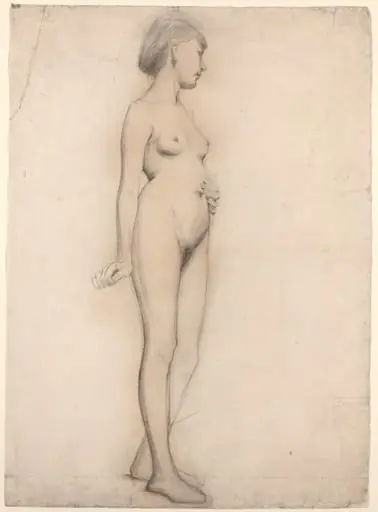
Carmen is a drawing attributed to Pierre Puvis de Chavannes, created circa 1804. Executed on aged, yellowed paper, the work depicts a solitary, unclothed figure holding a small object, rendered with swift, gestural lines. The composition is minimal, leaving the background largely blank to emphasize the bodily form and its confident stance.
Subject & Meaning
The central figure stands with one leg advanced, suggesting movement and self‑assurance. Though unclothed, the pose conveys a timeless, archetypal presence rather than a specific narrative, inviting contemplation of the human body as a vessel for expressive gesture.
Technique & Style
Puvis employs a loose, rapid sketching technique, allowing the line to define volume without detailed modeling. The unfinished areas and visible paper texture contribute to a sense of immediacy, characteristic of his practice of balancing rational composition with expressive line work.
History & Provenance
The drawing entered the collection of the Cleveland Museum of Art, where it remains accessible to the public. Its acquisition reflects the museum’s interest in representing the work of Puvis, a prominent figure in French mural painting during the early Third Republic.
Context
Puvis de Chavannes, a leading muralist and co‑founder of the Société Nationale des Beaux‑Arts, was celebrated for his rational yet emotive approach to art—a balance noted by contemporary writer Émile Zola. Carmen exemplifies his interest in simplified forms and the integration of figure and space, themes that recur throughout his larger mural projects.
Artist & collection
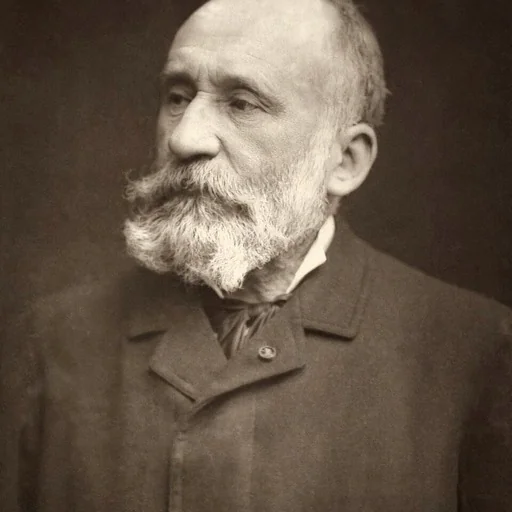
Artist
Pierre Puvis de Chavannes (French pronunciation: ; 14 December 1824 – 24 October 1898) was a French painter known for his mural painting, who came to be known as "the painter for France".