Artwork
Study of a Jockey (M. de Broutelles)
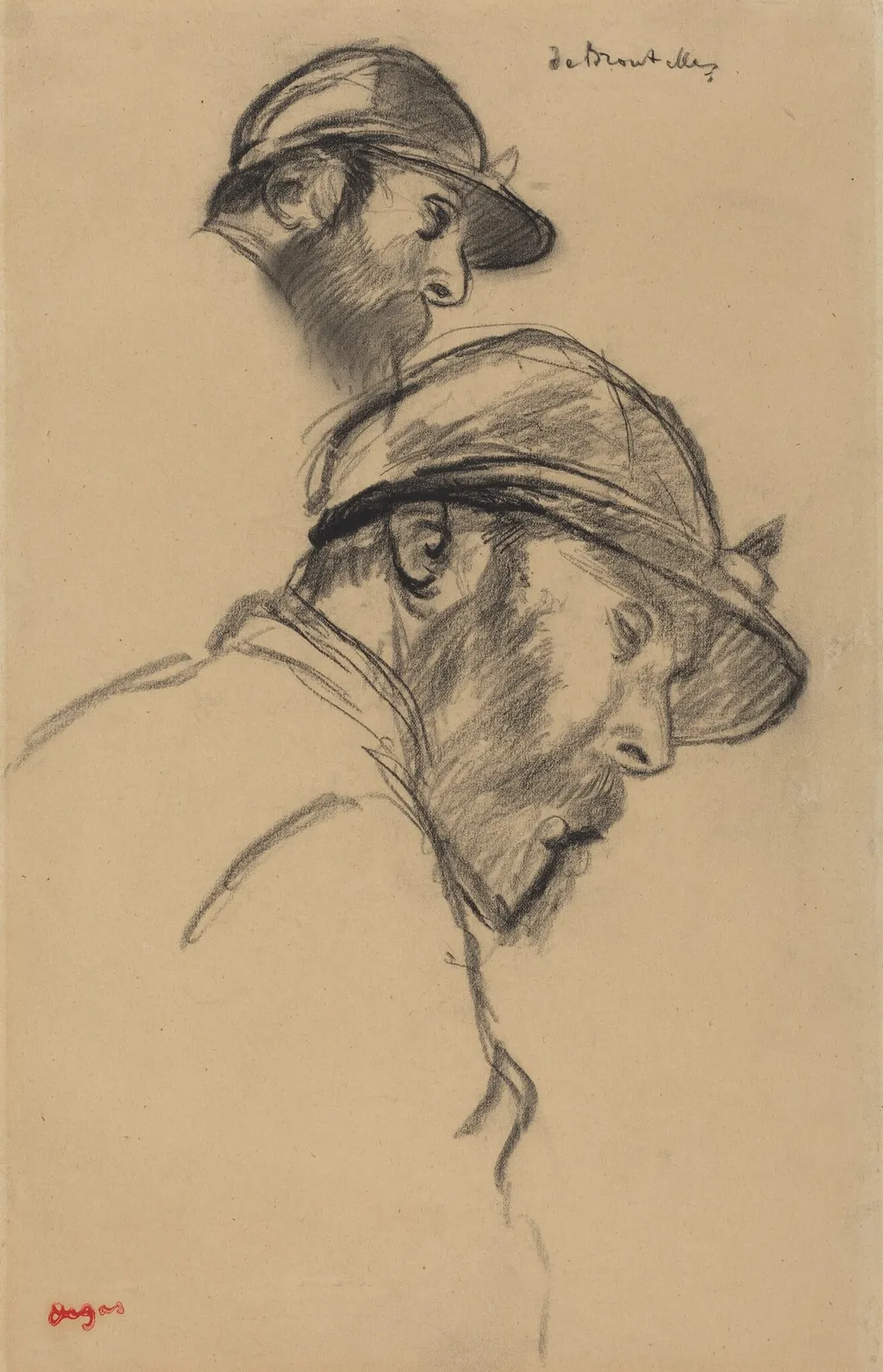
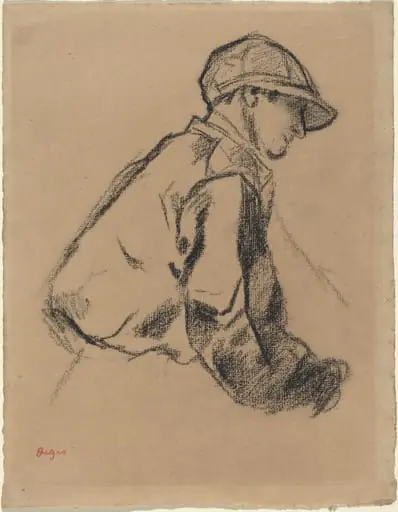
Study of a Jockey (M. de Broutelles) is a crayon drawing by the Romanticist artist Edgar Degas. It dates from 1884 and is held in the collection of the National Gallery of Art.
About this work
Overview
Though often linked to Impressionism, Degas identified more closely with realism, emphasizing observation over atmospheric effect.
Created around 1884, this drawing by Edgar Degas is a quick study executed in black crayon on cream paper. It captures a jockey in a moment of stillness, reflecting Degas’s sustained interest in figures engaged in athletic pursuits. Though often linked to Impressionism, Degas identified more closely with realism, emphasizing observation over atmospheric effect. The work belongs to a broader series of equestrian studies he produced during this period.
Subject & Meaning
The figure is a jockey, identified by his cap and close-fitting jacket, likely the model M. de Broutelles, whose name appears signed in the corner. Rather than depicting action, Degas focuses on the quiet presence of the rider, suggesting the physicality and discipline inherent in the profession. The absence of a horse shifts attention to the human form, inviting contemplation of the jockey’s posture and demeanor.
Technique & Style
Degas employed loose, energetic lines and deliberate shading to model the jockey’s hat and face, creating subtle volume. The cream paper remains visible in highlights, enhancing contrast and immediacy. Rough, textured strokes define the hair and collar, conveying texture without detail. The drawing’s spontaneity reflects Degas’s preference for working directly from life, capturing form through gesture rather than finish.
History & Provenance
The drawing was made during a period when Degas was intensively studying motion, particularly in horse racing and ballet. It likely originated from his personal sketchbook, part of a private archive later dispersed after his death. The signature 'de Broutelles' suggests the sitter was a known figure in racing circles, though little else is documented about him. The work entered public collections in the 20th century.
Context
In the 1880s, Degas frequently visited racecourses around Paris, producing dozens of studies of jockeys and horses. These works were distinct from his ballet scenes, yet shared his fascination with the body in motion and the rituals of performance. Racing was a popular subject among French artists, but Degas’s focus on the jockey’s solitude set his approach apart from more theatrical depictions.
Legacy
This drawing exemplifies Degas’s commitment to drawing as a primary mode of inquiry. His equestrian studies, though less celebrated than his dancers, reveal his rigorous attention to anatomy and movement. The work influenced later artists interested in capturing transient moments with economy and psychological depth, affirming the value of preparatory sketches as autonomous art.
Artist & collection
Artist
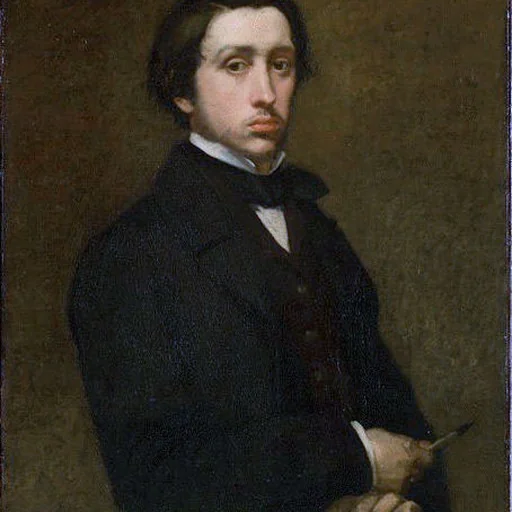
Born Hilaire-Germain-Edgar De Gas on 19 July 1834 in Paris, Edgar Degas came from an affluent banking family with aristocratic roots and spent his childhood among the cultivated circles of the French capital.

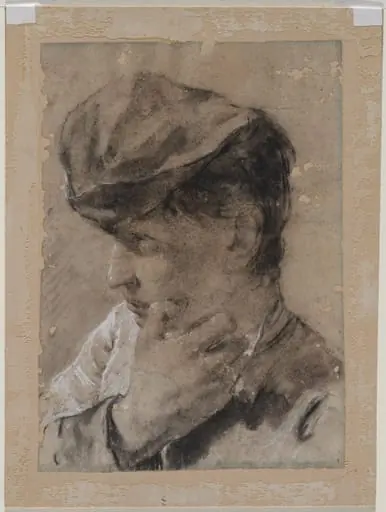 Head of a Young Man in a Cap
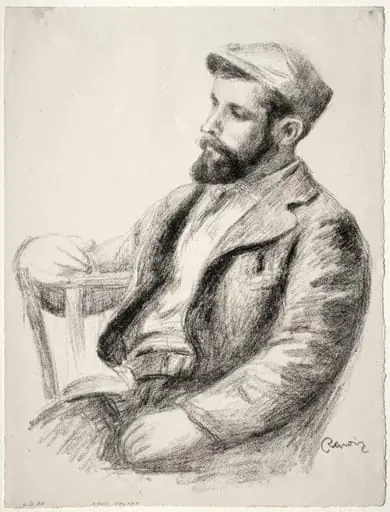 Louis Valtat
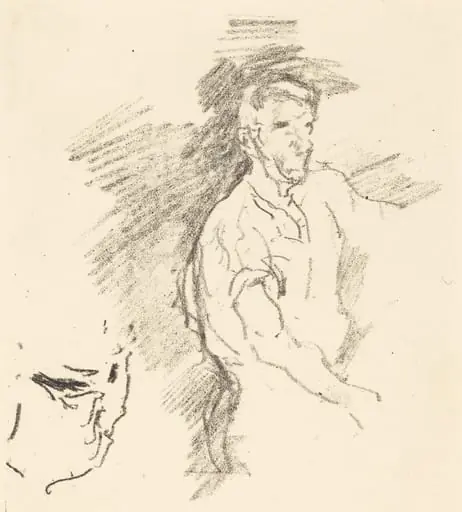 Sketch of a Blacksmith
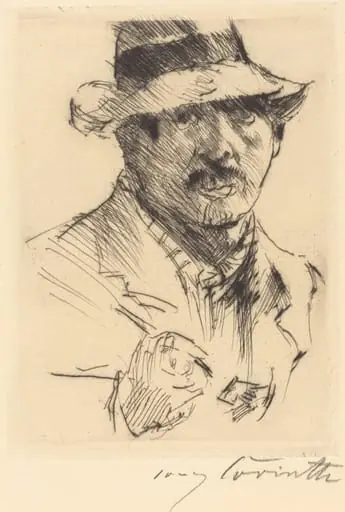 Selbstbildnis (Self-Portrait)
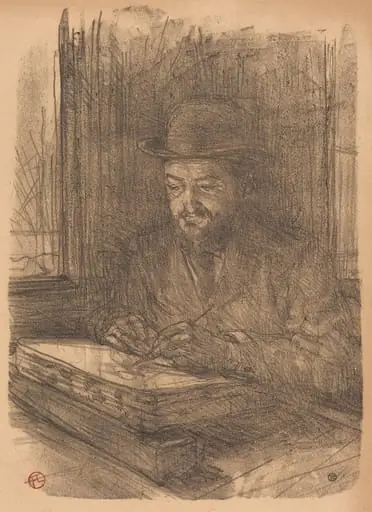 The Fine Printmaker Adolphe Albert (Le bon graveur - Adolphe Albert)
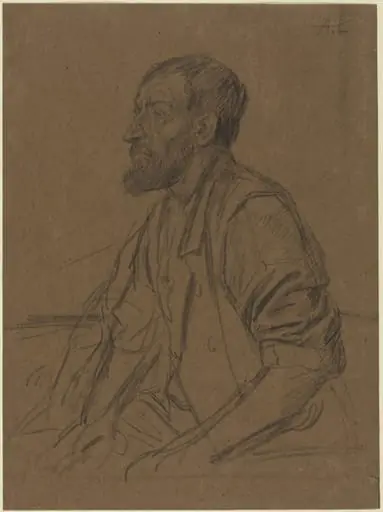 Study of a Workman
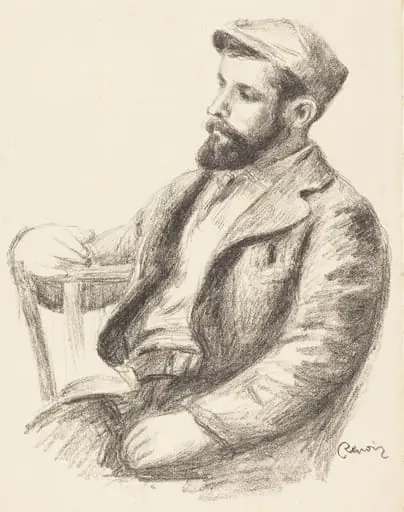 Louis Valtat
![Three Studies of a Man Wearing a Hat [recto], by Paul Gauguin](https://artifactworldgallery.com/img/paul-gauguin--three-studies-of-a-man-wearing-a-hat-recto--1337f9984d88798b-w320.webp) Three Studies of a Man Wearing a Hat [recto]
Three Studies of a Man Wearing a Hat [recto]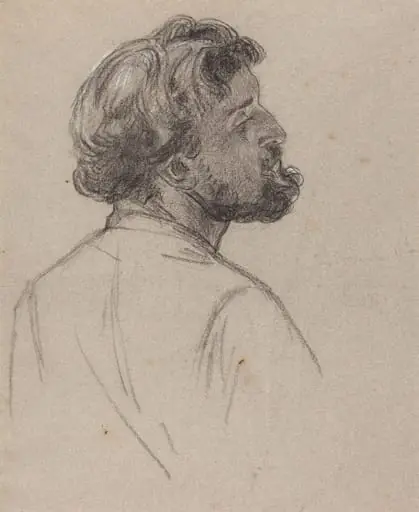 Head of a Bearded Gentleman
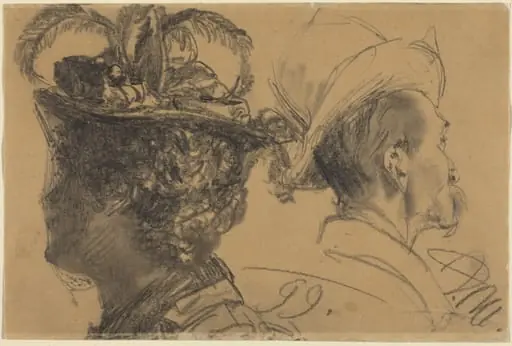 Heads of a Man and a Woman
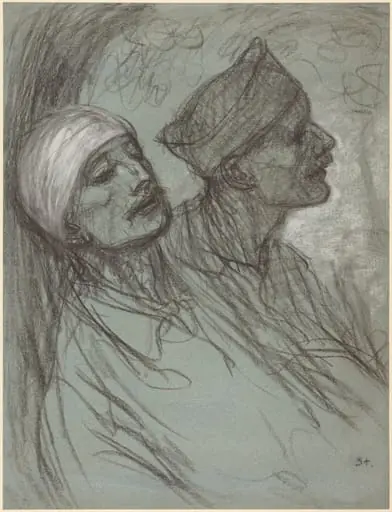 A Wounded Soldier and His Comrade
 Study of a Jockey