Artwork
A False Scalping Performed by Iowa Tribe Members in Paris
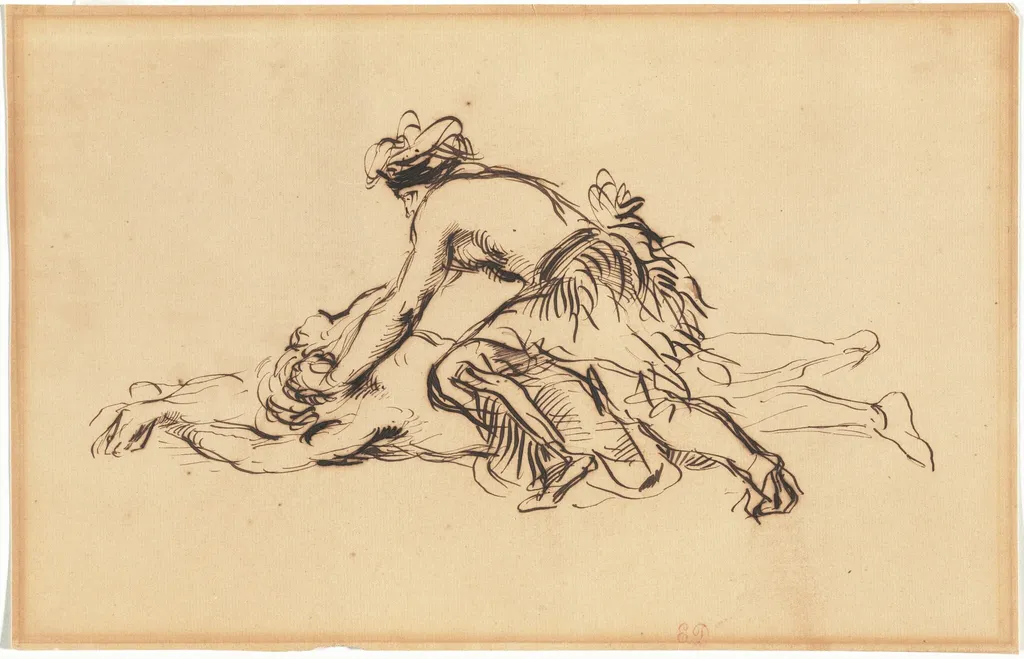
A False Scalping Performed by Iowa Tribe Members in Paris is an ink drawing by the Romanticist artist Eugène Delacroix. It dates from 1845 and is held in the collection of the National Gallery of Art.
About this work
Overview
Eugène Delacroix created 'A False Scalping Performed by Iowa Tribe Members in Paris' in 1845, a drawing that showcases his characteristic emphasis on expressive movement and dramatic themes.
Subject & Meaning
The drawing depicts a staged scalping reenactment by Iowa Tribe members during their Paris visit, capturing a moment of intense struggle between two figures, with one grasping the other's hair and holding a knife.
Technique & Style
Executed in pen and brown ink on laid paper, the sketch features bold, expressive lines that convey dynamic movement and emotion, exemplifying Delacroix's Romantic style.
Context
The work reflects the Romantic movement's focus on emotion and drama, while also documenting a unique cultural encounter between the Iowa Tribe and Parisian audiences.
Own this work as a print
Artist & collection
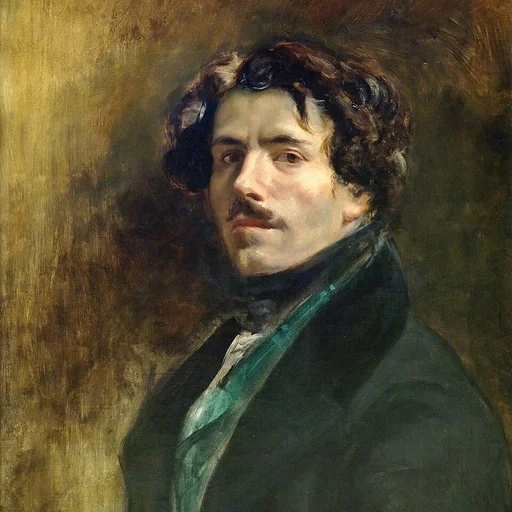
Artist
Ferdinand Victor Eugène Delacroix ( DEL-ə-krwah, -KRWAH; French: ; 26 April 1798 – 13 August 1863) was a French Romantic artist who was regarded as the leader of the French Romantic school.

 Untitled
 Studies of a Male Nude (verso)
 Frightened Man Looking Up; Woman and Children
 Odysseus und die Freier (Odysseus and the Suitor)
 Warrior Seizing a Kneeling Figure
 Unidentified design, sculpture
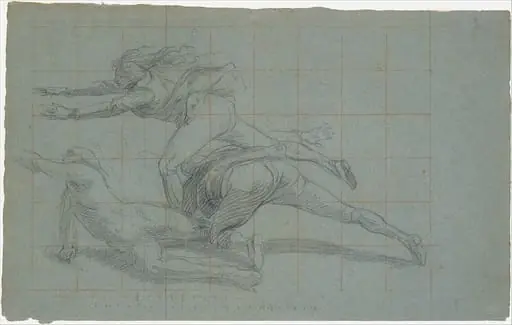 Study for "The Siege of Gibraltar": Three Figures
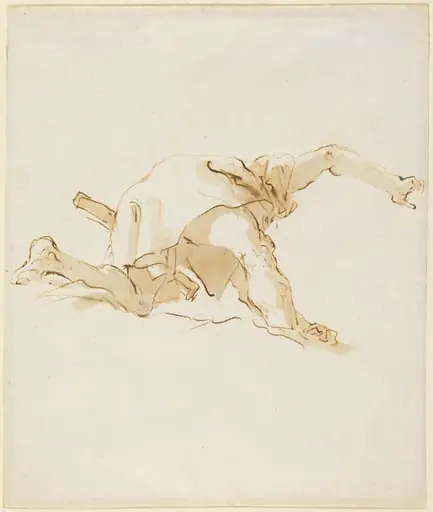 Figure on a Cloud
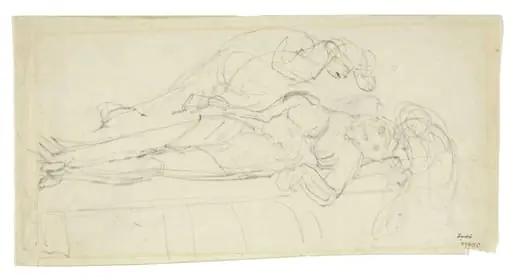 The death of the strong, wicked man
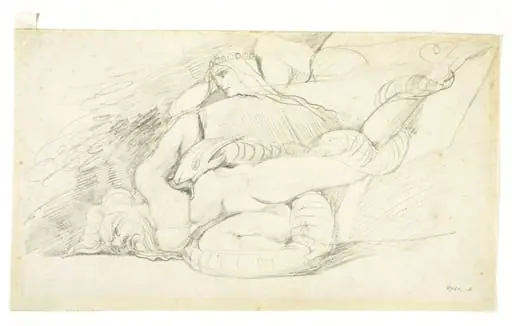 A woman gazing at the prostate body of a man, around which a serpent is coiled
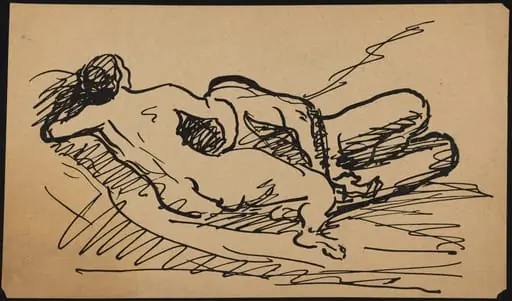 Reclining Nude
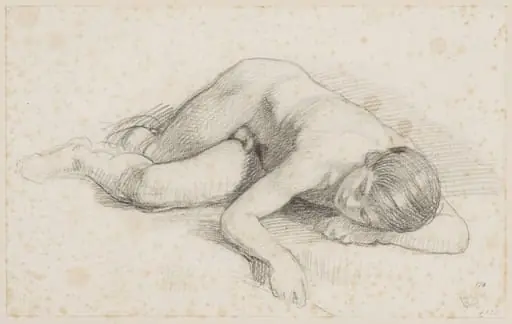 Study of a reclining nude youth