Artwork
Unidentified design, sculpture
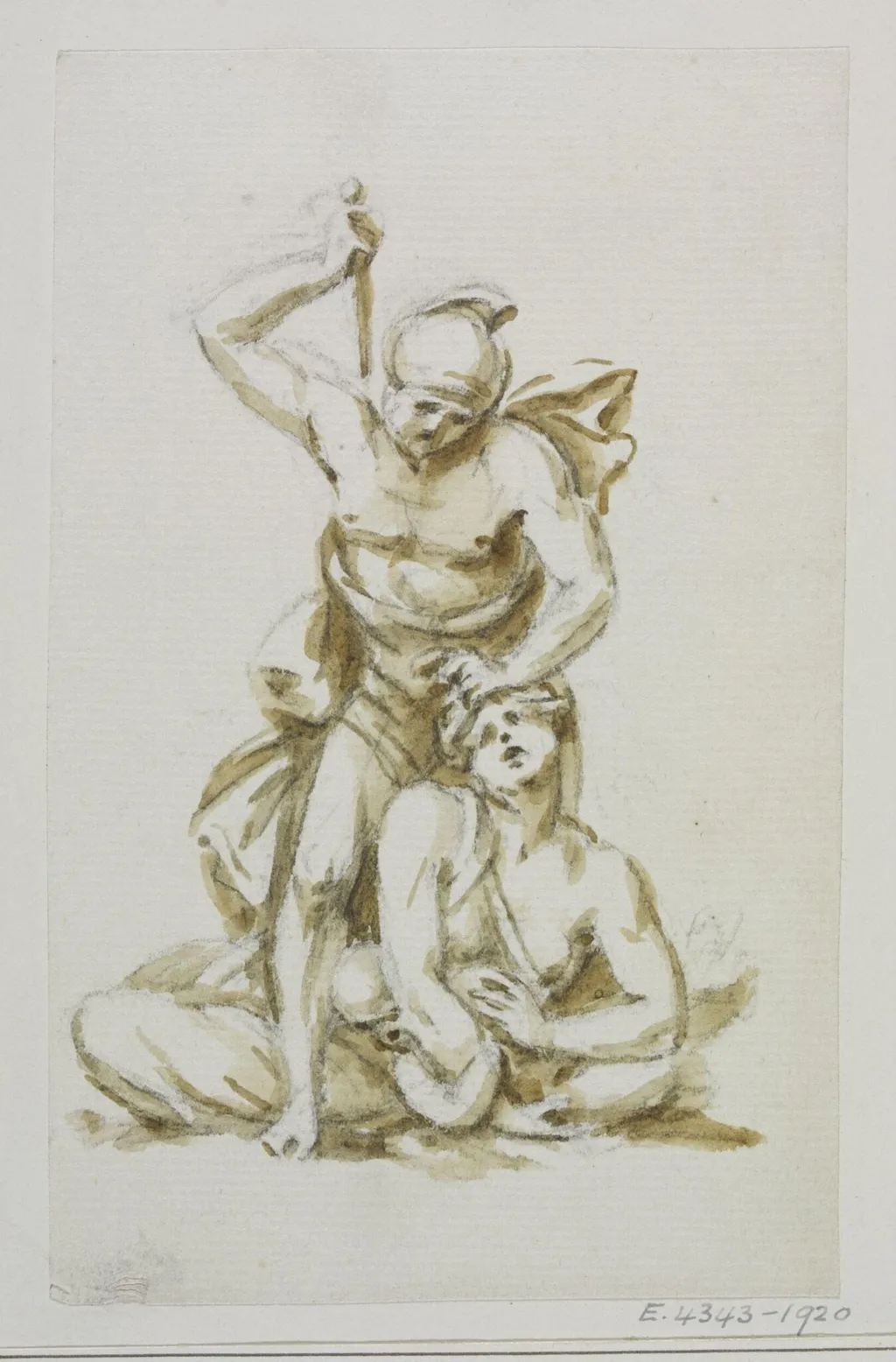
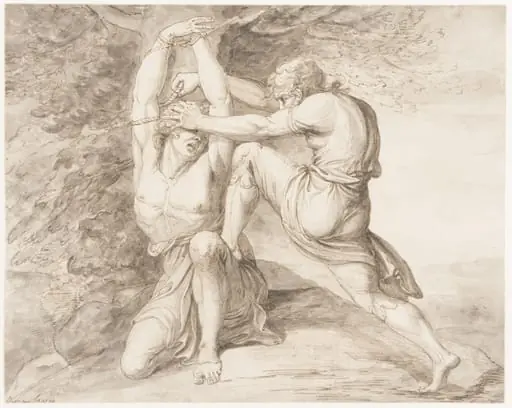
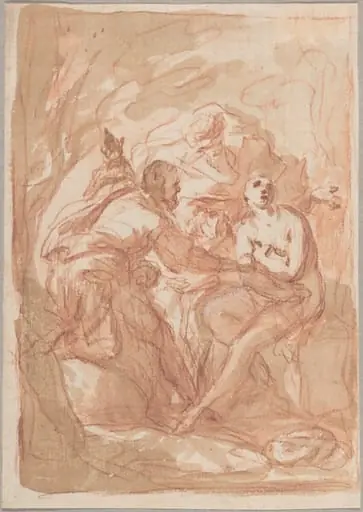
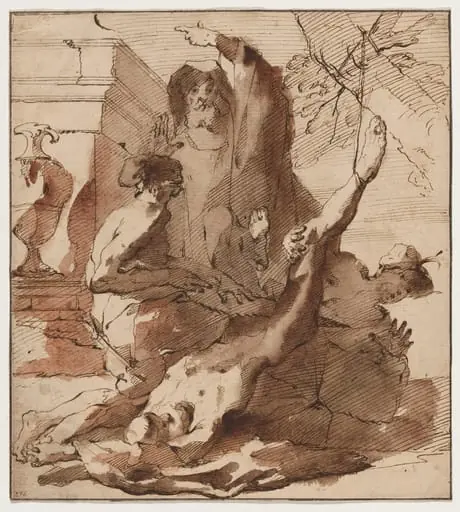
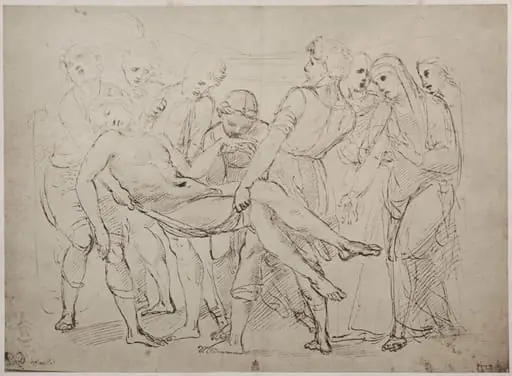
Unidentified design, sculpture is a drawing by the Baroque artist Joseph Frans Nollekens. It dates from 1737 and is held in the collection of the Victoria and Albert Museum. This drawing by Joseph Nollekens is one of a hundred preliminary designs for potential sculptural monuments.
About this work
Overview
It presents a compressed, emotionally charged scene in brown ink over pencil underdrawing, capturing a moment of violent confrontation between two figures.
This drawing by Joseph Nollekens is one of a hundred preliminary designs for potential sculptural monuments. It presents a compressed, emotionally charged scene in brown ink over pencil underdrawing, capturing a moment of violent confrontation between two figures. Though labeled as a study for a sculpture, it functions as a standalone expressive composition, emphasizing gesture and tension over finished detail.
Subject & Meaning
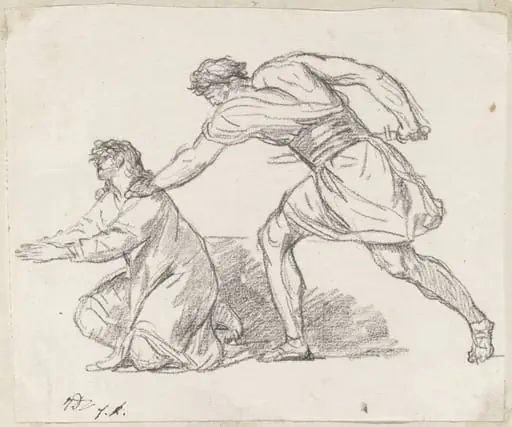
The scene depicts a man overpowering a seated woman, her head tilted back as he grips her hair and raises a sword. Though loosely associated with the biblical Massacre of the Innocents, the composition more directly echoes the physical dynamics of David and Goliath. The power imbalance and intimate violence suggest a broader meditation on dominance, vulnerability, and retributive force within narrative sculpture.
Technique & Style
Rendered in bold, fluid brown ink with visible pencil guidelines, the drawing prioritizes movement over precision. Strong, angular lines define the figures’ postures, while the woman’s reclining form contrasts with the man’s forward thrust. The sketch’s urgency is heightened by loose, gestural strokes that convey motion and emotional intensity, reflecting a sculptor’s interest in three-dimensional drama translated into two dimensions.
History & Provenance
Created during Nollekens’ active years as a sculptor in late 18th-century London, this drawing belongs to a series of experimental designs for public monuments, many of which were never realized. The group reflects his engagement with historical and mythological themes, likely intended to secure commissions. Its survival offers insight into his working process and the speculative nature of sculptural planning at the time.
Context
Nollekens worked in an era when historical and biblical narratives dominated public sculpture. His sketches, including this one, respond to the Baroque tradition of dynamic, emotionally charged compositions, though filtered through the more restrained sensibilities of late Georgian Britain. The drawing reveals how sculptors adapted dramatic visual language from painting and earlier sculpture to propose monumental forms.
Legacy
Though none of Nollekens’ proposed monuments from this series were executed, these drawings remain valuable records of his creative process. They illustrate how sculptors conceptualized narrative space and emotional impact before committing to costly materials. The drawing’s expressive force continues to inform studies of 18th-century British sculpture’s engagement with violence and drama in public art.
Artist & collection
Artist
This London-born sculptor spent his life carving marble so smoothly that his busts looked like living people frozen in time.

![Two Reclining Figures [verso], by French 17th Century](https://artifactworldgallery.com/img/french-17th-century--two-reclining-figures-verso--06163eb1c0b367f2-w320.webp)