Artwork
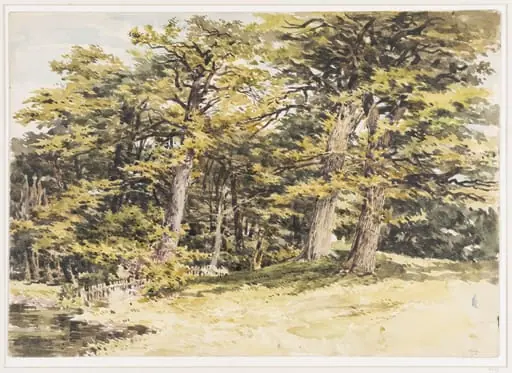
The Edge of a Wood at Nohant
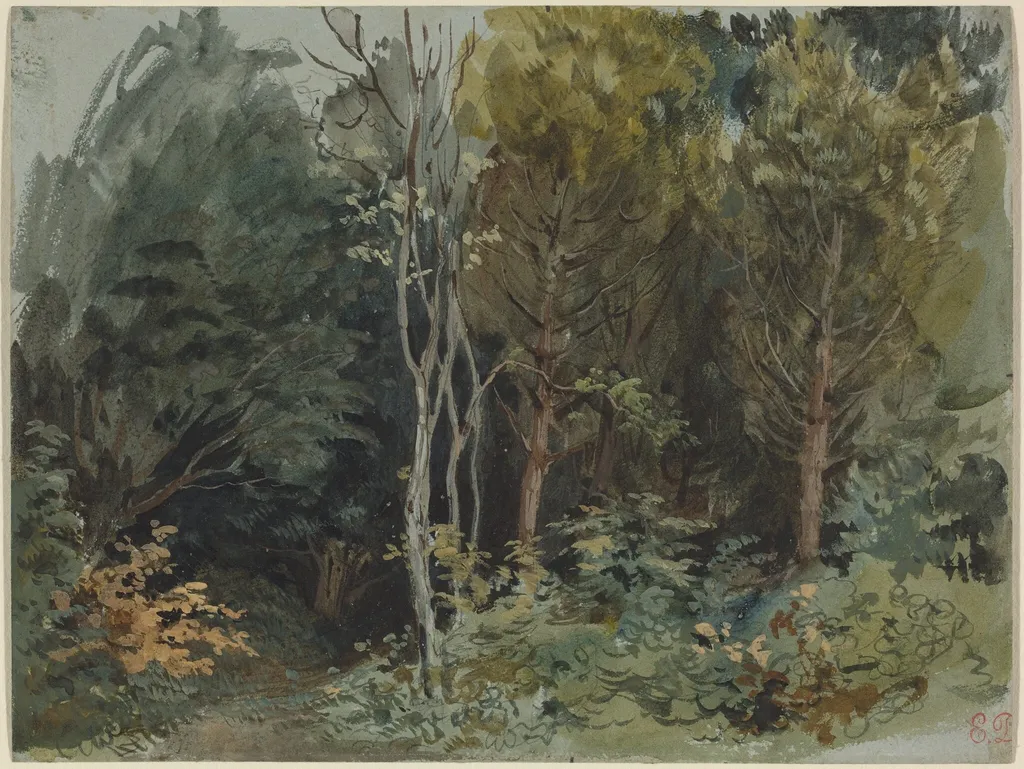
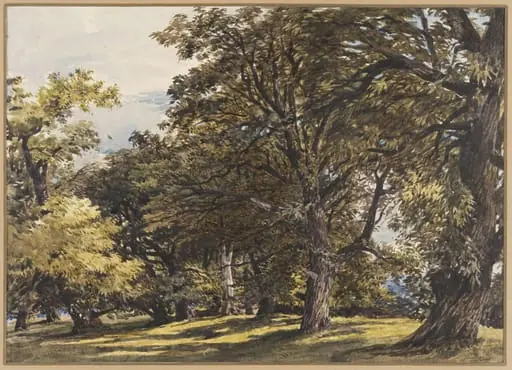
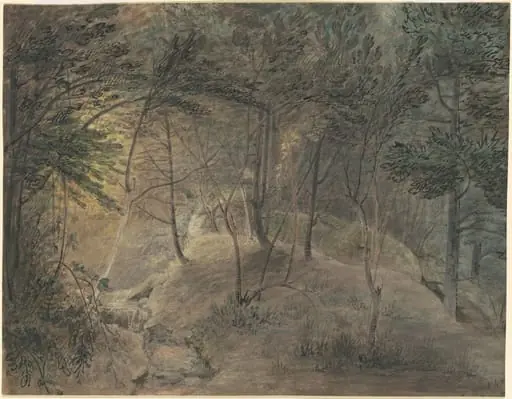
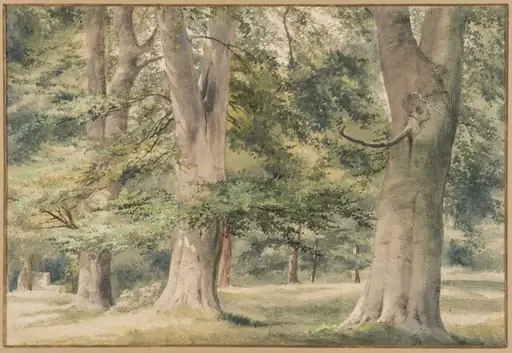
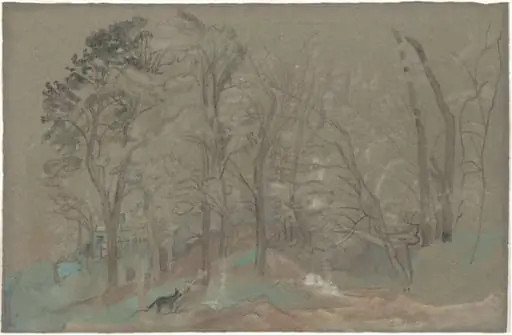
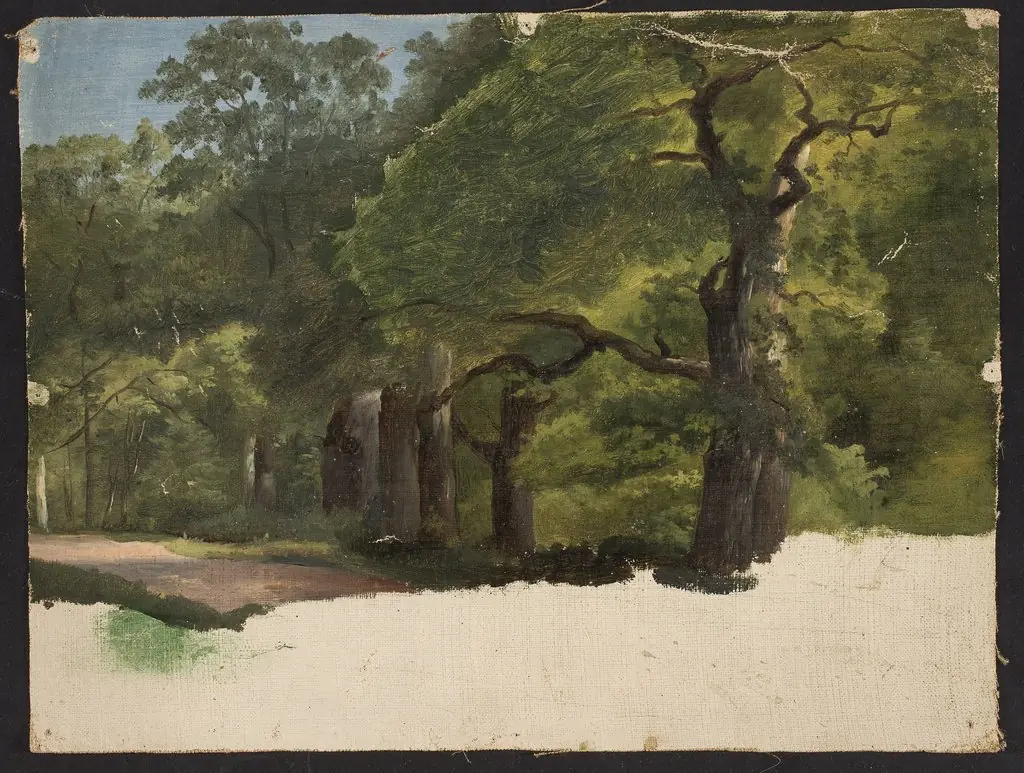
The Edge of a Wood at Nohant is a watercolor drawing by the Romanticist artist Eugène Delacroix. It dates from 1842 and is held in the collection of the National Gallery of Art.
About this work
Overview
Eugène Delacroix produced The Edge of a Wood at Nohort in the early 1840s as a watercolor landscape. The composition presents the fringe of a forest, rendered with delicate washes that convey the fleeting qualities of light and atmosphere. The work resides in the collection of the National Gallery of Art in Washington, D.C.
Subject & Meaning
The image focuses on the boundary where trees meet an open space, inviting contemplation of nature’s transitional zones. By emphasizing the subtle shifts of tone and the sense of depth, Delacroix evokes the Romantic preoccupation with the emotional resonance of the natural world, suggesting both serenity and the hidden dynamism beyond the visible edge.
Technique & Style
Executed in watercolor, the piece exploits the medium’s capacity for transparent layers and spontaneous brushwork. Delacroix’s handling of pigment reflects his broader interest in color and movement, drawing on the vigor of Rubens and the luminous palettes of Venetian masters while departing from the strict line work of Neoclassicism.
History & Provenance
Created circa 1842, the drawing entered the National Gallery of Art’s holdings through acquisition in the 20th century. Its presence in a major public institution underscores the artist’s reputation as a leading Romantic figure and provides scholars with a rare example of his work in a medium less frequently associated with his oeuvre.
Own this work as a print
Artist & collection
Artist
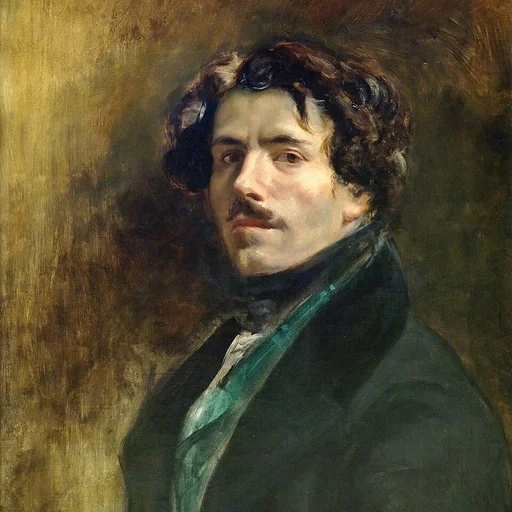
Ferdinand Victor Eugène Delacroix ( DEL-ə-krwah, -KRWAH; French: ; 26 April 1798 – 13 August 1863) was a French Romantic artist who was regarded as the leader of the French Romantic school.