Artwork
Maisema, karjaa ja henkilöitä
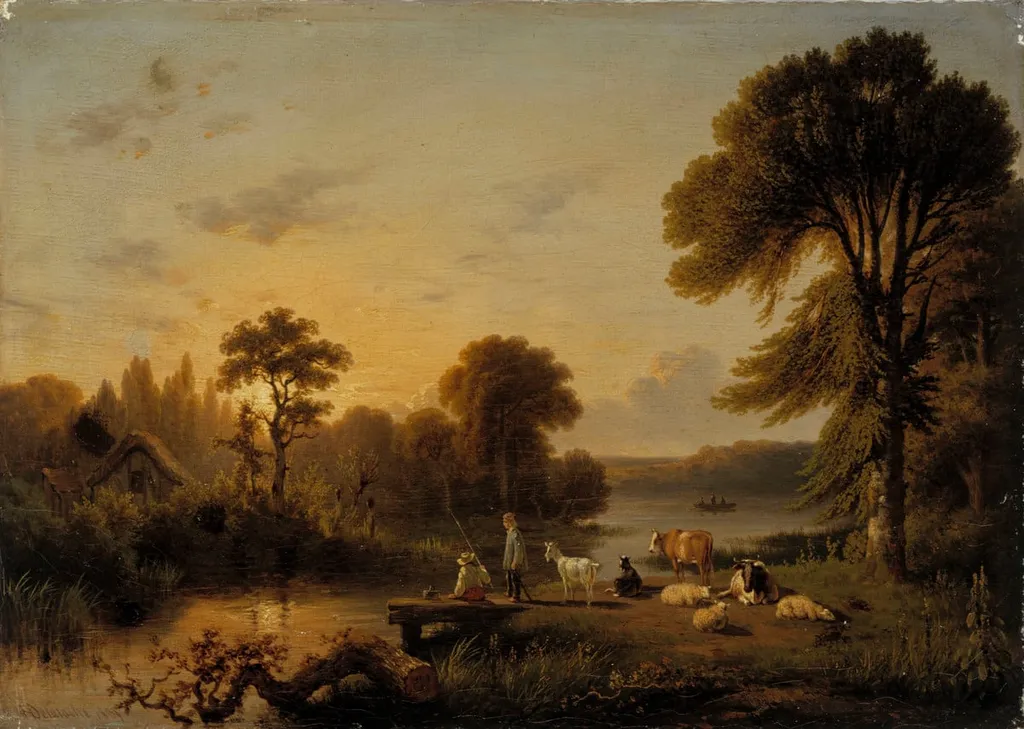
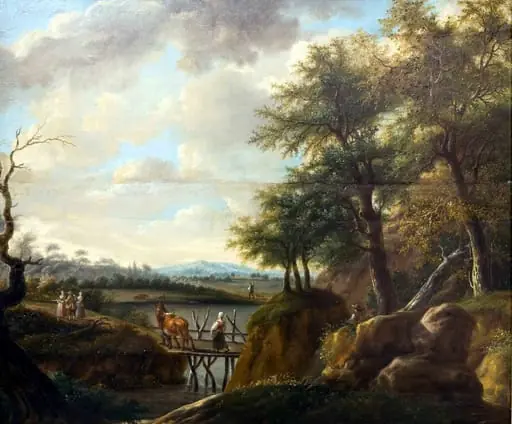
Maisema, karjaa ja henkilöitä is an unspecified painting by Honoré-Gaspard Delaroche. It is held in the collection of the Finnish National Gallery. A tranquil riverside scene captures the quiet end of a day in a rural Finnish landscape.
About this work
Overview
A tranquil riverside scene captures the quiet end of a day in a rural Finnish landscape. Two figures stand near the water—one holding a stick, the other crouched—while livestock graze peacefully nearby. A narrow wooden bridge spans the shallow stream, and a solitary boat drifts downstream. Tall trees line the banks, their foliage softened by the low, golden light of late afternoon.
Subject & Meaning
The grazing animals and modest bridge suggest a subsistence economy, while the empty boat hints at quiet movement through the landscape.
The painting presents an unembellished moment of rural life, emphasizing stillness over action. The figures appear absorbed in their surroundings, their roles unclear but their presence integral to the land. The grazing animals and modest bridge suggest a subsistence economy, while the empty boat hints at quiet movement through the landscape. No narrative is forced; meaning emerges from the calm coexistence of people, animals, and nature.
Technique & Style
The artist employs soft, blended brushwork to render the fading light, avoiding sharp edges in favor of gradual tonal shifts. Warm hues dominate the sky and water, while cool shadows pool beneath the trees. The subtle contrast between illuminated grasses and dimmer undergrowth creates depth without dramatic tension. Light is treated as a gentle, pervasive force rather than a directional spotlight.
History & Provenance
The work is attributed to a Finnish artist active in the late 19th or early 20th century, a period when rural life was increasingly idealized in national art. It likely originated from a series of plein air studies made near eastern Finnish waterways. Its provenance traces to private collections in Finland before entering public ownership, though specific ownership records remain limited.
Context
Created during a time when Finnish identity was being shaped through cultural expression, the scene reflects a broader interest in depicting everyday rural existence. Unlike urban-focused realism, this work aligns with a pastoral tradition that valued harmony with nature. Similar themes appear in the work of contemporaries who sought to document the quiet rhythms of the countryside before industrialization transformed it.
Legacy
The painting contributes to a regional artistic lineage that prioritizes atmosphere over drama. Its restrained palette and subdued composition influenced later Finnish landscape painters who favored emotional resonance over spectacle. While not widely exhibited internationally, it remains a touchstone in Finnish art education for its sensitive handling of light and quiet observation.
Artist & collection
Artist
This painter worked in the Finnish countryside around 1800, turning quiet pastures and slow herds into small, sunlit scenes.

 Landscape
 Landscape
 Lago di Nemi
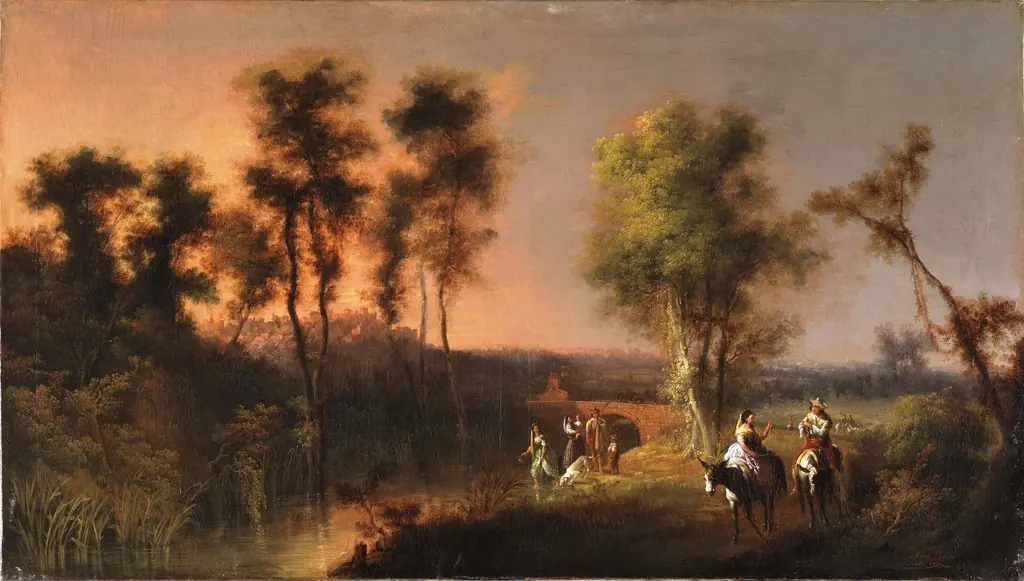 Paisaje fluvial con figuras
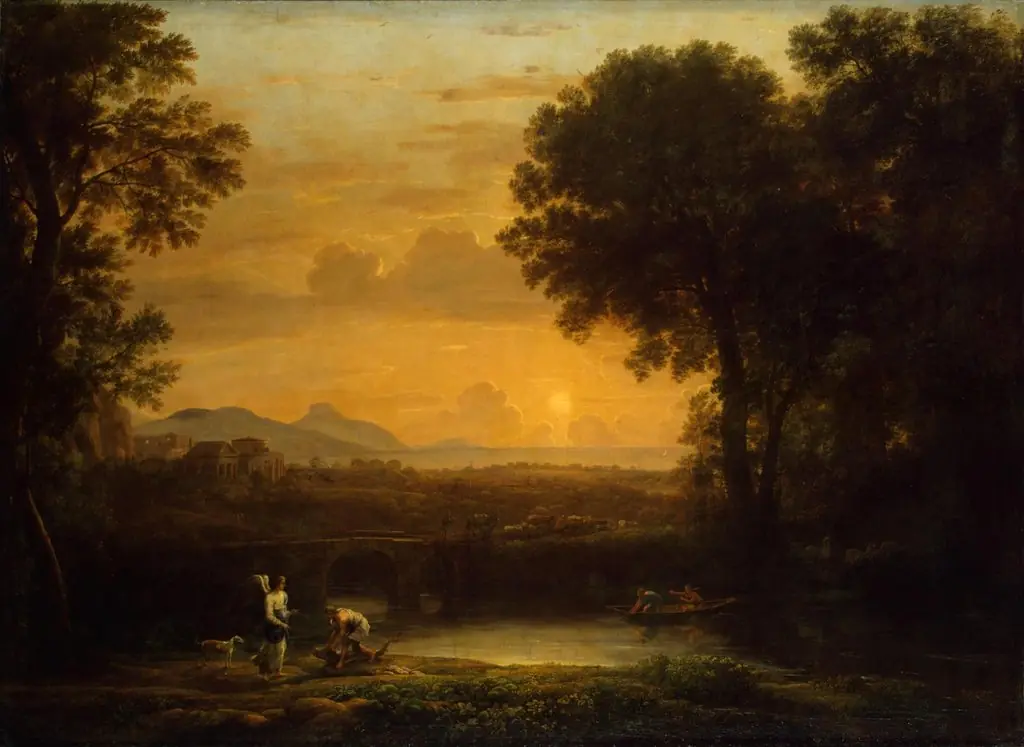 Landscape with Tobias and the Angel (Evening)
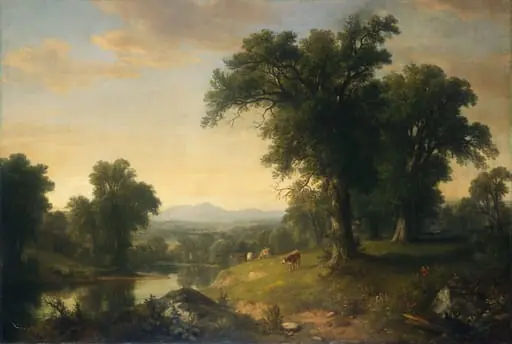 A Pastoral Scene
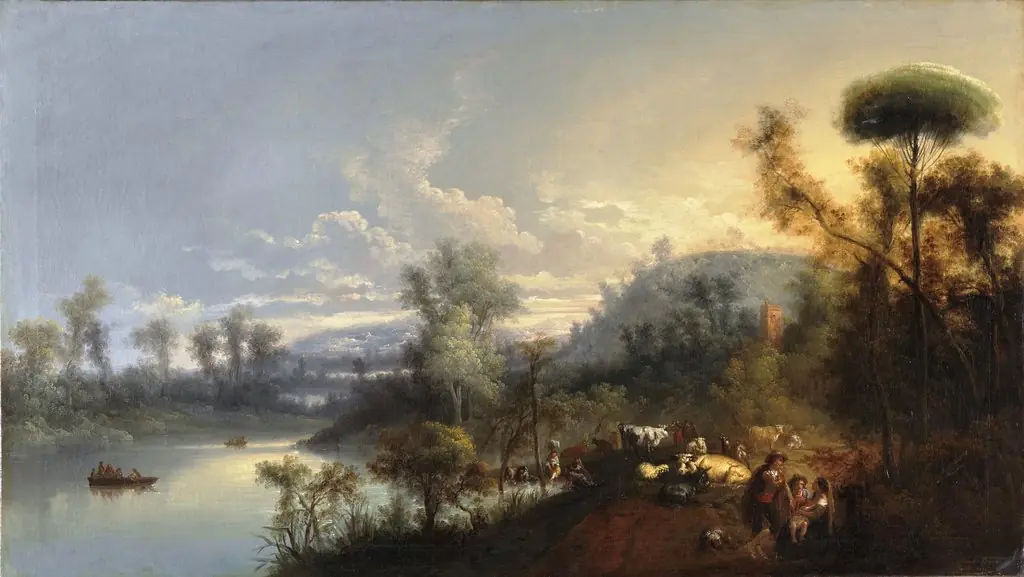 Paisaje fluvial con figuras y ganado
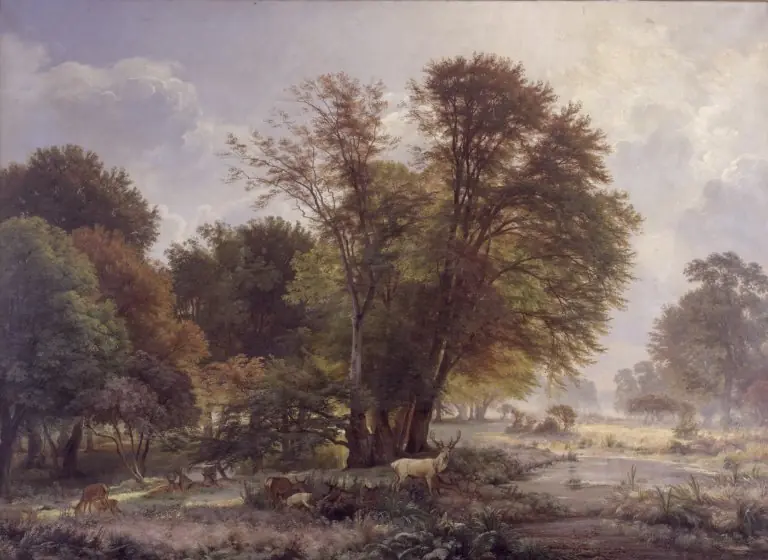 Efterårsmorgen i Jægersborg Dyrehave
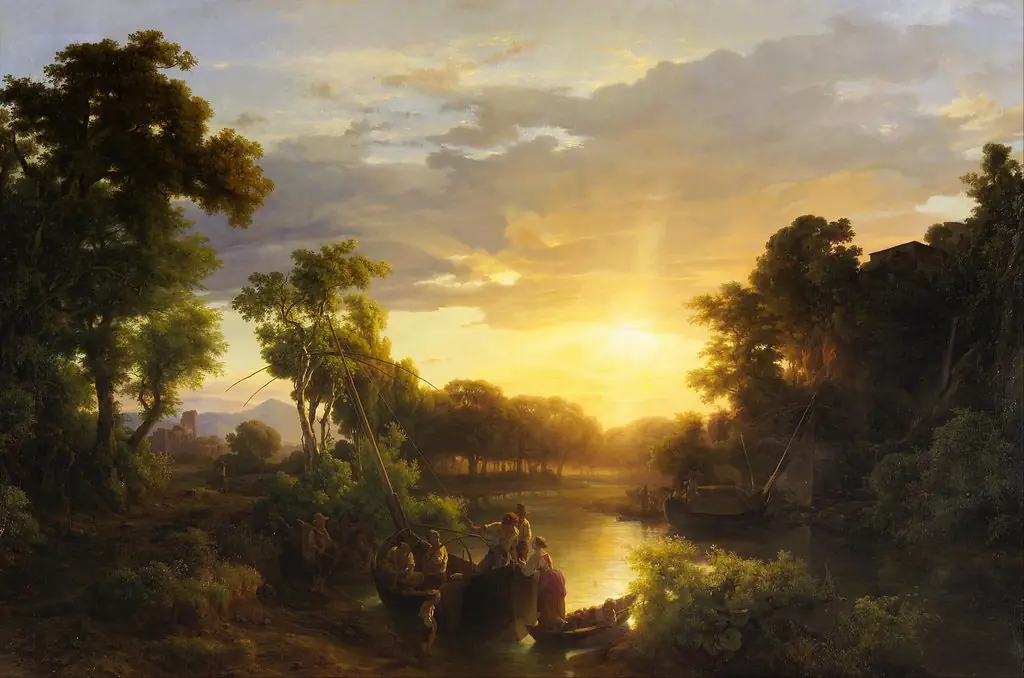 Italian Landscapes at Sunset, Fishermen
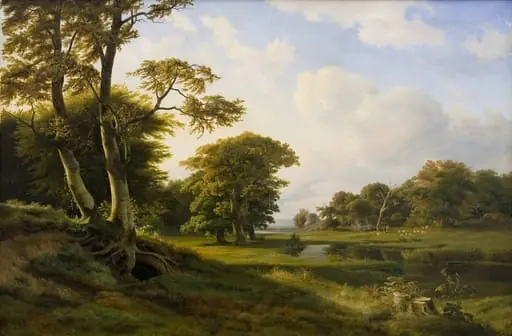 Skovlandskab ved Hellebæk. Efterår
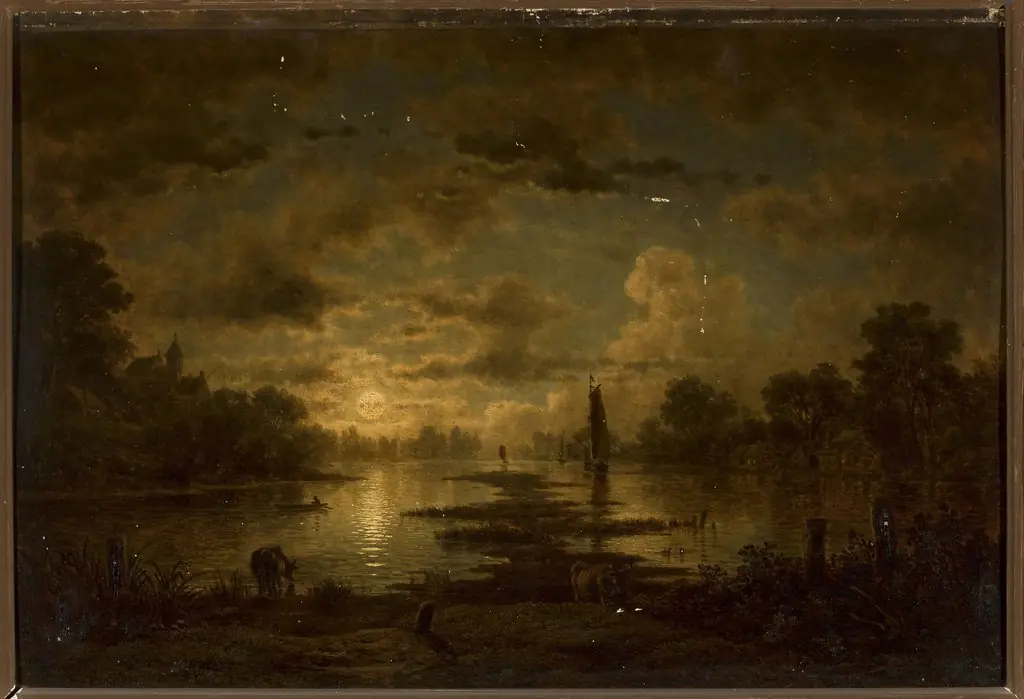 Moonlit night at the lake
 Peisaj cu figuri