Artwork
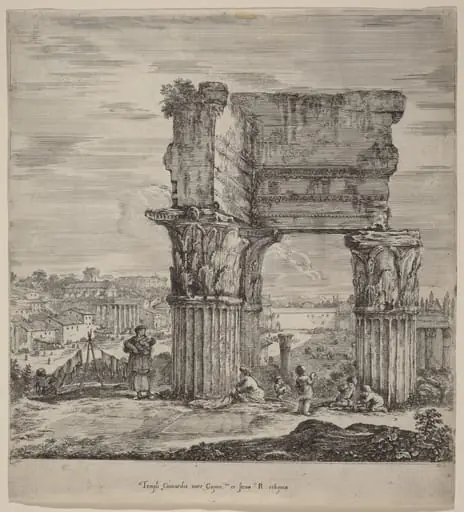
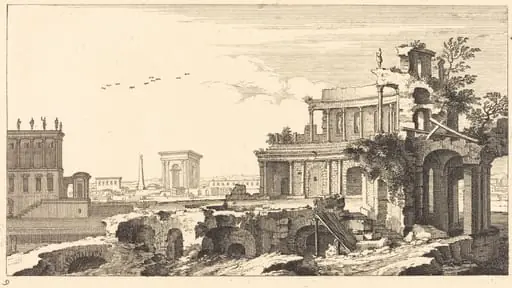
Temple of Antonius and the Campo Vaccino
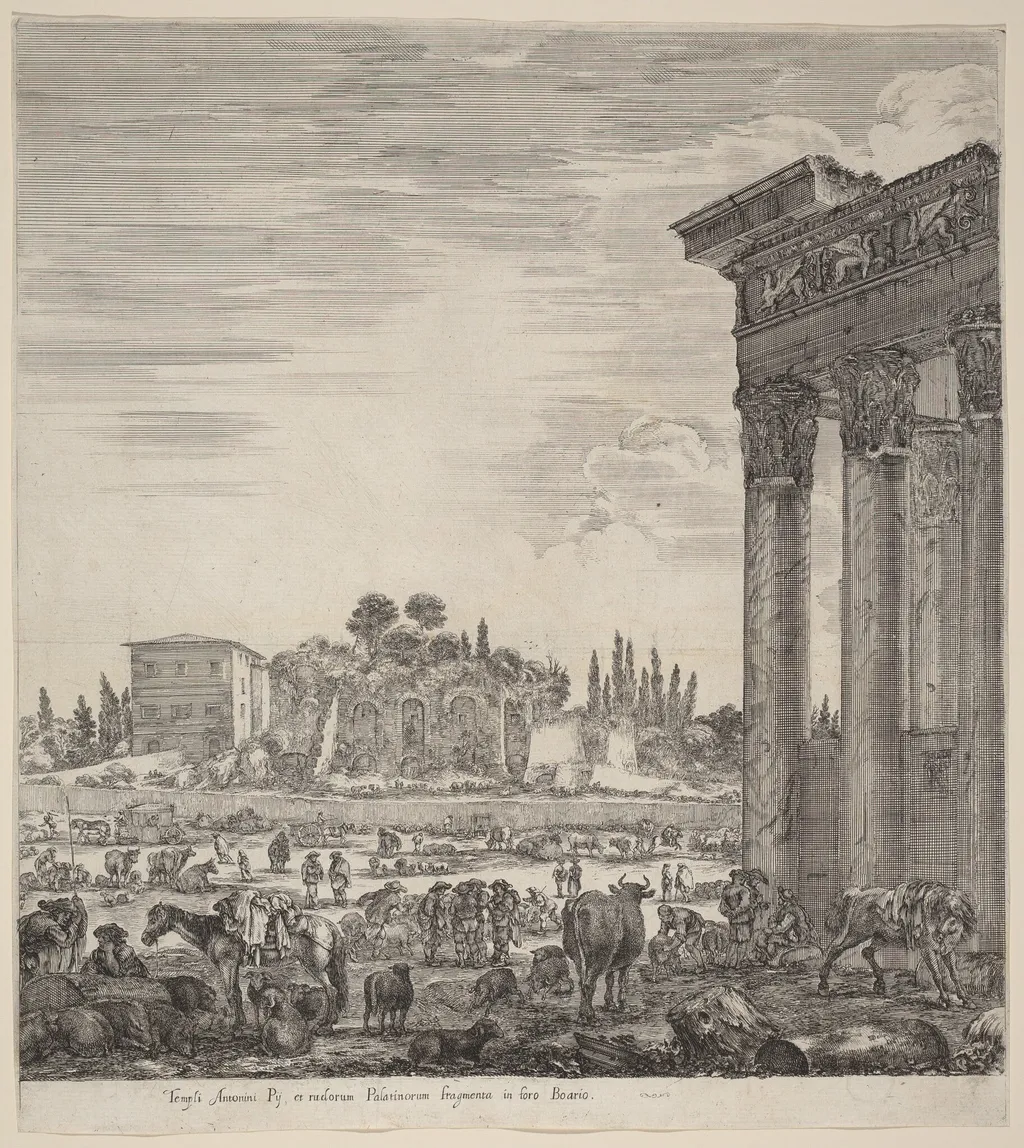
Temple of Antonius and the Campo Vaccino is an ink print by the Baroque artist Stefano Della Bella. It dates from 1656 and is held in the collection of the National Gallery of Art.
About this work
Overview
Stefano della Bella, a Florentine artist active in the mid-17th century, produced this etching in 1656 as part of his extensive series of topographical prints.
Stefano della Bella, a Florentine artist active in the mid-17th century, produced this etching in 1656 as part of his extensive series of topographical prints. Known for his meticulous draftsmanship, he captured Roman ruins with both accuracy and atmospheric detail. This work belongs to a body of over a thousand etchings that document architecture, daily life, and landscape, reflecting his interest in the intersection of art and observation.
Subject & Meaning
The etching portrays the Temple of Antoninus and Faustina, a well-preserved Roman structure in the Campo Vaccino, then a public pasture. Della Bella includes figures and animals engaged in ordinary activities—herding, resting, conversing—placing the ancient monument within the lived reality of contemporary Rome. The scene suggests no idealization; instead, it presents the ruin as a functional part of urban life, subtly commenting on time’s layering of use and decay.
Technique & Style
Using etching, della Bella employed fine, controlled lines to render architectural textures, foliage, and human forms with precision. The density of detail in the temple’s columns and the varied postures of figures create a sense of spatial depth. His use of cross-hatching and delicate tonal gradations enhances the illusion of volume and light, characteristic of his mature style and the Northern European influence on his graphic work.
History & Provenance
Created during della Bella’s time in Rome, the etching was likely made for collectors and travelers drawn to the city’s antiquities. It circulated in print form among European art circles, contributing to the 17th-century vogue for Roman ruins as subjects of study and aesthetic contemplation. The work’s survival in multiple institutional collections attests to its early recognition and enduring scholarly interest.
Context
In mid-17th-century Rome, the Campo Vaccino was a bustling, informal space where ancient monuments coexisted with pastoral life. Artists frequently sketched here, drawn to the contrast between classical grandeur and everyday activity. Della Bella’s print aligns with a broader tradition of topographical recording, serving as both documentation and artistic interpretation within a culture increasingly fascinated by archaeology and the passage of time.
Legacy
Della Bella’s etchings of Roman ruins influenced later generations of printmakers and topographical artists, particularly in their blend of documentary precision and compositional vitality. While not widely exhibited today, his works remain important references for historians studying the perception and representation of antiquity in early modern Europe, preserving a visual record of Rome’s evolving urban fabric.
Artist & collection
Artist
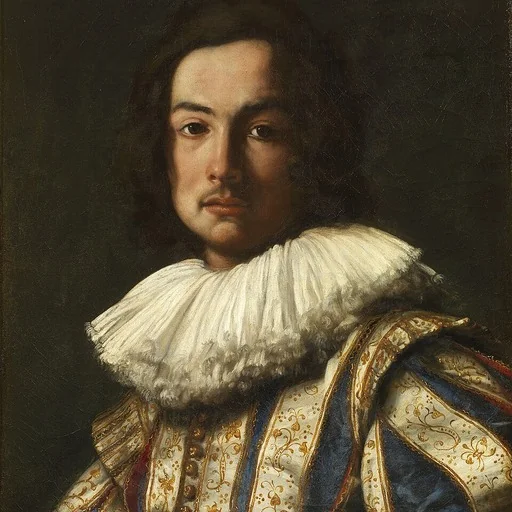
Stefano della Bella (18 May 1610 – 12 July 1664) was an Italian draughtsman and printmaker known for etchings of a great variety of subjects, including military and court scenes, landscapes, and lively genre scenes.

![The Flight into Egypt [verso], by Stefano Della Bella](https://artifactworldgallery.com/img/stefano-della-bella--the-flight-into-egypt-verso--3a100db72e6d25e3-w320.webp)