Artwork
Temple of Concord and Roman Forum
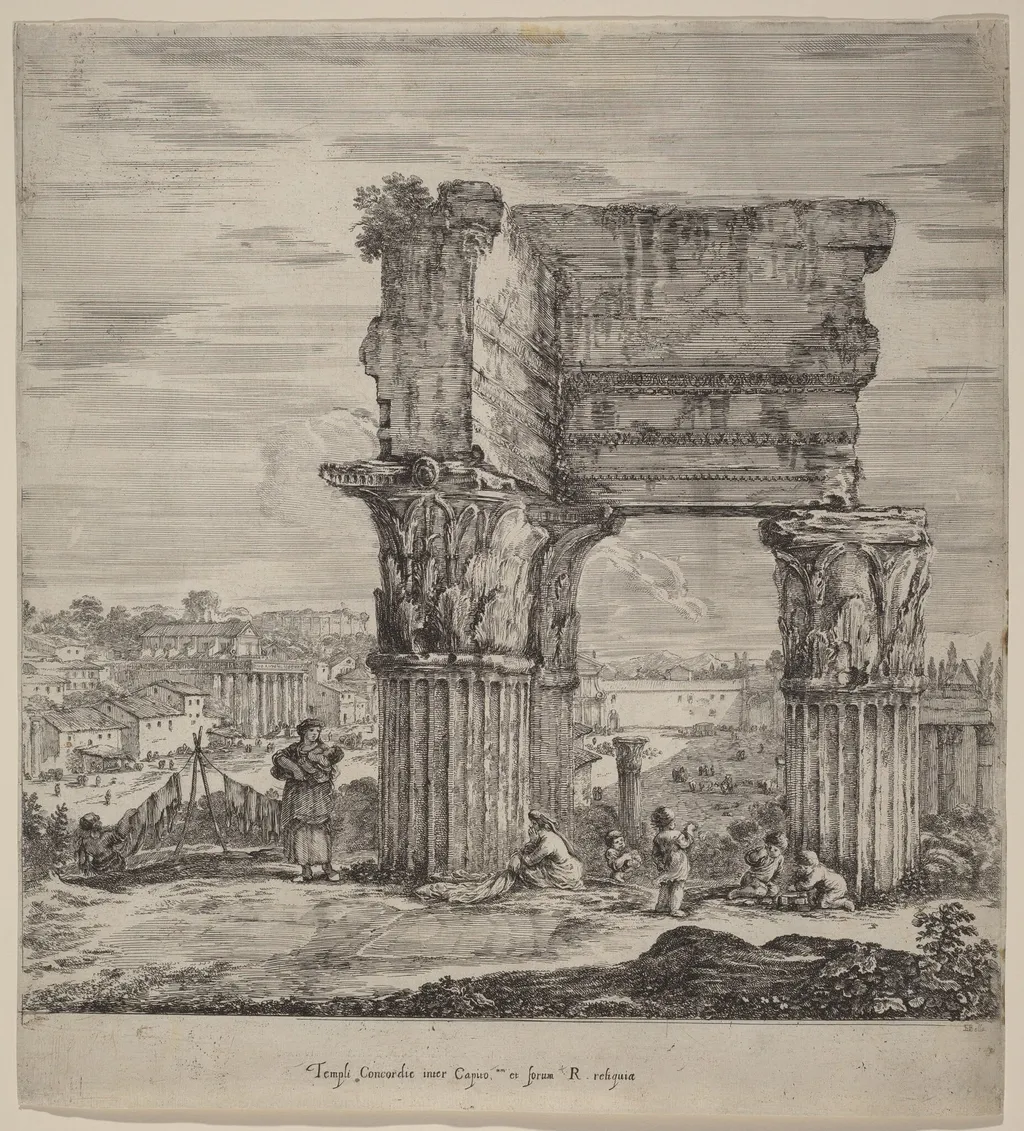
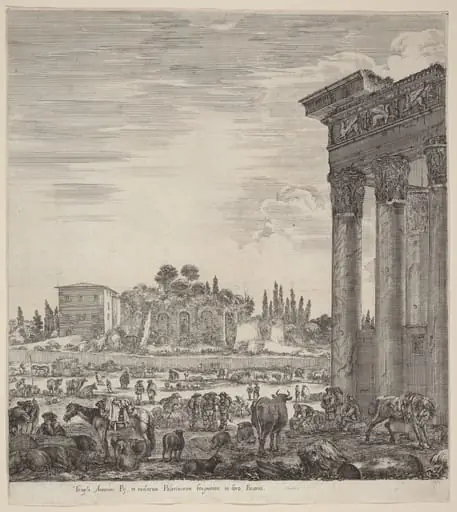
Temple of Concord and Roman Forum is an ink print by the Baroque artist Stefano Della Bella. It dates from 1656 and is held in the collection of the National Gallery of Art.
About this work
Overview
Stefano della Bella, a Florentine artist active in the mid-17th century, produced this etching in 1656 as part of his extensive series of architectural views.
Stefano della Bella, a Florentine artist active in the mid-17th century, produced this etching in 1656 as part of his extensive series of architectural views. Known for his precision and observational rigor, he captured ancient Roman ruins with scholarly attention. The work belongs to a broader practice of documenting classical monuments, reflecting contemporary interest in antiquity among European artists and intellectuals.
Subject & Meaning
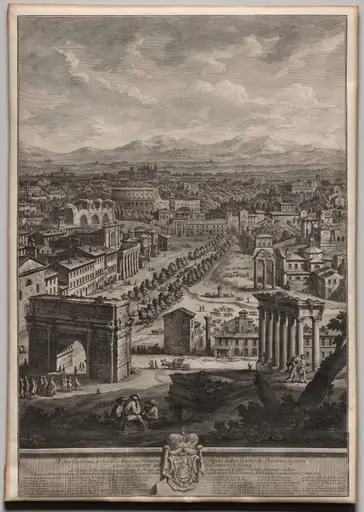
The etching portrays the Temple of Concord, a well-preserved structure in the Roman Forum, surrounded by traces of urban life. Figures in the foreground—some seated, others moving—suggest the site’s continued presence in daily experience, not merely as a relic but as a lived space. The composition balances architectural grandeur with human scale, implying continuity between antiquity and the artist’s own time.
Technique & Style
Della Bella employed fine, controlled lines typical of etching to render texture and depth. The columns’ carved details, the play of light on stone, and the layered background of distant buildings were achieved through meticulous hatching and cross-hatching. His technique avoids theatricality, favoring clarity and structural accuracy, aligning with the empirical spirit of his era’s draftsmanship.
History & Provenance
Created during della Bella’s time in Florence, the etching was likely made for collectors interested in classical antiquities. It circulated among scholars and artists, contributing to the visual record of Roman ruins before modern archaeological methods emerged. The work survives in multiple institutional collections, testament to its enduring value as a documentary record.
Context
In mid-17th-century Italy, interest in ancient Rome was fueled by humanist scholarship and travel. Artists like della Bella responded to the Grand Tour’s rise by producing detailed views of ruins for educated audiences. His work stands apart from idealized Renaissance reconstructions, offering instead a grounded, observational approach that valued accuracy over embellishment.
Legacy
Della Bella’s etchings of Roman architecture influenced later topographical artists and archaeologists seeking reliable visual documentation. His method of combining precise detail with atmospheric depth became a model for recording historical sites. Though not widely known today, his prints remain important references for understanding how antiquity was perceived and preserved visually in the Baroque period.
Artist & collection
Artist
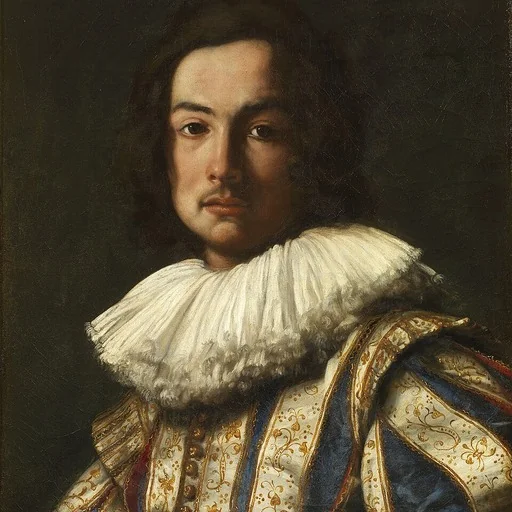
Stefano della Bella (18 May 1610 – 12 July 1664) was an Italian draughtsman and printmaker known for etchings of a great variety of subjects, including military and court scenes, landscapes, and lively genre scenes.

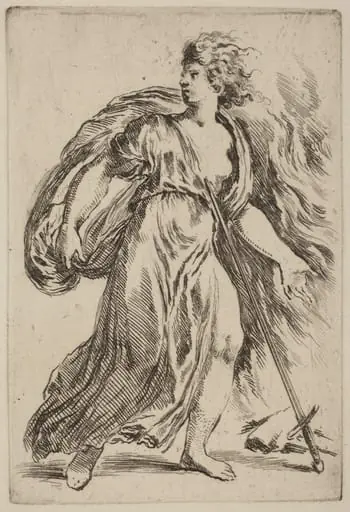
![The Flight into Egypt [verso], by Stefano Della Bella](https://artifactworldgallery.com/img/stefano-della-bella--the-flight-into-egypt-verso--3a100db72e6d25e3-w320.webp)