Artwork
Ten Cavaliers in a Circle
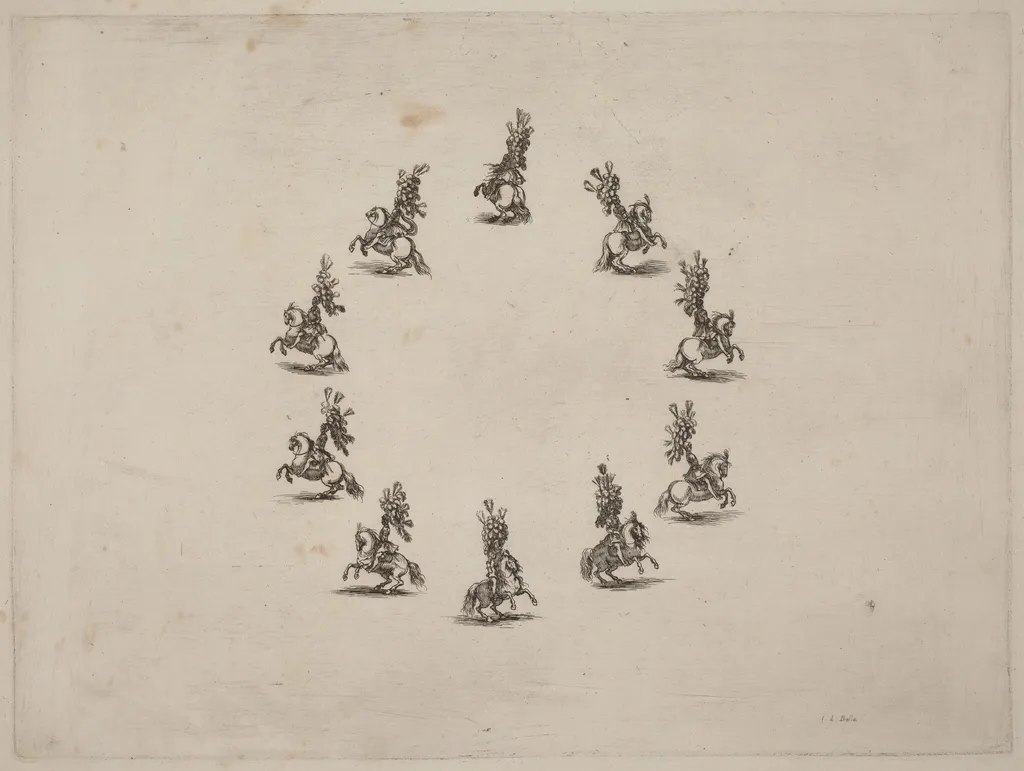
Ten Cavaliers in a Circle is an ink print by the Baroque artist Stefano Della Bella. It dates from 1652 and is held in the collection of the National Gallery of Art.
About this work
Overview
Created in 1652 by Stefano della Bella, *Ten Cavaliers in a Circle* is an etching on laid paper that captures a group of riders in motion.
Created in 1652 by Stefano della Bella, *Ten Cavaliers in a Circle* is an etching on laid paper that captures a group of riders in motion. As one of over a thousand prints produced by the Florentine artist, this work exemplifies his focus on dynamic, everyday scenes. The composition is compact yet energetic, arranged in a circular formation that draws the viewer’s eye around the group. Its simplicity and immediacy reflect della Bella’s preference for observational sketching over formal grandeur.
Subject & Meaning
The image depicts ten armored horsemen, each holding a bundle of sticks, riding in a loose, galloping circle. Their identical attire and synchronized movement suggest a ritual, training exercise, or ceremonial display rather than battle. The absence of narrative context invites interpretation: it may represent military drills, courtly entertainment, or a symbolic representation of order in motion. The focus on gesture and rhythm, not individual identity, emphasizes collective action over personal heroism.
Technique & Style
Della Bella employed etching, a method involving acid-bitten lines on a metal plate, to create sharp, fluid contours. The ink sits in these incised grooves, producing bold, dark strokes against the paper’s texture. His sketch-like approach uses minimal, rapid lines to suggest movement and form—horses’ legs, armor, and bundled sticks are rendered with economy. The laid paper’s subtle grain enhances the tactile quality, reinforcing the work’s spontaneous, on-the-spot character.
History & Provenance
The print was made during della Bella’s mature period in Florence, after years of working in Paris and other European courts. Though no specific early ownership records are documented, the work aligns with his broader output of equestrian studies circulated among collectors and artists. Its survival in multiple institutional collections suggests it was valued for its technical precision and lively composition, even if not commissioned for a specific patron.
Context
In mid-17th-century Italy, etching was widely used by artists to explore movement and character outside formal portraiture. Della Bella’s interest in cavalry scenes reflected broader European fascination with military life and horsemanship, especially among aristocratic circles. Unlike grand historical prints, his works captured fleeting moments—training, processions, or leisure—offering a more intimate view of the era’s equestrian culture.
Legacy
Della Bella’s etchings, including this one, influenced later generations of printmakers through their emphasis on observation and expressive line. His ability to convey motion with minimal detail became a model for artists seeking realism without embellishment. While not widely exhibited in his lifetime as a standalone work, *Ten Cavaliers in a Circle* remains a representative example of his contribution to the development of the autonomous graphic study.
Artist & collection
Artist
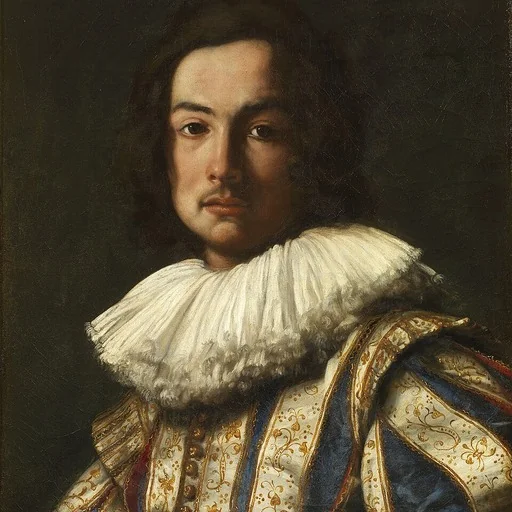
Stefano della Bella (18 May 1610 – 12 July 1664) was an Italian draughtsman and printmaker known for etchings of a great variety of subjects, including military and court scenes, landscapes, and lively genre scenes.

![The Flight into Egypt [verso], by Stefano Della Bella](https://artifactworldgallery.com/img/stefano-della-bella--the-flight-into-egypt-verso--3a100db72e6d25e3-w320.webp)
 Cavaliers Fighting with Swords
 Twenty-Four Cavorting Cavaliers
 Ten Cavaliers with Large Plumed Helmets
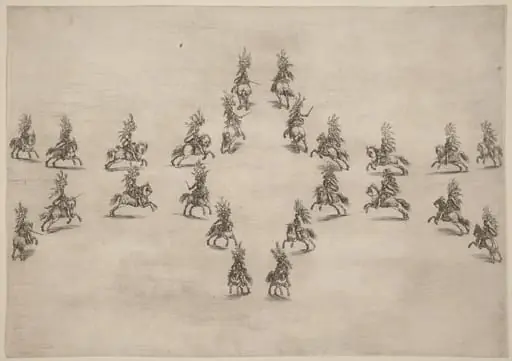 Twenty-Four Cavaliers in an Oval
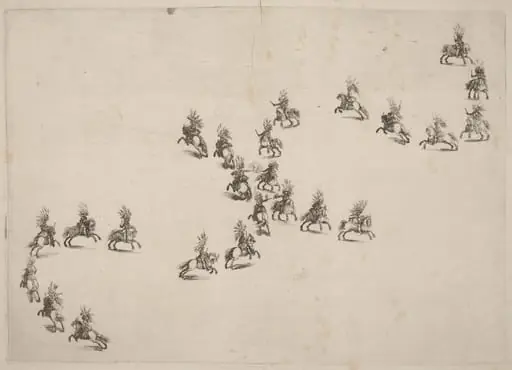 Twenty-Four Cavaliers in Double S Formation
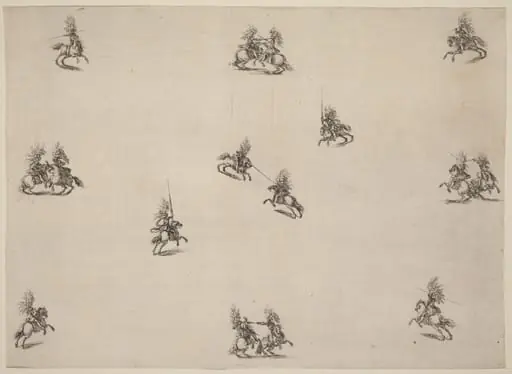 Fighting Cavaliers
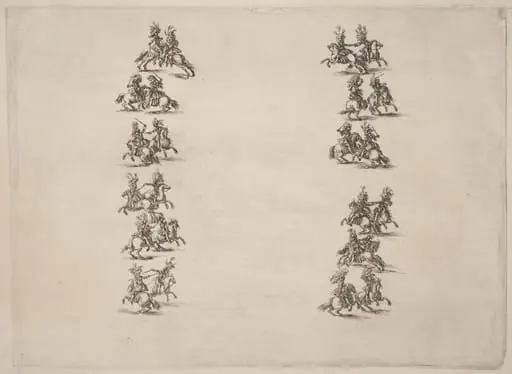 Cavaliers Fighting in Two Columns
 A Procession of Sixty Cavaliers and Torch Bearers
 Ten Men Pulling on Ropes
 Two Polish Cavaliers