Artwork
Francis Bacon
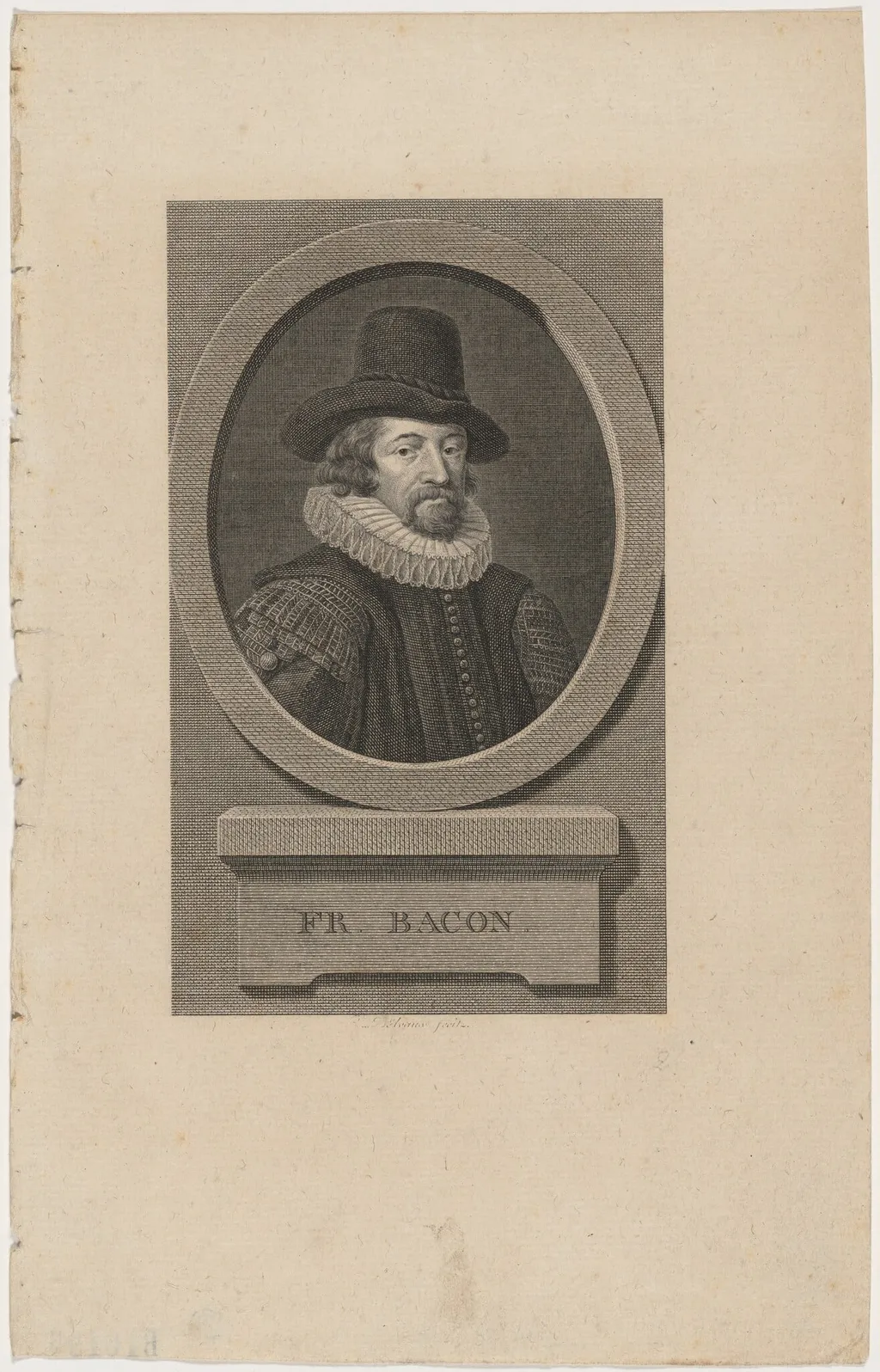
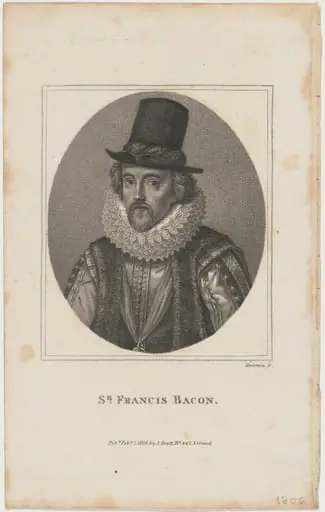
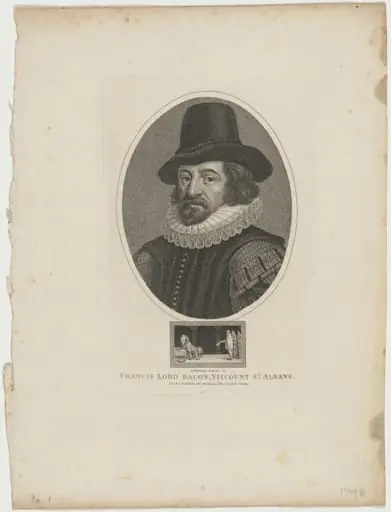
Francis Bacon is an ink print by the Baroque artist Remi-Henri-Joseph Delvaux. It dates from 1786 and is held in the collection of the National Gallery of Art.
About this work
Overview
Remi‑Henri‑Joseph Delvaux’s 1786 engraving presents a monochrome likeness of the English philosopher Francis Bacon. Rendered in a tight oval frame, the print shows the thinker in a solemn pose, his features defined by delicate line work. The composition balances a formal portraiture tradition with the precise, reproducible qualities of late‑eighteenth‑century printmaking.
Subject & Meaning
The image captures Bacon as a dignified intellectual, his expression austere and contemplative. Attired in a wide‑brimmed hat, ruffled collar, and dark coat, the portrait emphasizes his status and scholarly demeanor, reflecting the Enlightenment’s reverence for rational thought and the individual’s contribution to philosophy.
Technique & Style
Delvaux employed fine cross‑hatching and parallel lines to model light and shadow, giving the figure a subtle three‑dimensionality despite the absence of colour. The meticulous shading on the face and garments demonstrates the engraver’s control of tonal variation, a hallmark of the period’s print techniques.
History & Provenance
Created in 1786, the engraving was likely intended for distribution among learned circles interested in Bacon’s work. While specific ownership records are scarce, the print has survived as part of collections documenting eighteenth‑century portrait engravings, illustrating the era’s practice of commemorating notable thinkers through reproducible media.
Artist & collection