Artwork
Frederick the Great, King of Prussia
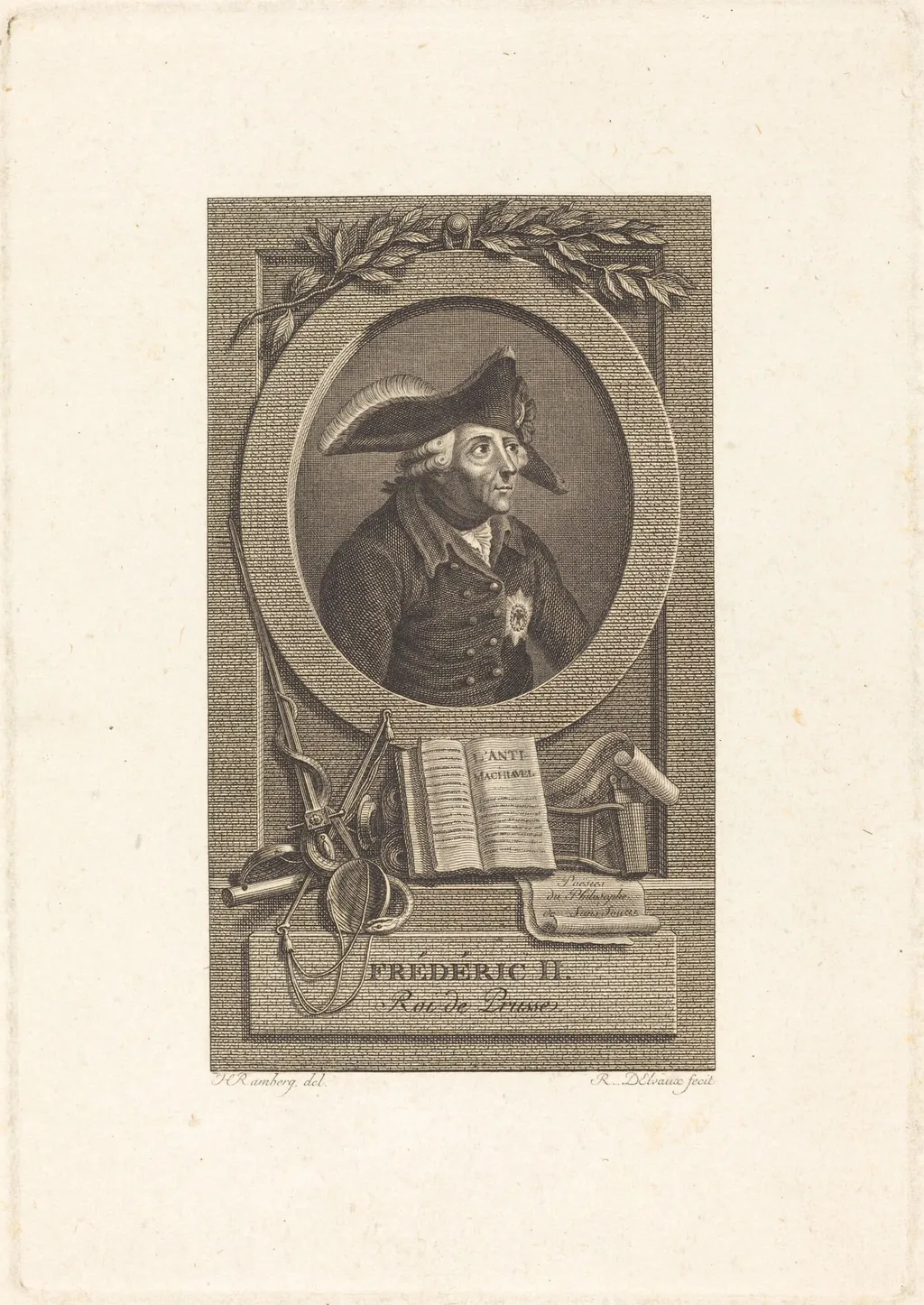
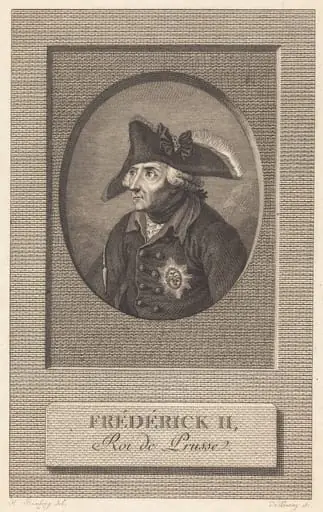
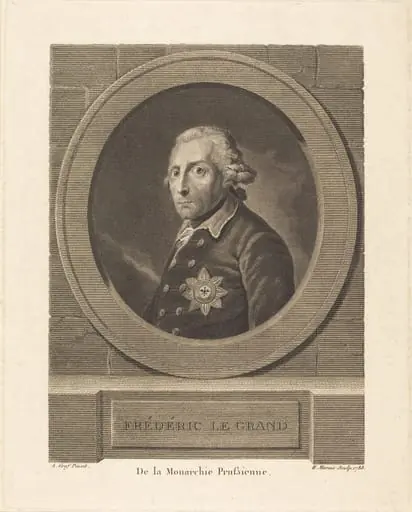
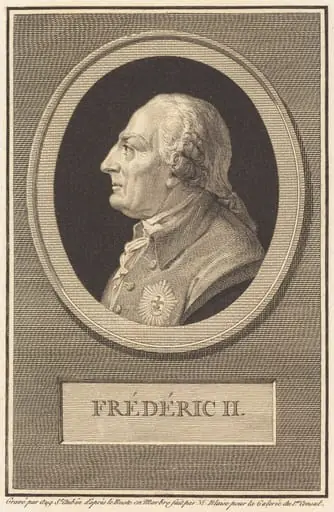
Frederick the Great, King of Prussia is an ink print by the Baroque artist Remi-Henri-Joseph Delvaux. It dates from 1786 and is held in the collection of the National Gallery of Art. Created in 1786, this black‑and‑white engraving by Remi‑Henri‑Joseph Delvaux depicts Frederick II, King of Prussia.
About this work
Overview
Created in 1786, this black‑and‑white engraving by Remi‑Henri‑Joseph Delvaux depicts Frederick II, King of Prussia. Executed on laid paper, the image presents the monarch in formal attire, complete with a feathered hat, dark coat and a decorative star on his chest, surrounded by objects such as a book, spectacles and a ruler.
Subject & Meaning
The portrait emphasizes Frederick’s role as a learned ruler. The inclusion of scholarly items—books, glasses and a measuring instrument—suggests intellectual authority and administrative precision, reinforcing the image of a monarch who valued both military prowess and enlightened governance.
Technique & Style
Delvaux employs fine line engraving to model light and shadow, giving the face a sculptural quality. The use of cross‑hatching creates depth in the folds of clothing and the surrounding objects, while the stark monochrome palette highlights the contrast between the figure and the detailed accessories.
History & Provenance
The print was produced shortly after Frederick’s death in 1786, reflecting contemporary interest in commemorating his reign. It remains in museum collections as an example of late‑18th‑century portrait engraving, illustrating the period’s approach to royal iconography and the technical skill of French engravers working for a European audience.
Artist & collection