Artwork
Polixenia la Mangalia
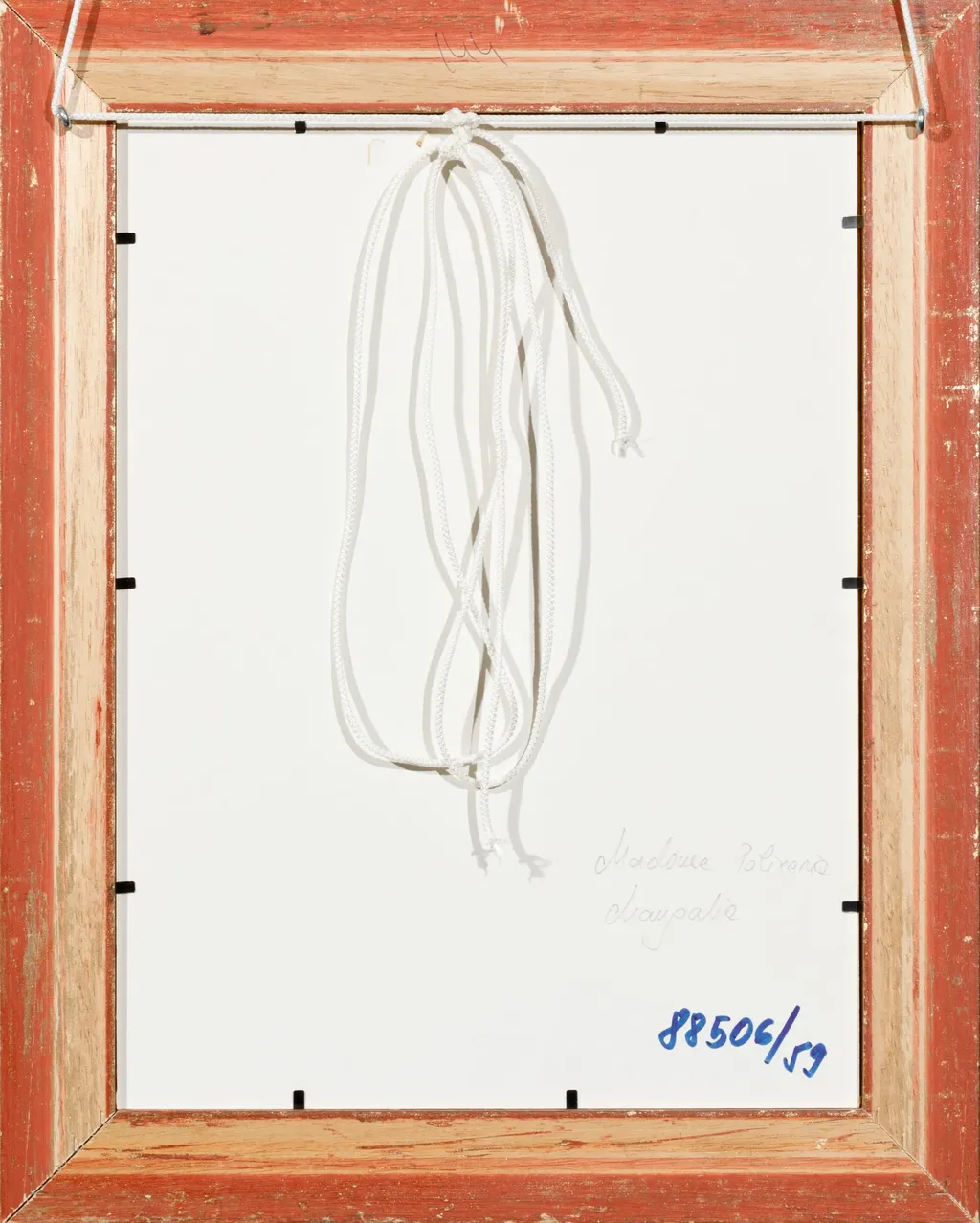
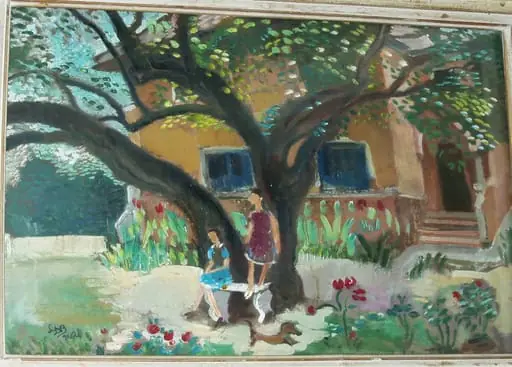
Polixenia la Mangalia is an unspecified painting by Lucia Dem-Bălăcescu. It dates from 1850 and is held in the collection of the National Museum of Art of Romania.
About this work
Overview
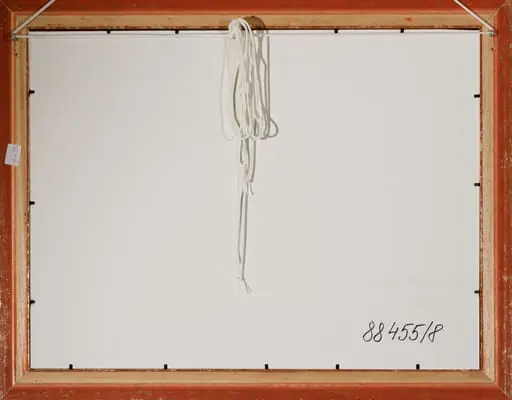
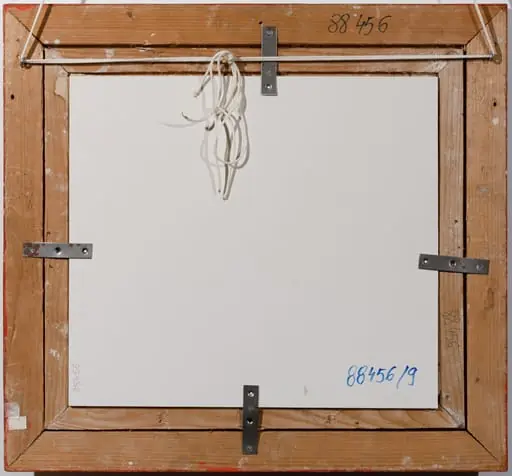
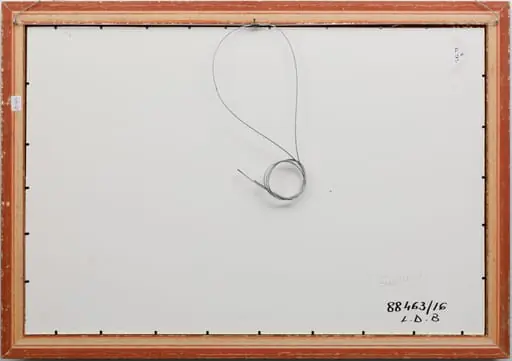
Polixenia la Mangalia, created circa 1850 by Lucia Dem-Bălăcescu, presents a minimalist composition within a plain wooden frame accented by a red border. The central element is a loose knot of three white ropes, suspended centrally on an otherwise empty canvas.
Subject & Meaning
The subject of Polixenia la Mangalia is abstract and open to interpretation. The deliberate simplicity of the knotted ropes may symbolize unity, restraint, or the essence of a bond, though the artist's intent remains ambiguous without additional context.
Technique & Style
Dem-Bălăcescu employs a stark, minimalist approach. The use of a monochromatic color scheme (white ropes against an empty canvas) and the absence of intricate details emphasize the piece's conceptual focus over visual complexity.
History & Provenance
Created around 1850, specific details regarding the artwork's history, exhibitions, or ownership prior to its current status are not provided. The handwritten title on the frame, 'Polixenia la Mangalia', serves as the primary identifier.
Context
Given its date (c. 1850), Polixenia la Mangalia precedes the advent of modern abstract art movements. It may reflect early explorations of minimalism or symbolic representation in European art during the mid-19th century.
Legacy
The impact or influence of Polixenia la Mangalia on subsequent art movements or artists is not immediately evident from the provided information, suggesting it may not be widely recognized in broader art historical narratives without further context.
Artist & collection