Artwork
Peisaj moldovenesc
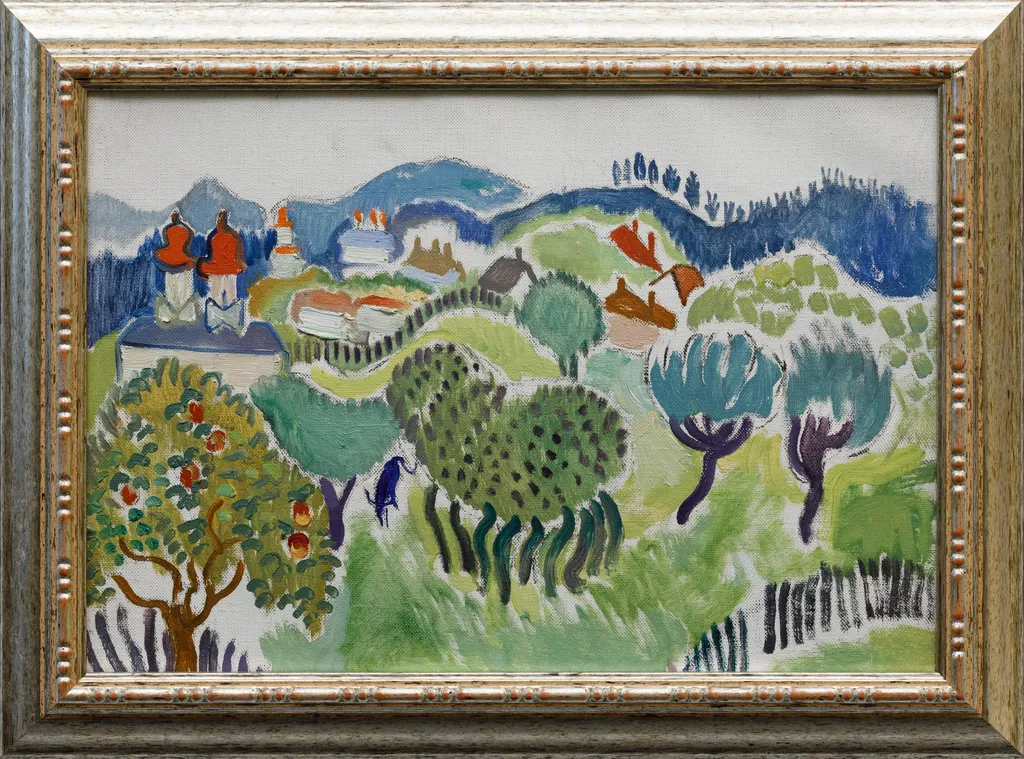
Peisaj moldovenesc is an unspecified painting by Lucia Dem-Bălăcescu. It dates from 1850 and is held in the collection of the National Museum of Art of Romania.
About this work
Overview
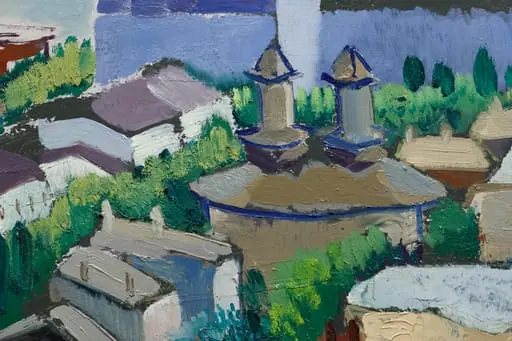
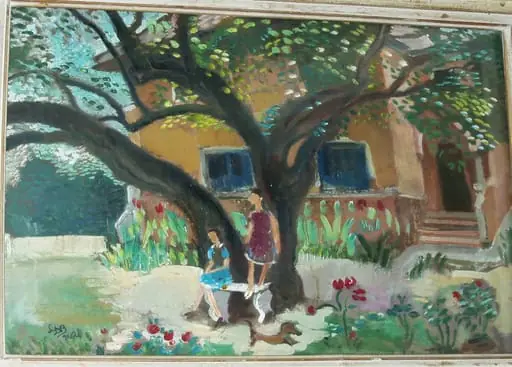
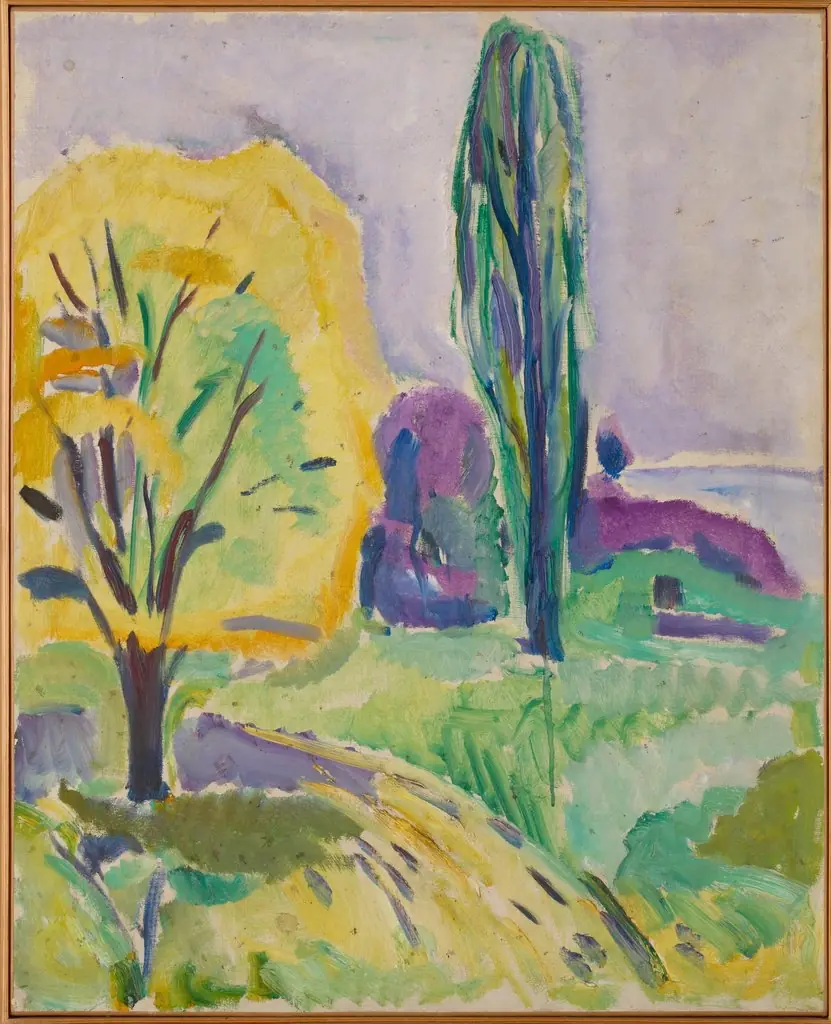
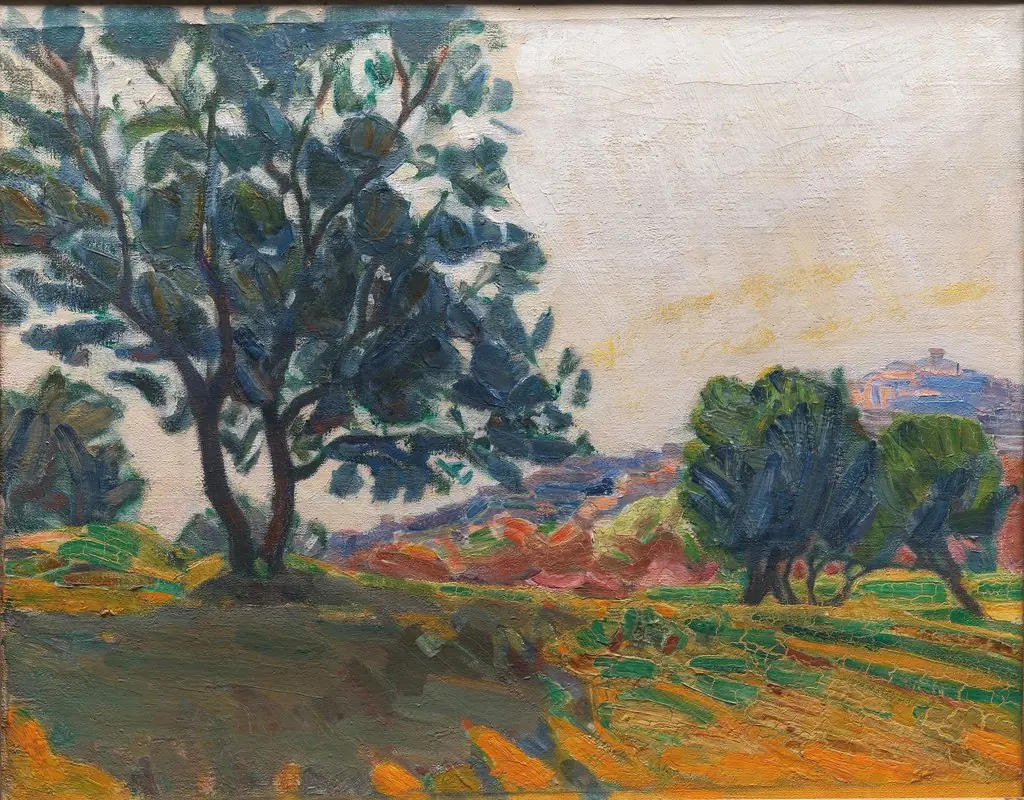
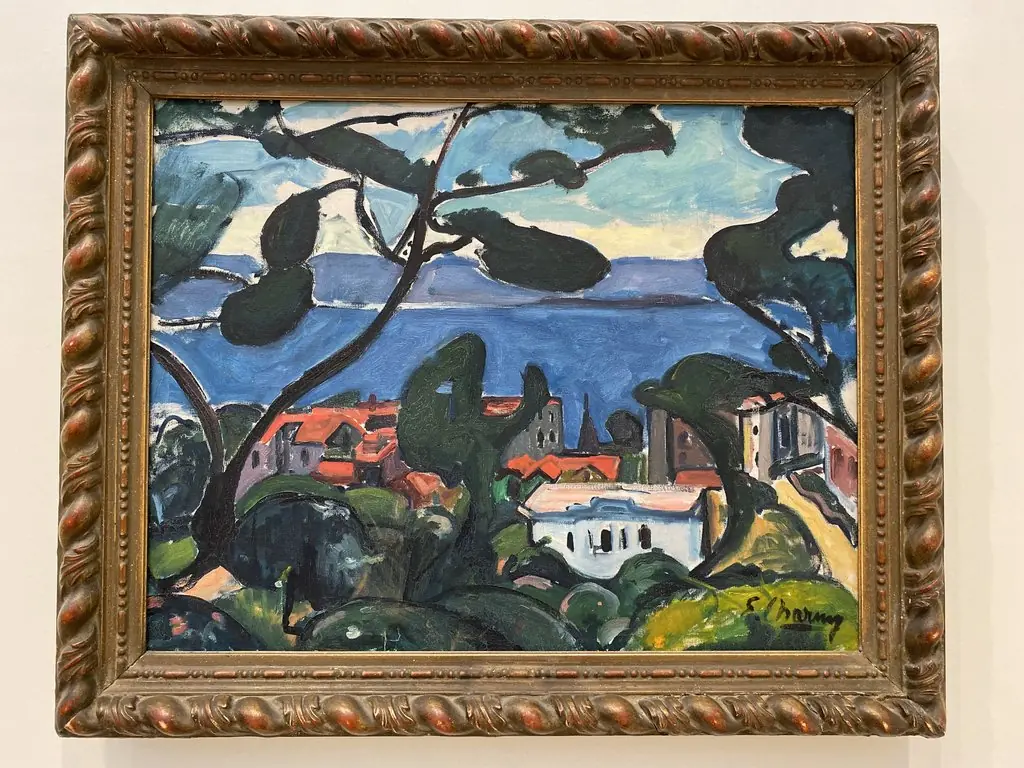
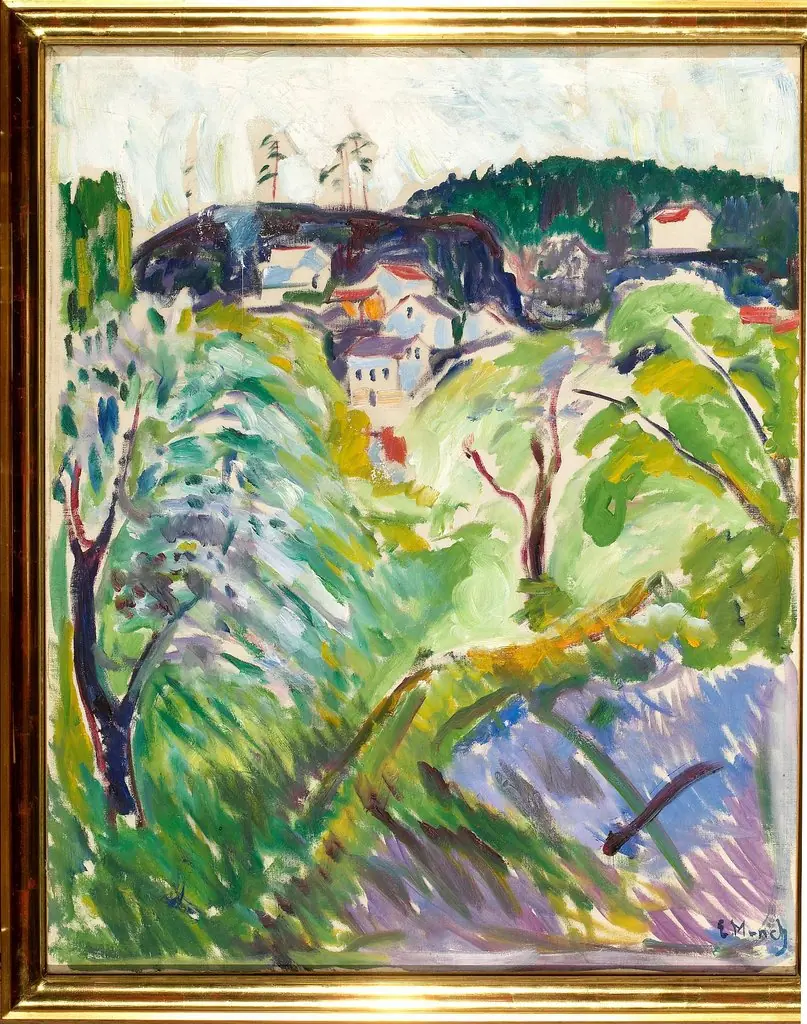
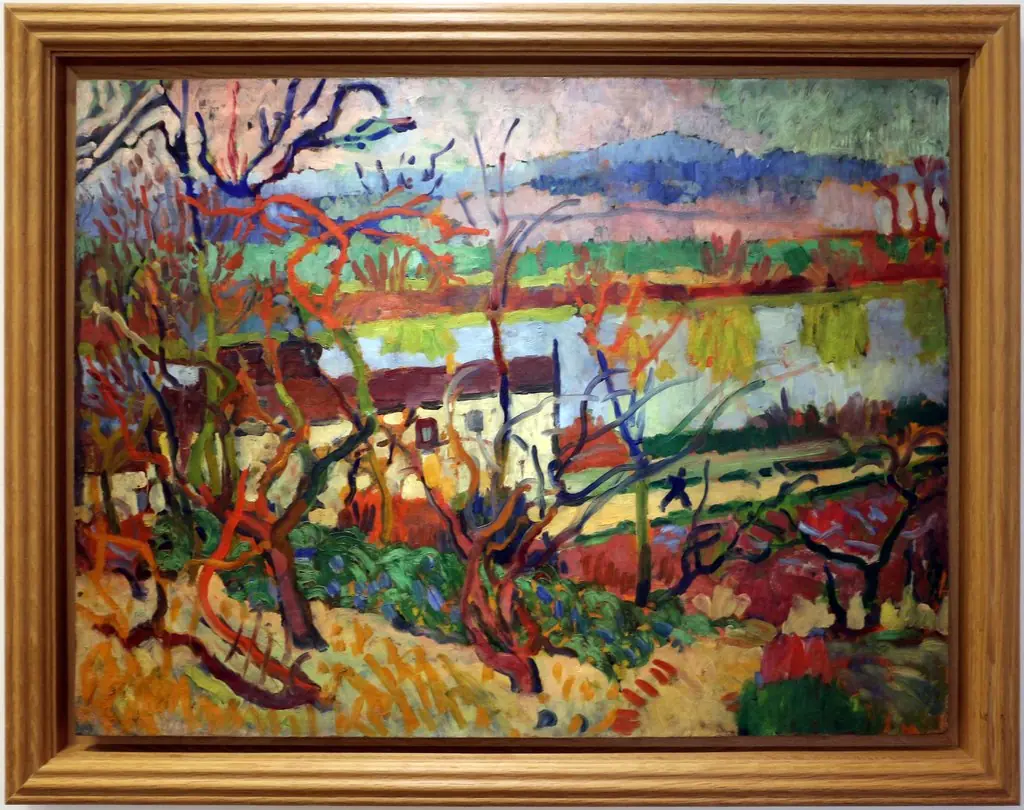
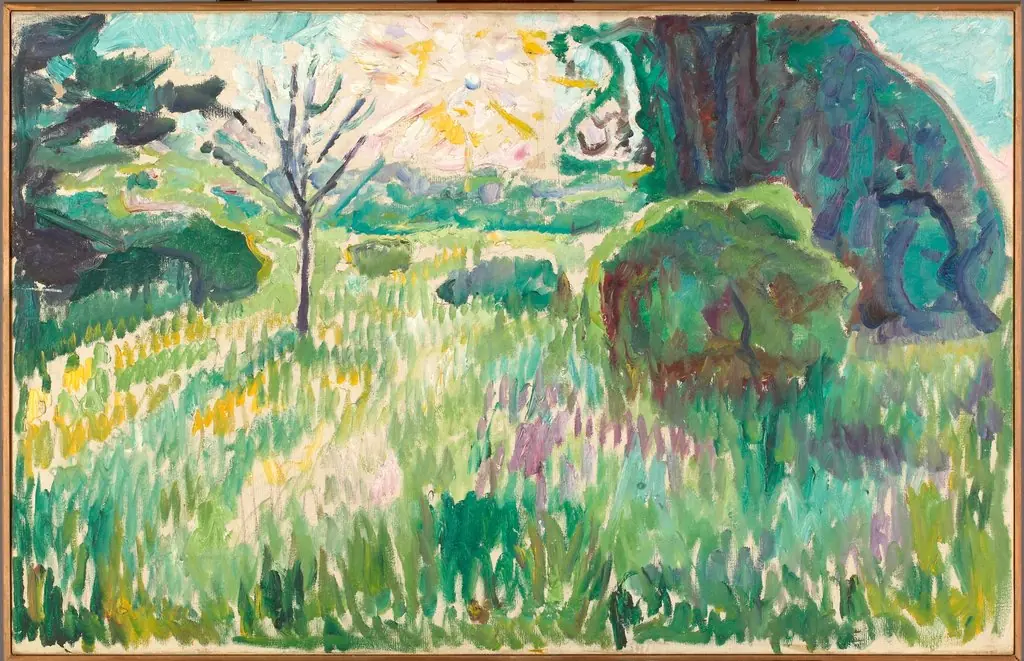
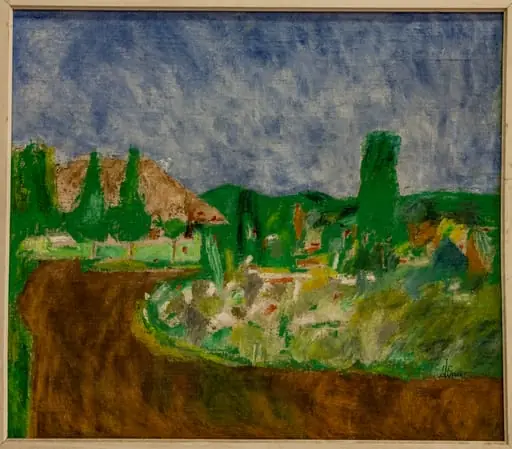
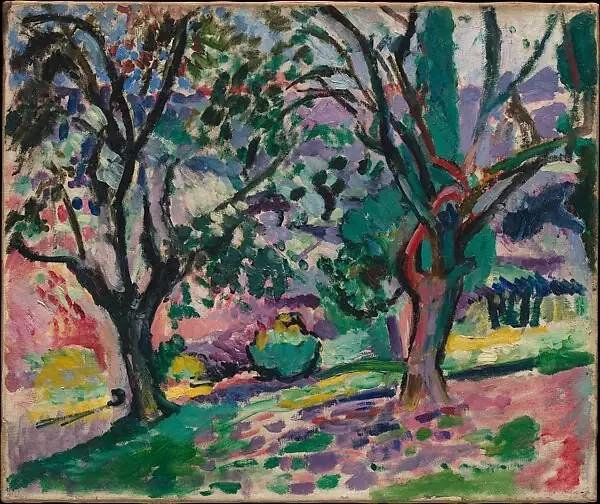
Created around 1850, Peisaj moldovenesc is a landscape by Romanian painter Lucia Dem‑Bălăcescu. The work depicts a sunlit, gently undulating countryside populated by modest dwellings and distant figures. A line of trees frames the foreground, some bearing red fruit, while soft blue‑green hills rise beyond. The sky is pale and expansive, giving the scene an airy atmosphere.
Subject & Meaning
The composition presents an idealized view of rural Moldavia, emphasizing the harmony between human settlement and the natural environment. Small houses and solitary figures suggest a quiet, agrarian life, while the vivid foliage and fruit hint at abundance. The painting celebrates the region’s pastoral character without narrative drama, focusing instead on visual serenity.
Technique & Style
Dem‑Bălăcescu employs a brisk, loose brushstroke that conveys immediacy, as if the scene were captured in a fleeting moment. Bold, contrasting hues—crimson on the rooftops, deep greens in the trees, and pale blues on the hills—enhance the visual rhythm. The palette’s vibrancy and the rapid application of paint reflect a mid‑nineteenth‑century approach to plein‑air observation.
History & Provenance
The work dates to the mid‑19th century, a period when Romanian artists began documenting local landscapes. While specific ownership records are scarce, the painting has been referenced in surveys of Dem‑Bălăcescu’s oeuvre, indicating its inclusion in collections that focus on early Romanian genre painting.
Context
Peisaj moldovenesc belongs to a broader movement of regional landscape painting that emerged as national identities solidified in Eastern Europe. Artists like Dem‑Bălăcescu sought to record familiar terrain, contributing to a visual archive of the Moldavian countryside during a time of social and political change.
Artist & collection