Artwork
Woman Feeding Chickens
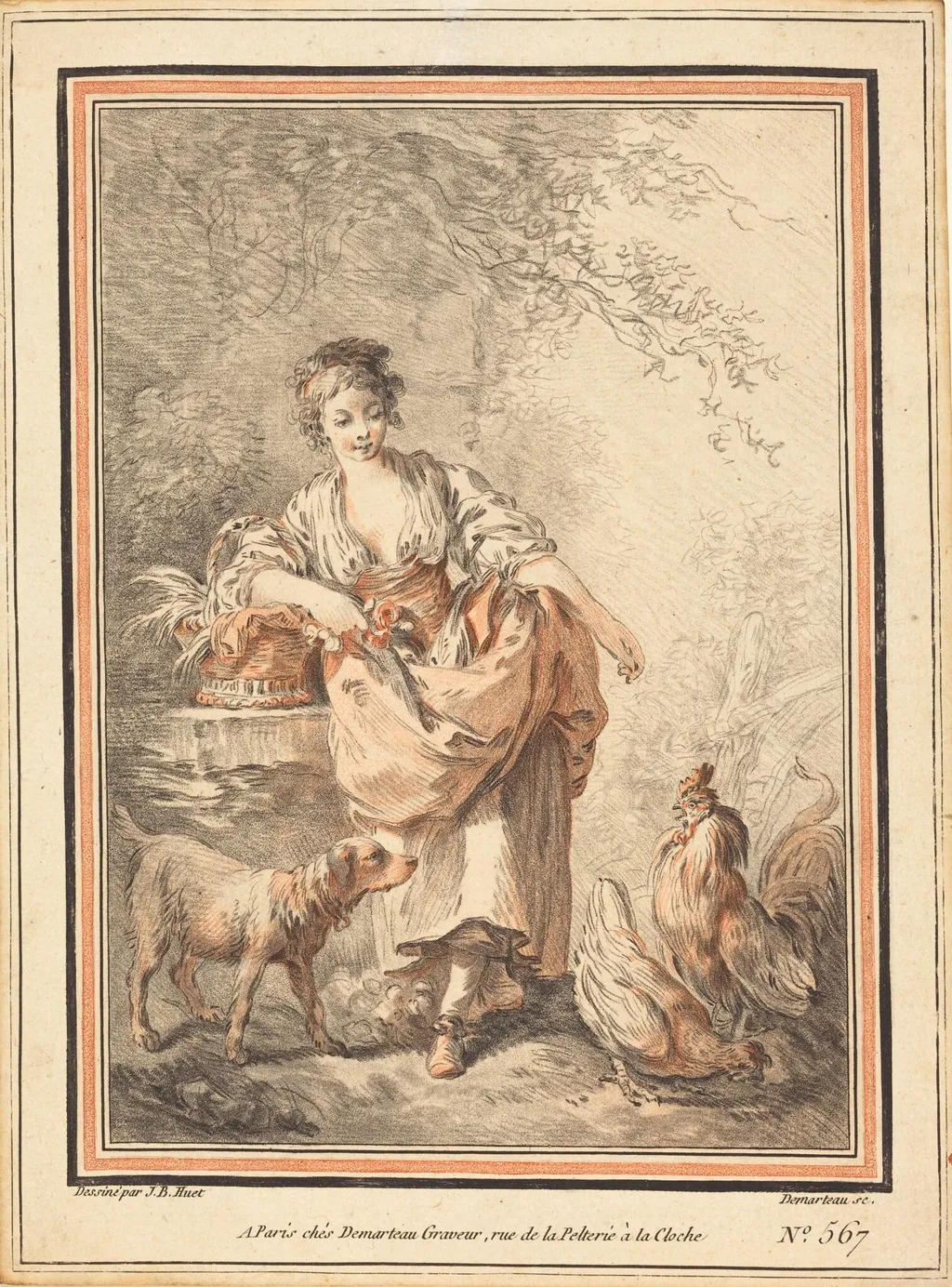
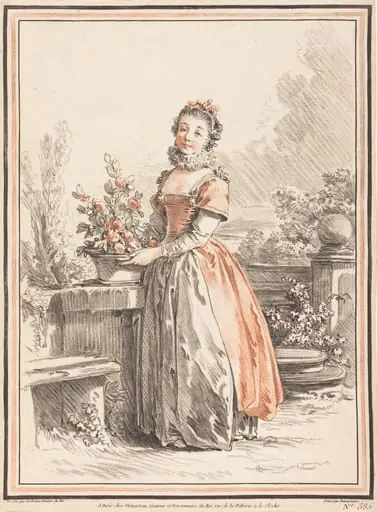
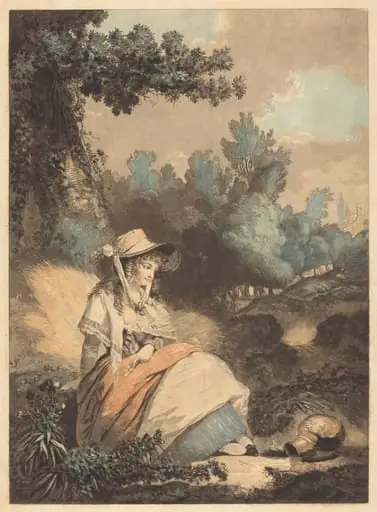
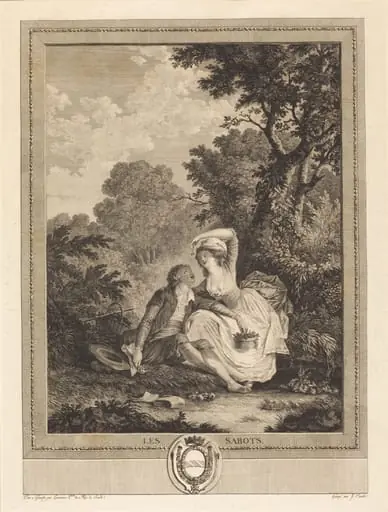
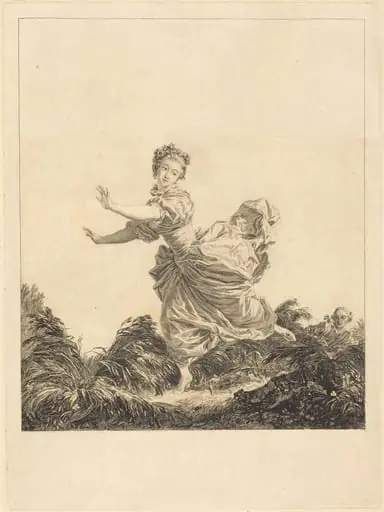
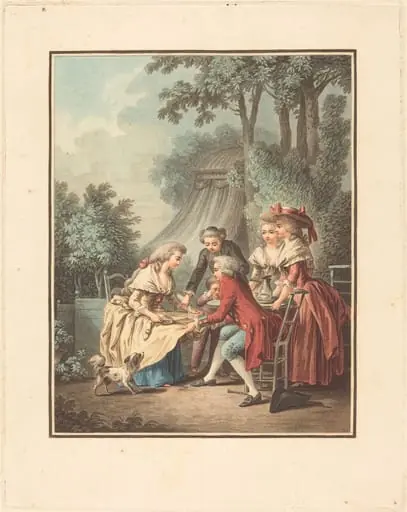
Woman Feeding Chickens is a chalk print by the Romanticist artist Gilles-Antoine Demarteau. It dates from 1776 and is held in the collection of the National Gallery of Art.
About this work
Overview
The composition combines red and black chalk to produce a delicate tonal range, emphasizing texture and form without heavy detail.
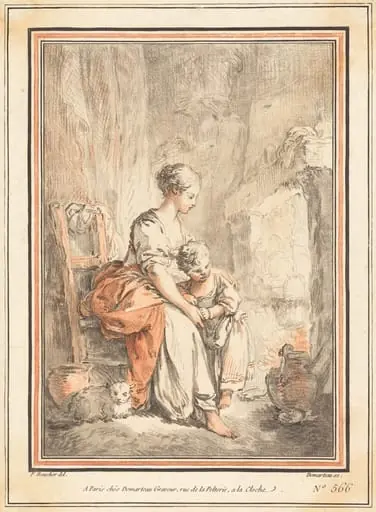
Created in 1776 by Gilles-Antoine Demarteau, this print depicts a rural domestic moment rendered in chalk on laid paper. The composition combines red and black chalk to produce a delicate tonal range, emphasizing texture and form without heavy detail. The scene captures a quiet interaction between a woman and her animals, framed within a minimal landscape that suggests spontaneity rather than formal composition.
Subject & Meaning
The image portrays a woman in an ornate dress tending to chickens and a dog, blending elements of aristocratic attire with humble farm activity. The contrast between her refined clothing and the grounded, natural setting implies a romanticized view of rural life, common in 18th-century French art. The animals’ natural behavior adds warmth and immediacy, grounding the scene in observable reality rather than idealized narrative.
Technique & Style
Demarteau employed soft chalk strokes to model the woman’s face and garments, using subtle gradations of red and black to suggest volume and fabric texture. The background is deliberately sketchy, with loose lines indicating trees and ground, allowing the central figures to emerge through contrast. The use of chiaroscuro is restrained but effective, enhancing the three-dimensionality of the figures without overwhelming the delicate, intimate scale of the work.
History & Provenance
This print was produced during Demarteau’s active period as a reproductive engraver and designer of decorative arts in Paris. It likely originated as part of a series illustrating pastoral themes for domestic decoration. Though its early ownership is undocumented, its survival in museum collections reflects its value as an example of 18th-century French graphic art focused on everyday subjects.
Context
In the decades before the French Revolution, there was growing artistic interest in rural life as a counterpoint to urban sophistication. Demarteau’s work aligns with this trend, drawing from the Rococo tradition’s affection for tender, informal scenes. Unlike grand historical paintings, this print appeals through quiet observation, reflecting a broader cultural shift toward valuing simplicity and naturalism in visual culture.
Legacy
Demarteau’s print contributes to a body of work that elevated minor domestic moments into subjects worthy of artistic attention. While not widely known today, it exemplifies how chalk drawings and prints served as accessible, intimate alternatives to oil painting. Its preservation in institutional collections underscores its role in documenting the aesthetic values of late 18th-century French graphic art.
Artist & collection