Artwork
Saint John, from Henry the Seventh's Chapel Westminster Abbey
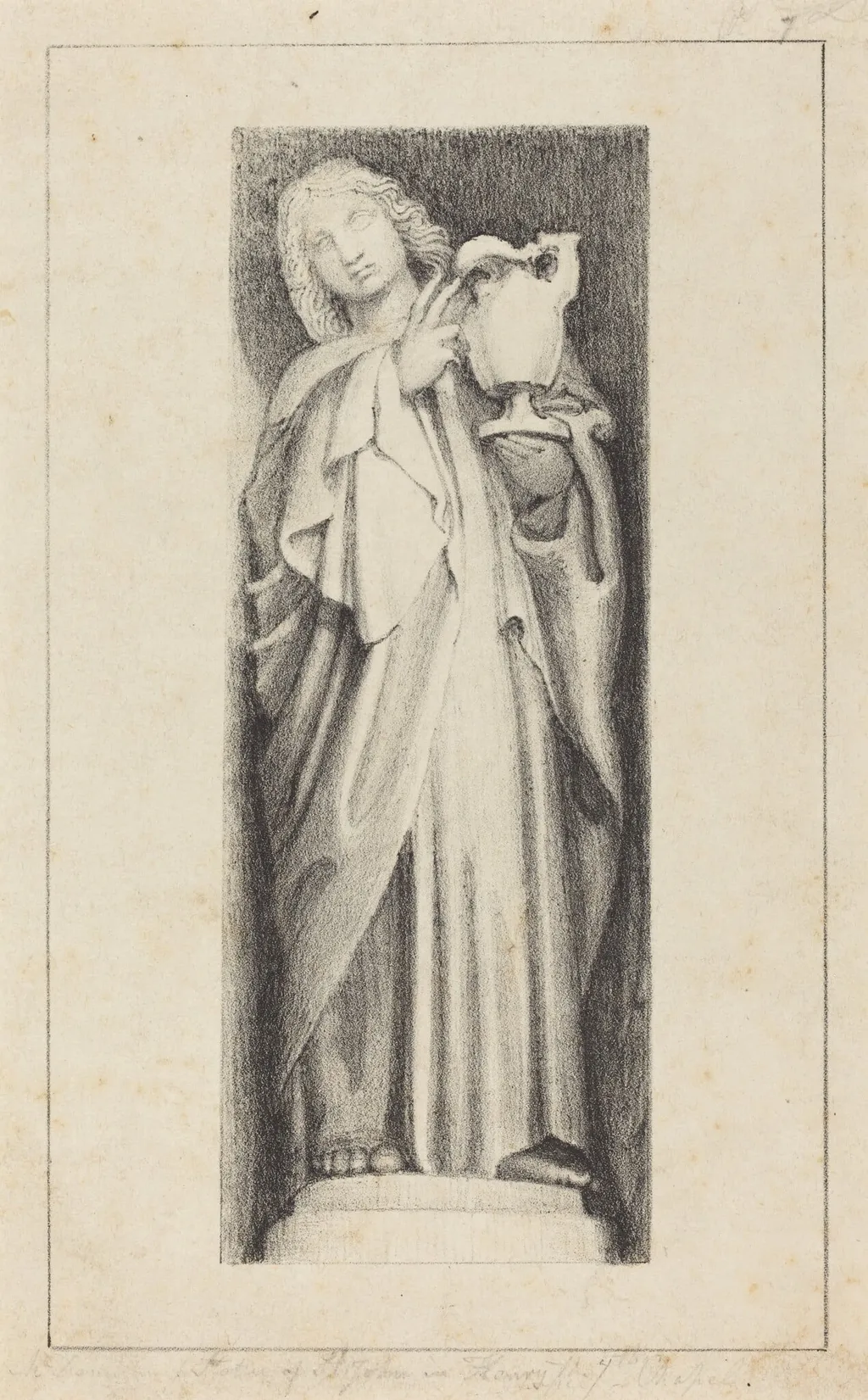
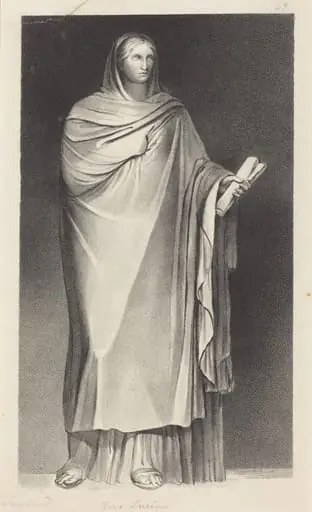
Saint John, from Henry the Seventh's Chapel Westminster Abbey is an ink print by the Romanticist artist Maria Denman. It dates from 1829 and is held in the collection of the National Gallery of Art.
About this work
Overview
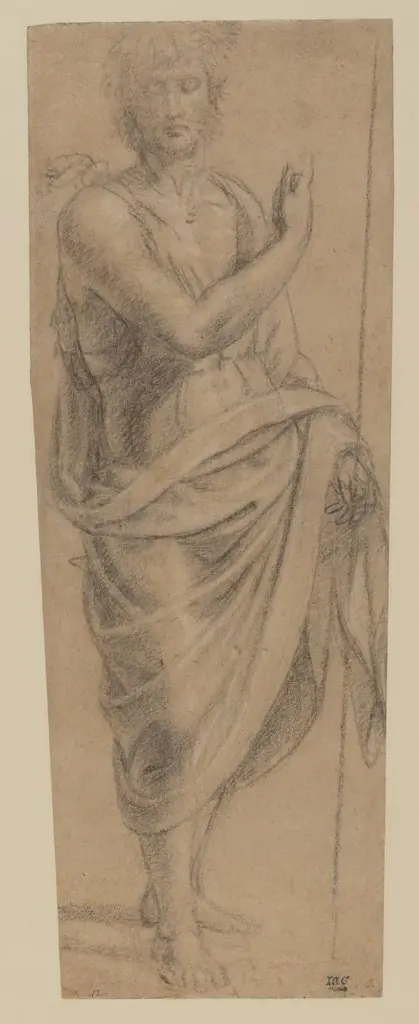
Maria Denman's 1829 lithographic proof depicts Saint John within the architectural context of Henry VII's Chapel at Westminster Abbey. Executed as a preparatory print before the addition of lettering, the work presents a solitary, upright figure framed against a dark backdrop, emphasizing the saint's contemplative pose.
Subject & Meaning
The saint is rendered in flowing robes, holding a small bird—traditionally a symbol of the soul or the Holy Spirit—while his other hand gestures upward, suggesting divine inspiration or revelation. His serene expression and smooth features convey a tranquil devotion appropriate to his biblical role.
Technique & Style
Denman employed the lithographic process, working directly on a stone surface to create a proof characterized by swift, sketch-like lines. The rendering of fabric folds and feather details relies on energetic strokes, imparting a sense of immediacy and movement despite the medium's capacity for fine detail.
History & Provenance
The print originates from a series intended to illustrate the iconography of Henry VII's Chapel, a late‑15th‑century royal chapel renowned for its intricate fan‑vaulted ceiling and stained glass. As a proof before lettering, the piece likely served as a test for the final printed edition, remaining in the artist's possession or workshop before entering a collection.
Context
Created during the early nineteenth‑century revival of interest in medieval English architecture, the work reflects contemporary scholarly and artistic fascination with Westminster Abbey's historic chapels. Denman's choice of Saint John aligns with the chapel's dedication to royal patronage and biblical narratives.
Legacy
While not a finished commercial print, the lithographic proof offers insight into the preparatory stages of early nineteenth‑century printmaking and the period's reverence for ecclesiastical subjects. It remains a valuable document for studying both Denman's technique and the visual culture surrounding Westminster Abbey.
Artist & collection


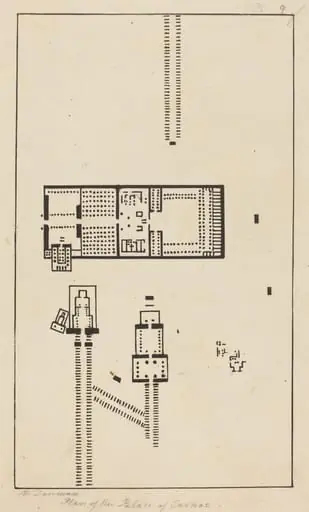 Plan of the Palace of Carnac
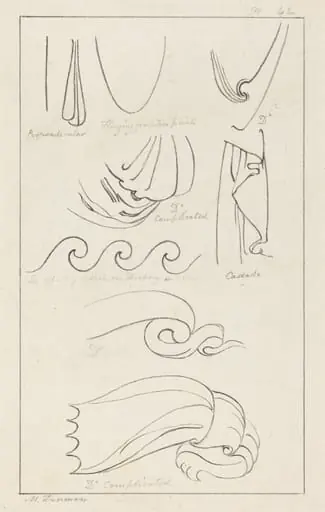 Drapery
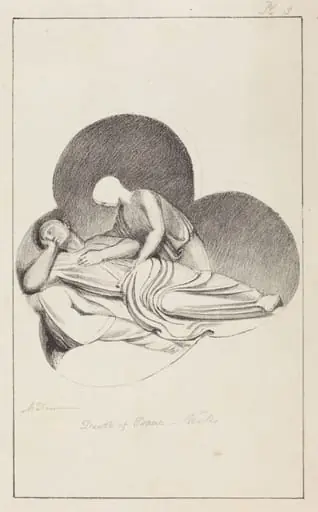 Death of Isaac, from Wells Cathedral
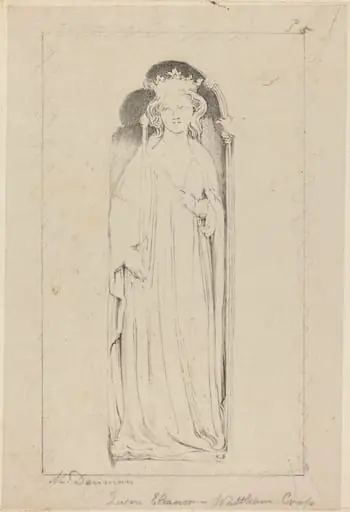 Queen Eleanor, from Waltham Cross
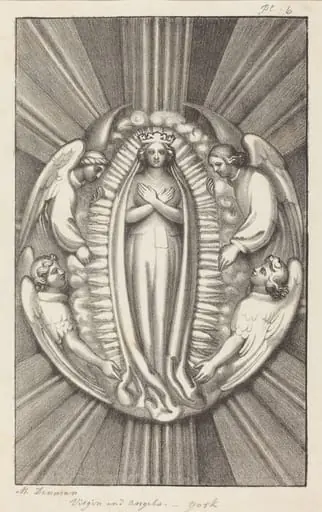 Virgin and Angels, a Key Stone in York
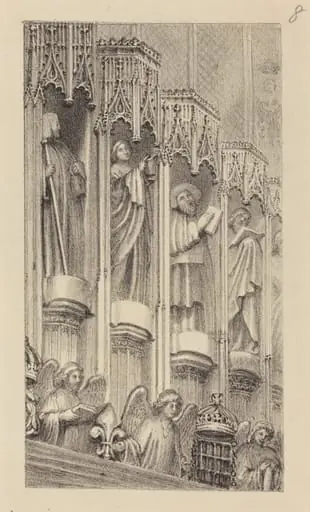 Statues in the Architecture of Henry the Seventh's Chapel, Westminster Abbey
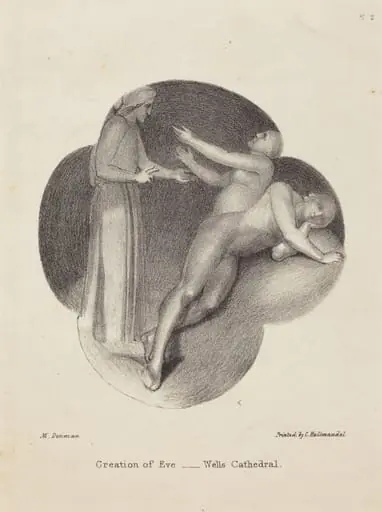 Creation of Eve, from Wells Cathedral
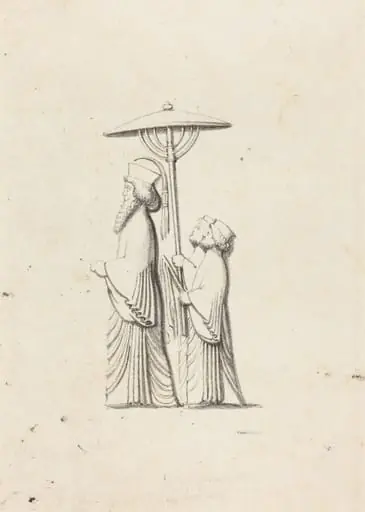 Sculpture at Persepolis, from Le Bruyn's Travels