Artwork
Drapery
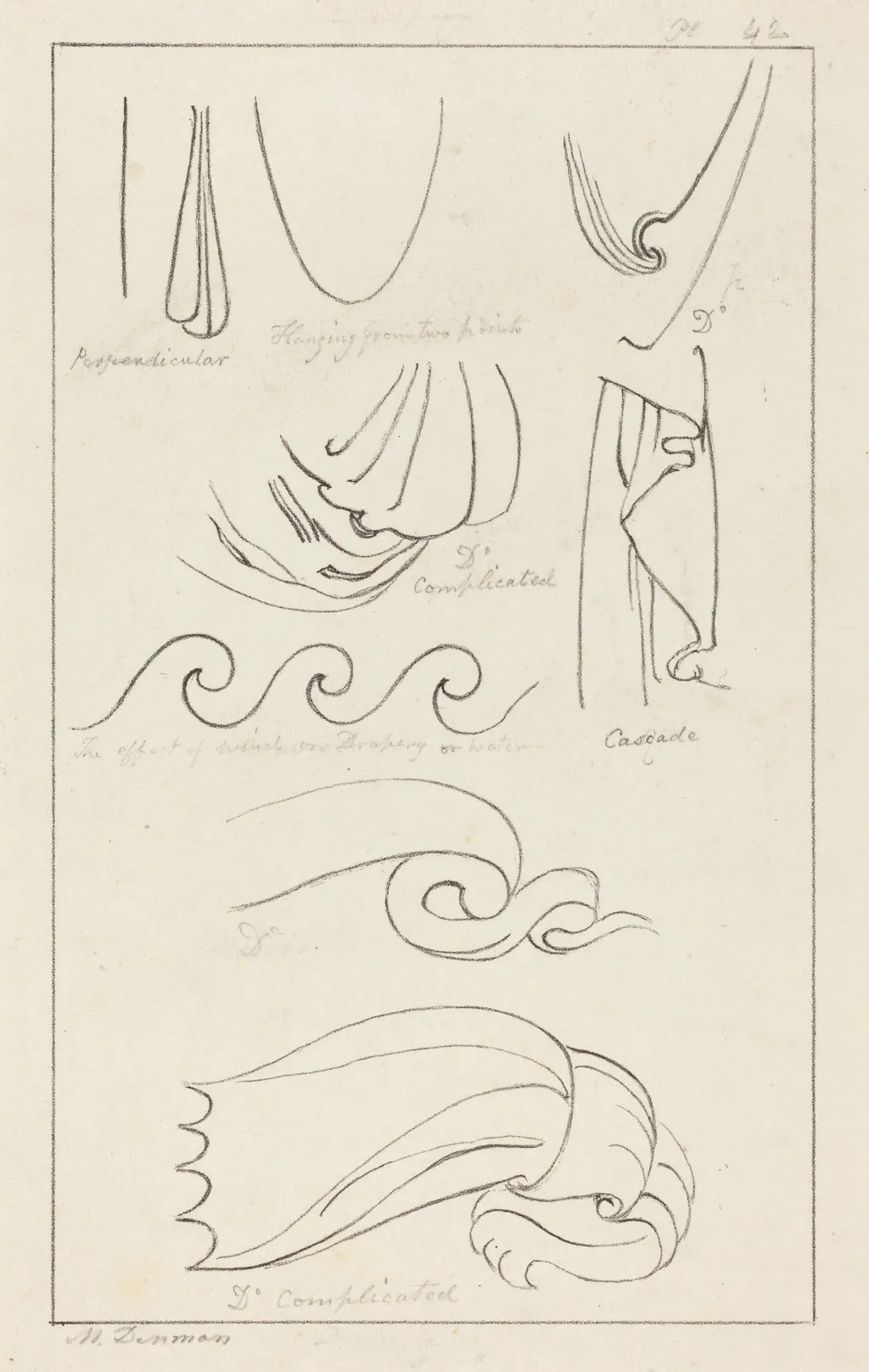
Drapery is an ink print by the Romanticist artist Maria Denman. It dates from 1829 and is held in the collection of the National Gallery of Art.
About this work
Overview
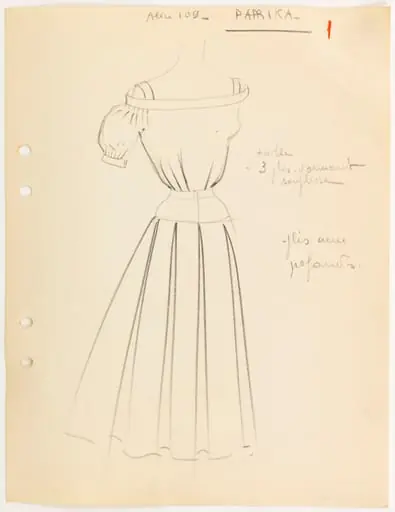
Created in 1829 by Maria Denman, this lithograph is a preparatory study exploring the behavior of fabric under light. Executed as a proof before letters, it lacks final inscriptions, suggesting it was an experimental stage in the printing process. The work functions less as a finished image and more as a visual inquiry into textile form.
Subject & Meaning
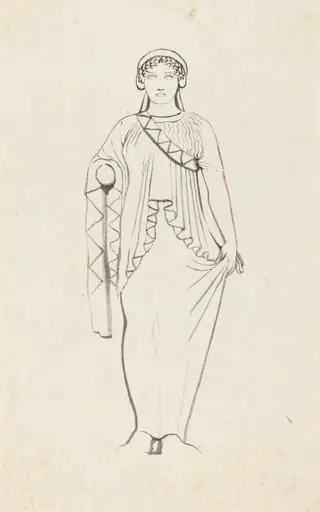
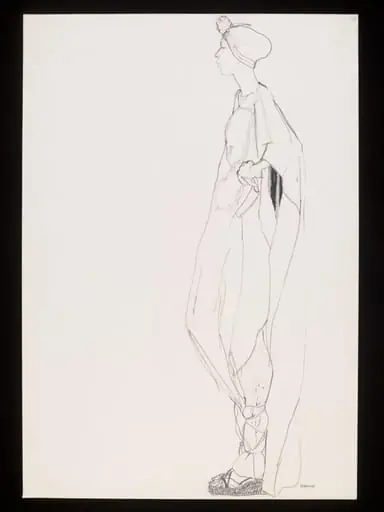
The drawing examines folds in draped cloth, categorizing them by type: straight, fluid, and complex. Labels such as 'complicated' and references to muslin, drapery, and water indicate a systematic study of how materials respond to gravity and light. These annotations reveal an artist engaged in observational analysis rather than narrative expression.
Technique & Style
Lithography allowed Denman to translate loose, fluid lines directly onto stone with precision. The strokes are swift yet controlled, resembling sketchbook notations. The medium’s capacity for tonal variation enabled subtle distinctions between light and shadow on fabric surfaces, supporting her investigation of material texture through line.
History & Provenance
As a proof before letters, this print likely remained in Denman’s possession or within her working circle. No public exhibition or collector record from the period is documented. Its survival suggests it was valued as a reference tool, preserved for its pedagogical or technical utility rather than as a standalone artwork.
Context
In early 19th-century art education, detailed studies of drapery were standard for training painters and draftsmen. Denman’s approach aligns with academic traditions that prioritized observation over imagination. Her focus on fabric behavior reflects broader interests in naturalism and material science emerging in artistic practice at the time.
Legacy
This lithograph contributes to understanding how female artists engaged with technical training in an era when formal art institutions often excluded them. Denman’s method—systematic, annotated, and process-oriented—offers insight into the quiet, persistent work behind artistic development outside the public spotlight.
Artist & collection


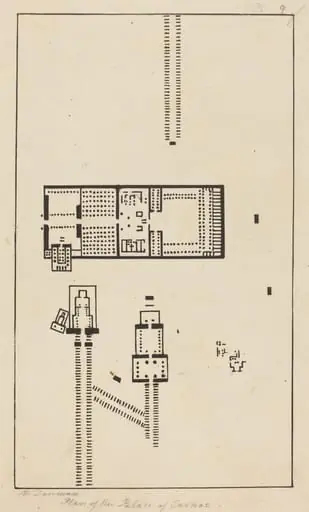 Plan of the Palace of Carnac
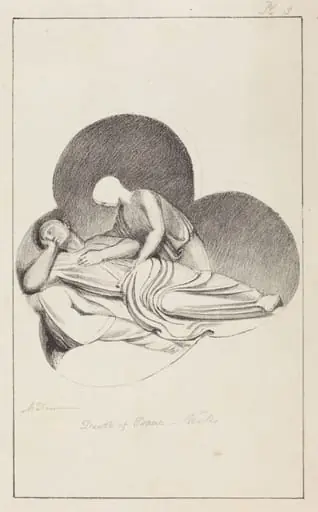 Death of Isaac, from Wells Cathedral
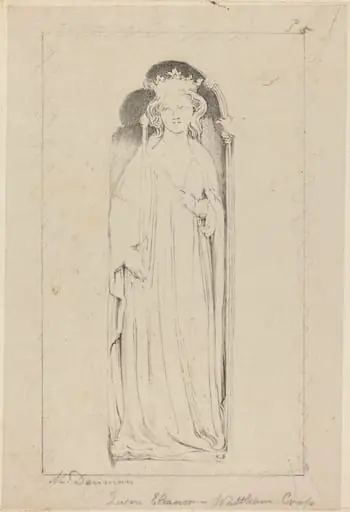 Queen Eleanor, from Waltham Cross
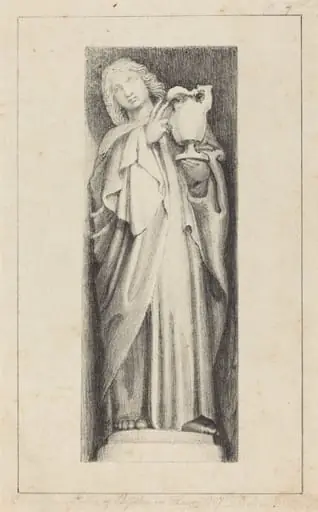 Saint John, from Henry the Seventh's Chapel Westminster Abbey
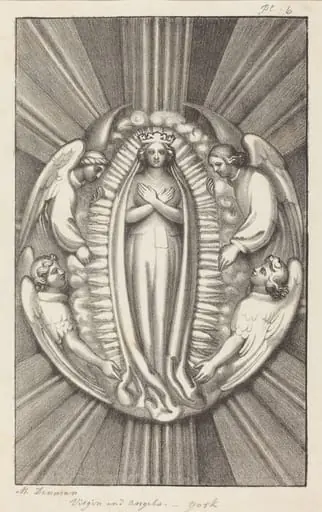 Virgin and Angels, a Key Stone in York
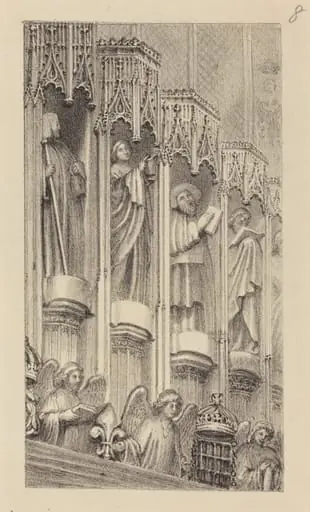 Statues in the Architecture of Henry the Seventh's Chapel, Westminster Abbey
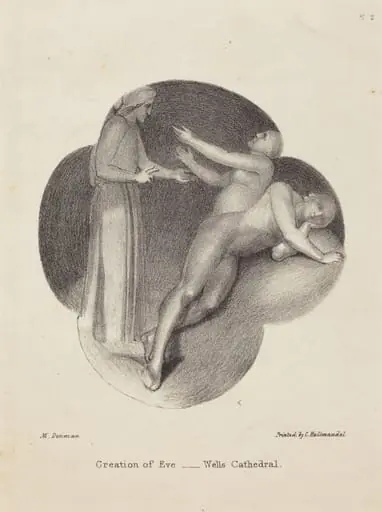 Creation of Eve, from Wells Cathedral
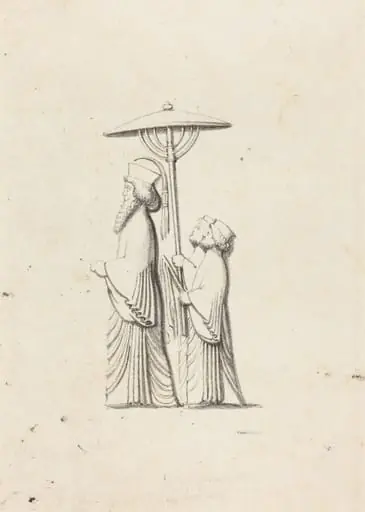 Sculpture at Persepolis, from Le Bruyn's Travels
![An Ascending Spiral of Figures [recto], by William Blake](https://artifactworldgallery.com/img/william-blake--an-ascending-spiral-of-figures-recto--508535a71ee63cd8-w320.webp)