Artwork
Plan of the Palace of Carnac
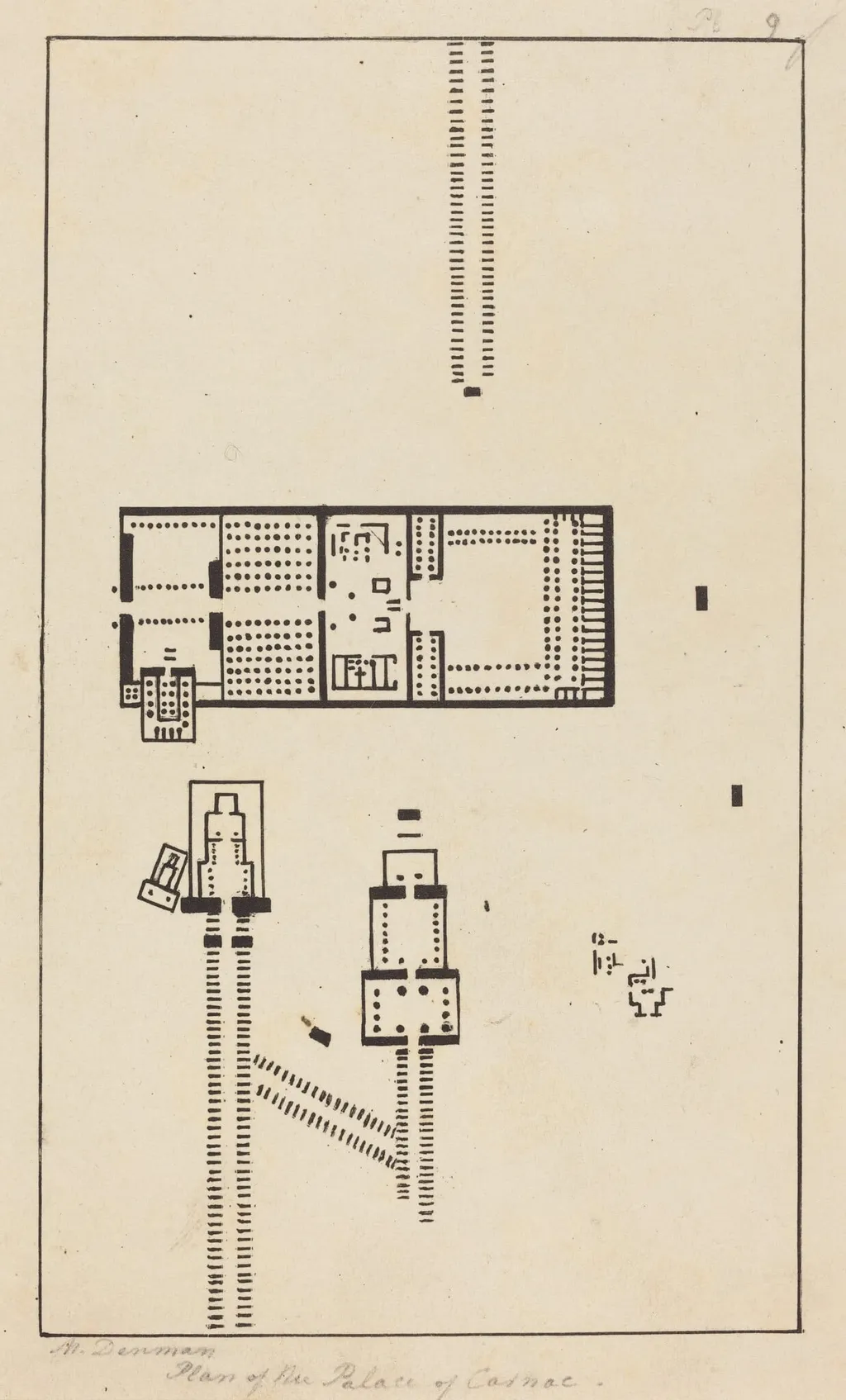
Plan of the Palace of Carnac is an ink print by the Romanticist artist Maria Denman. It dates from 1829 and is held in the collection of the National Gallery of Art.
About this work
Overview
Maria Denman's 1829 lithographic proof presents a bird’s‑eye schematic of the Palace of Carnac. Rendered in monochrome, the image records the building’s overall massing, central block, flanking wings, and a subordinate annex linked by a corridor. The composition functions as a technical illustration rather than a decorative rendering.
Subject & Meaning
The drawing delineates the palace’s spatial organization, using a network of small dots to indicate apertures such as windows or doors within rooms and halls. By emphasizing planimetric relationships, the work conveys the functional hierarchy of the interior spaces without narrative embellishment.
Technique & Style
Executed as a lithograph proof prior to the addition of lettering, the image relies on fine black lines and stippled marks on a light ground. The absence of color and the precision of the line work reflect early 19th‑century architectural printing practices, where clarity of measurement took precedence over artistic flourish.
History & Provenance
Created in 1829, the print bears the artist’s signature, M. Denman, at the lower margin. While the original purpose of the lithograph—whether for publication, patron review, or archival record—remains undocumented, its survival suggests it was retained as a reference for the palace’s design.
Context
The early nineteenth century saw a rise in printed architectural plans accompanying travel literature and scholarly surveys of historic sites. Denman’s work fits within this tradition, providing a visual supplement to textual descriptions of the Carnac estate, which was of interest to antiquarians and architects of the period.
Artist & collection


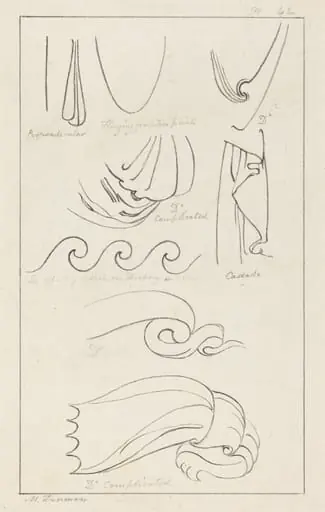 Drapery
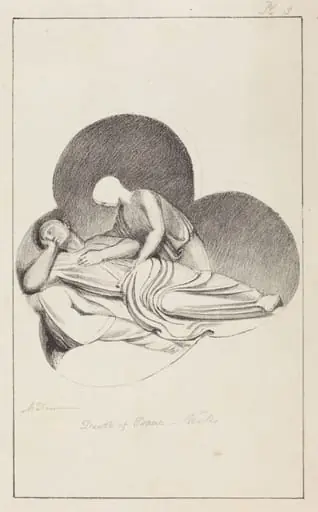 Death of Isaac, from Wells Cathedral
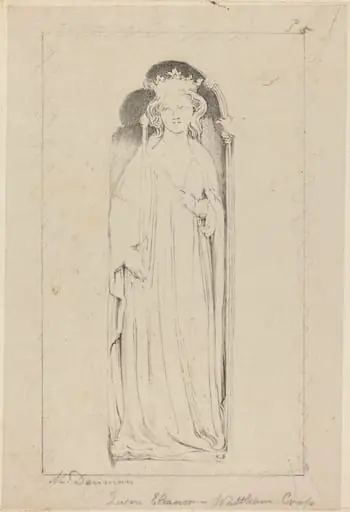 Queen Eleanor, from Waltham Cross
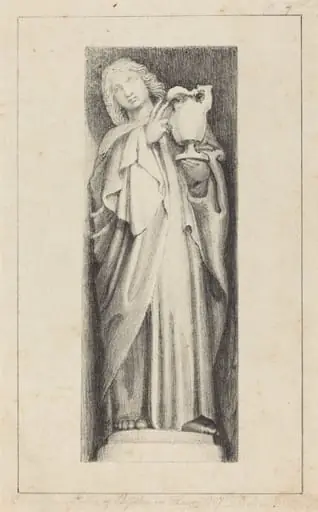 Saint John, from Henry the Seventh's Chapel Westminster Abbey
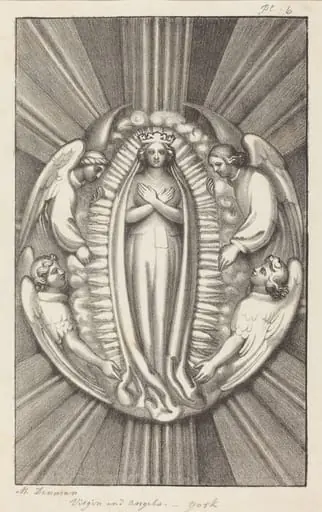 Virgin and Angels, a Key Stone in York
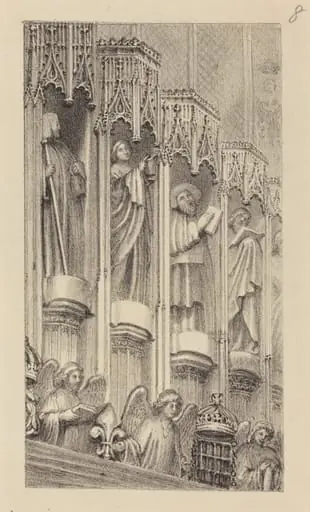 Statues in the Architecture of Henry the Seventh's Chapel, Westminster Abbey
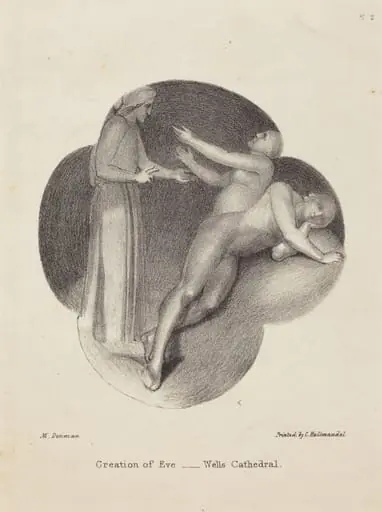 Creation of Eve, from Wells Cathedral
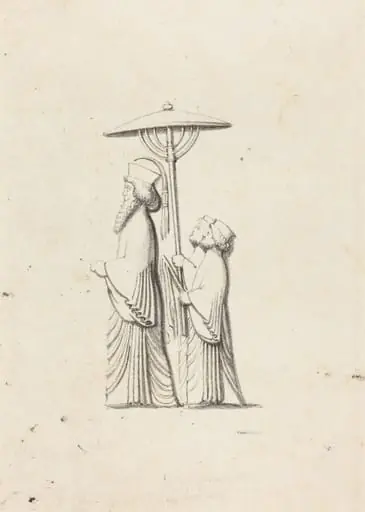 Sculpture at Persepolis, from Le Bruyn's Travels
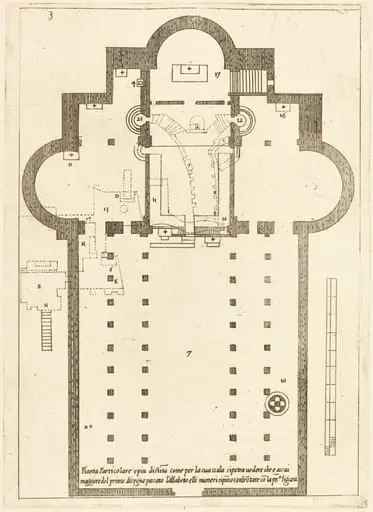 Plan of the Church of the Holy Manger
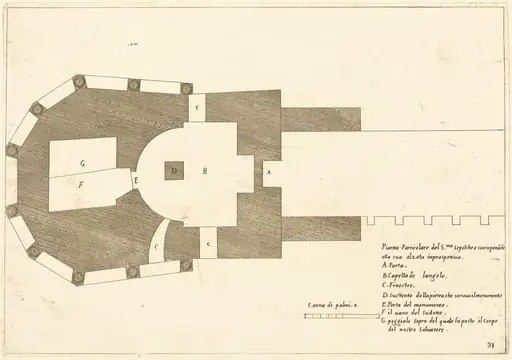 Plan of the Church of the Holy Sepulchre
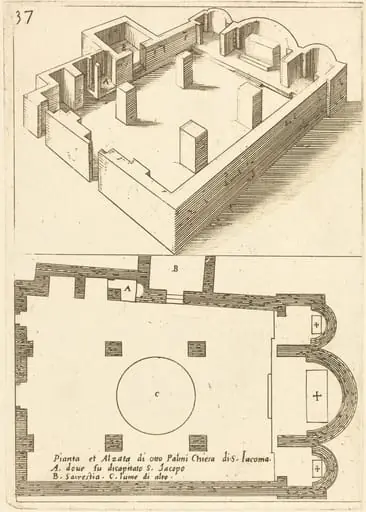 Plan and Elevation of the Church of S. Iacoma
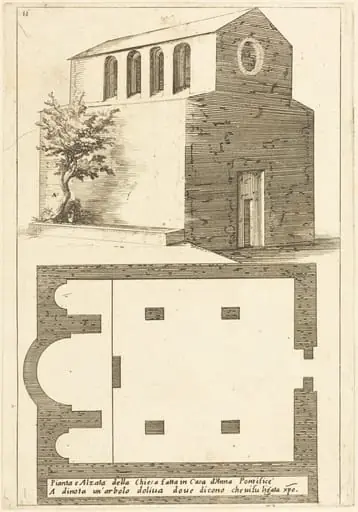 Plan and Elevation of the Church near the House of Annas
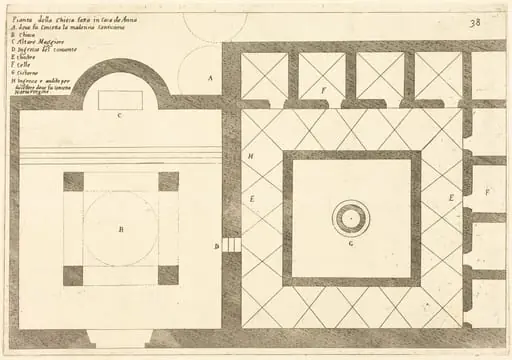 Plan of the Church near the House of Annas
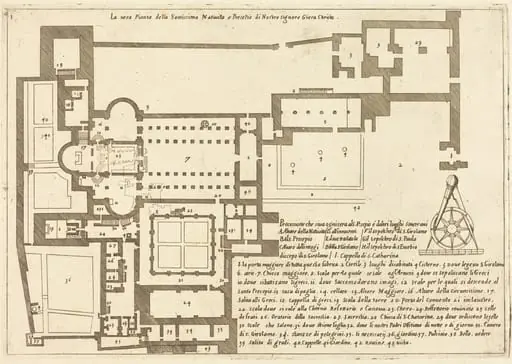 Plan of the Church of the Holy Nativity
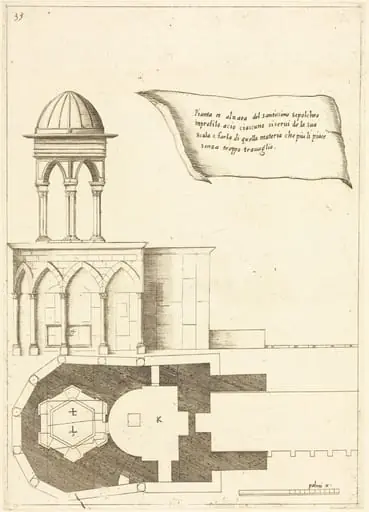 Plan and Elevation of the Church of the Holy Sepulchre
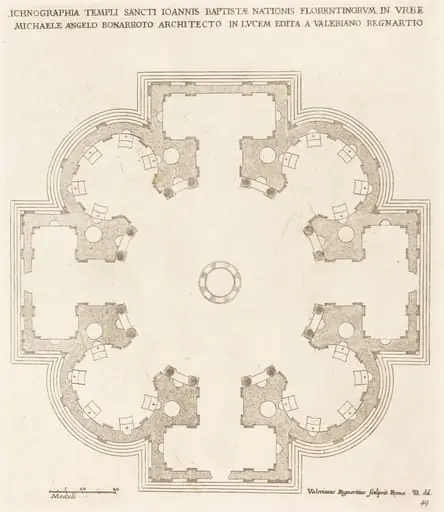 Ground Plan of the Church of Saint John the Baptist