Artwork
Noce de Village (Village Wedding)
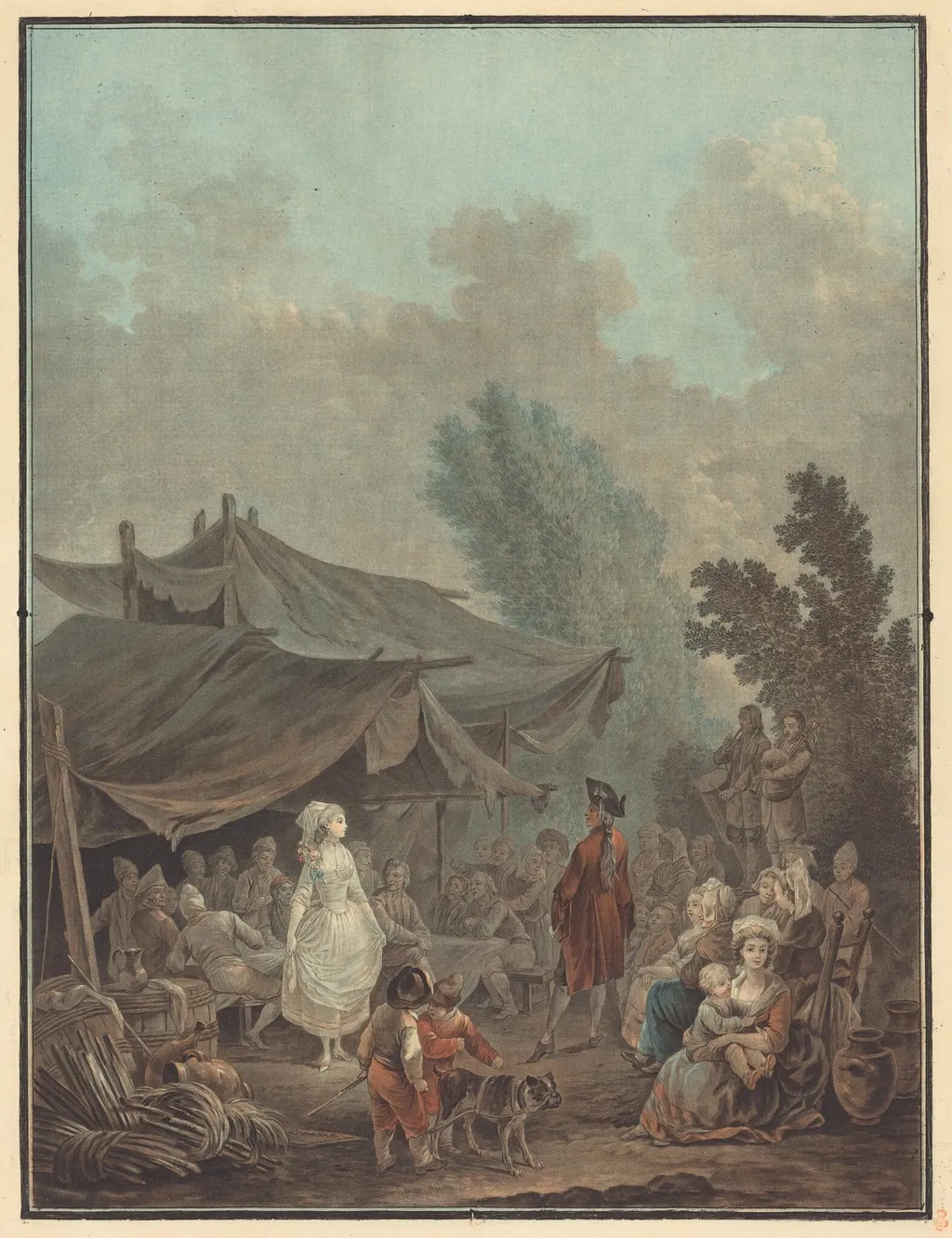
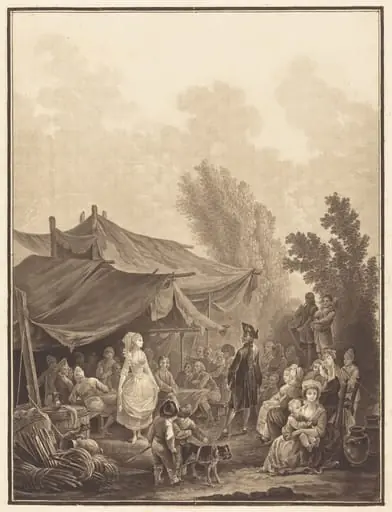
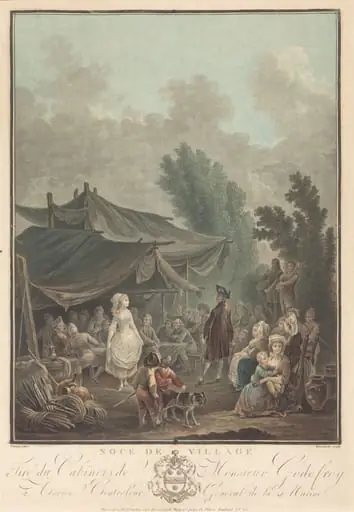
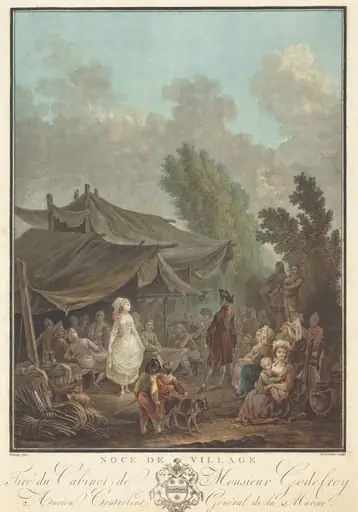
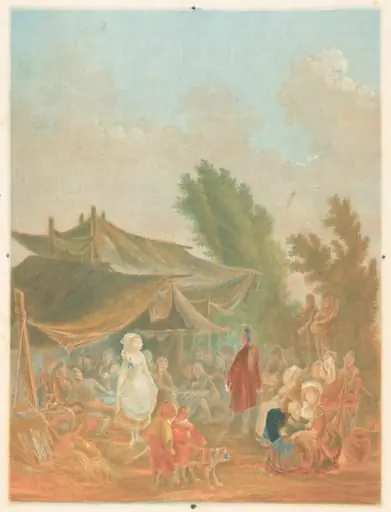
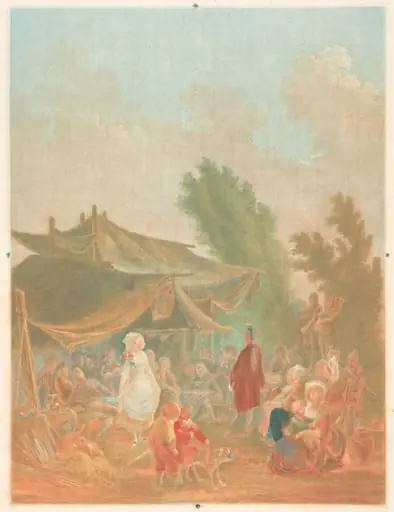
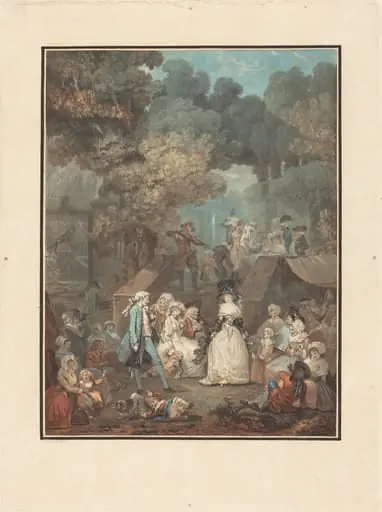
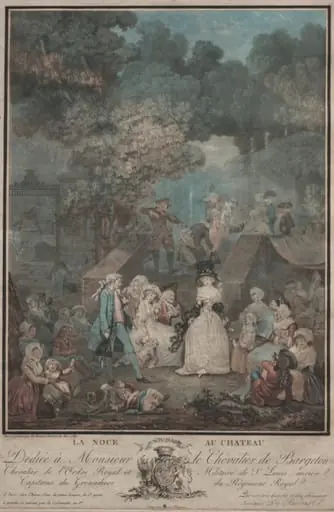
Noce de Village (Village Wedding) is an ink print by the Romanticist artist Charles-Melchior Descourtis. It dates from 1785 and is held in the collection of the National Gallery of Art.
About this work
Overview
Created in 1785 by Charles-Melchior Descourtis, Noce de Village is a colored print combining etching and engraving techniques.
Created in 1785 by Charles-Melchior Descourtis, Noce de Village is a colored print combining etching and engraving techniques. It captures a rural celebration in France, rendered with fine linear detail and layered ink tones. The work belongs to a tradition of genre scenes documenting everyday life, offering a glimpse into 18th-century peasant festivities through precise draftsmanship and controlled color application.
Subject & Meaning
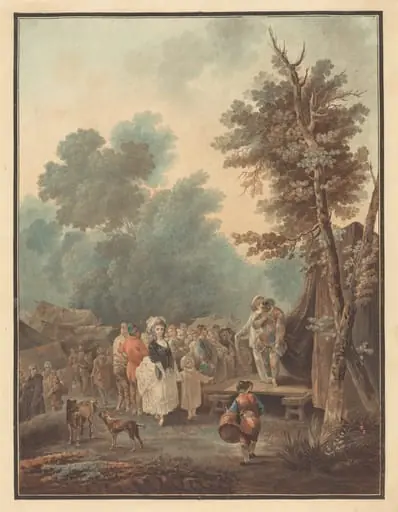
The scene depicts a village wedding, with figures engaged in dancing, music-making, and communal feasting. Clothing, utensils, and architectural details reflect regional customs of the period. Rather than idealizing the event, Descourtis presents it with observational clarity, emphasizing collective participation and the rhythms of rural social life over individual heroism or grandeur.
Technique & Style
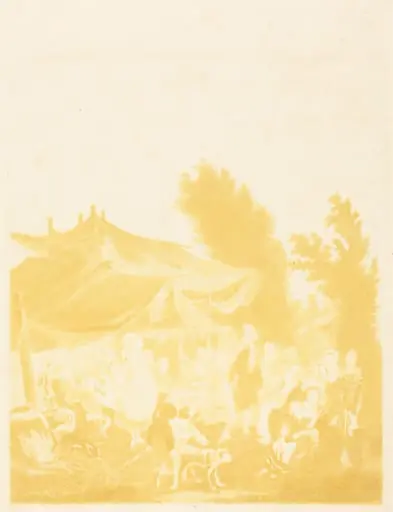
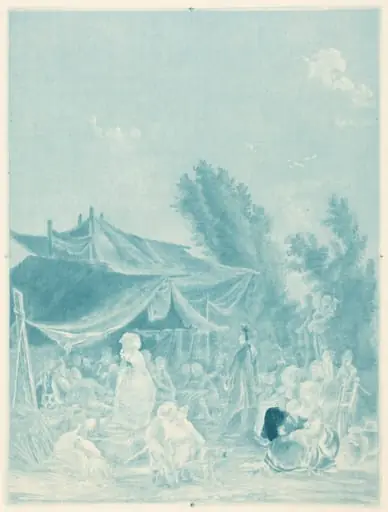
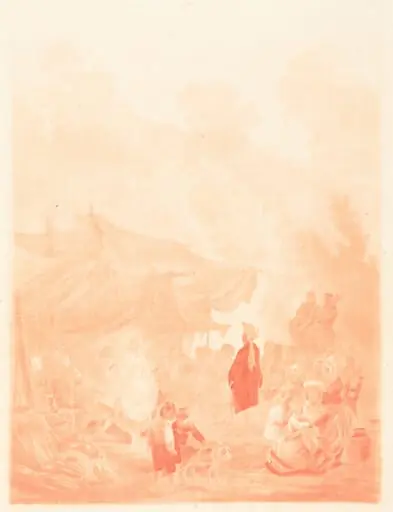
Descourtis employed etching for delicate lines and engraving for stronger contours, layering multiple plates to achieve subtle color effects. The composition is densely populated yet organized, with figures arranged in rhythmic groupings that guide the viewer’s eye across the scene. The use of muted, hand-applied washes enhances the naturalism of the setting without overwhelming the linear precision of the print.
History & Provenance
The print was produced during a period of growing interest in peasant life among French artists and collectors. Descourtis, known for his topographical and genre prints, circulated such works through print dealers in Paris. While no early ownership records are widely documented, the print’s survival in museum collections suggests it was valued for its documentary quality and technical skill.
Context
In the decades before the French Revolution, images of rural life gained popularity as urban audiences sought connection to perceived authenticity. Descourtis’s work aligns with contemporaries like Greuze and Boucher, who depicted peasant subjects with attention to costume and setting, though without overt moralizing. This print reflects a broader cultural fascination with regional customs and vernacular traditions.
Legacy
Noce de Village remains a representative example of late 18th-century French printmaking focused on everyday scenes. It contributed to the preservation of visual records of rural customs and influenced later artists interested in social realism. Though not widely reproduced today, its technical execution and observational depth continue to inform studies of print culture and folk life in pre-revolutionary France.
Artist & collection

Artist
Charles-Melchior Descourtis (1753–1820) was a French artist, born in Paris.