Artwork
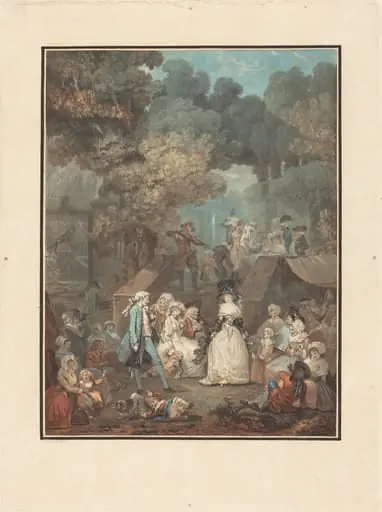
Noce de Village (Village Wedding)
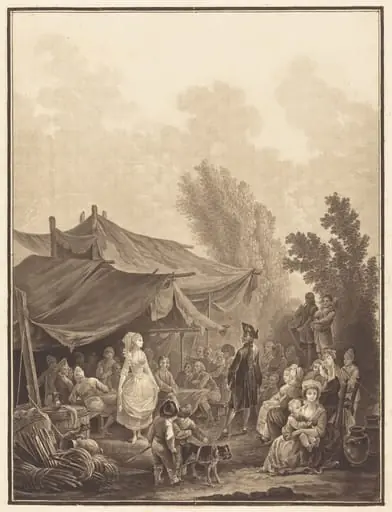
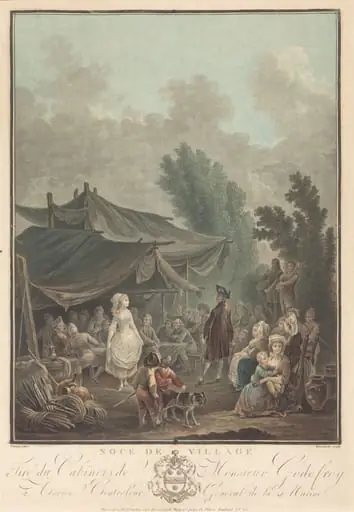
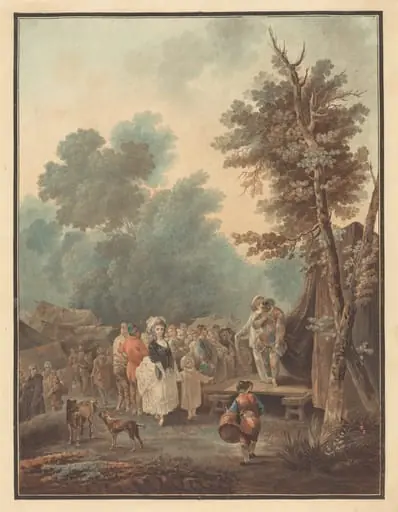
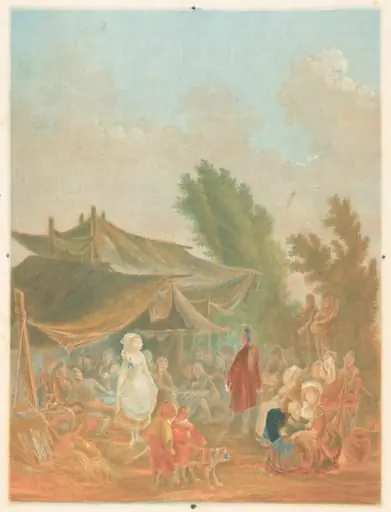
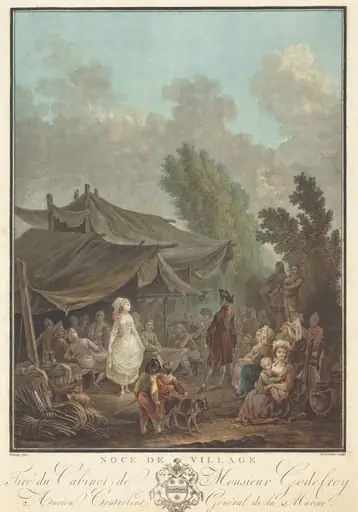
Noce de Village (Village Wedding) is an ink print by the Romanticist artist Charles-Melchior Descourtis. It dates from 1785 and is held in the collection of the National Gallery of Art.
About this work
Overview
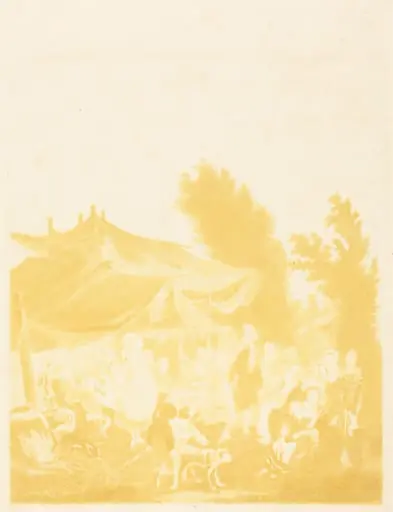
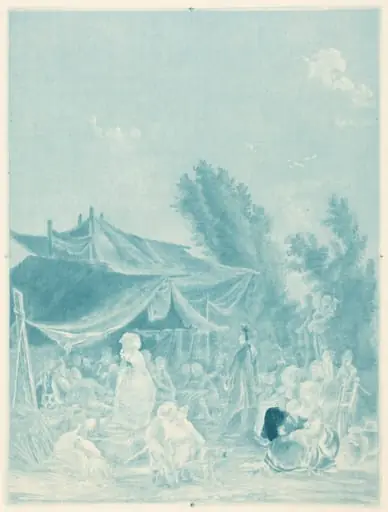
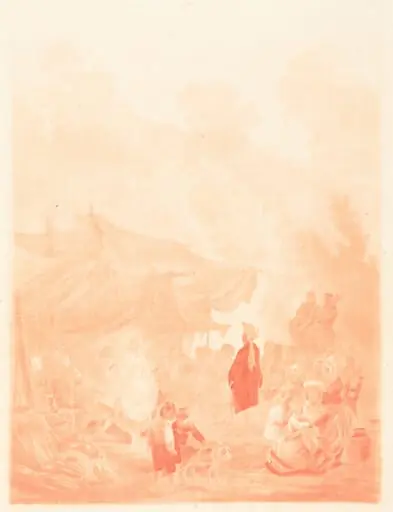
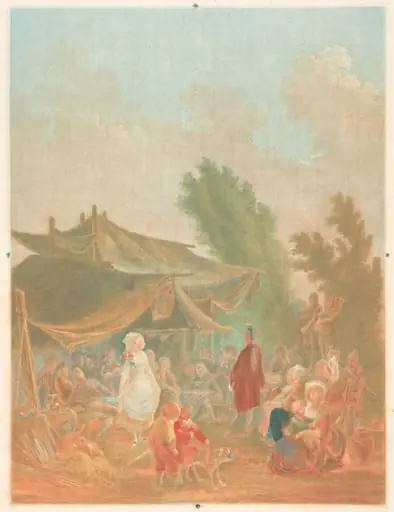
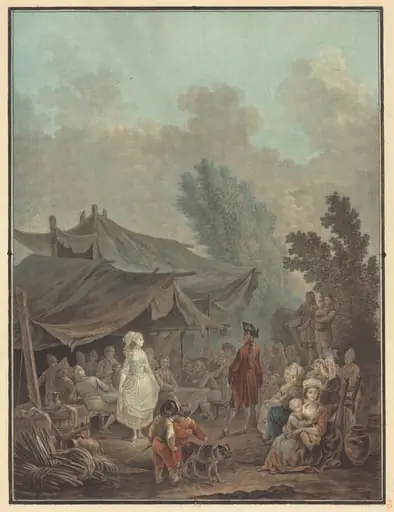
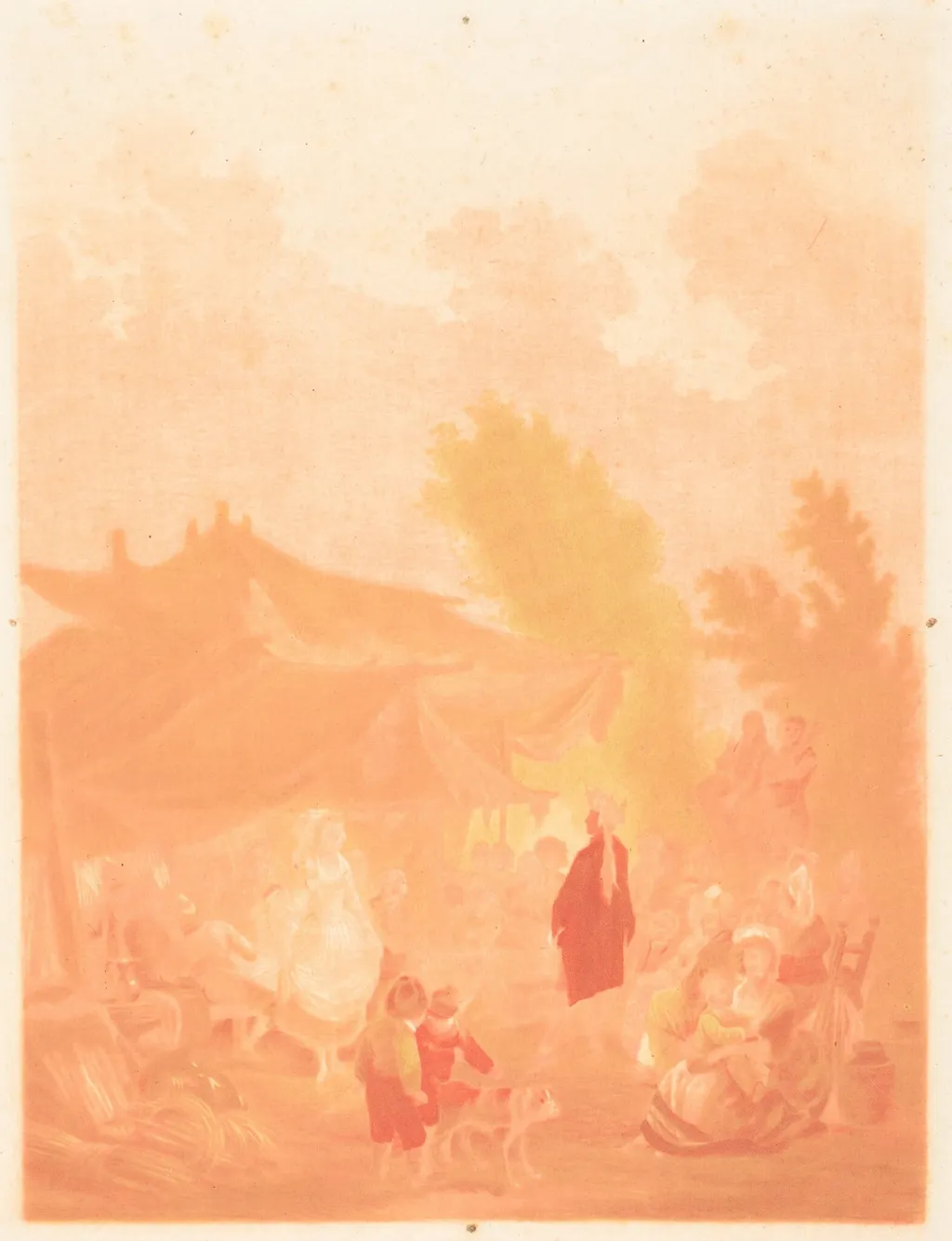
Charles-Melchior Descourtis produced the print Noce de Village, or Village Wedding, in 1785. Executed as a wash manner print, the work employs ochre and red‑pink inks applied in layered washes. The composition captures a domestic celebration within a modest interior, presenting a tightly arranged group of figures gathered around a central bride.
Subject & Meaning
The scene depicts a rural wedding ceremony, with the bride seated upright in a simple chair, her vivid red dress contrasting against the subdued surrounding walls. Guests fill the cramped space, suggesting communal participation and the importance of collective observance in village life. The arrangement emphasizes social ritual and the intimate scale of provincial festivities.
Technique & Style
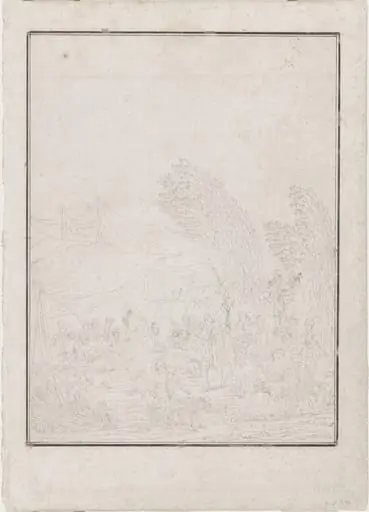
Descourtis first incised the design with fine lines, then applied ink washes using a cross‑hatching method to build tonal variation. The interplay of ochre and soft reds creates depth through layered shading, while the restrained line work conveys form with minimal strokes. This approach yields a sense of immediacy akin to a snapshot, yet remains carefully composed.
Context
Created in the late eighteenth century, the print reflects contemporary interest in genre scenes that document everyday customs. By focusing on a village wedding, Descourtis aligns with Enlightenment‑era curiosities about rural life, offering viewers a visual record of social practices outside urban centers.
Artist & collection

Artist
Charles-Melchior Descourtis (1753–1820) was a French artist, born in Paris.