Artwork
Self-portrait
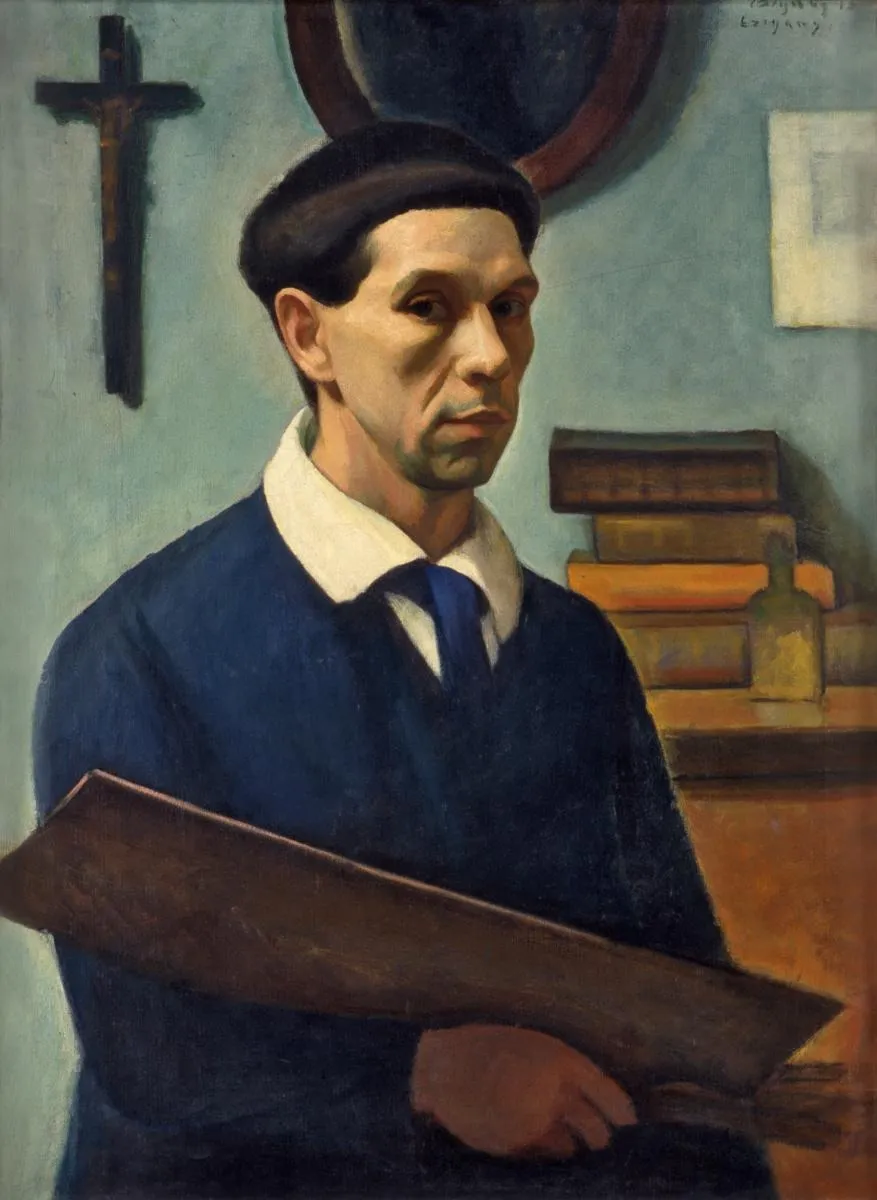
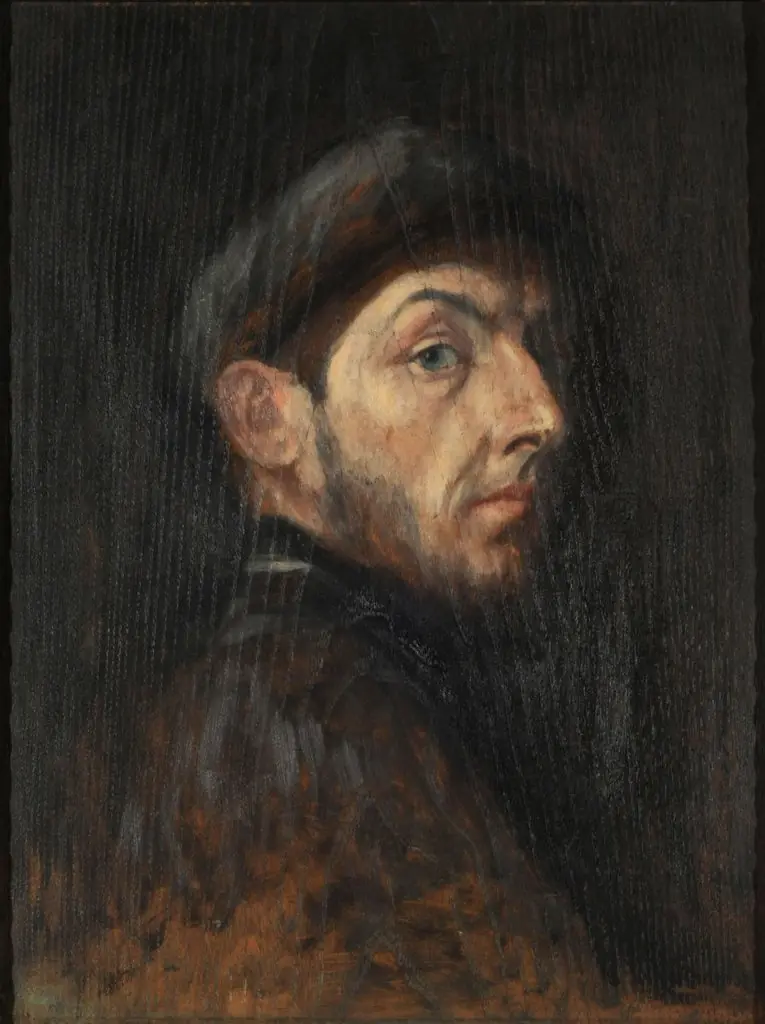
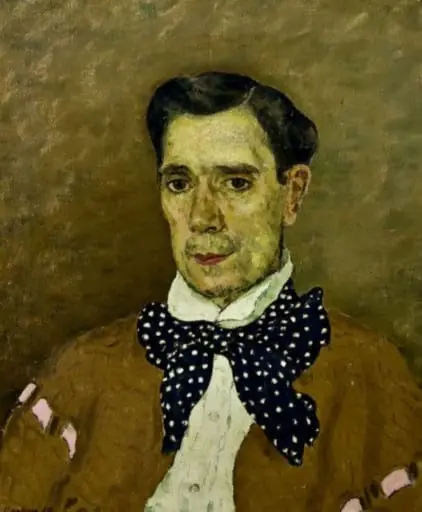
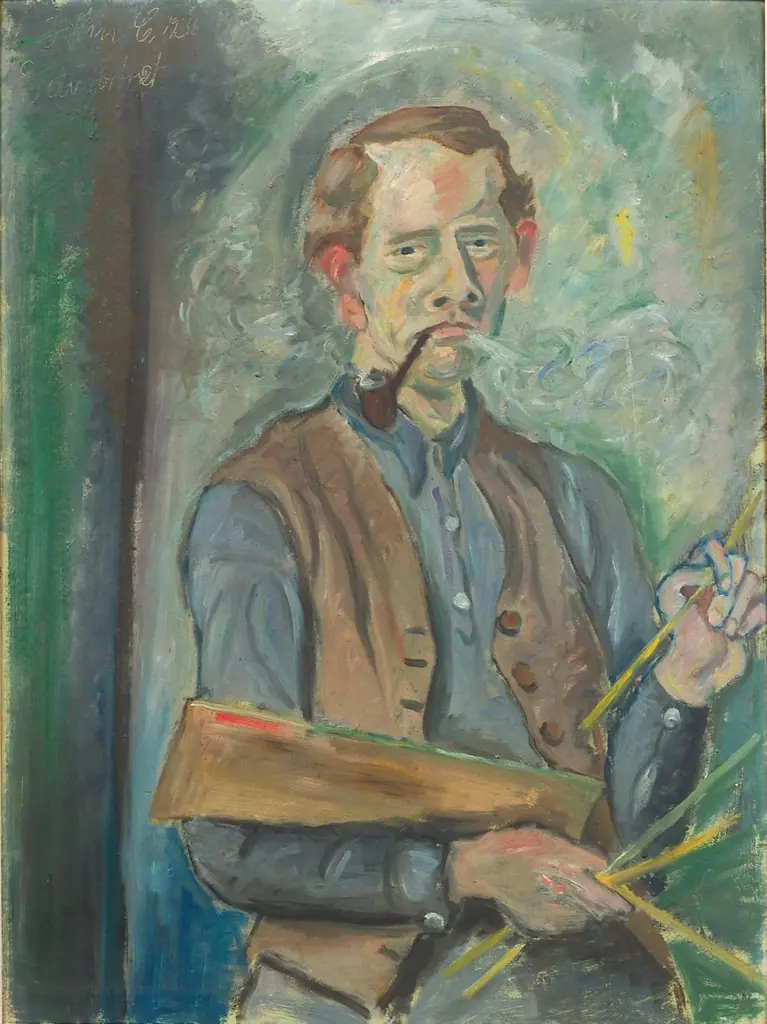
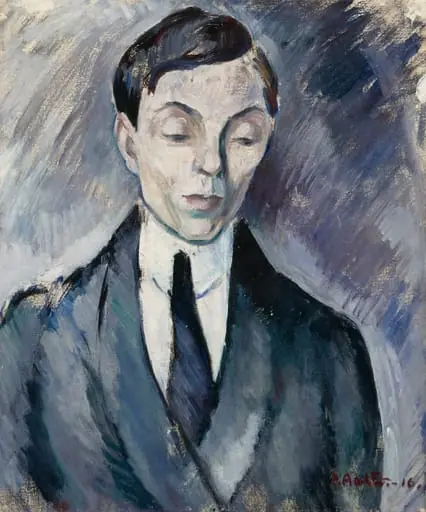
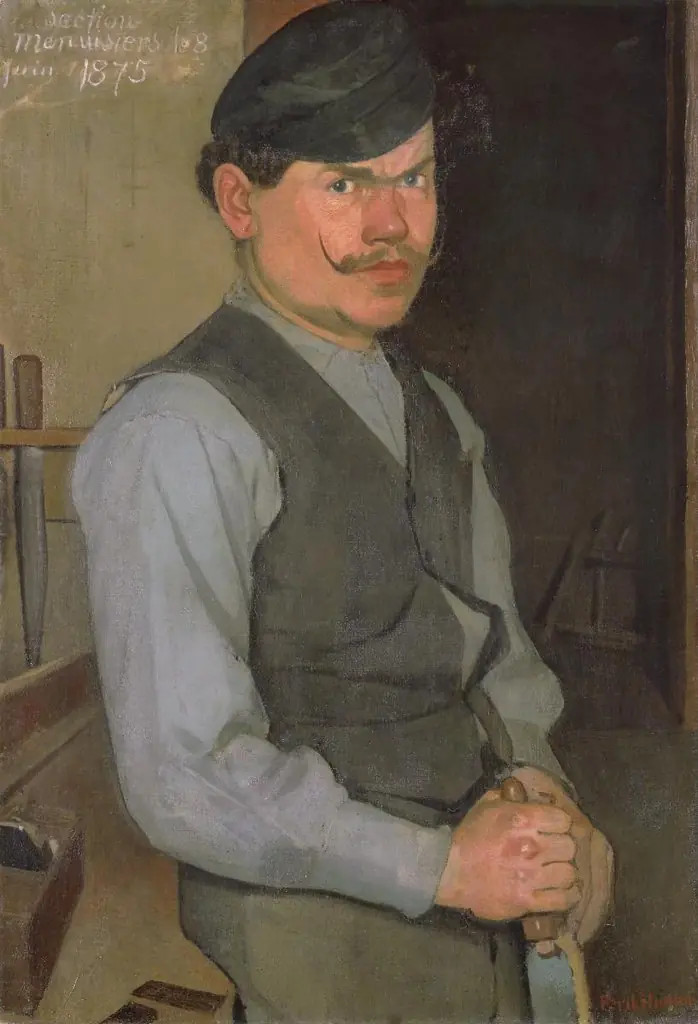
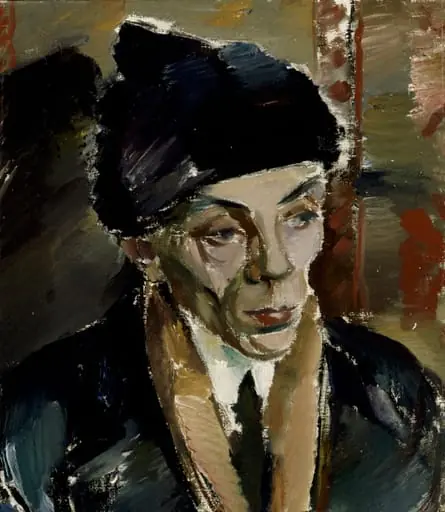
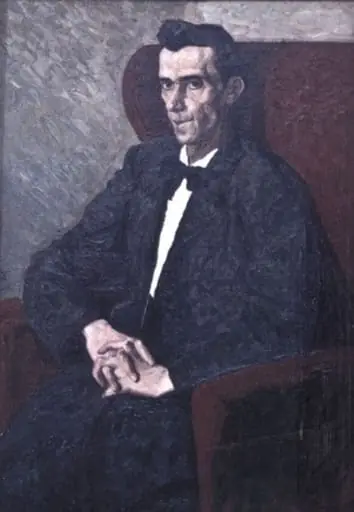
Self-portrait is an oil painting by Dezső Czigány. It dates from 1913 and is held in the collection of the Hungarian National Gallery.
About this work
Overview
Dezső Czigány's 1913 self-portrait is an oil painting depicting the artist in a contemplative pose, characterized by muted colors and realistic detail, now part of the Hungarian National Gallery's collection.
Subject & Meaning
The subject is Czigány himself, dressed in a dark blue shirt, tie, and white collar, holding an indeterminate brown object (possibly a paper or book), conveying an air of introspection against a symbolic backdrop featuring a cross on a light blue wall.
Technique & Style
Executed in a predominantly realistic style with attention to facial and textile details, the painting utilizes chiaroscuro for depth, impasto for texture, and glazing to enhance the subdued color palette dominated by blues and browns.
History & Provenance
Created in 1913 by Czigány, a key figure in introducing avant-garde movements (cubism, fauvism, expressionism) to Hungary post-studies in Munich and Paris, as part of the influential group 'The Eight', the work remains in the Hungarian National Gallery.
Context
Reflecting Czigány's role in modernizing Hungarian art, this self-portrait balances traditional representation with emerging European art trends of the early 20th century, amidst his Budapest-centric life (1883-1937).
Legacy
As a piece by a pivotal artist in Hungarian modernism, the self-portrait contributes to the legacy of 'The Eight', illustrating the group's impact on the country's artistic transition in the pre-WWI era.
Artist & collection
Artist
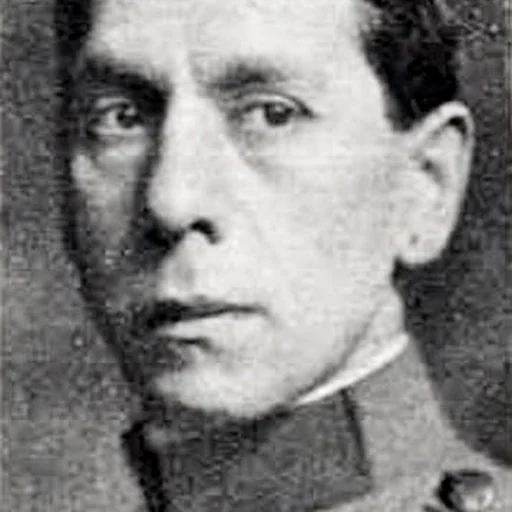
Dezső Czigány (1 June 1883 – 31 December 1937) was a Hungarian painter who was born and died in Budapest.