Artwork
The Mass of Saint Gregory
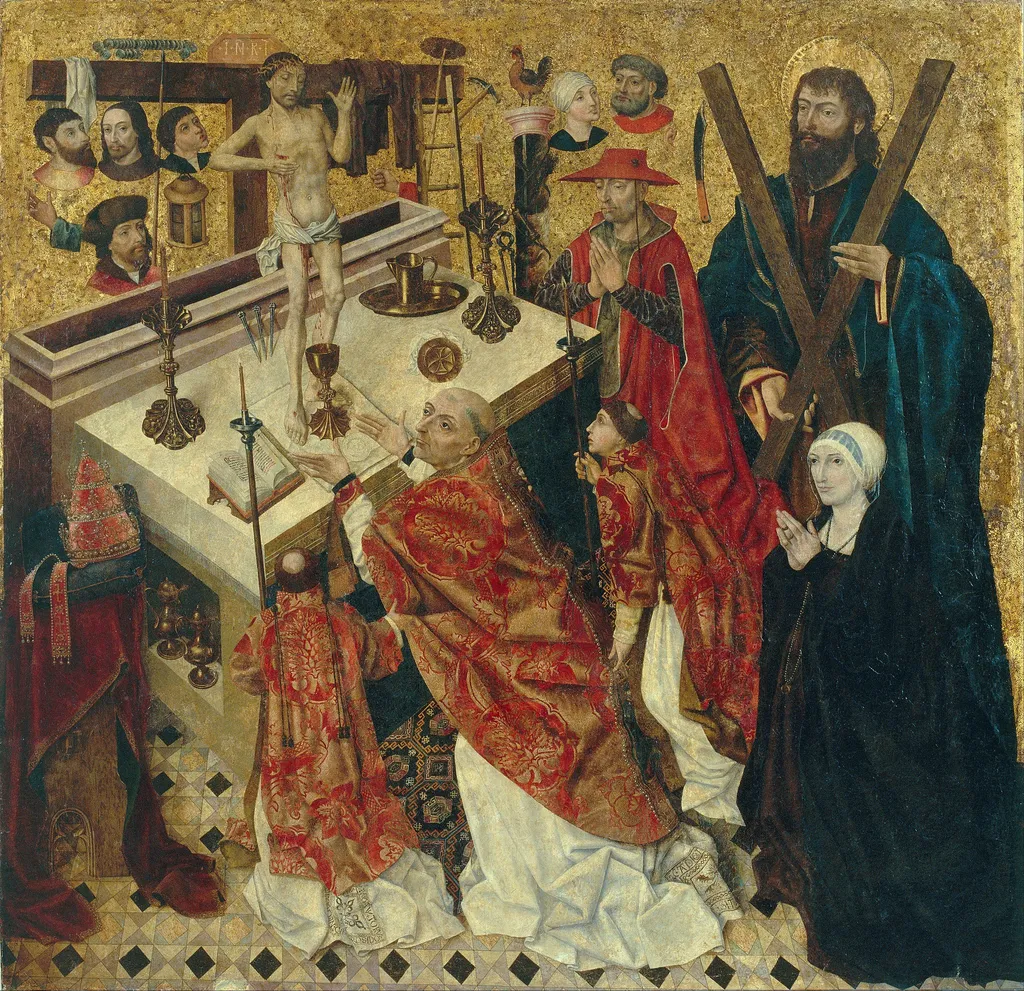
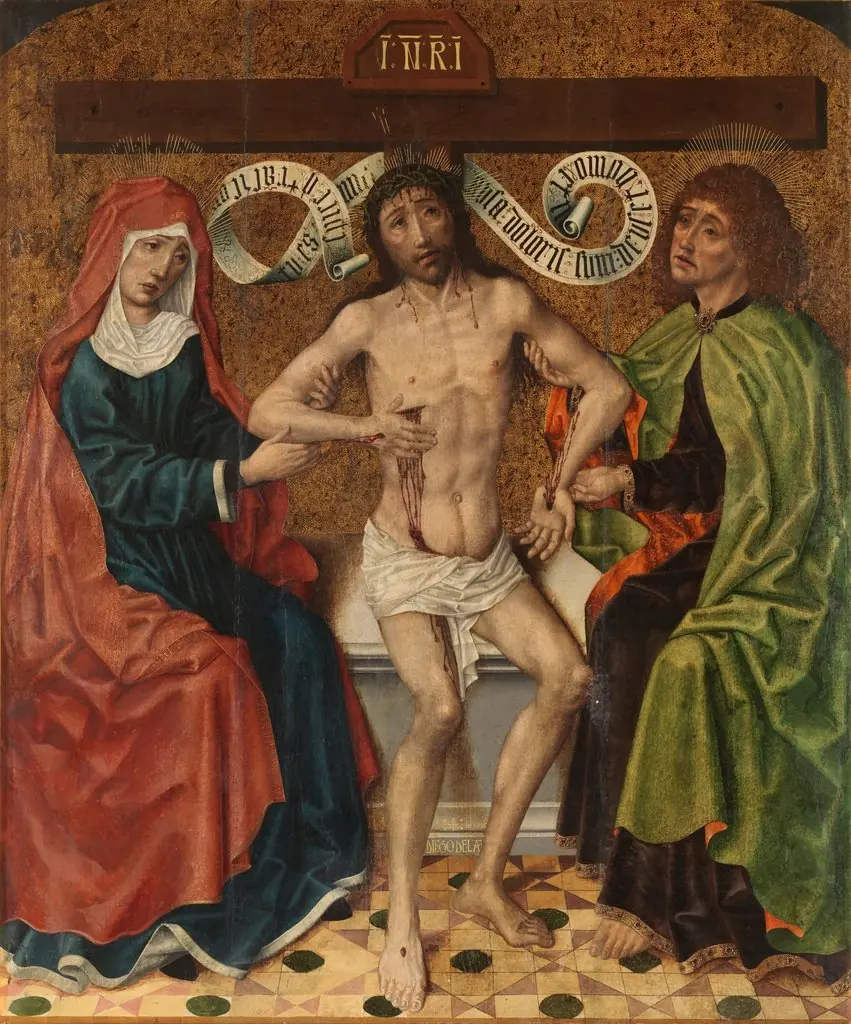
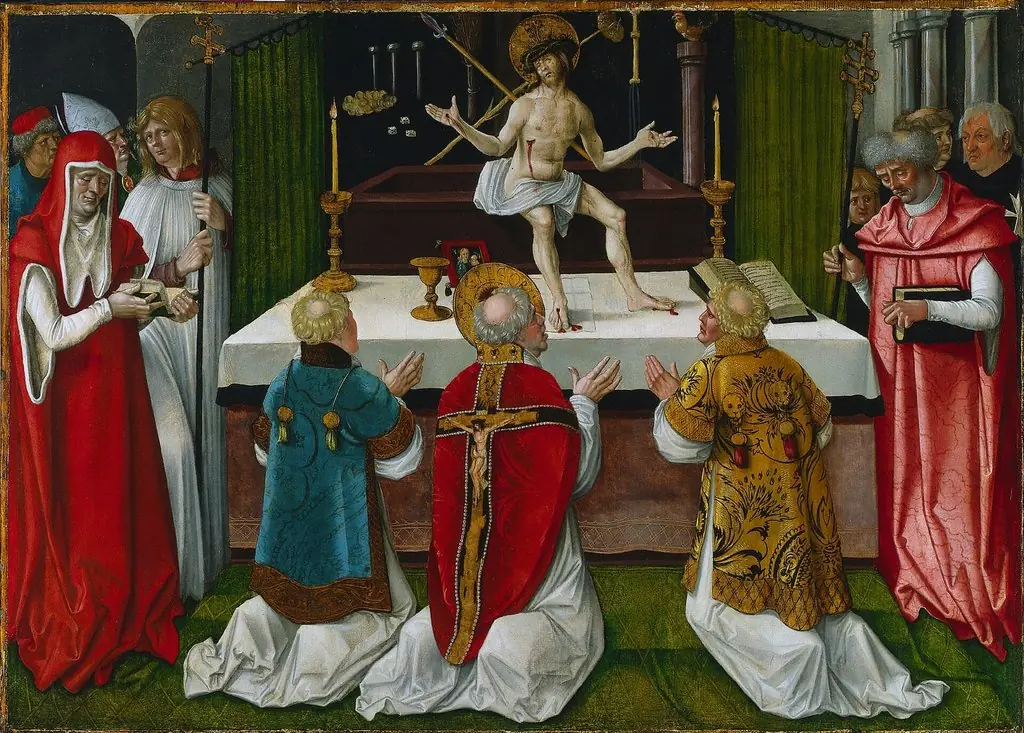
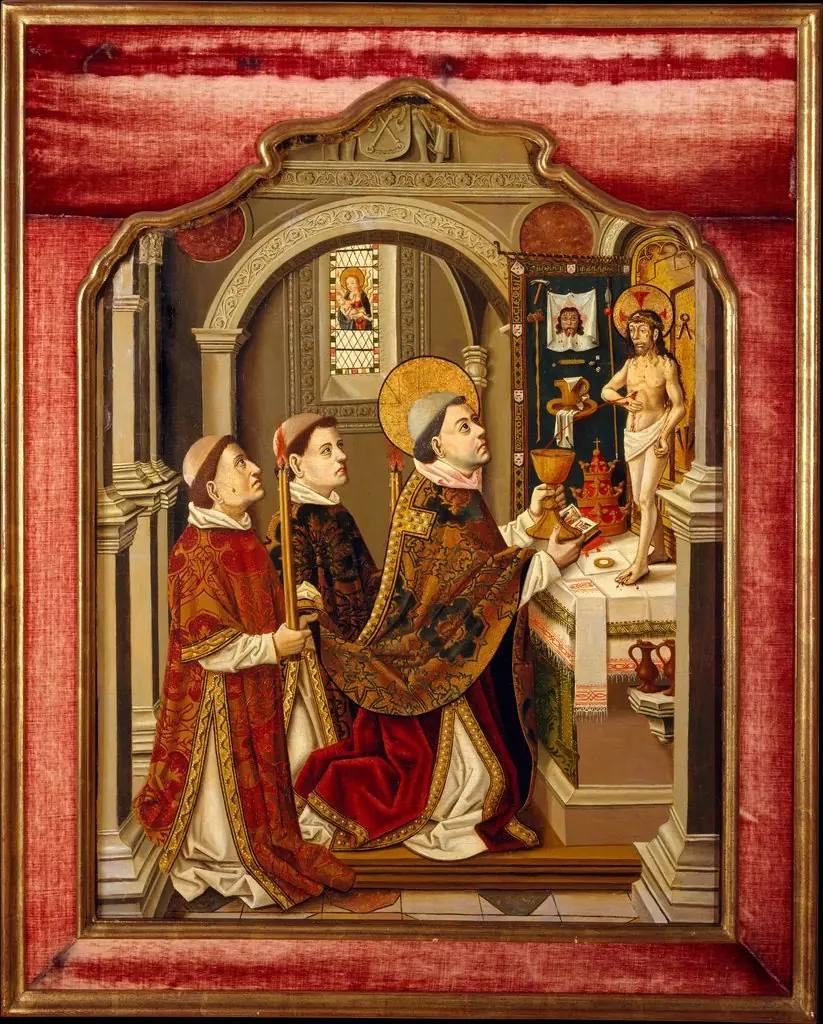
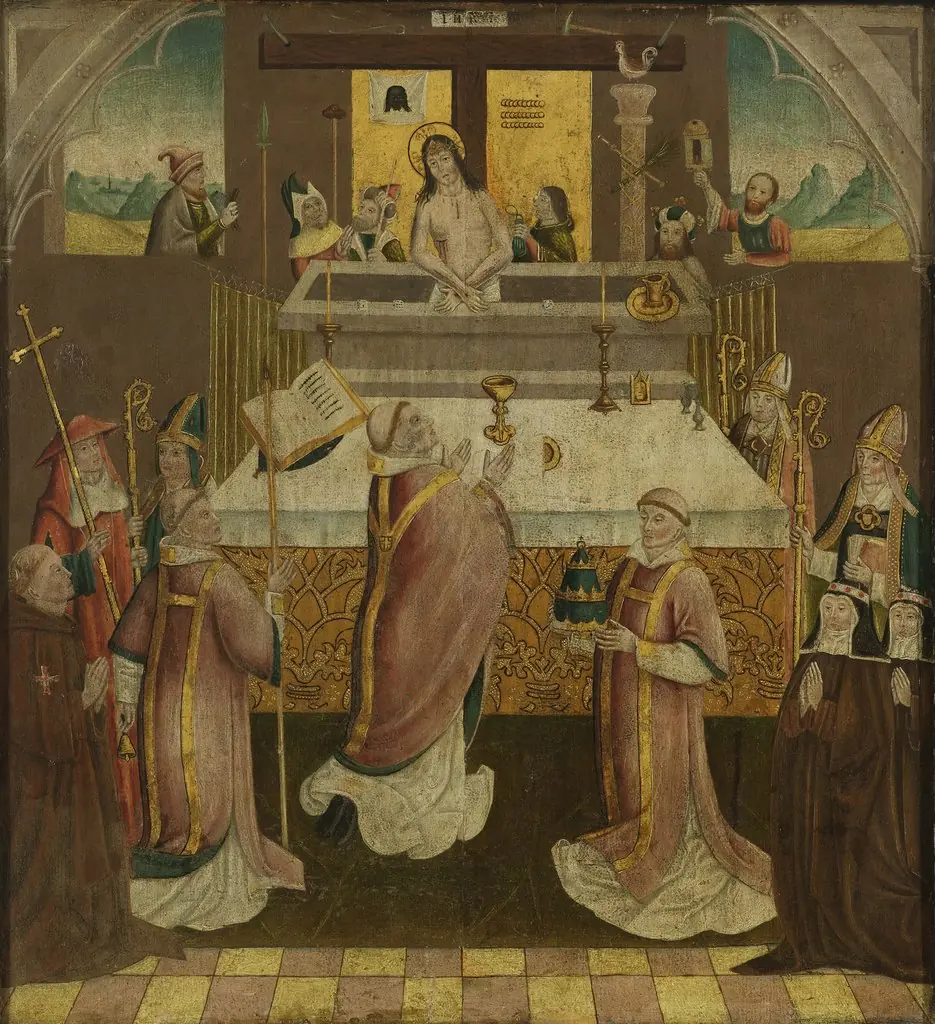
The Mass of Saint Gregory is an unspecified painting by the Early Renaissance artist Diego de la Cruz. It dates from 1475 and is held in the collection of the Museu Nacional d'Art de Catalunya.
About this work
Overview
Painted around 1475, *The Mass of Saint Gregory* is attributed to Diego de la Cruz, an artist active in northern Spain during the late 15th century.
Painted around 1475, *The Mass of Saint Gregory* is attributed to Diego de la Cruz, an artist active in northern Spain during the late 15th century. Likely of Flemish descent, he worked within the Burgos region, blending Northern European precision with Iberian devotional traditions. The work is a religious panel executed in tempera and gold leaf, now held by the Museu Nacional d'Art de Catalunya. Its composition reflects the transitional style of early Renaissance Spain, where spiritual narrative remains central.
Subject & Meaning
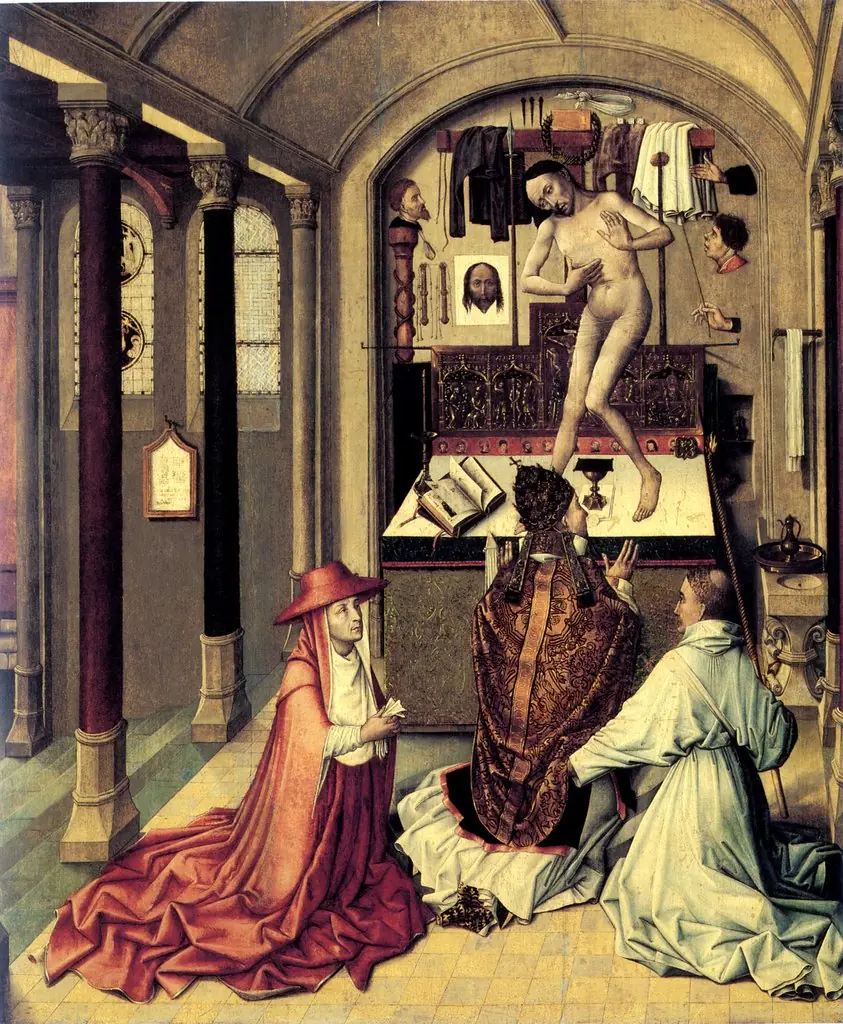
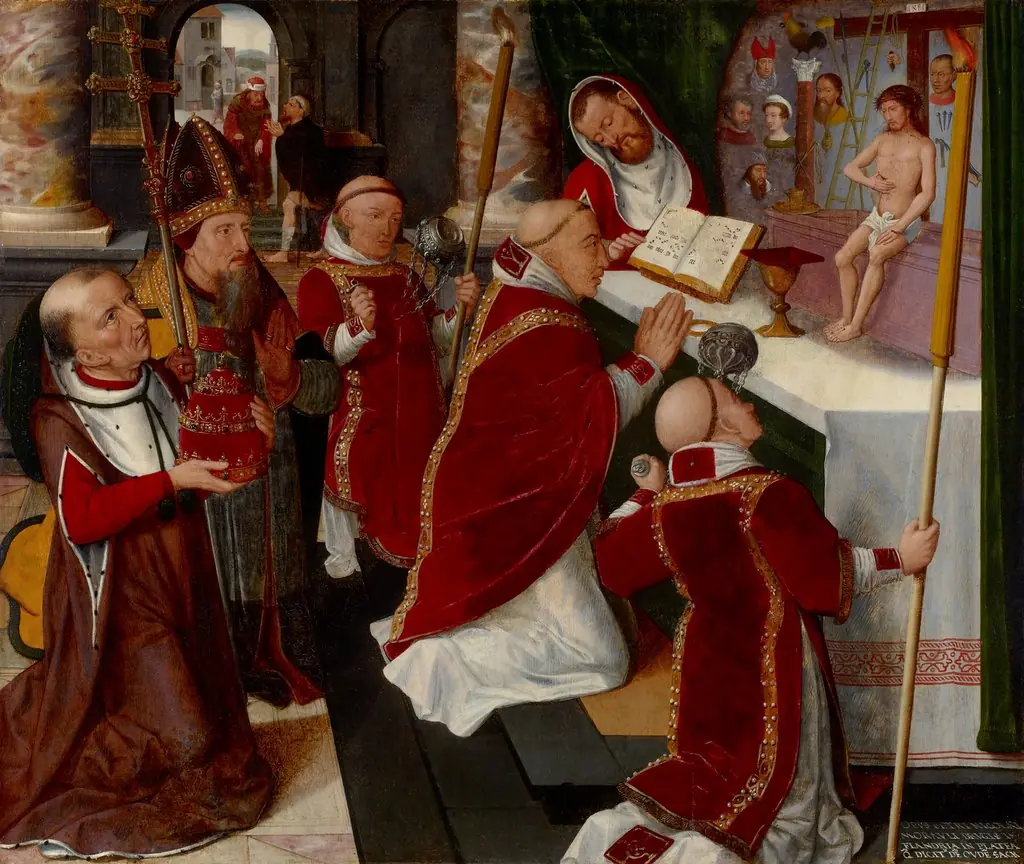
The painting illustrates a legendary moment when Saint Gregory the Great, while celebrating Mass, is granted a vision of Christ on the cross, affirming the doctrine of transubstantiation. The scene centers on the altar where Christ appears in glory, surrounded by clergy and witnesses. Their gestures—prayer, reverence, and contemplation—emphasize the sacredness of the Eucharist. The inclusion of specific figures, including a kneeling donor and a cleric holding a cross, reinforces the connection between earthly ritual and divine revelation.
Technique & Style
The artist employs fine brushwork and rich pigments to render intricate textiles, facial expressions, and metallic details. Gold leaf backgrounds, typical of medieval altarpieces, elevate the sacred atmosphere while contrasting with the naturalistic rendering of figures. Spatial depth is suggested through overlapping forms and varied scale, though perspective remains stylized. The meticulous attention to costume and ornamentation reflects Flemish influence, while the overall structure adheres to Spanish liturgical conventions of the period.
History & Provenance
The painting likely originated as part of a devotional altarpiece in a Spanish church or monastery, possibly commissioned by a noble patron seeking to affirm orthodoxy. It entered the collection of the Museu Nacional d'Art de Catalunya in the early 20th century, having been transferred from a religious institution in Catalonia. Its survival through the secularizations of the 19th century underscores its recognized artistic and historical value within Spanish ecclesiastical heritage.
Context
Created during a period of religious consolidation in Spain, the painting responds to growing emphasis on Eucharistic devotion and the authority of the Church. It aligns with broader European trends in late Gothic art, where theological concepts were made visually accessible. The blending of Northern detail with Iberian iconography reflects the cultural exchange occurring in Castile, particularly in urban centers like Burgos, where Flemish artists and techniques were increasingly influential.
Legacy
Though not widely known outside specialist circles, the work exemplifies the quiet sophistication of Spanish religious painting before the full impact of the Italian Renaissance. Its preservation offers insight into how devotional imagery functioned in local communities. The painting’s technical quality and symbolic clarity helped shape later Spanish altarpiece traditions, serving as a bridge between medieval iconography and emerging Renaissance sensibilities in the Iberian Peninsula.
Own this work as a print
Artist & collection
Artist
Diego de la Cruz (fl. 1482 – 1500) was a Spanish painter who may have been of Flemish origin. He was active in Burgos and the neighboring region.