Artwork
Equestrian Portrait of Philip IV
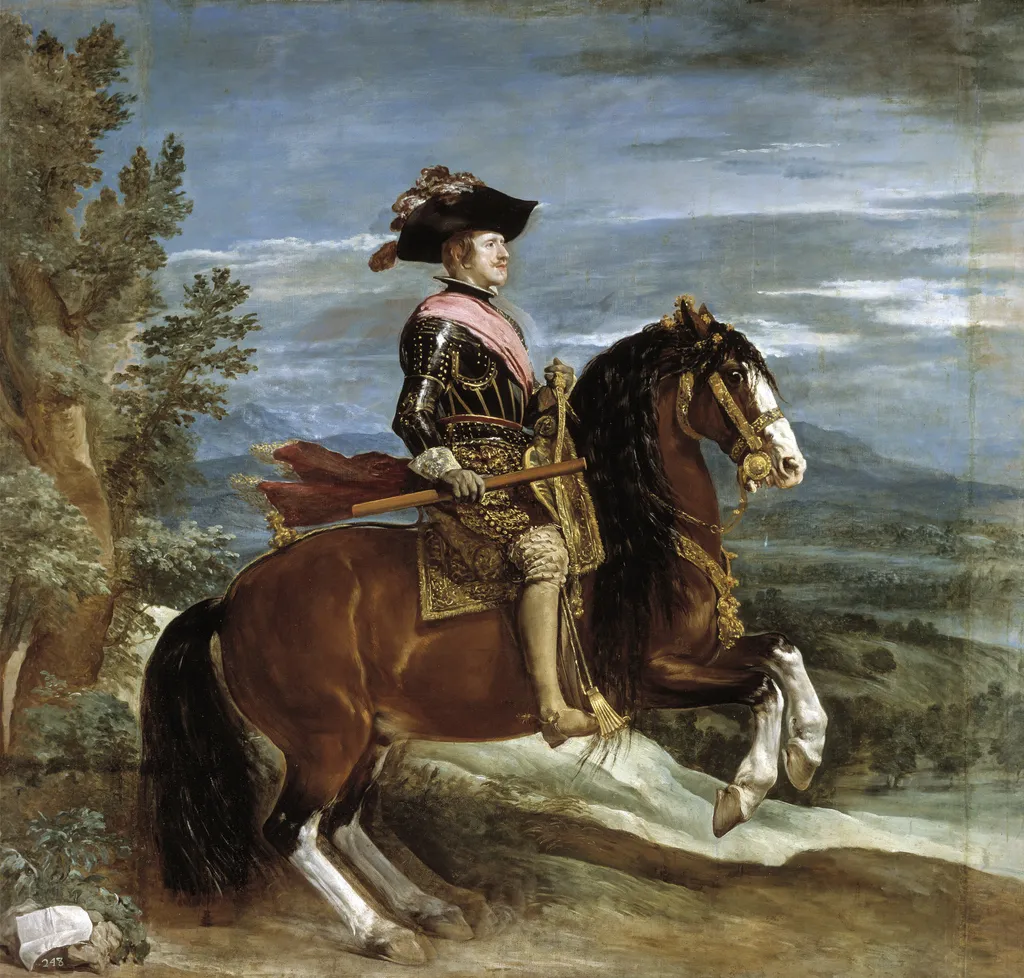
Equestrian Portrait of Philip IV is an oil painting by the Early Baroque Italian artist Diego Velázquez. It dates from 1634 and is held in the collection of the Museo del Prado.
About this work
Overview
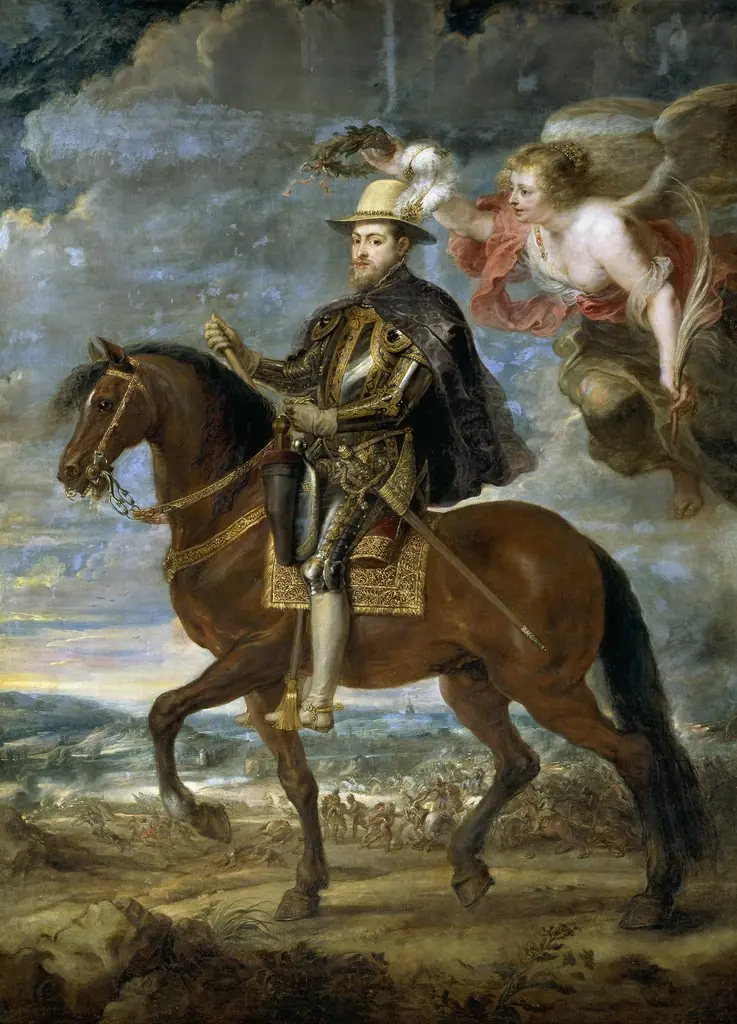
Diego Velázquez executed this oil painting between 1635 and 1636, depicting King Philip IV of Spain mounted on a dark brown horse. The work formed part of a set of equestrian portraits intended for the Hall of Realms, a gallery within the Buen Retiro Palace in Madrid. It was displayed alongside a companion portrait of the king’s son, Prince Balthasar Charles.
Subject & Meaning
The rider is shown in elaborate armor, his black hat adorned with a prominent feather, holding a long riding staff as he guides the horse up a rugged slope. The composition emphasizes royal authority and martial prowess, presenting the monarch as a confident, controlled figure against a natural landscape of trees and a distant sky.
Technique & Style
Velázquez employs a chiaroscuro scheme that models the rider’s face in bright light against the darker mass of the horse, creating a sense of three‑dimensionality. The metallic sheen of the armor and the gold‑trimmed bridle are rendered with fine brushwork, while the muscular tension of the horse is suggested through subtle tonal shifts rather than detailed anatomy.
History & Provenance
Commissioned for the Hall of Realms, the portrait originally hung in a wing of the Buen Retiro Palace, a royal residence that served as a ceremonial space for the Spanish court. Over time the painting was transferred to the national collection, eventually becoming part of the Prado Museum’s holdings, where it remains accessible to the public.
Own this work as a print
Artist & collection
Artist
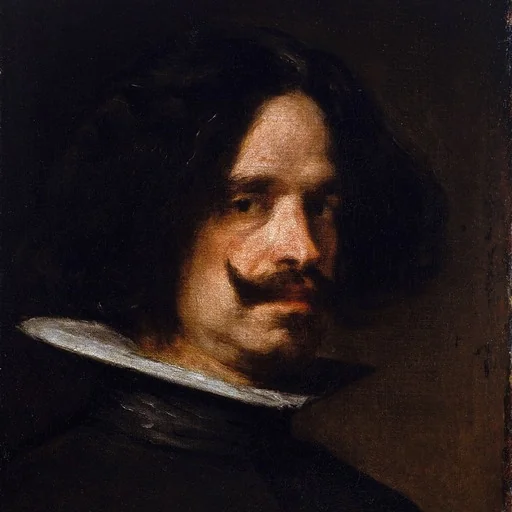
Diego Rodríguez de Silva y Velázquez was a Spanish Baroque painter, the leading artist in the court of King Philip IV of Spain and Portugal, and of the Spanish Golden Age.