Artwork
Equestrian Portrait of the Count-Duke of Olivares
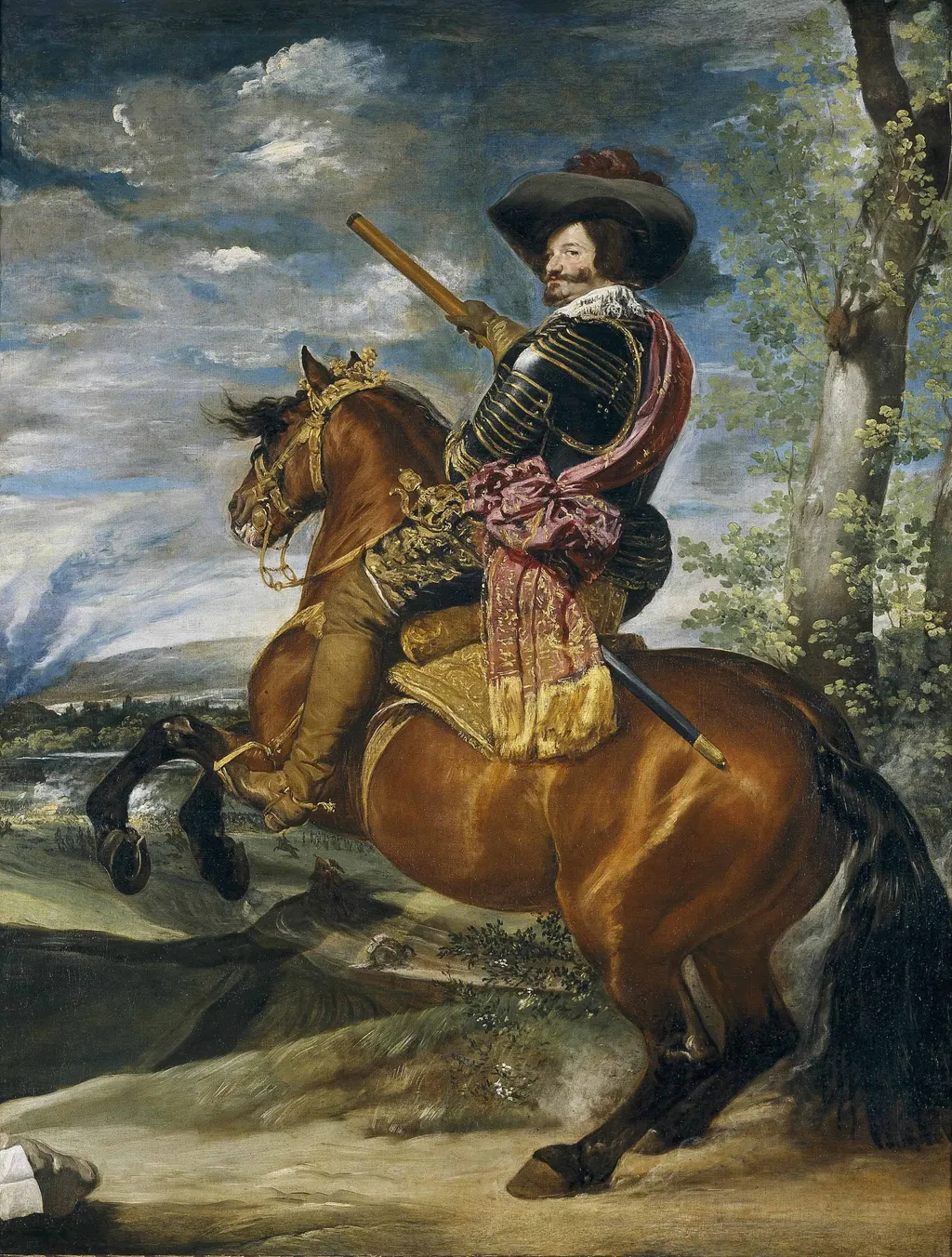
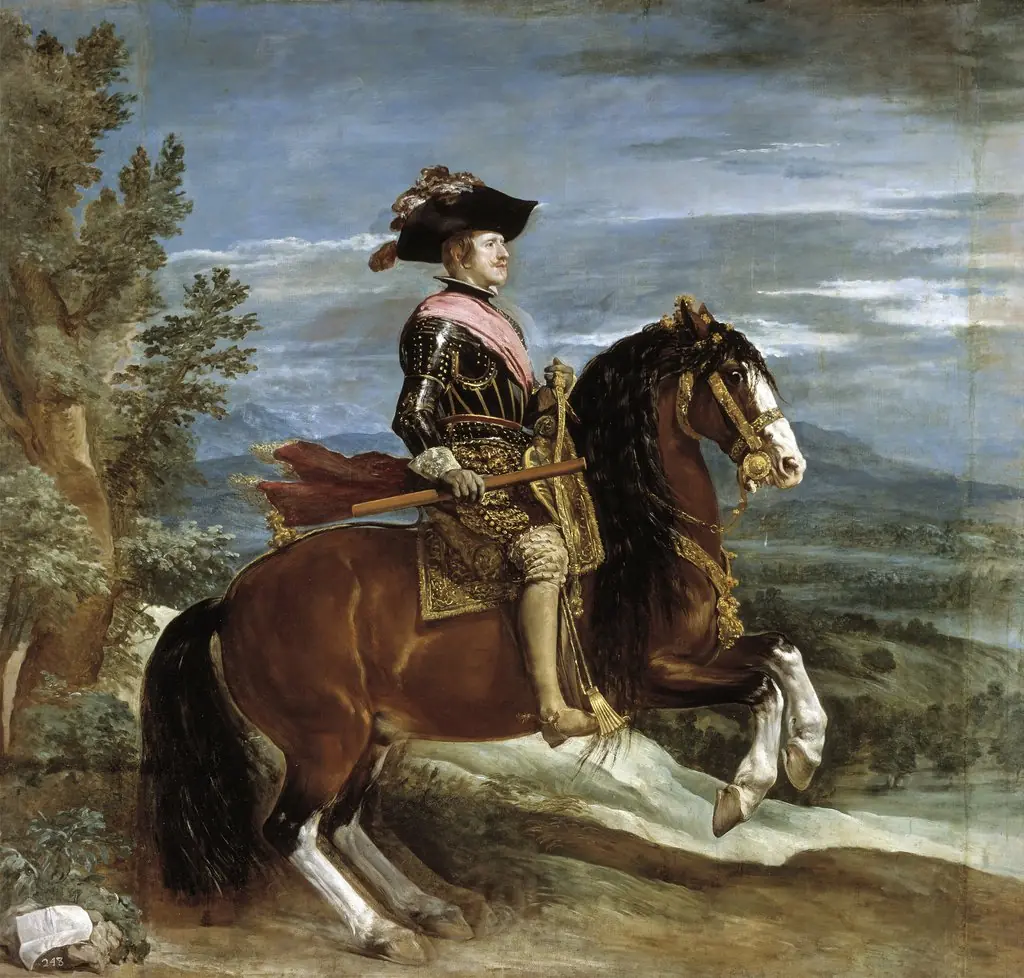
Equestrian Portrait of the Count-Duke of Olivares is an oil painting by the Early Baroque Italian artist Diego Velázquez. It dates from 1636 and is held in the collection of the Museo del Prado.
About this work
Overview
This painting, now a part of the Museo del Prado's collection, was intended to project the authority and power of Philip IV's chief minister.
Diego Velázquez's "Equestrian Portrait of the Count-Duke of Olivares," an oil on canvas created around 1636, depicts Gaspar de Guzmán, a prominent Spanish statesman. This painting, now a part of the Museo del Prado's collection, was intended to project the authority and power of Philip IV's chief minister. It is notable for its dynamic composition and vibrant palette, which distinguish it from many of Velázquez's more subdued works.
Subject & Meaning
The artwork features Gaspar de Guzmán, known as the Count-Duke of Olivares, who wielded considerable political influence as chief minister to King Philip IV of Spain. Velázquez's portrayal aims to affirm Olivares's status and power. The nobleman is depicted in armor, astride a powerful, tensed horse ascending a rocky slope, symbolizing military prowess and leadership—qualities essential for a figure of his political standing in 17th-century Spain.
Technique & Style
This portrait represents a stylistic departure for Velázquez. Unlike his typically more restrained and somber works, the "Equestrian Portrait" employs a vigorous design and a richer color scheme. The dynamic pose of the brown horse, with its tensed muscles, and the Count-Duke's striking red cloak and black hat against a cloudy sky, create a sense of grandeur and movement. The rider's serious yet calm expression contrasts with the energetic foreground, while a distant, winding river offers a quiet backdrop.
History & Provenance
The "Equestrian Portrait of the Count-Duke of Olivares" has been a part of the collection at the Museo del Prado in Madrid since the institution first opened its doors in 1819. Its continuous presence in this prominent Spanish museum underscores its historical significance and enduring recognition as a key work by Velázquez within the national heritage.
Own this work as a print
Artist & collection
Artist
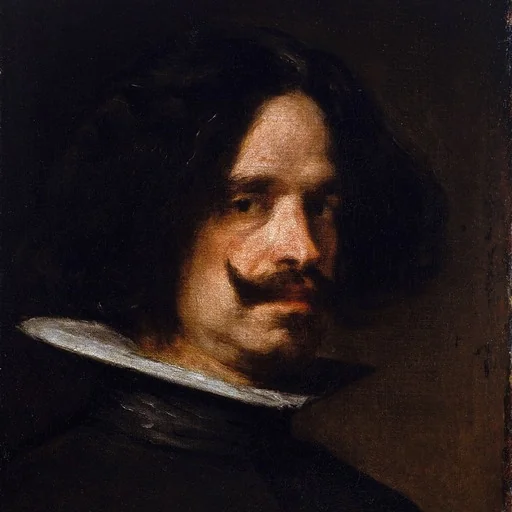
Diego Rodríguez de Silva y Velázquez was a Spanish Baroque painter, the leading artist in the court of King Philip IV of Spain and Portugal, and of the Spanish Golden Age.