Artwork
Equestrian Portrait of Prince Balthasar Charles
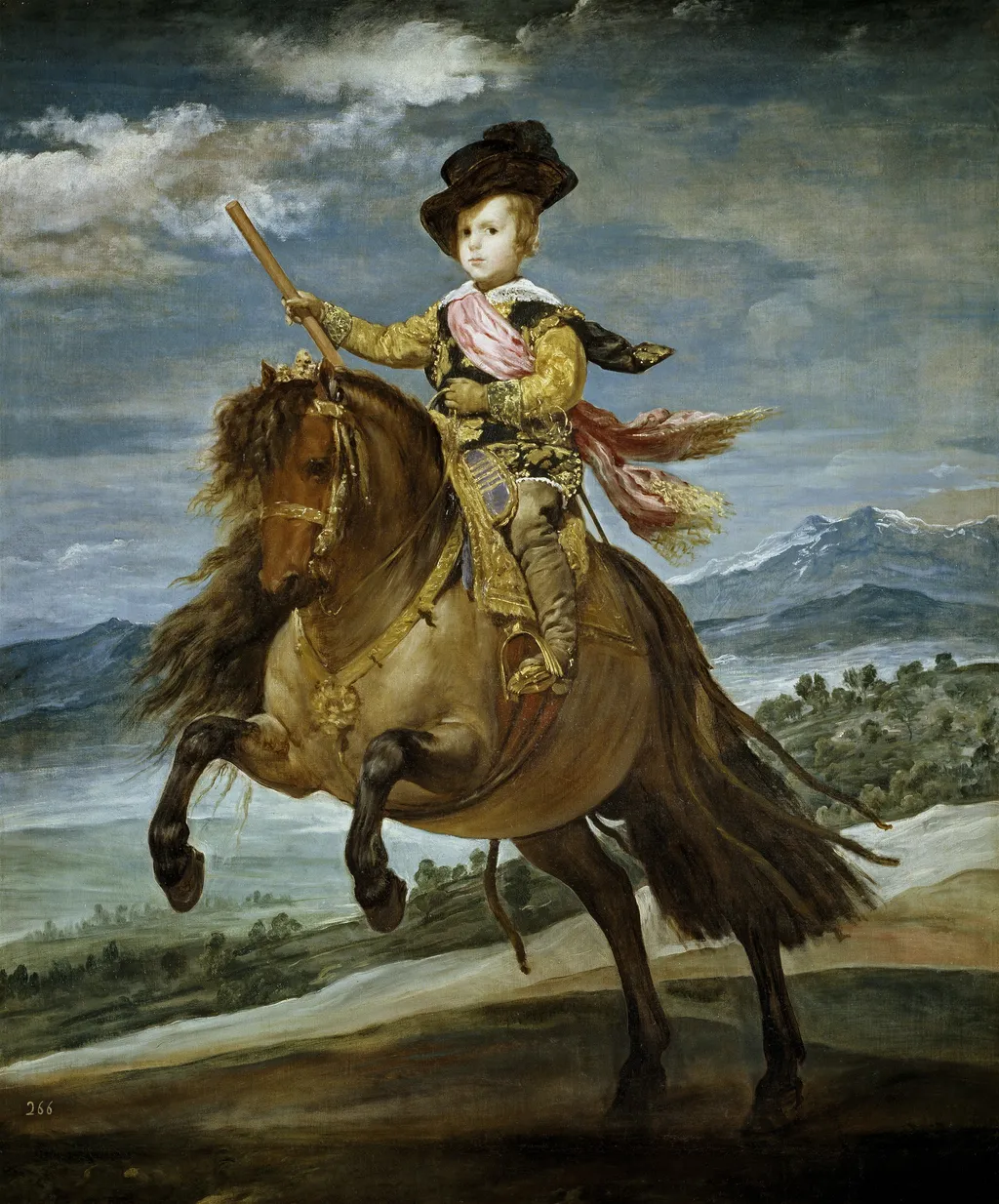
Equestrian Portrait of Prince Balthasar Charles is an oil painting by the Early Baroque Italian artist Diego Velázquez. It dates from 1634 and is held in the collection of the Museo del Prado.
About this work
Overview
Diego Velázquez completed the Equestrian Portrait of Prince Balthasar Charles between 1634 and 1635. This oil painting depicts Balthasar Charles, then Prince of Asturias, mounted on horseback. It is a significant work by the Spanish master, showcasing his skill in royal portraiture. The artwork is currently housed in the collection of the Prado Museum in Madrid.
Subject & Meaning
By portraying the young prince astride a horse, Velázquez conveyed the future monarch's regal stature and his destined role as a leader, even in childhood.
This painting features Prince Balthasar Charles, the heir apparent to the Spanish throne, presented in a formal equestrian pose. Such portraits were customary for European royalty, symbolizing power, authority, and military prowess from a young age. By portraying the young prince astride a horse, Velázquez conveyed the future monarch's regal stature and his destined role as a leader, even in childhood.
History & Provenance
Commissioned during Velázquez's tenure as court painter to King Philip IV, this portrait formed part of a series of royal equestrian paintings. These works were intended for the Hall of Realms in the Buen Retiro Palace, a grand royal residence. After centuries within royal collections, the painting eventually entered the public domain and is now a prominent piece within the Prado Museum's extensive holdings, representing a key period in Spanish art.
Own this work as a print
Artist & collection
Artist
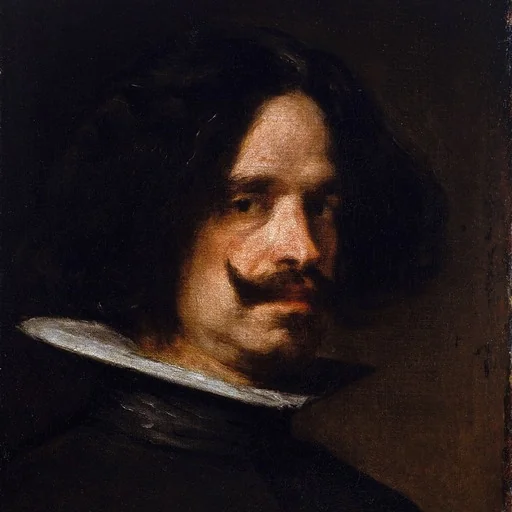
Diego Rodríguez de Silva y Velázquez was a Spanish Baroque painter, the leading artist in the court of King Philip IV of Spain and Portugal, and of the Spanish Golden Age.