Artwork
Equestrian Portrait of the Duke of Lerma
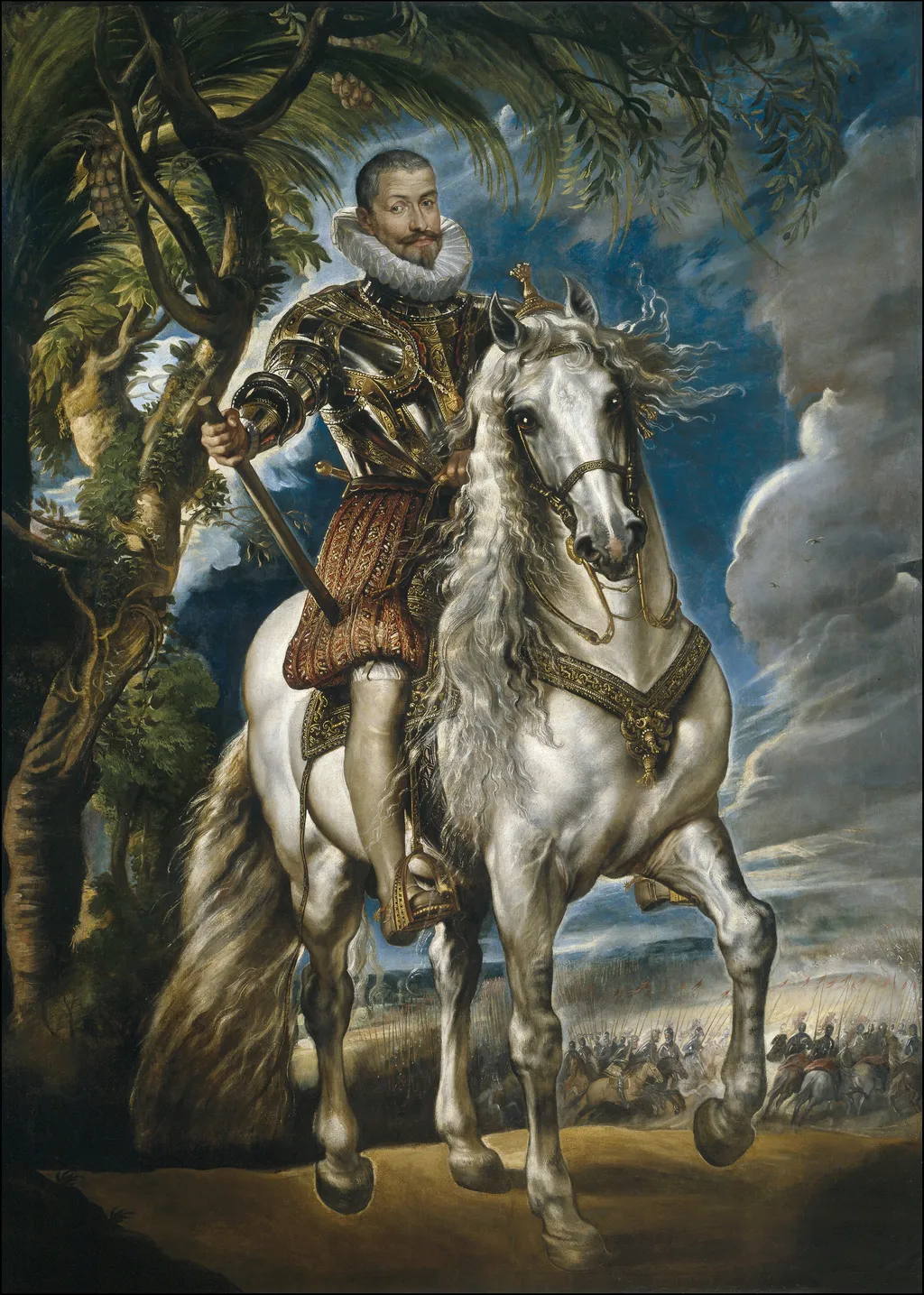
Equestrian Portrait of the Duke of Lerma is an oil painting by the Flemish Baroque painting artist Peter Paul Rubens. It dates from 1603 and is held in the collection of the Museo del Prado.
About this work
Overview
Executed in oil on canvas, the work presents the Duke in elaborate armor and a red sash, holding a commander's baton to signify his military authority.
Painted in 1603 during his first visit to Spain, the Equestrian Portrait of the Duke of Lerma depicts Francisco Gómez de Sandoval, the powerful valido of King Philip III, astride a rearing white horse. Executed in oil on canvas, the work presents the Duke in elaborate armor and a red sash, holding a commander's baton to signify his military authority. Rubens composed the figure dynamically against a dark, wooded background, contrasting the polished surface of the armor and the horse's musculature with a distant, atmospheric landscape featuring a battlefield and encampment. This composition draws heavily on the tradition of imperial equestrian portraiture, particularly Titian's Portrait of Charles V at Mühlberg, adapting the format to celebrate the Duke's status as the de facto ruler of Spain. The painting marks a pivotal moment in Rubens's career, demonstrating his mastery of the Italian Renaissance style while establishing his reputation at the Spanish court. It remains a defining example of Flemish Baroque portraiture, currently held in the Museo del Prado in Madrid.
Subject & Meaning
The portrait presents the Duke of Lerma mounted on a white horse, his posture commanding and direct. Dressed in elaborate, gleaming armor adorned with gold and red, he holds a baton, a symbol of authority. The background features a leaning dark tree and a distant battlefield with soldiers and tents beneath a cloudy sky, suggesting his military or political influence and the turbulent context of his era.
Technique & Style
Rubens employed oil paint to achieve a sense of robust realism, particularly evident in the horse's musculature rendered with thick brushstrokes. The artist utilized dramatic chiaroscuro, creating strong contrasts between light and shadow that make the Duke's armor glint and his serious face stand out. This interplay of light and detailed ornamentation emphasizes the subject's imposing presence and the richness of his attire.
Own this work as a print
Artist & collection
Artist
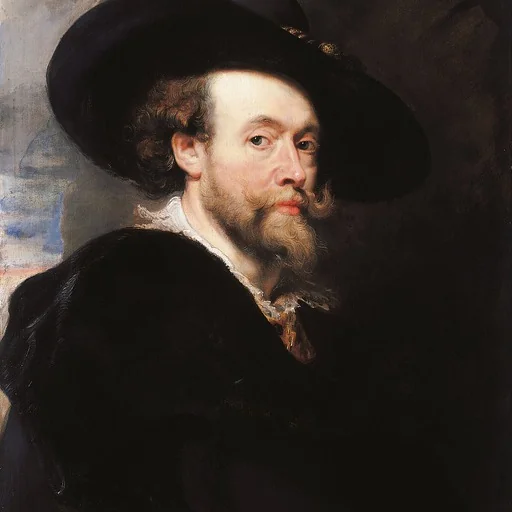
Sir Peter Paul Rubens ( ROO-bənz; Dutch: ; 28 June 1577 – 30 May 1640) was a Flemish artist and diplomat.