Artwork
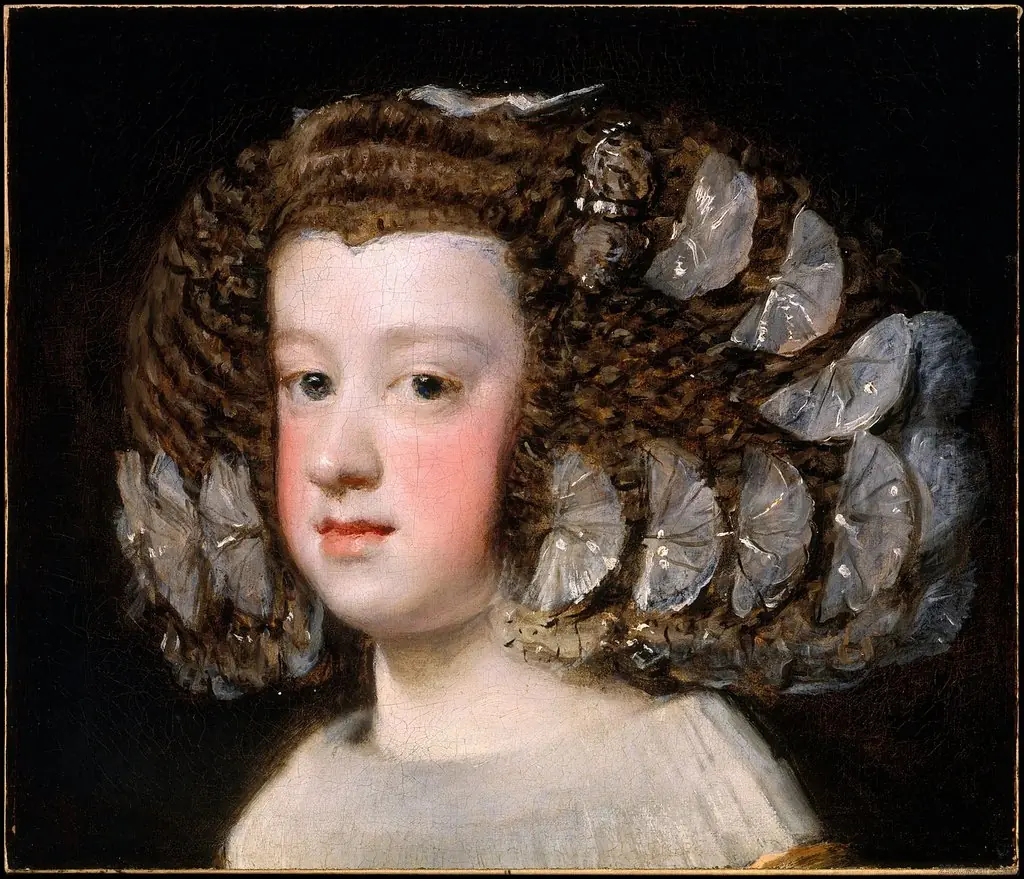
Portrait of Mariana of Austria, Queen of Spain
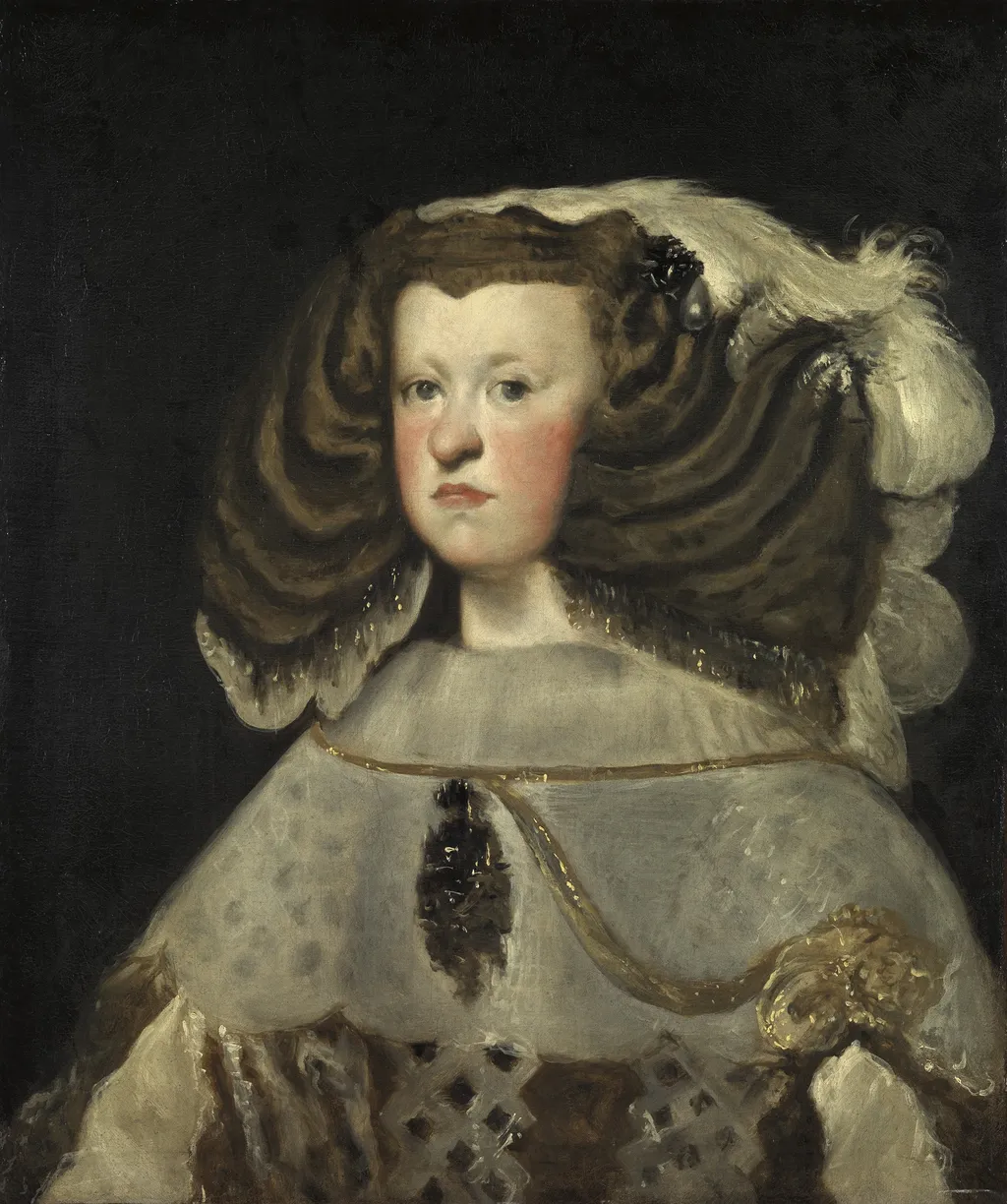
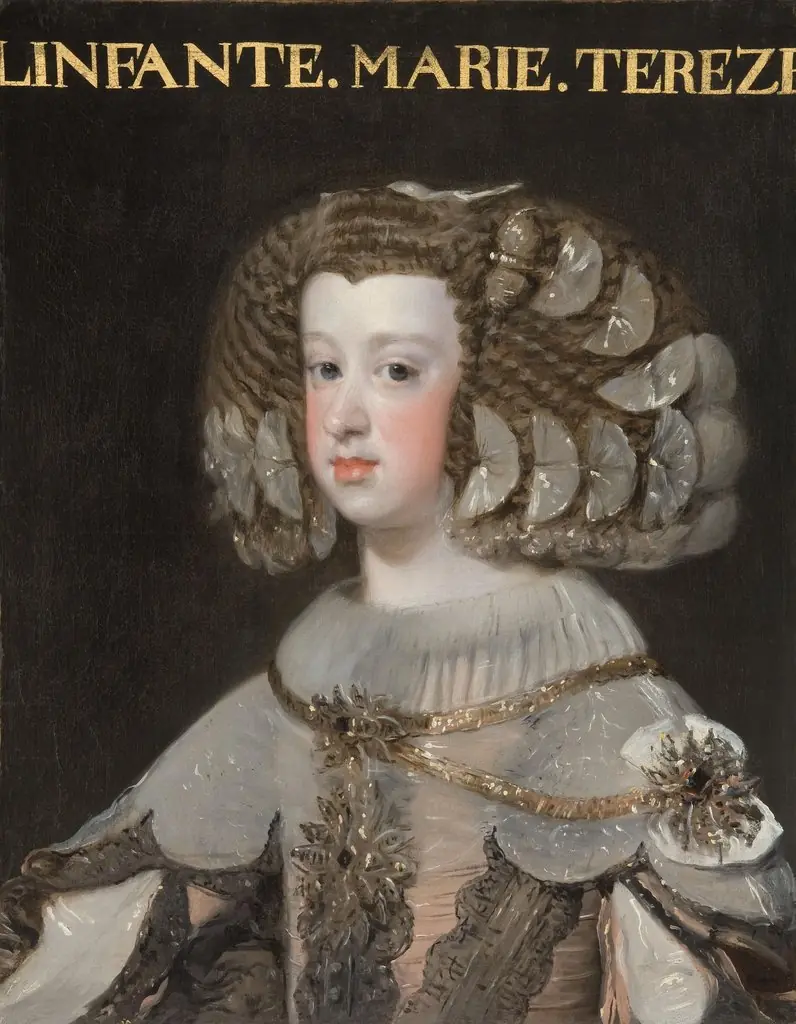
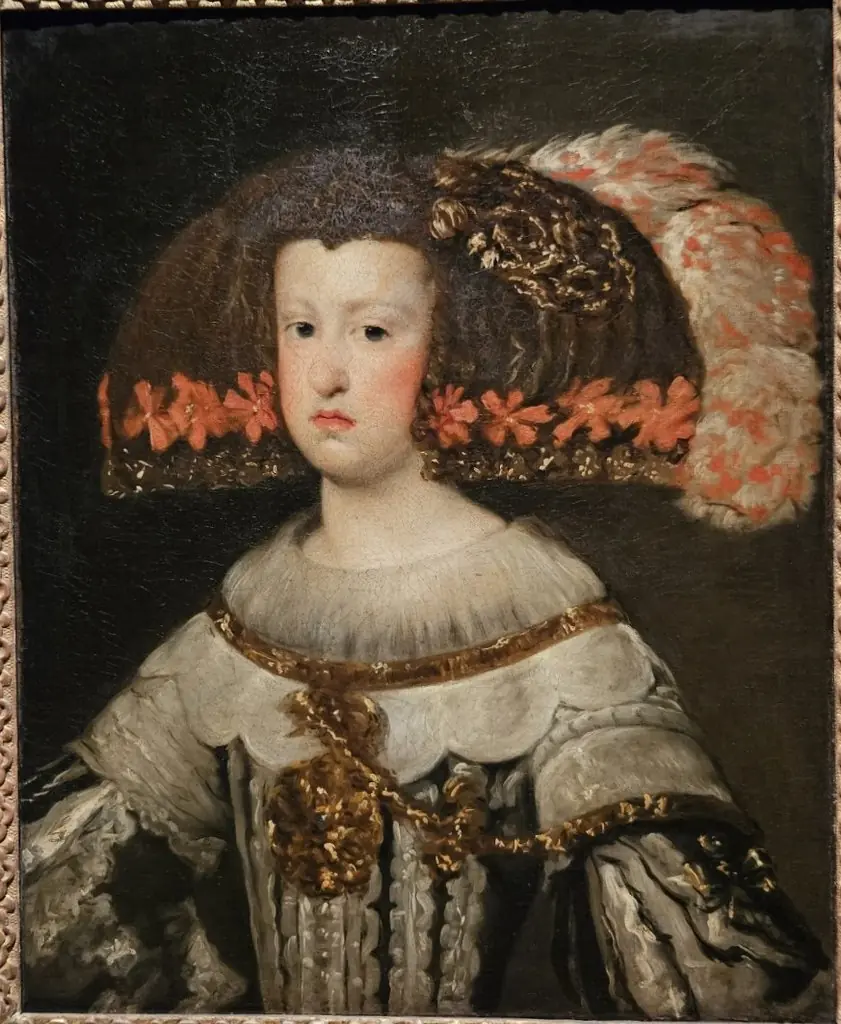
Portrait of Mariana of Austria, Queen of Spain is an oil painting by the Early Baroque Italian artist Diego Velázquez. It dates from 1655 and is held in the collection of the Thyssen-Bornemisza Museum.
About this work
If you want to learn more about the artist's use of light and shadow, look up the technique of chiaroscuro.
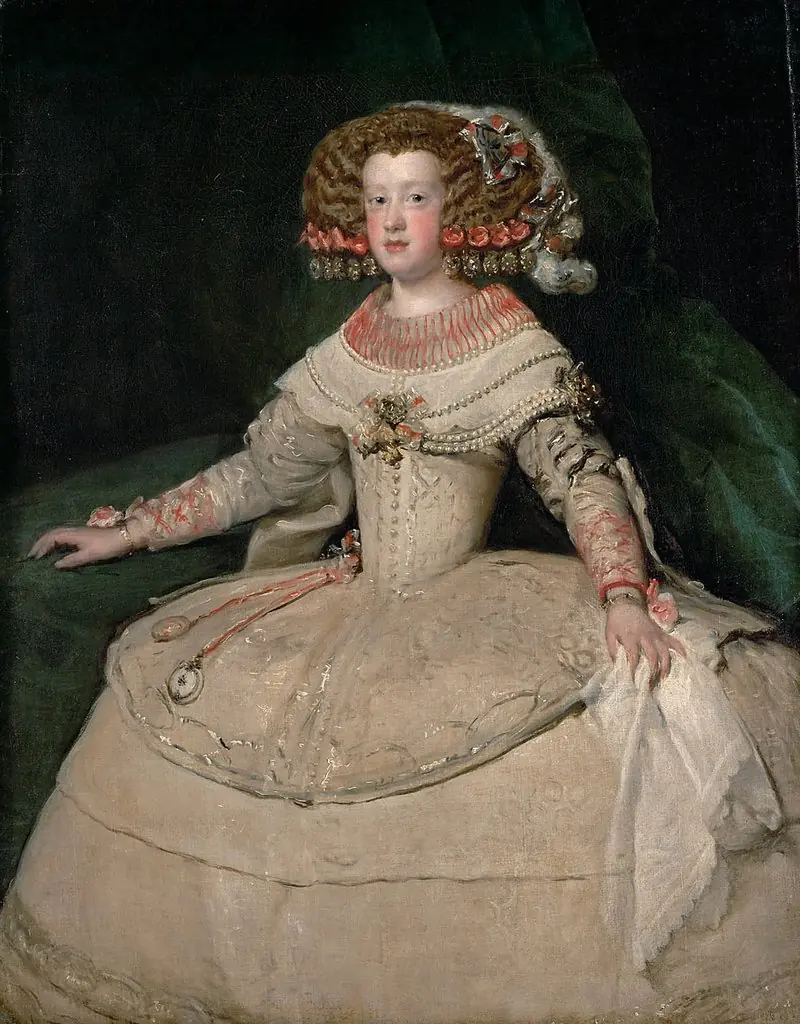
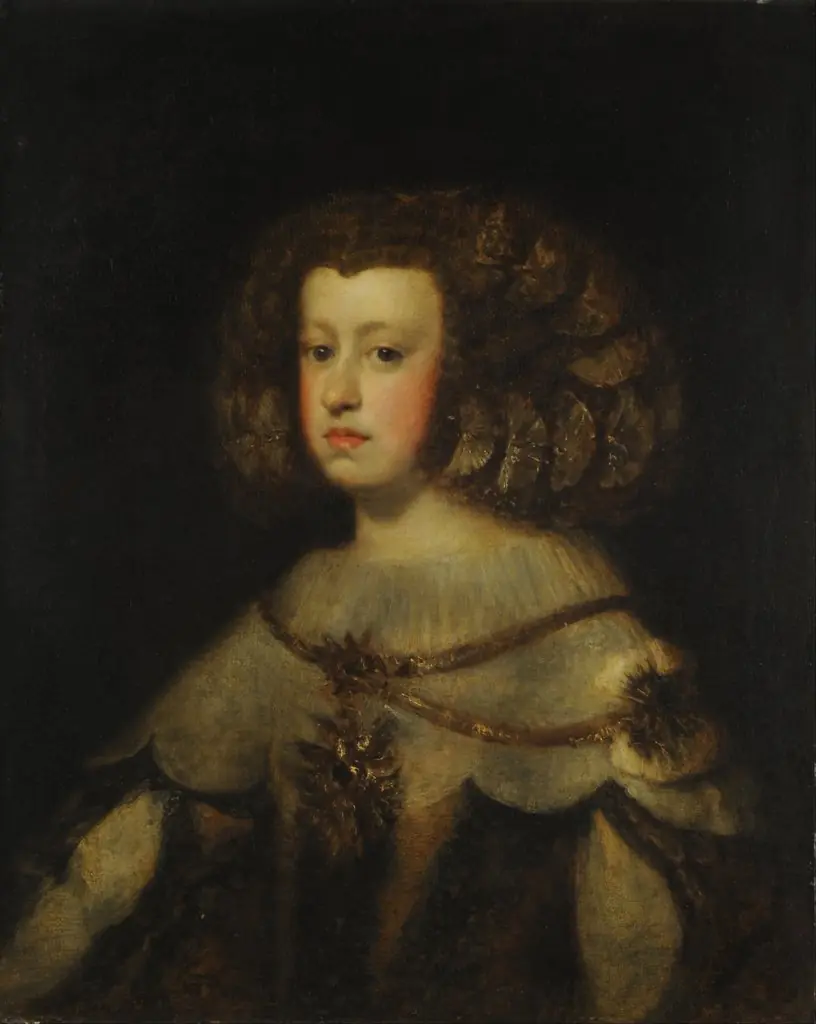
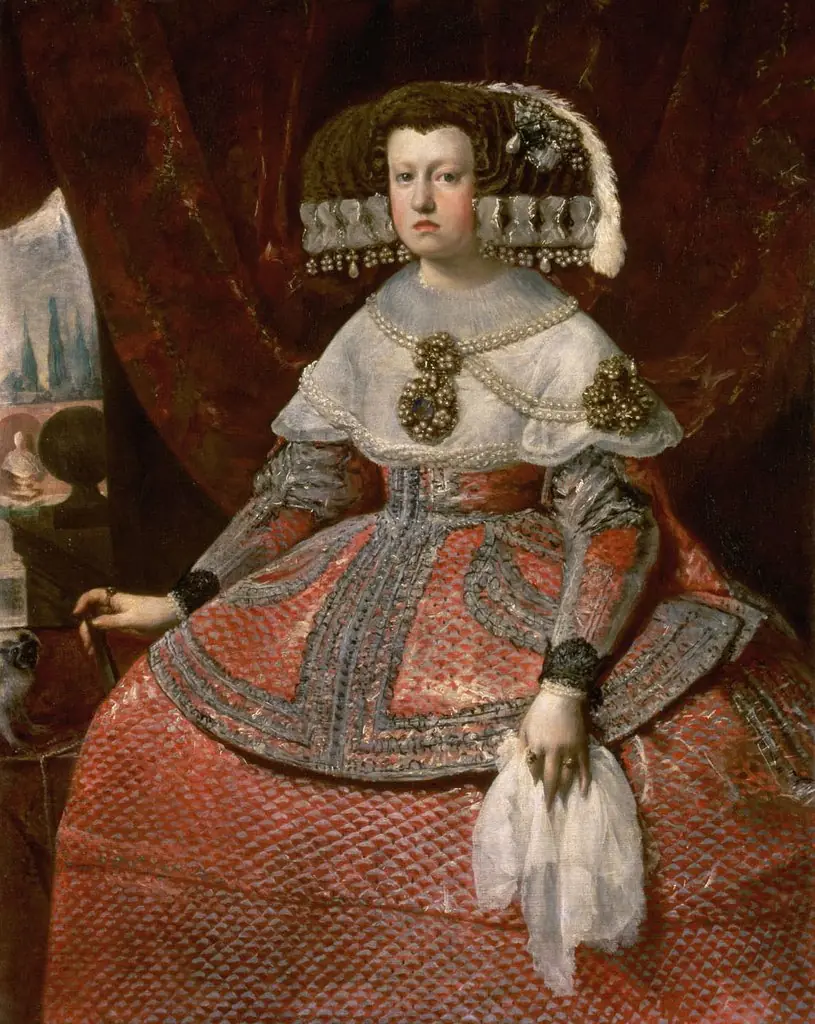
This painting shows a woman in a white dress with a gold trim, looking straight ahead. Her dark hair is styled in an updo, and she wears a large white hat with a feather on the right side.
The woman's face is painted with soft, gentle features. Her dress is decorated with intricate patterns and textures, giving it a sense of depth and dimension. The background of the painting is dark, which helps to highlight the woman's face and clothing.
The painting is a portrait of Mariana of Austria, Queen of Spain, created by Diego Velázquez in 1655. If you want to learn more about the artist's use of light and shadow, look up the technique of chiaroscuro.
Overview
Diego Velázquez completed this oil portrait in 1655, presenting Mariana of Austria, who served as queen consort of Spain. The canvas, now part of the Museu Nacional d'Art de Catalunya’s collection, captures the monarch in a composed, frontal pose, emphasizing her status through attire and bearing.
Subject & Meaning
Mariana is shown wearing a white gown trimmed in gold, her dark hair gathered in an elegant updo beneath a broad white headdress accented with a single feather. The serene expression and direct gaze convey both regal authority and personal dignity, reflecting the courtly ideals of 17th‑century Spanish royalty.
Technique & Style
Velázquez employs a restrained palette, allowing the luminous white of the dress to contrast with a deep, almost tenebrous background. Subtle modeling of the face and delicate rendering of fabric textures demonstrate his mastery of chiaroscuro, using light to sculpt form while maintaining a naturalistic yet dignified representation.
History & Provenance
Executed during the later phase of Velázquez’s career, the portrait remained in the Spanish royal collection before eventually entering the Museu Nacional d'Art de Catalunya. Its documented transfer to the museum occurred in the early 20th century, where it has been displayed as a key example of court portraiture.
Context
The work belongs to a series of royal portraits commissioned by the Spanish court to affirm dynastic legitimacy after the death of Philip IV. By portraying Mariana with understated elegance, Velázquez contributed to the visual language that emphasized continuity and stability within the Habsburg monarchy during a period of political uncertainty.
Own this work as a print
Artist & collection
Artist
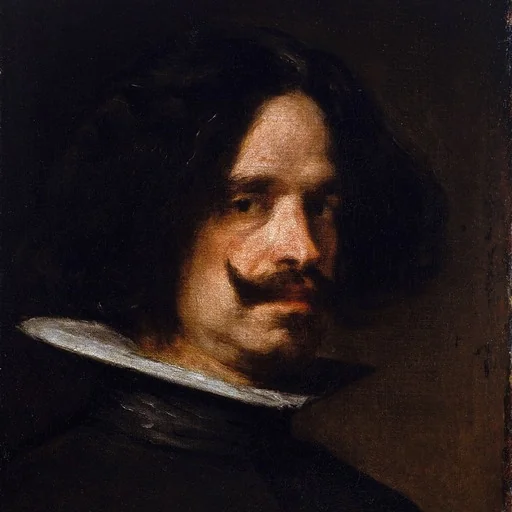
Diego Rodríguez de Silva y Velázquez was a Spanish Baroque painter, the leading artist in the court of King Philip IV of Spain and Portugal, and of the Spanish Golden Age.