Artwork
Retrato de la infanta María Teresa de España
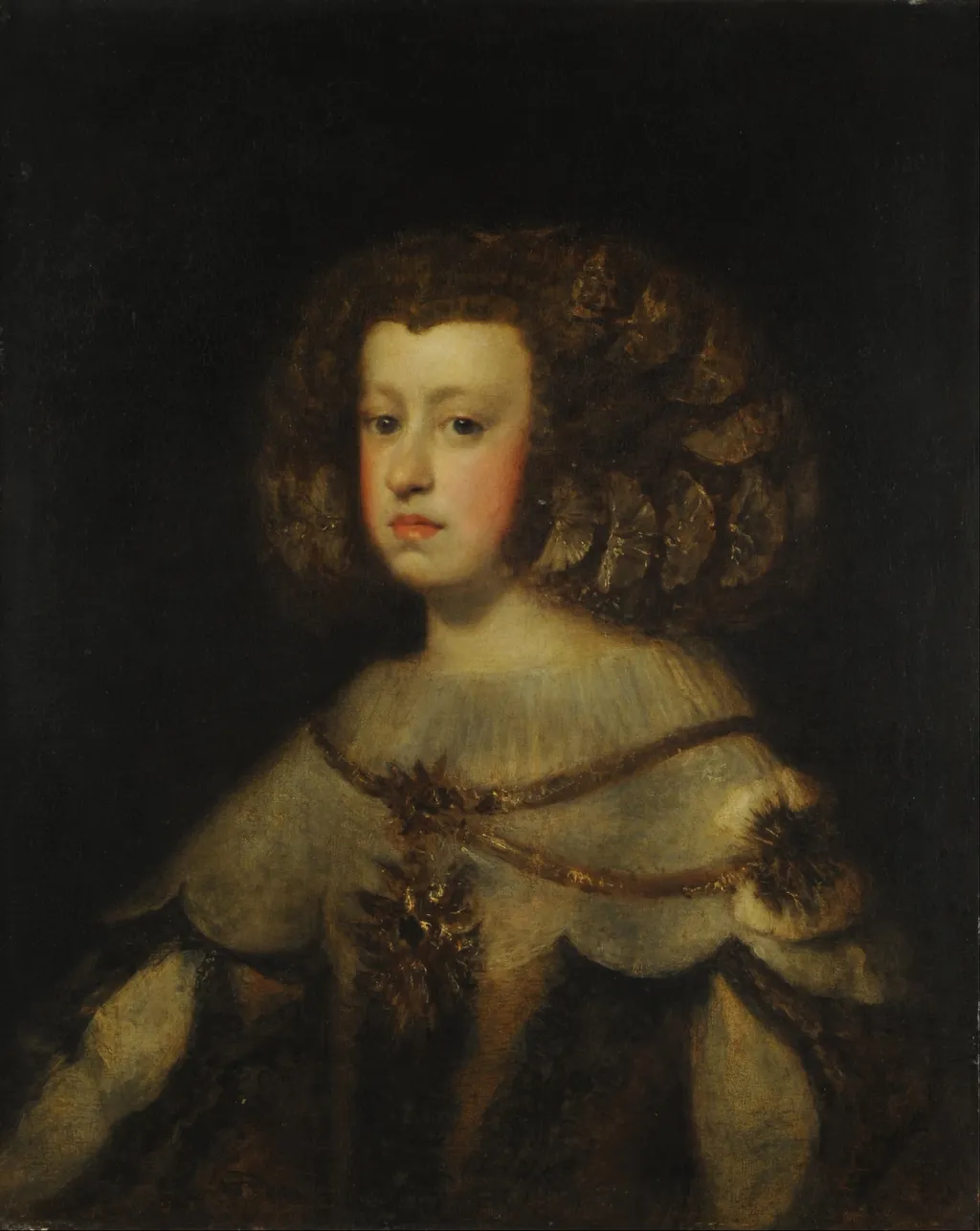
Retrato de la infanta María Teresa de España is an oil painting by the Early Baroque Italian artist Unknown. It dates from 1650 and is held in the collection of the National Museum of Fine Arts, Argentina.
About this work
Overview
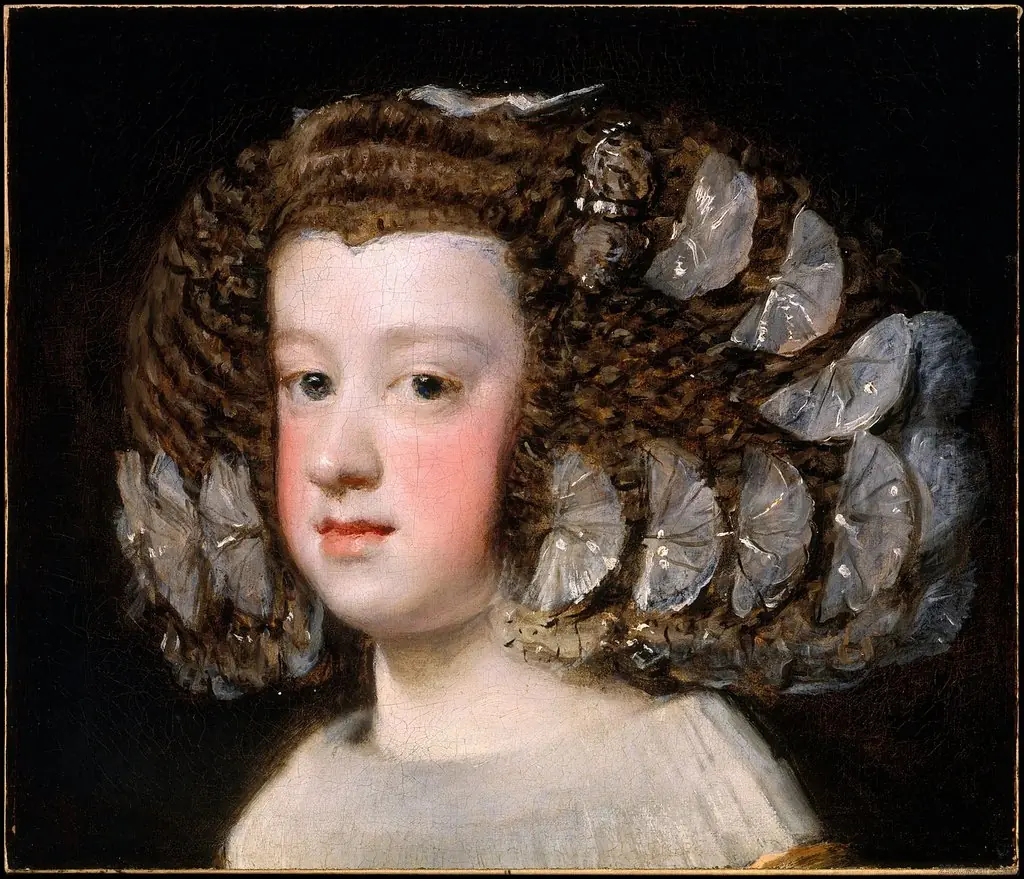
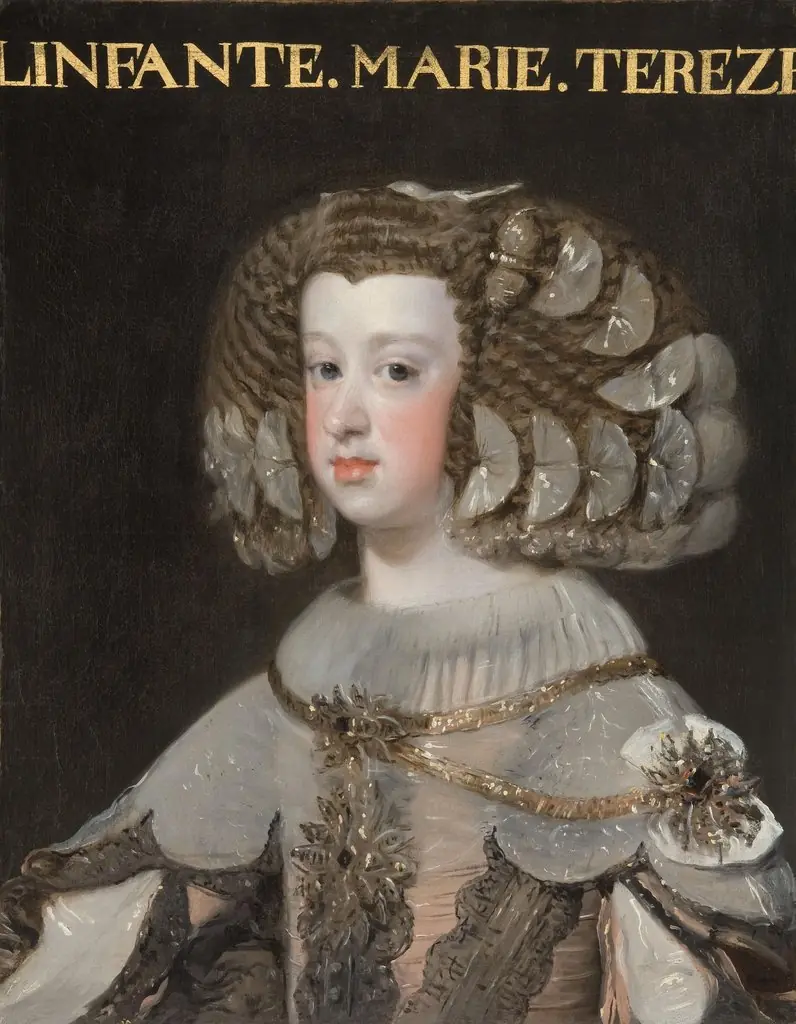
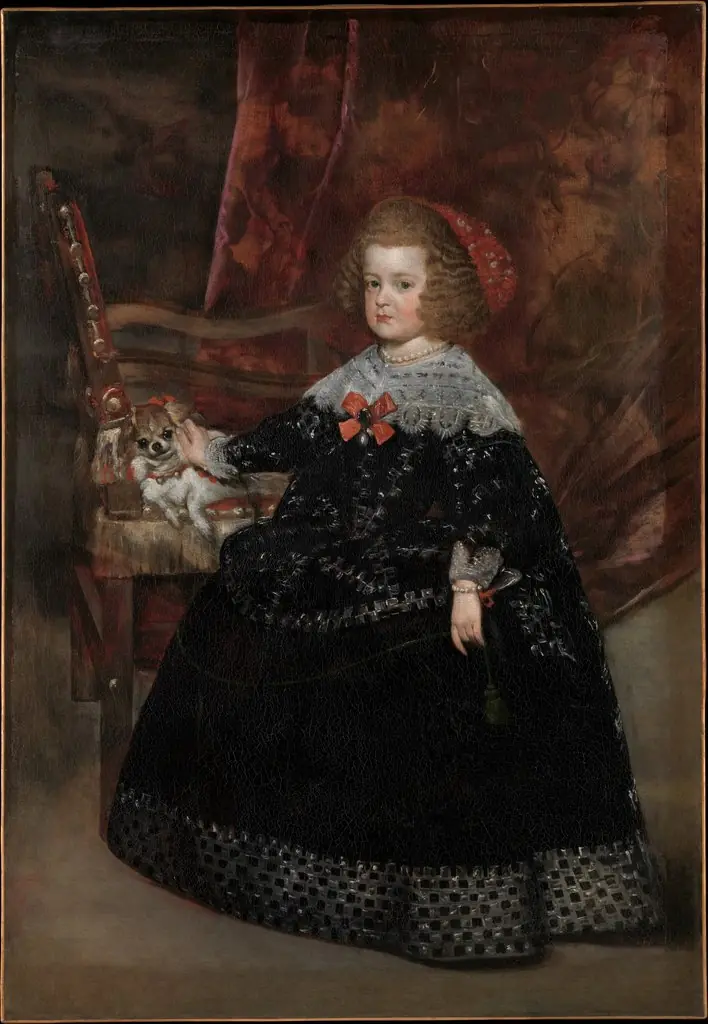
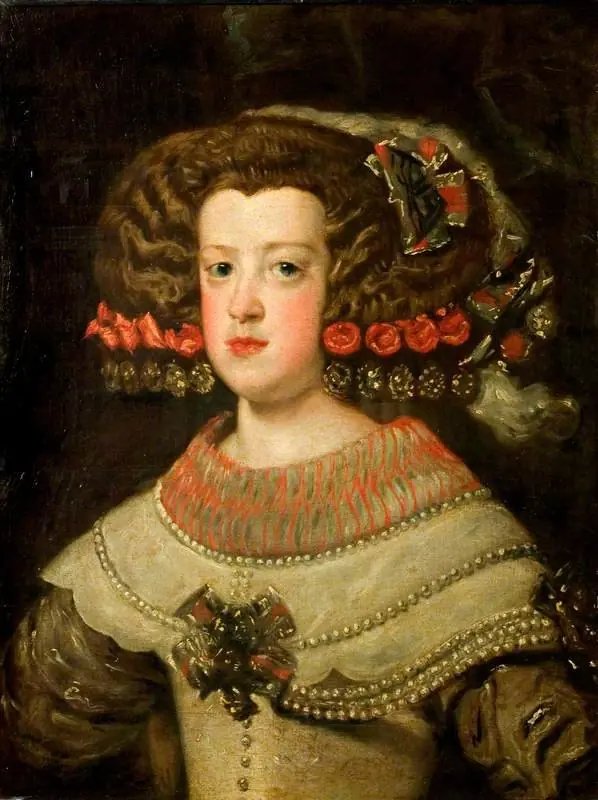
This oil painting portrays a young girl, likely a member of the Spanish royal family, dressed in a white gown with a brown cape and a gold necklace.
This oil painting portrays a young girl, likely a member of the Spanish royal family, dressed in a white gown with a brown cape and a gold necklace. Set against a dark, undefined background, the figure emerges through subtle contrasts of light and shadow. The face is softly blurred, suggesting a focus on presence rather than individualized detail. The composition emphasizes form and texture through deliberate brushwork.
Subject & Meaning
The subject is believed to be Infanta María Teresa of Spain, daughter of King Philip IV. Her formal attire and jewelry indicate her royal status, while the muted expression and indistinct facial features reflect a tradition of court portraiture that prioritized dignity over psychological depth. The painting functions as a symbolic representation of lineage and nobility rather than a personal likeness.
Technique & Style
The artist employs chiaroscuro to model the figure with quiet intensity, using gradations of light to define the contours of the dress and cape. Impasto is applied selectively in the fabric folds and jewelry, adding tactile richness. The blurred face contrasts with the sharper rendering of textures, directing attention to costume and posture as markers of identity rather than individual expression.
History & Provenance
The painting originates from the Spanish Habsburg court in the mid-17th century, likely created by a studio assistant under the supervision of Diego Velázquez. It remained within royal collections until the 19th century, when it entered a private Spanish collection. Its attribution has been debated, but its stylistic ties to Velázquez’s workshop are consistently noted by scholars.
Context
In mid-1600s Spain, royal portraits served political and dynastic purposes, reinforcing the visibility and continuity of the Habsburg line. The use of dark backgrounds and restrained color palettes was common in courtly portraiture, emphasizing solemnity and hierarchy. This work aligns with a broader trend of depicting children as miniature adults, adorned in adult regalia to signify their future roles.
Legacy
Though not widely exhibited, the painting contributes to the understanding of how royal children were visually represented in Baroque Spain. Its technical subtlety and restrained emotion reflect the influence of Velázquez’s approach to portraiture, even when executed by lesser-known hands. It remains a quiet example of how power was conveyed through costume, light, and absence of expression.
Artist & collection

Museum
National Museum of Fine Arts, Argentina
Continue through works from the same source collection.
 Domestic Scene
 Giacomo and Cardinal Marco, investing Andrea, Abbot of San Zeno, with his Benefice
 The Nymph of Fontainebleau
 Portrait of a Woman
 Madonna and Child with Saints in the Enclosed Garden
 Venus and Minerva
 Family Group of Four on Sofa
 Wall painting from Room H of the Villa of P. Fannius Synistor at Boscoreale