Artwork
Visitation
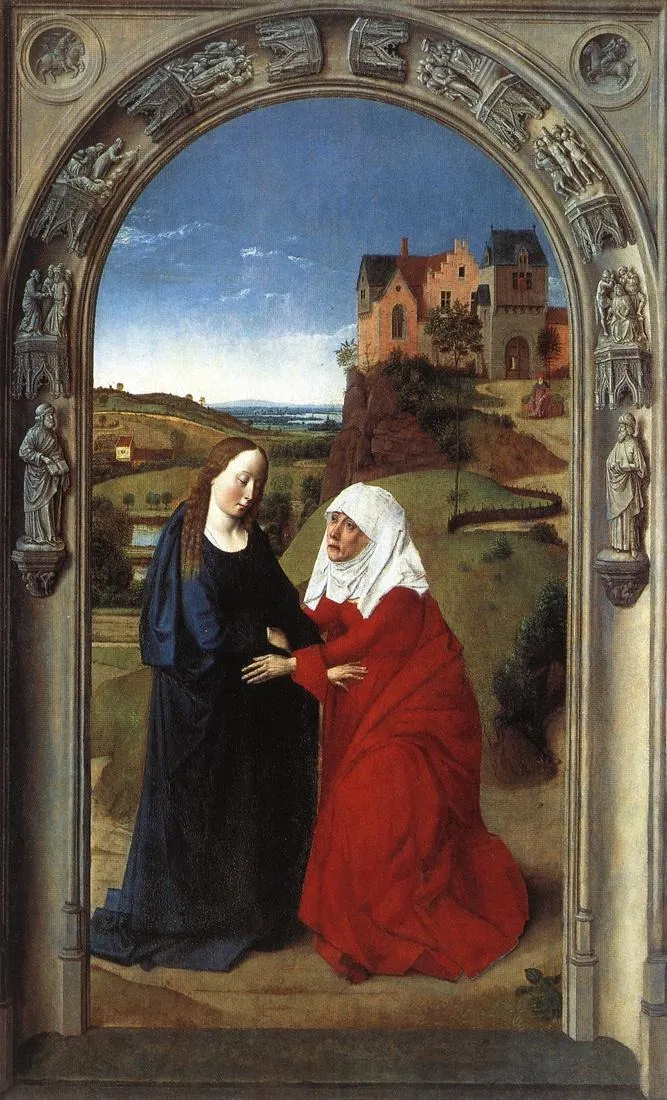
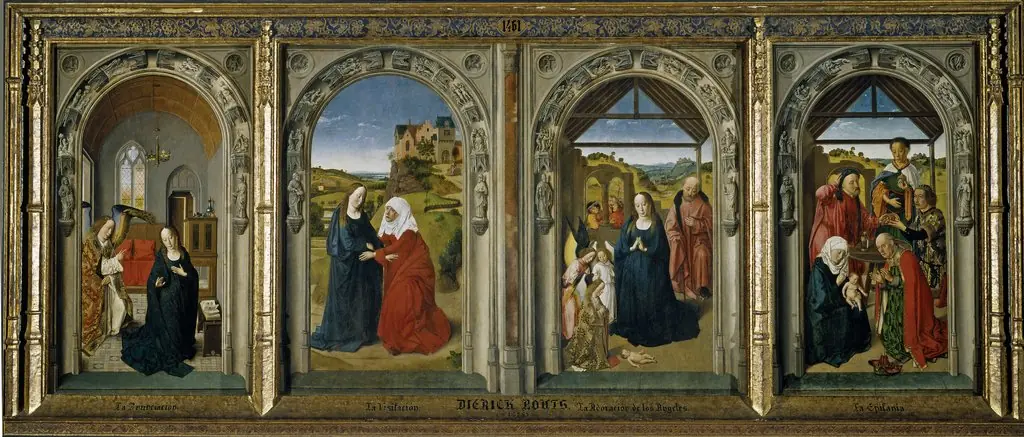
Visitation is an oil painting by the Early Renaissance artist Dieric Bouts. It dates from 1445 and is held in the collection of the Museo del Prado.
About this work
Overview
Dieric Bouts’ *Visitation* (1445) is an oil painting that portrays the biblical encounter between the Virgin Mary and her cousin Elizabeth. Executed during the early Renaissance, the work presents the two figures within an arched architectural setting, framed by a distant landscape that includes a castle, village and fields.
Subject & Meaning
The composition illustrates the moment described in the Gospel of Luke when Mary, pregnant with Jesus, visits Elizabeth, who bears John the Baptist. The gesture of the woman in blue extending her hands toward the kneeling figure in red emphasizes the exchange of greetings and the shared recognition of their miraculous pregnancies.
Technique & Style
Bouts employs a restrained palette of blues, reds and greens, contrasting light and shadow to model the faces. The painting shows his early adoption of linear perspective, guiding the viewer’s eye toward the receding landscape. Stylistic elements echo the detailed realism of Jan van Eyck and the compositional balance characteristic of Rogier van der Weyden.
History & Provenance
Created in 1445, the work remained in the Low Countries before entering the collection of the Museo del Prado in Madrid, where it is currently displayed. Bouts, active in Leuven from at least 1457 until his death in 1475, produced the piece early in his career, reflecting the transitional artistic currents of his time.
Context
*Visitation* belongs to a period when Northern European artists were integrating Italian spatial concepts with their own meticulous observation of texture and light. The painting’s architectural framing and expansive background illustrate the growing interest in situating sacred narratives within a recognizable, three‑dimensional world.
Artist & collection
Artist
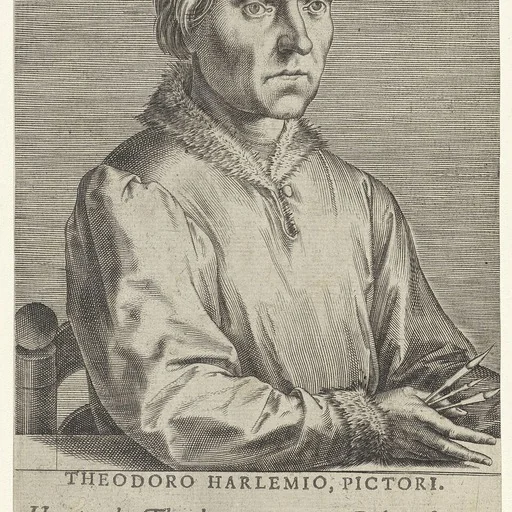
Dieric Bouts (born c. 1415 – 6 May 1475) was an Early Netherlandish painter. Bouts may have studied under Rogier van der Weyden, and his work was influenced by van der Weyden and Jan van Eyck. He worked in Leuven from…