Artwork
H Beard Print Collection
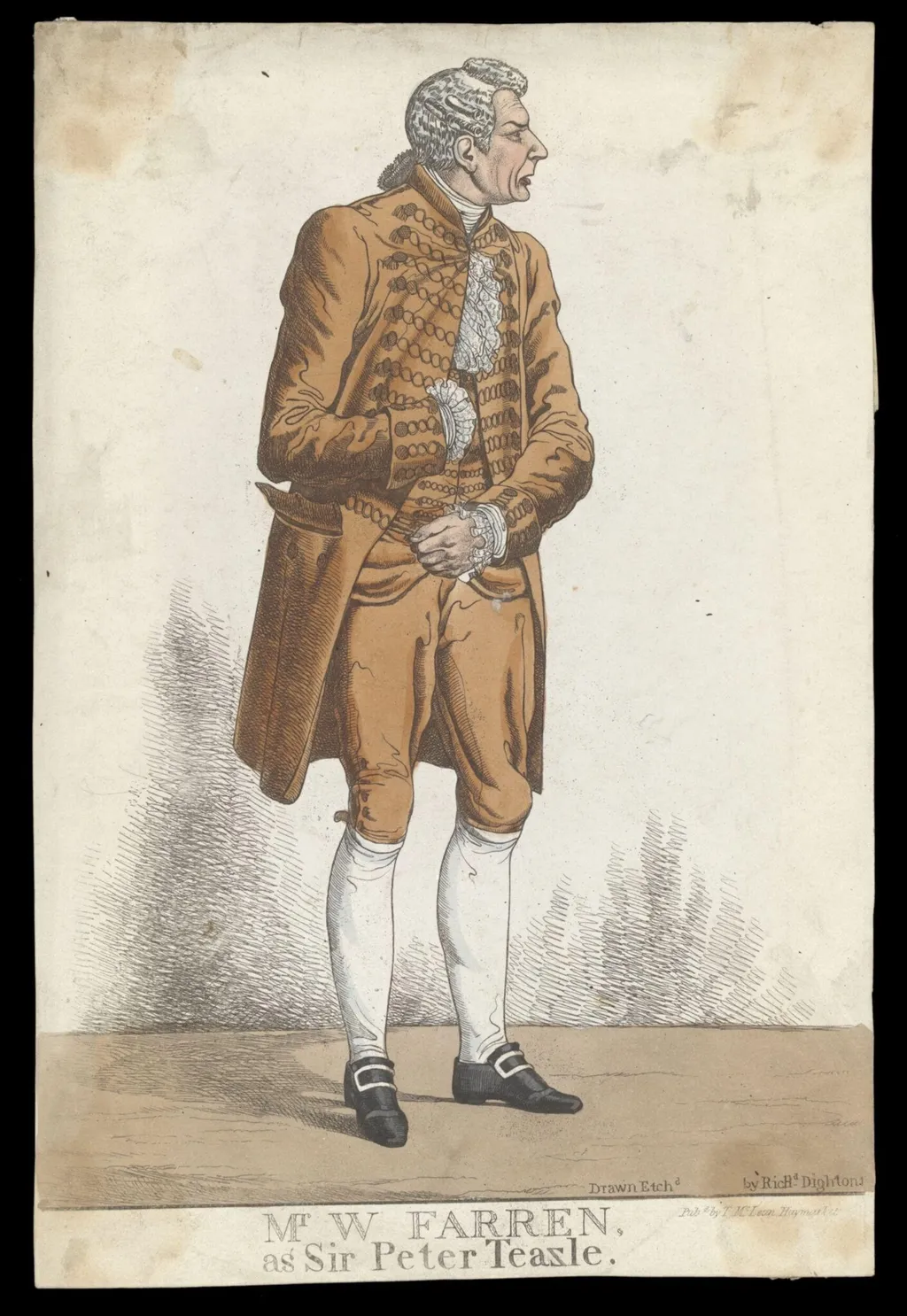
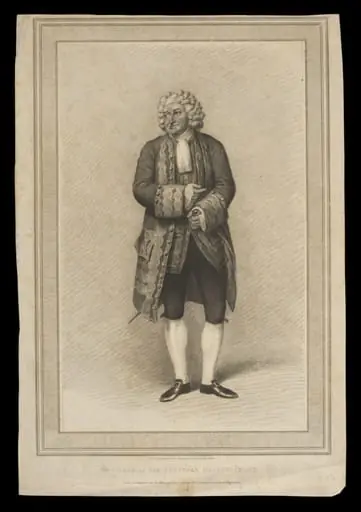
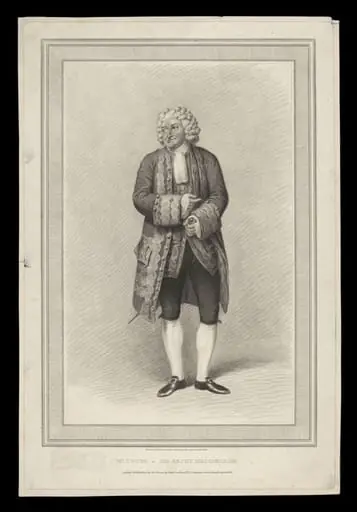
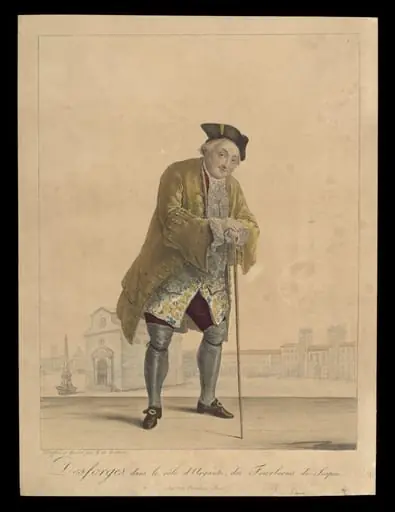
H Beard Print Collection is a print by Richard Dighton. It dates from 1850 and is held in the collection of the Victoria and Albert Museum. A printed image captures William Farren in the role of Sir Peter Teazle from Richard Brinsley Sheridan’s comedy The School for Scandal.
About this work
Overview
A printed image captures William Farren in the role of Sir Peter Teazle from Richard Brinsley Sheridan’s comedy The School for Scandal. Produced by T. MacLean, the print was likely intended for public distribution, offering theatergoers a visual memento of a popular stage performance. The format reflects 19th-century theatrical portraiture, blending accuracy with stylized presentation.
Subject & Meaning
Sir Peter Teazle is a wealthy, vain aristocrat whose social pretensions and marital missteps drive much of the play’s satire. Farren’s portrayal emphasized the character’s comic pomposity, making him a standout in the original cast. The print freezes a moment of theatrical exaggeration, reinforcing the role’s function as a critique of aristocratic folly in Georgian society.
Technique & Style
The print employs line engraving or etching, typical of theatrical portraits of the era. Details in costume and posture are rendered with precision, while the background remains minimal to focus attention on the figure. The composition follows conventional stage-portrait norms: frontal pose, expressive gesture, and clear delineation of period dress.
History & Provenance
Published by T. MacLean, a known printer of theatrical imagery in early 19th-century London, the print circulated among theater enthusiasts. It likely accompanied promotional materials or was sold at the theatre as a keepsake. Its inclusion in the H. Beard Collection suggests it was preserved as part of a broader archive of British stage history.
Context
The School for Scandal premiered in 1777 and remained a staple of the British stage through the 1800s. William Farren’s performance as Sir Peter Teazle was particularly acclaimed in the 1820s and 1830s. Prints like this helped sustain the play’s popularity beyond the stage, linking performance to public memory in an era before photography.
Legacy
This print contributes to the visual record of 19th-century British theatre, preserving the physicality and costume of a celebrated actor in a defining role. Though not widely known today, such images were vital in shaping how audiences remembered performances before the advent of film or recorded sound.
Artist & collection
Artist
Richard Dighton spent his life sketching London street life on the spot, cigarette behind his ear and sketchbook in hand.

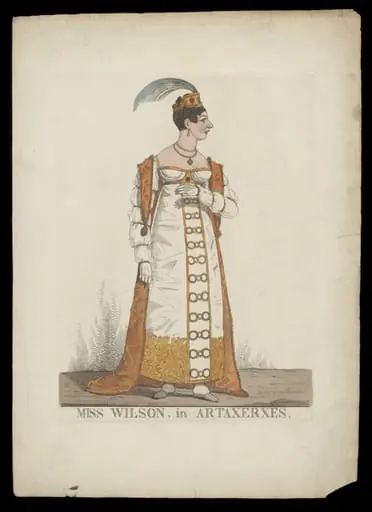
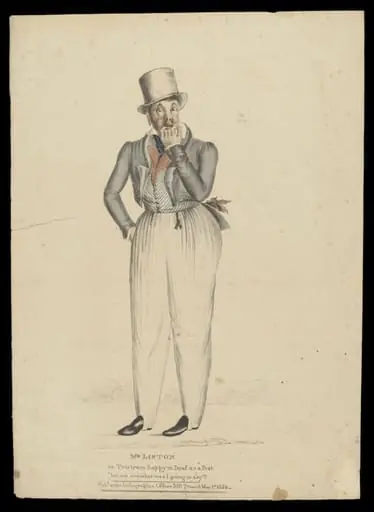 H Beard Print Collection
 H Beard Print Collection
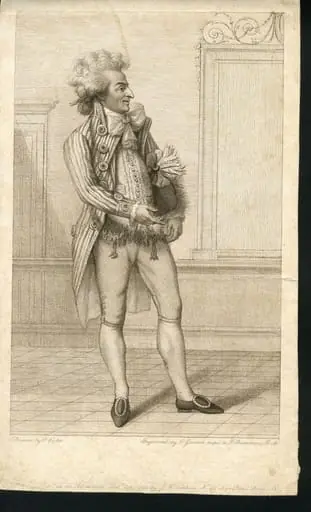 H Beard Print Collection
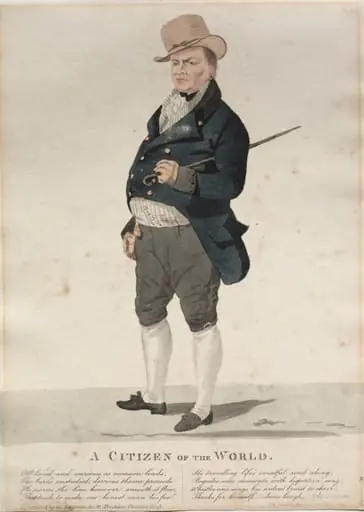 A Citizen of the World
 Print Collection
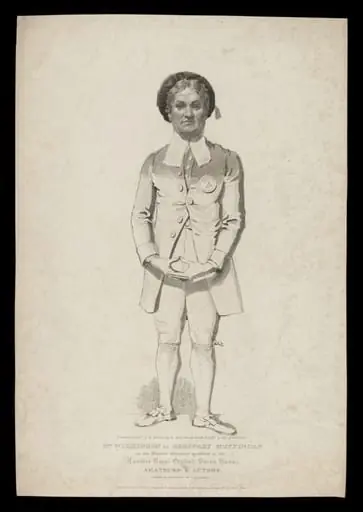 H Beard Print Collection
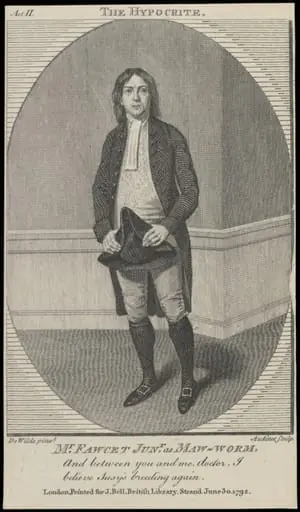 H Beard Print Collection
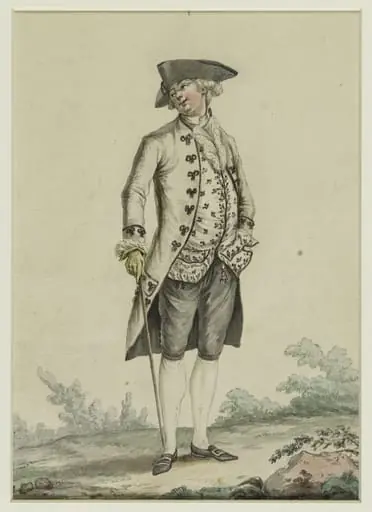 Habit de petit-deuil gris
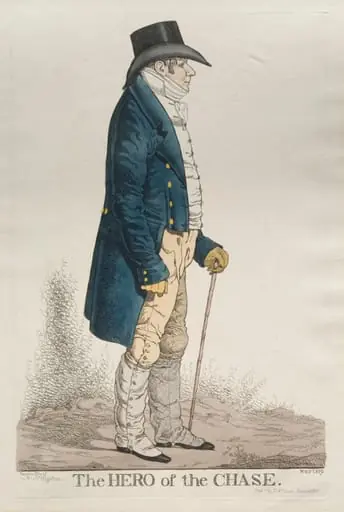 The Hero of the Chase
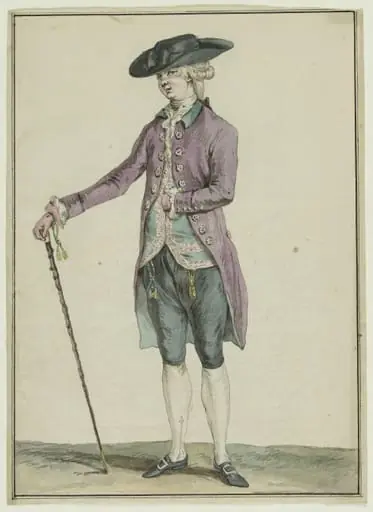 Petit maître en chenille, Habit du matin
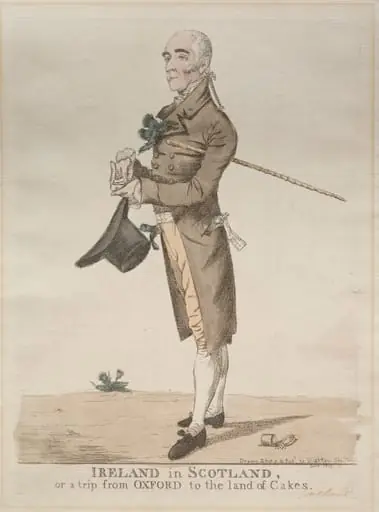 Ireland in Scotland, or a Trip from Oxford to the Land of Cakes
 H Beard Print Collection