Artwork
Castelul Brâncoveanu din Sâmbăta de Sus
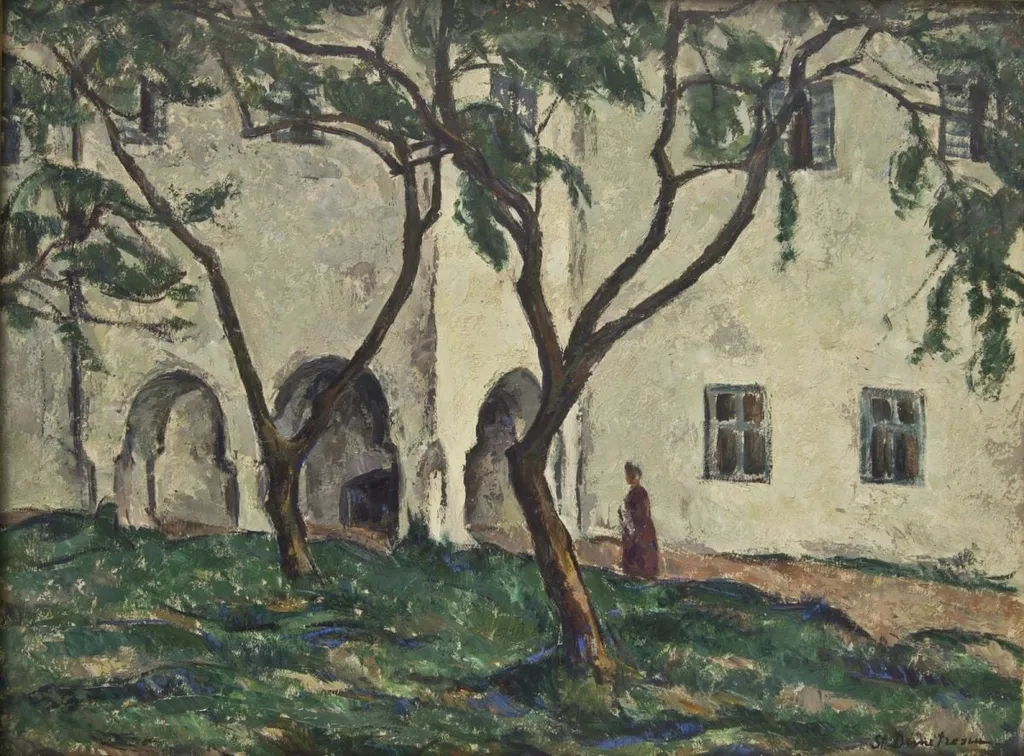
Castelul Brâncoveanu din Sâmbăta de Sus is an unspecified painting by Ștefan Dimitrescu. It dates from 1926 and is held in the collection of the National Museum of Art of Romania.
About this work
Overview
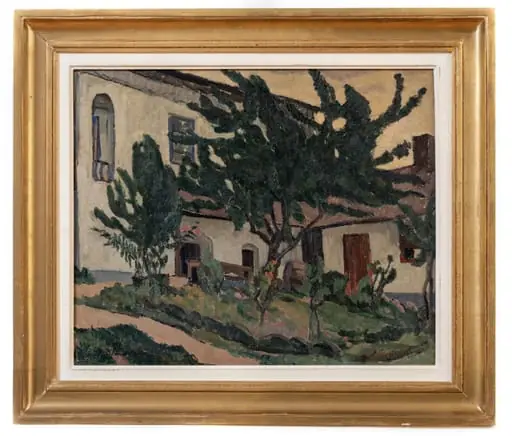
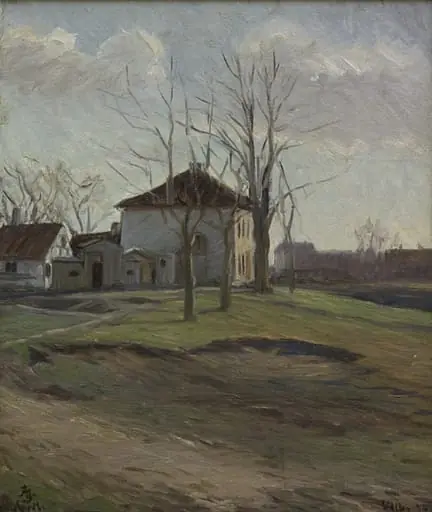
The ground is a mottled mix of grass and earth, while three robust trees spread their branches overhead, casting dappled shade across the scene.
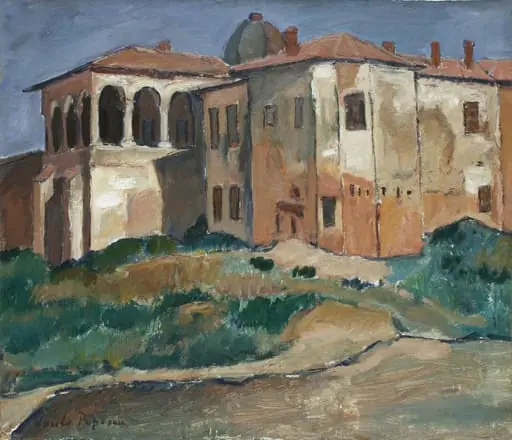
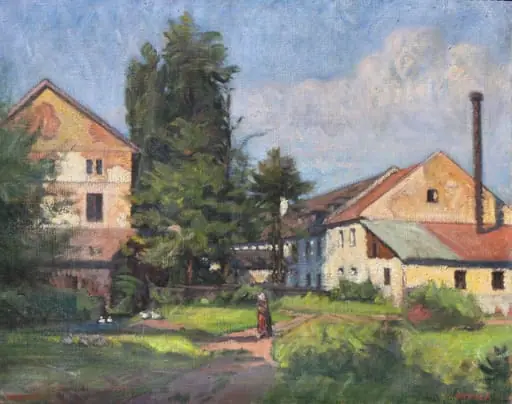
Ștefan Dimitrescu’s 1926 canvas, titled Castelul Brâncoveanu din Sâmbăta de Sus, depicts a tranquil courtyard centered on a pale, rectangular structure with arched openings. A solitary figure in a dark dress stands near the right edge, clutching a small object. The ground is a mottled mix of grass and earth, while three robust trees spread their branches overhead, casting dappled shade across the scene.
Subject & Meaning
The composition focuses on an isolated moment of stillness, emphasizing the contrast between the bright, empty courtyard and the solitary presence of the woman. The muted palette and sparse activity suggest contemplation or a pause in daily life, inviting viewers to consider the relationship between architecture, nature, and human presence within a quiet rural setting.
Technique & Style
Dimitrescu employs a pronounced impasto technique, applying thick layers of paint especially on the foliage and masonry, which creates a tactile surface and accentuates the play of light. The uneven illumination on the building’s façade highlights certain planes, while the textured brushwork gives the trees a sense of volume and movement despite the overall calm atmosphere.
History & Provenance
Created in 1926, the work belongs to the interwar period of Romanian art, a time when Dimitrescu was active in portraying regional landscapes and architecture. The painting has remained within Romanian collections, reflecting its cultural relevance to the depiction of historic sites such as the Brâncoveanu Castle in Sâmbăta de Sus.
Context
During the 1920s, Romanian painters often turned to national heritage sites to explore identity and memory. Dimitrescu’s rendering of the Brâncoveanu Castle aligns with this trend, combining realistic observation with expressive brushwork, thereby situating the piece within broader movements that blended academic training with emerging modernist sensibilities.
Artist & collection