Artwork
Mama cu copii
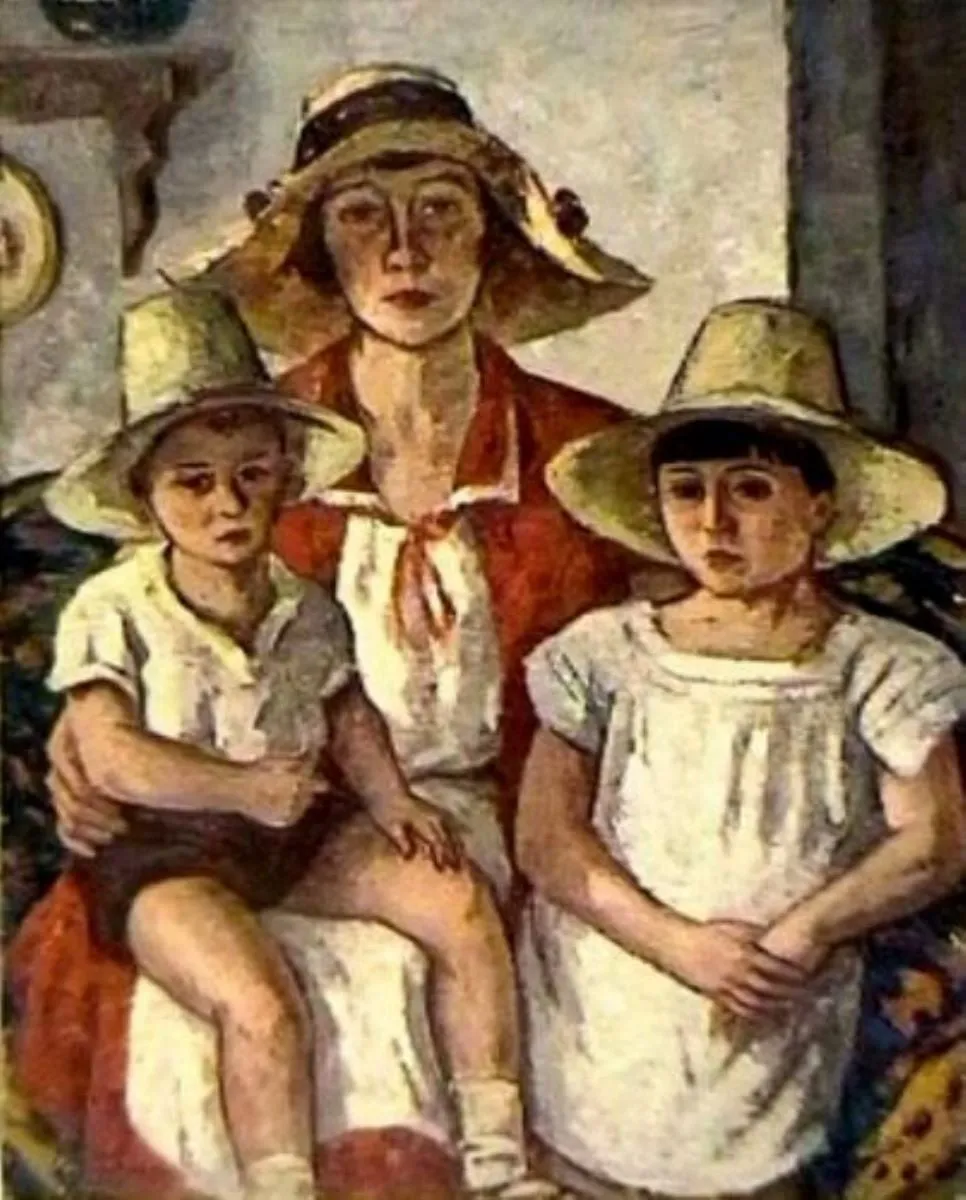
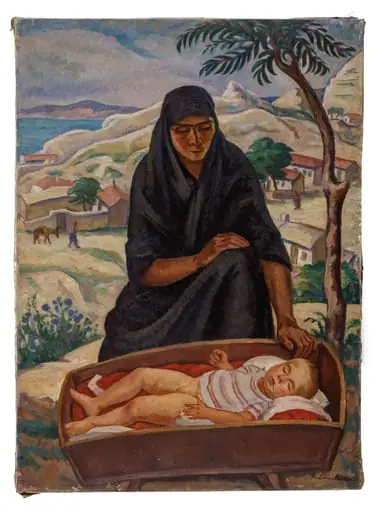
Mama cu copii is an unspecified painting by the Romanesque artist Ștefan Dimitrescu. It dates from 1928 and is held in the collection of the Moldova National Museum Complex.
About this work
Overview
The composition centers on the woman, framed by a plain wall and a clock, suggesting a quiet moment of everyday life.
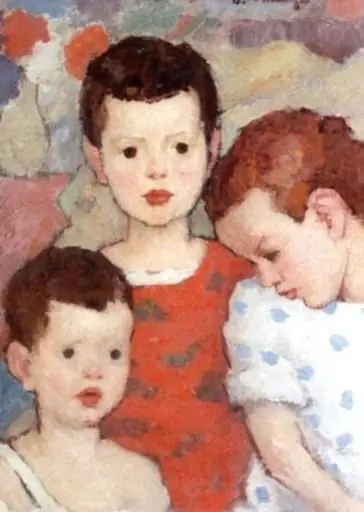
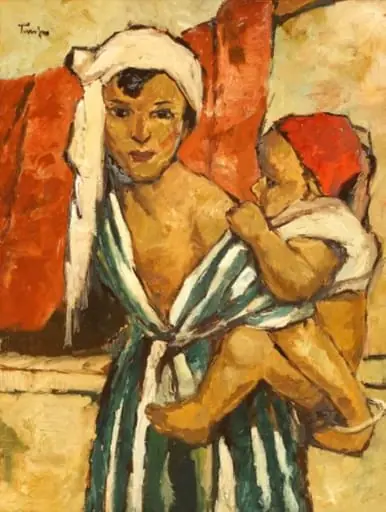
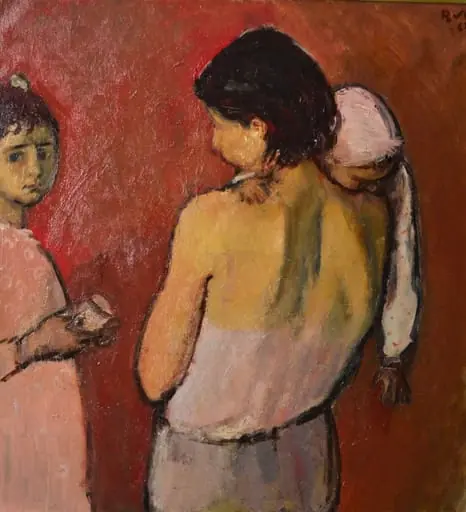
Painted in 1928 by Ștefan Dimitrescu, Mama cu copii depicts a mother seated with two children in a domestic setting. The composition centers on the woman, framed by a plain wall and a clock, suggesting a quiet moment of everyday life. The work belongs to the collection of the Museum of Ethnography in Romania, reflecting its focus on intimate, culturally grounded scenes rather than grand narratives.
Subject & Meaning
The painting portrays a mother with one child on her lap and another standing nearby, both dressed in white, contrasting with her red dress. The simplicity of the scene emphasizes familial bonds and quiet domesticity. The inclusion of a clock hints at the passage of time, subtly underscoring the transient nature of childhood and maternal care without overt symbolism.
Technique & Style
Dimitrescu employed loose, visible brushwork to build form and texture, avoiding smooth finishes in favor of tactile surface quality. Warm tones dominate the palette, enhancing the sense of closeness. While not strictly using chiaroscuro, the artist modulates light to model the figures gently, grounding them in a shallow, unadorned space that draws attention to their physical presence.
History & Provenance
Created in 1928, the painting entered the collection of the Museum of Ethnography in Romania, where it remains today. Its acquisition aligns with the museum’s early 20th-century mission to document Romanian rural and domestic life through visual art. There is no record of public exhibition prior to its institutional acquisition, suggesting it was likely kept in private hands initially.
Context
Dimitrescu worked during a period when Romanian artists increasingly turned to everyday subjects, moving away from academic idealism. Mama cu copii reflects this shift, echoing broader European trends in post-impressionist portraiture that valued emotional authenticity over formal grandeur. The painting resonates with contemporaneous works that celebrated ordinary family life as worthy of artistic attention.
Legacy
Though not widely reproduced, Mama cu copii is recognized within Romanian art history as a quiet exemplar of interwar domestic portraiture. Its preservation in a museum focused on ethnography underscores its role as a cultural document. The work continues to inform discussions on how Romanian artists rendered intimacy and gender roles in the early 20th century.
Artist & collection