Artwork
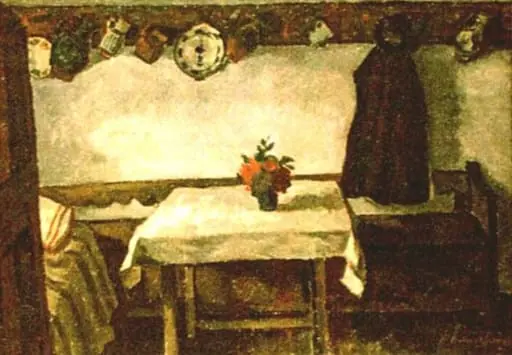
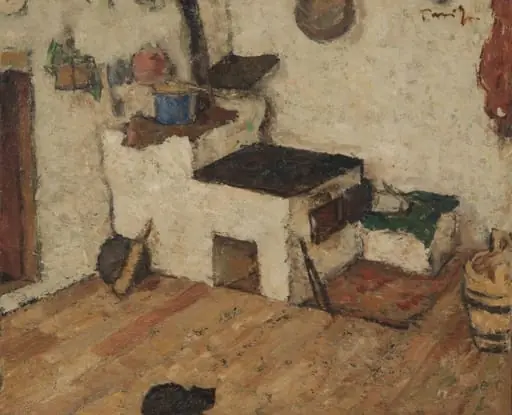
Interior țărănesc (Studiu pentru „Cina”)
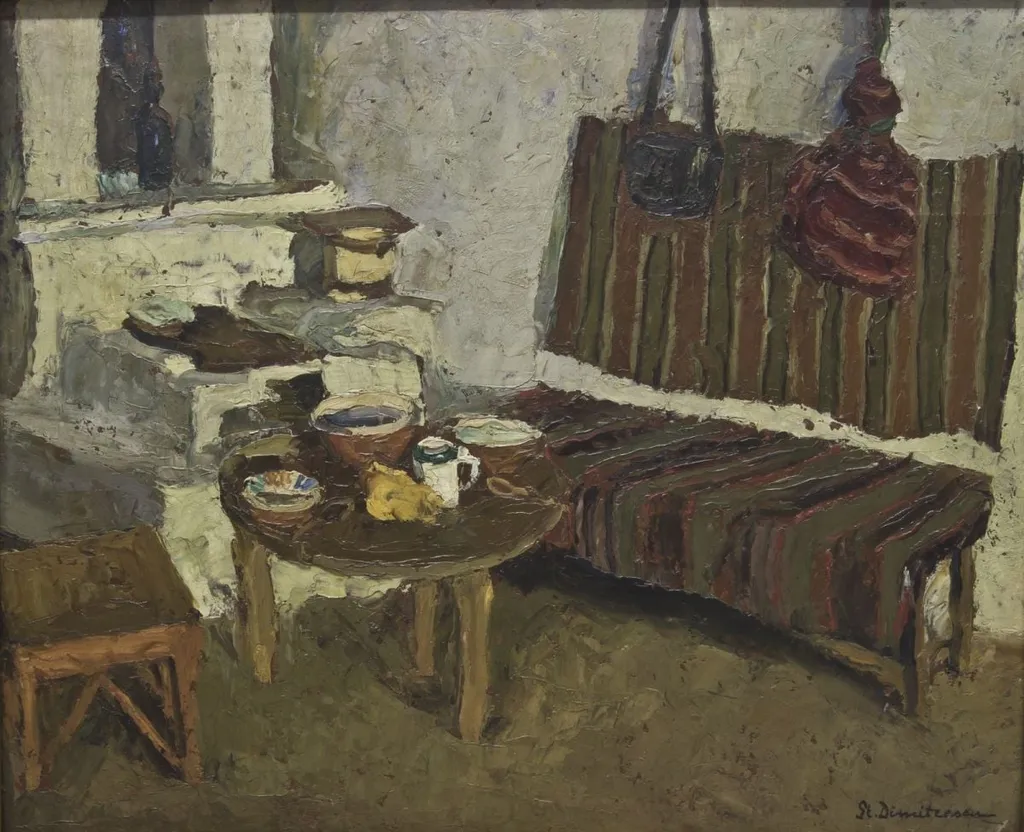
Interior țărănesc (Studiu pentru „Cina”) is a print by Ștefan Dimitrescu. It dates from 1923 and is held in the collection of the National Museum of Art of Romania.
About this work
Overview
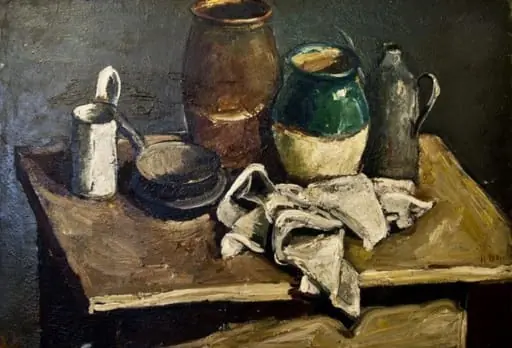
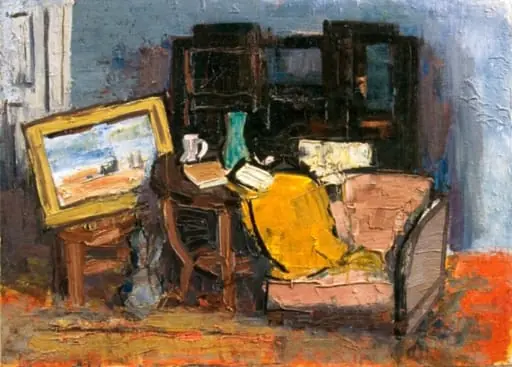
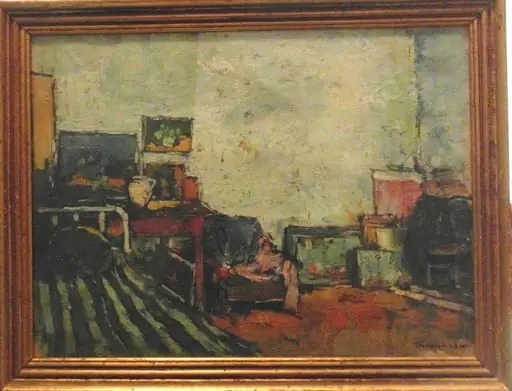
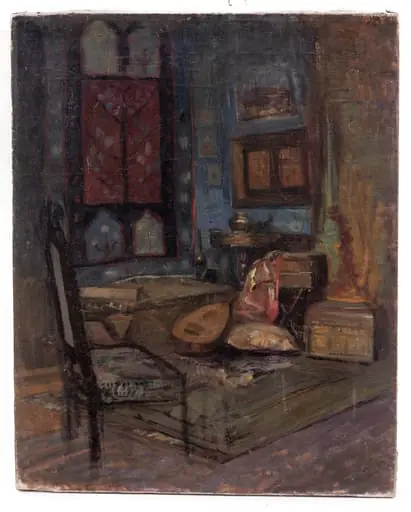
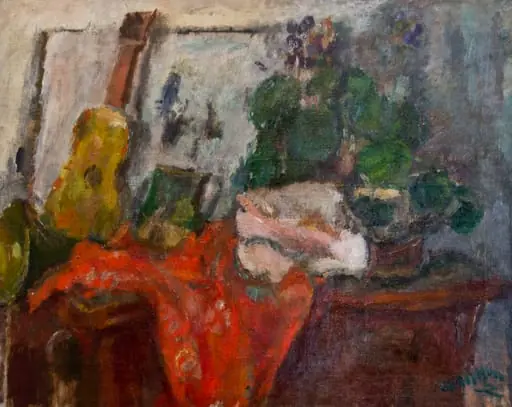
Painted around 1923 by Ștefan Dimitrescu, this study for the larger work 'Cina' captures a modest rural interior with quiet precision. The scene is stripped of ornamentation, focusing instead on the quiet presence of daily objects: bread, ceramic bowls, a pitcher, and simple furniture. The composition avoids narrative drama, offering a restrained meditation on domestic life in interwar Romania.
Subject & Meaning
The arrangement of food and tableware suggests a recent meal, hinting at absence rather than celebration.
The painting presents an unidealized view of peasant domesticity, where utility outweighs decoration. The arrangement of food and tableware suggests a recent meal, hinting at absence rather than celebration. By centering ordinary items without symbolic embellishment, Dimitrescu elevates the mundane, reflecting a broader cultural interest in authentic rural existence during a period of national identity formation.
Technique & Style
Dimitrescu employs thick, tactile brushwork to build the surfaces of wood, clay, and bread, creating a physical sense of texture. The impasto technique gives weight to the objects, anchoring them in tangible reality. Light falls unevenly across the table, warming the bread and bowls while leaving shadows in the corners, enhancing the feeling of a space lived in rather than staged.
History & Provenance
Created as a preparatory study for the painting 'Cina,' this work remained in the artist’s circle until its inclusion in Romanian public collections. It reflects Dimitrescu’s shift toward intimate, domestic subjects during the early 1920s, a period when he moved away from academic conventions toward a more personal, expressive realism rooted in Romanian rural life.
Context
In the aftermath of World War I, Romanian artists increasingly turned to local themes as part of a broader cultural reassessment. Dimitrescu’s focus on peasant interiors aligned with a national movement to document and affirm vernacular traditions. This work stands apart from urban modernism, instead embracing the quiet rhythms of village life as a source of artistic truth.
Legacy
Though less known internationally, this study exemplifies Dimitrescu’s contribution to Romanian modernism through his commitment to unadorned observation. His use of texture and light influenced later generations of artists seeking to portray everyday life without romanticization. The work remains a quiet testament to the dignity found in simplicity.
Artist & collection