Artwork
Natură statică
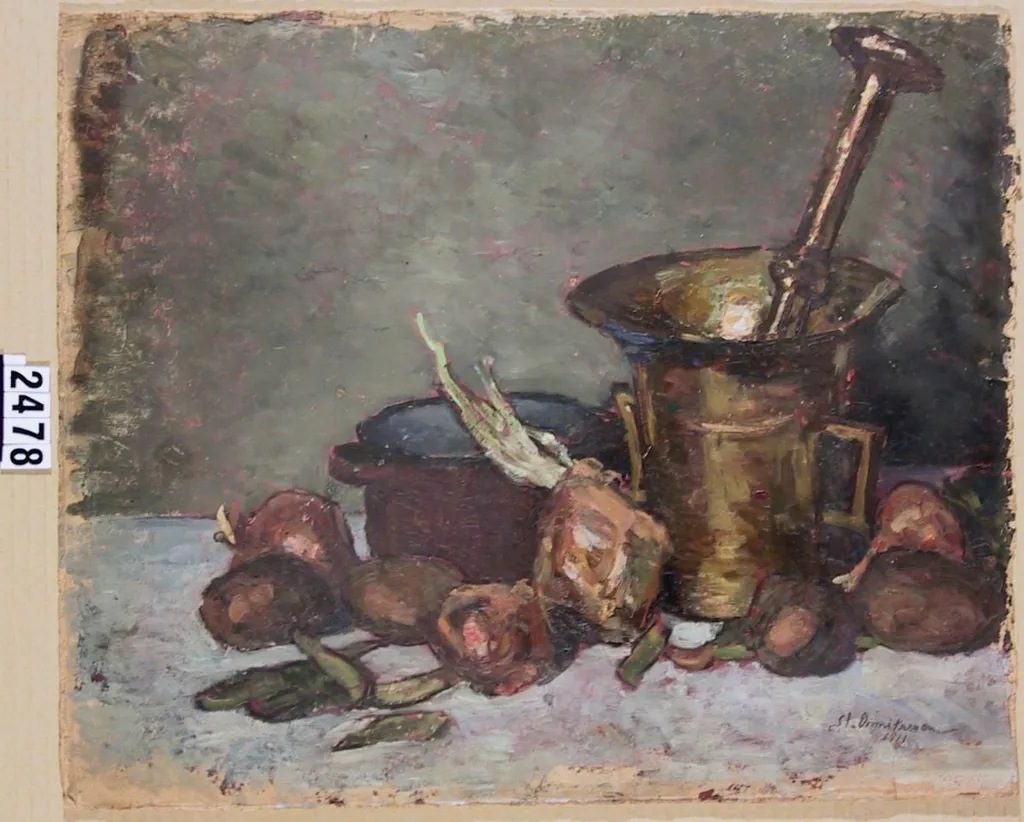
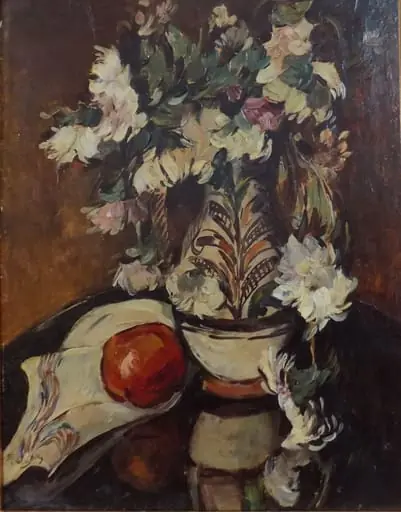
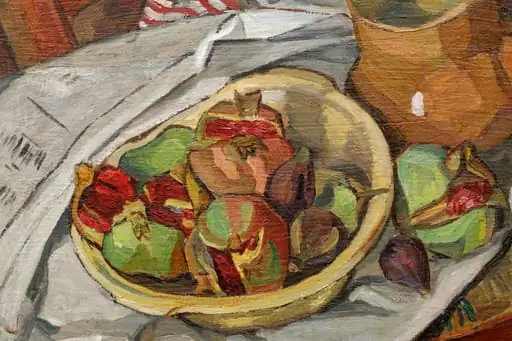
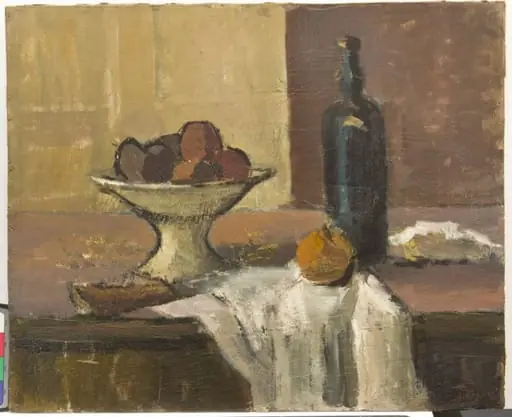
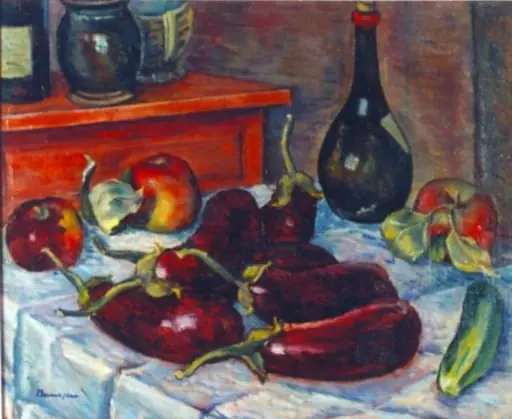
Natură statică is a print by Ștefan Dimitrescu. It dates from 1919 and is held in the collection of the Brukenthal National Museum.
About this work
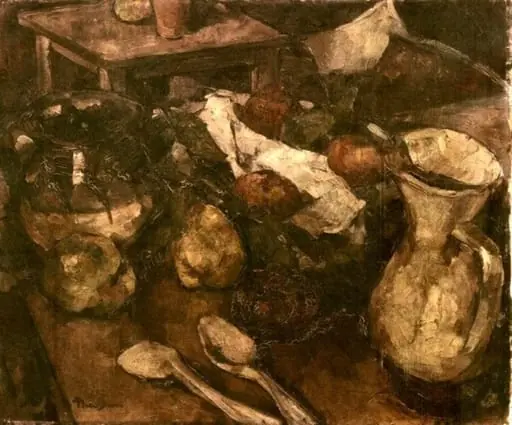
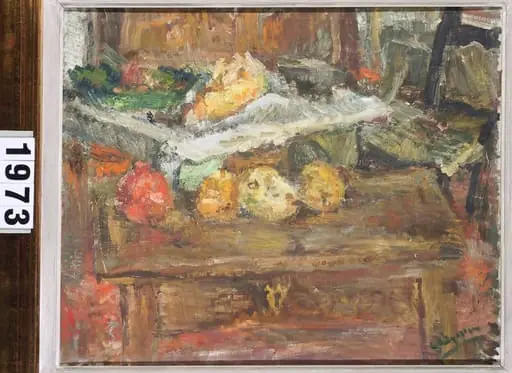
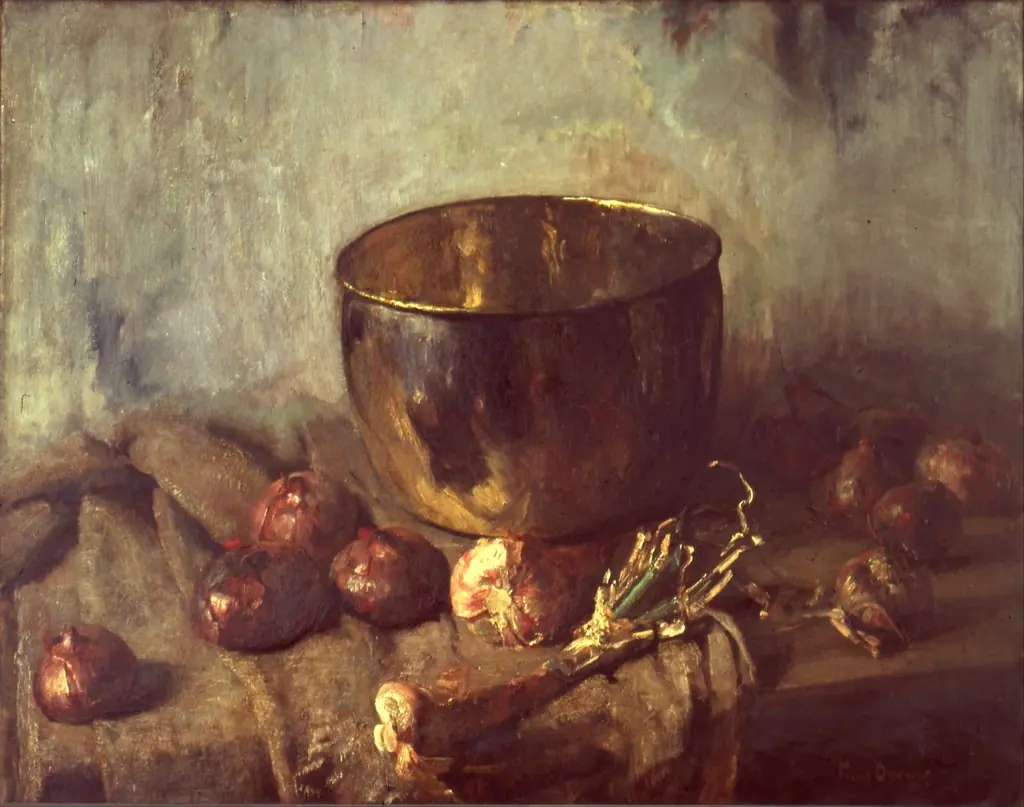
This painting shows a simple still life: a few onions, a mortar and pestle, and a small pot on a rough table.
This painting shows a simple still life: a few onions, a mortar and pestle, and a small pot on a rough table. The colors are earthy—browns, grays, and muted greens—with some green leaves scattered around. The brushstrokes are loose and uneven, almost like the objects were painted quickly.
The mortar and pestle look old and worn, with a stick half inside. The background is blurry, making the objects stand out more. The signature says "St. Dimitrescu" and the year 1947.
If you like this style, look up impasto next to see how thick paint can create texture.
Overview
Natură statică, attributed to Romanian painter Ștefan Dimitrescu, dates from around 1919. The composition presents a modest arrangement of everyday kitchen items—a few onions, a mortar and pestle, and a small pot—resting on a weathered tabletop. The work is executed in muted earth tones, emphasizing the humble nature of the subject while drawing attention to the tactile qualities of the objects.
Subject & Meaning
The still‑life depicts common culinary tools and vegetables, suggesting a focus on domestic labor and the material culture of rural life. The inclusion of a worn mortar and pestle, with a wooden stick lodged within, hints at prolonged use and the passage of time, inviting contemplation of everyday routines and the quiet persistence of daily work.
Technique & Style
Dimitrescu employs a loose, uneven brushwork that conveys a sense of immediacy, as if the scene was captured in a brief sitting. The palette is dominated by browns, grays, and subdued greens, reinforcing the earthy atmosphere. The background is rendered with softened, blurred forms, allowing the central objects to emerge sharply, while the texture of the paint suggests a modest impasto effect.
History & Provenance
Although the painting is dated circa 1919, the artist’s signature and the year 1947 appear on the canvas, indicating it may have been signed or re‑dated later in Dimitrescu’s career. The work remains part of the artist’s oeuvre that reflects his interest in ordinary subjects, and it is catalogued in several Romanian museum collections.
Artist & collection