Artwork
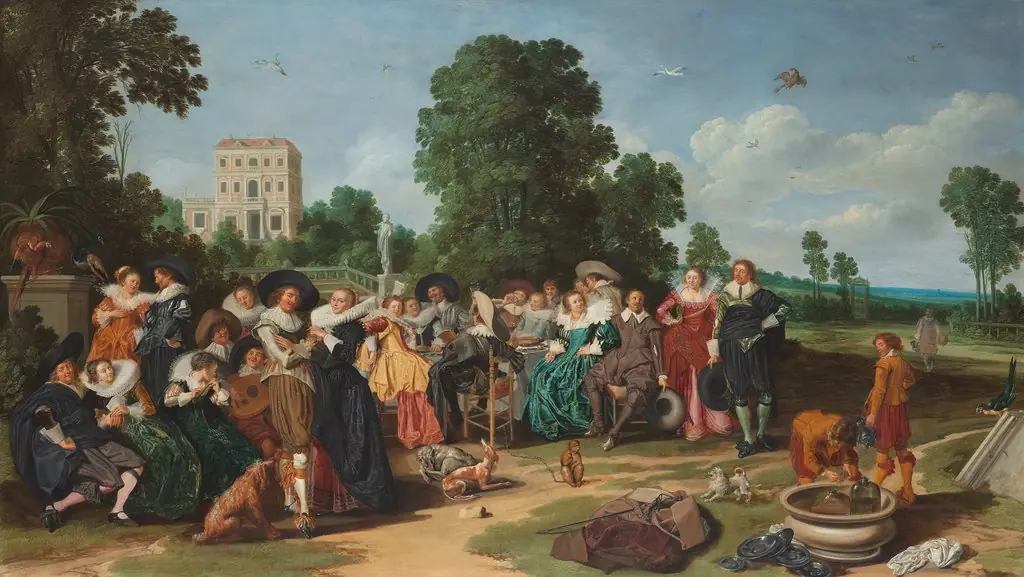
De buitenpartij
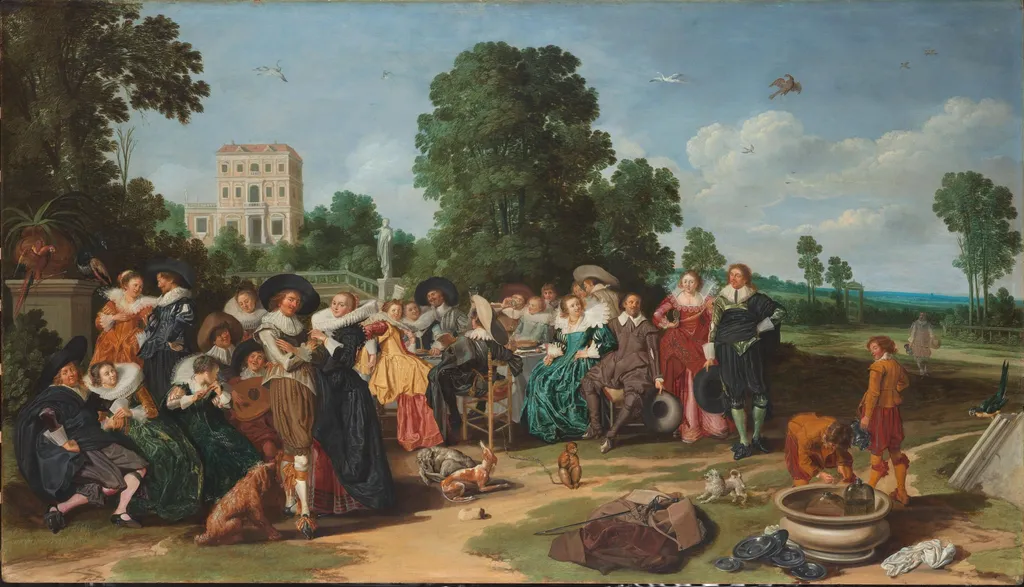
De buitenpartij is an unspecified painting by the Baroque artist Dirck Hals. It dates from 1627 and is held in the collection of the Rijksmuseum.
About this work
Overview
De buitenpartij is a seventeenth‑century oil painting that depicts a lively outdoor gathering. Under a leafy tree a group of revelers drink, laugh and dance, while a chained monkey watches from the periphery. The composition balances the festive scene with a subtle moralizing element, inviting viewers to look beyond the surface merriment.
Subject & Meaning
The central motif is a convivial party, yet the presence of the restrained monkey introduces a cautionary note. In contemporary symbolism the monkey stands for humanity’s susceptibility to base appetites; its chains suggest that indulgence can become a self‑imposed bondage, reminding viewers that pleasure should be tempered by restraint.
Technique & Style
Rendered in the Baroque idiom, the work employs vigorous brushwork and a warm palette to convey movement and vitality. Light filters through the foliage, illuminating the figures and creating a contrast between the bright, animated foreground and the darker, more contemplative space occupied by the animal.
History & Provenance
Created for a Dutch audience in the 1600s, the painting would have resonated with a public accustomed to moralizing genre scenes. Its original patronage and subsequent ownership remain undocumented, but the work has been preserved as an example of the period’s didactic yet entertaining visual culture.
Context
During the Dutch Golden Age, genre paintings often combined everyday life with allegorical messages. De buitenpartij follows this tradition, using a familiar social setting to comment on the dangers of excess, a theme echoed in contemporary literature and sermons that warned against overindulgence.
Artist & collection
Artist
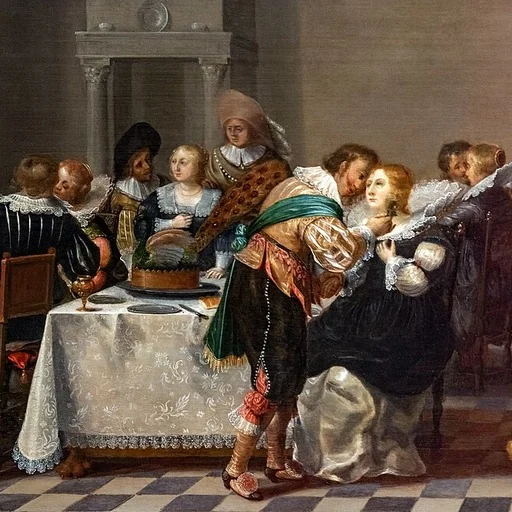
Dirck Hals (19 March 1591 – 17 May 1656), born at Haarlem, was a Dutch Golden Age painter of merry company scenes, festivals and ballroom scenes.

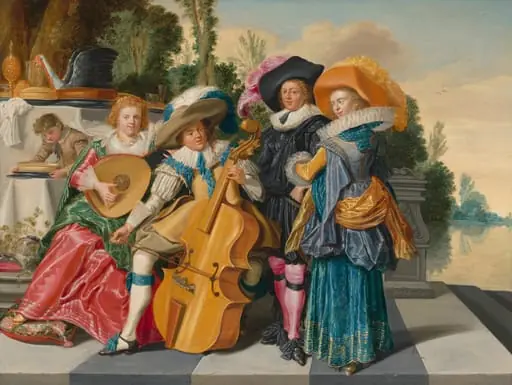
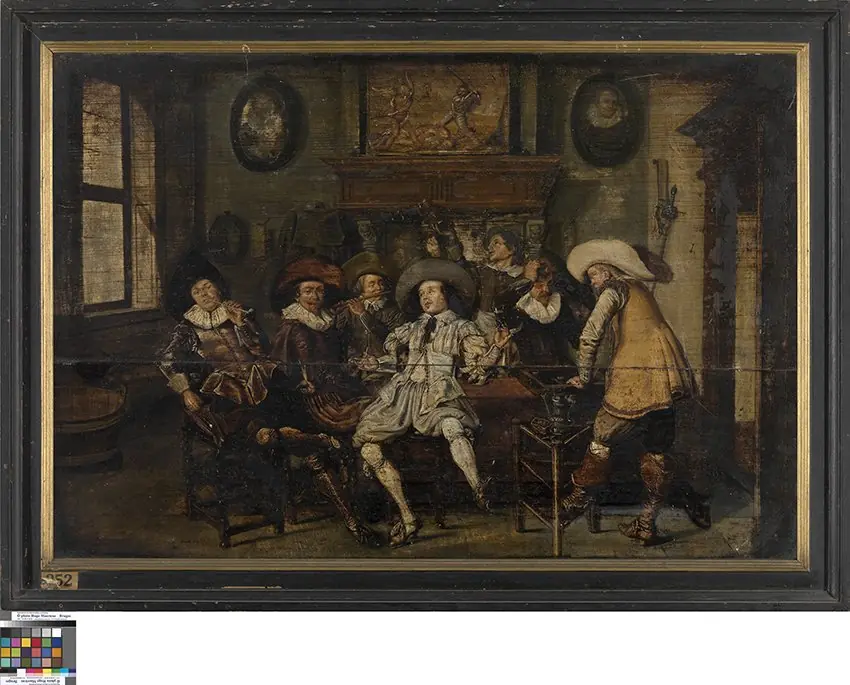
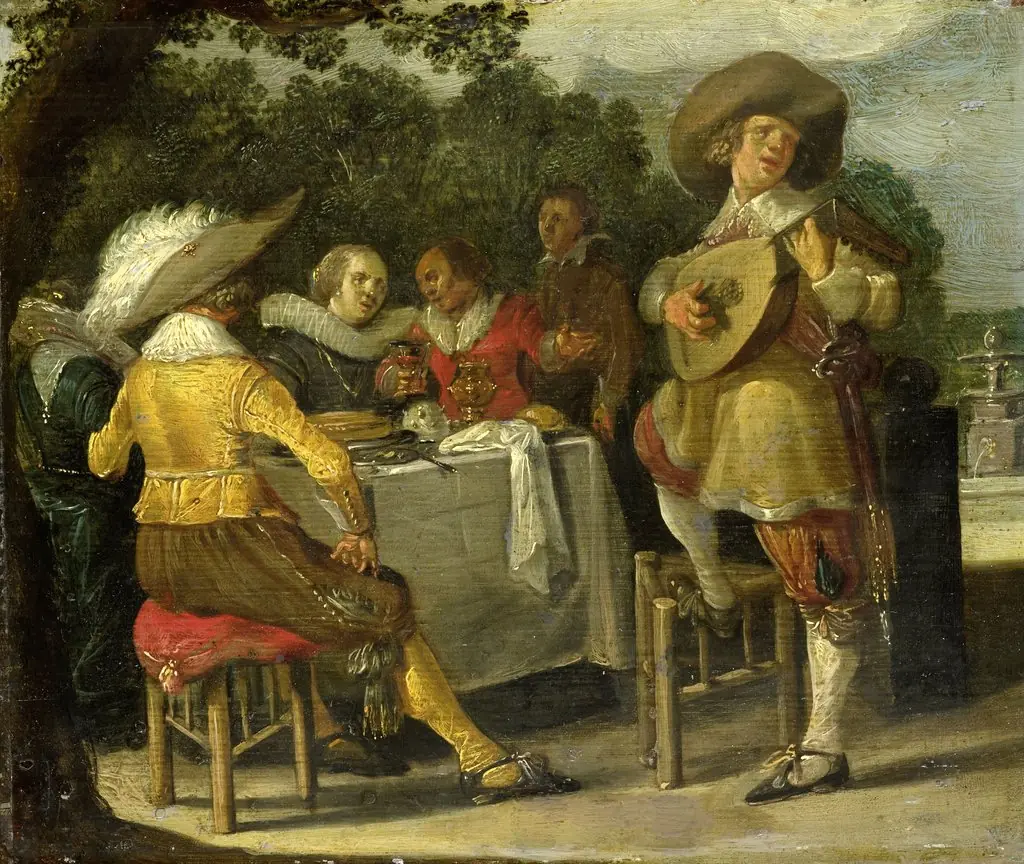
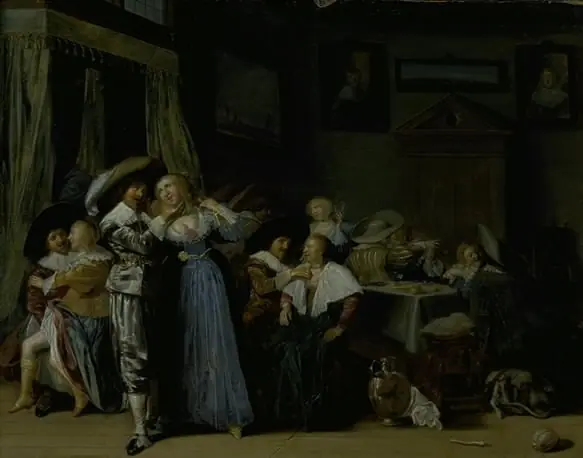
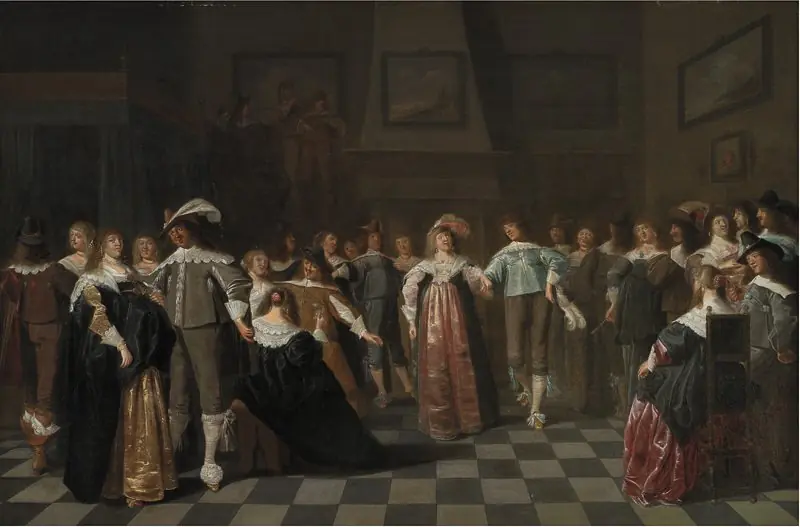
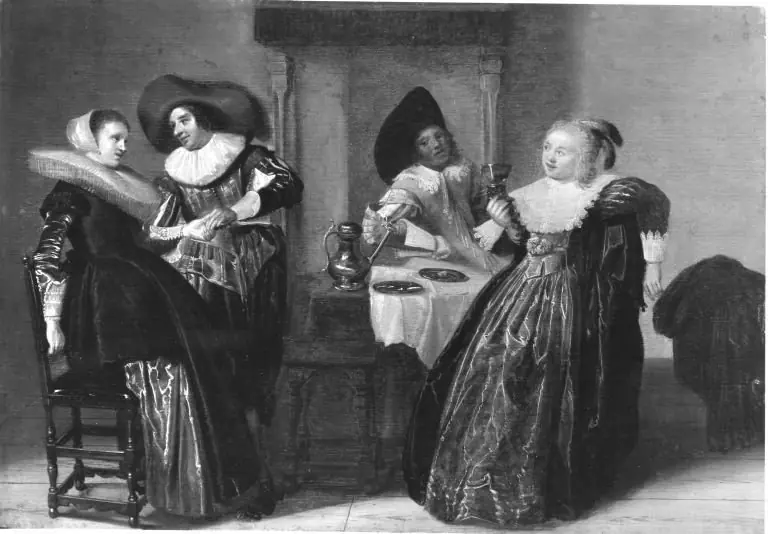
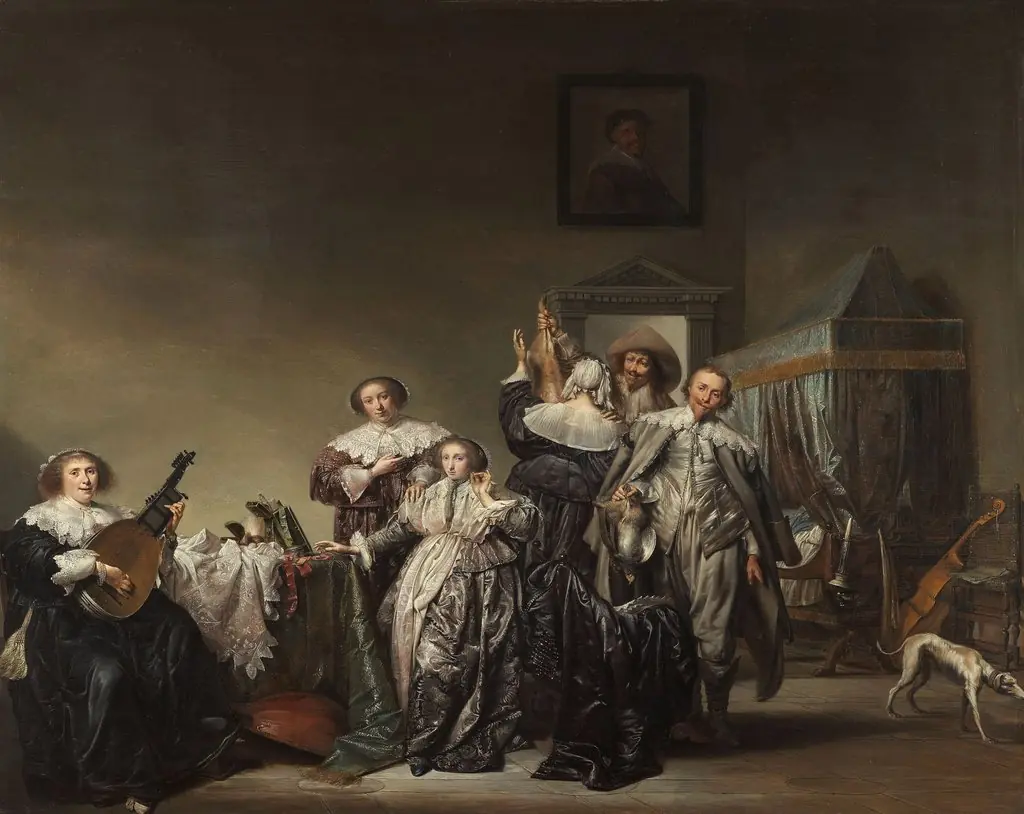 Gallant Company
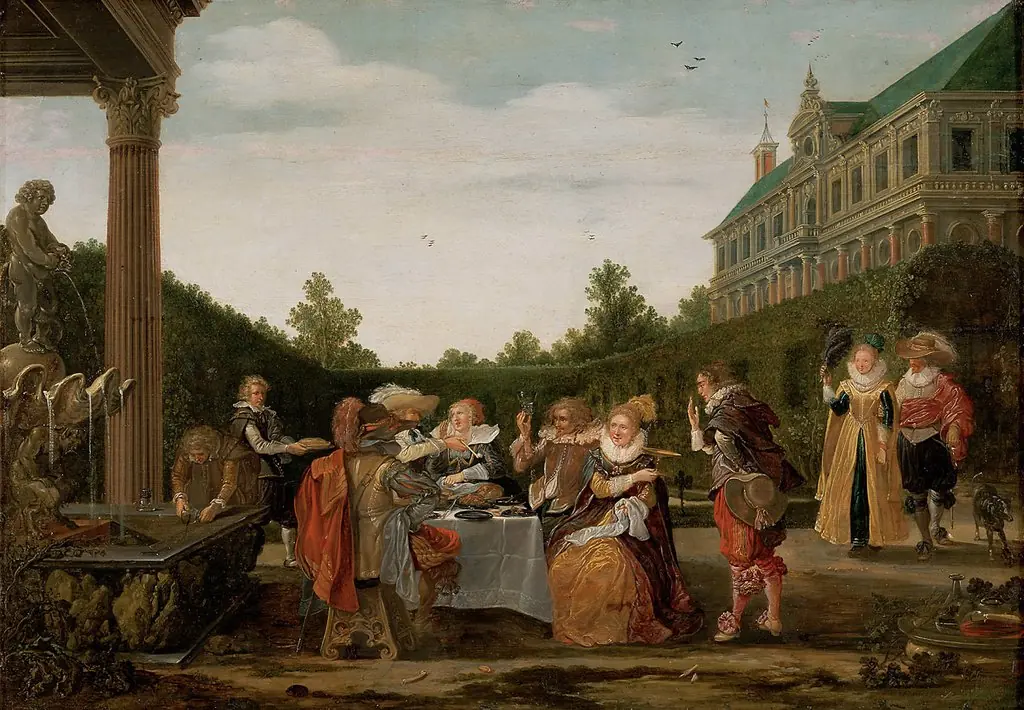 Banquet in a palatial garden, with an elegant company drinking and in conversation
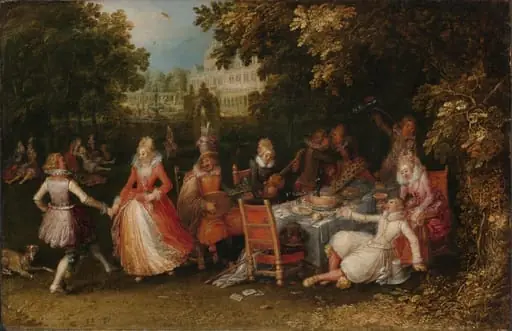 The Fête Champêtre
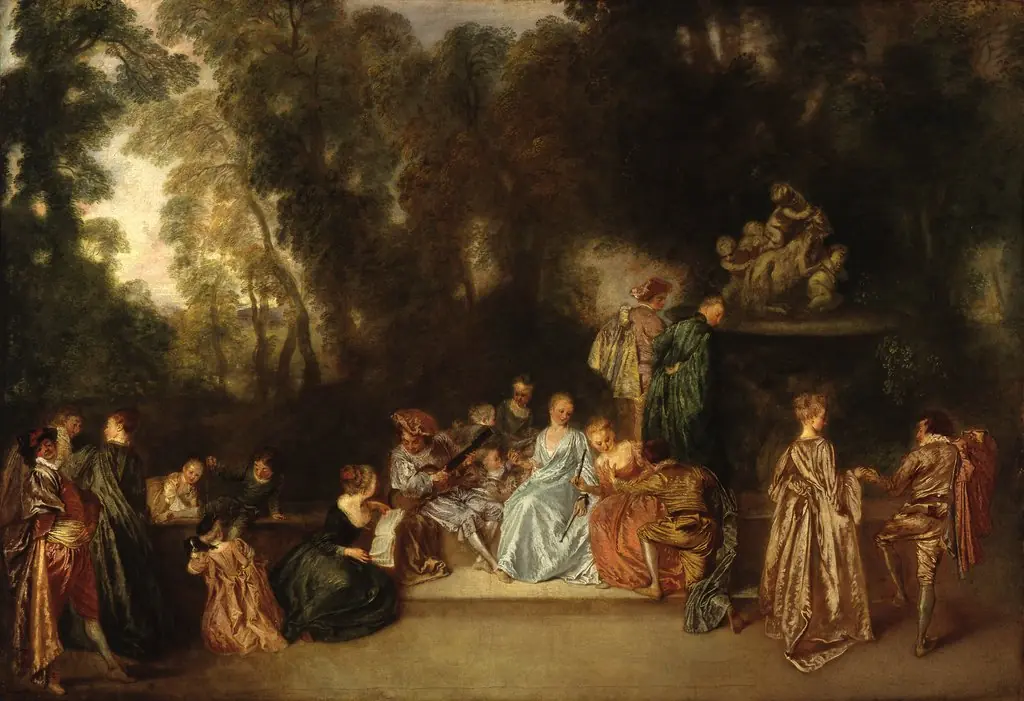 Party in the Open Air
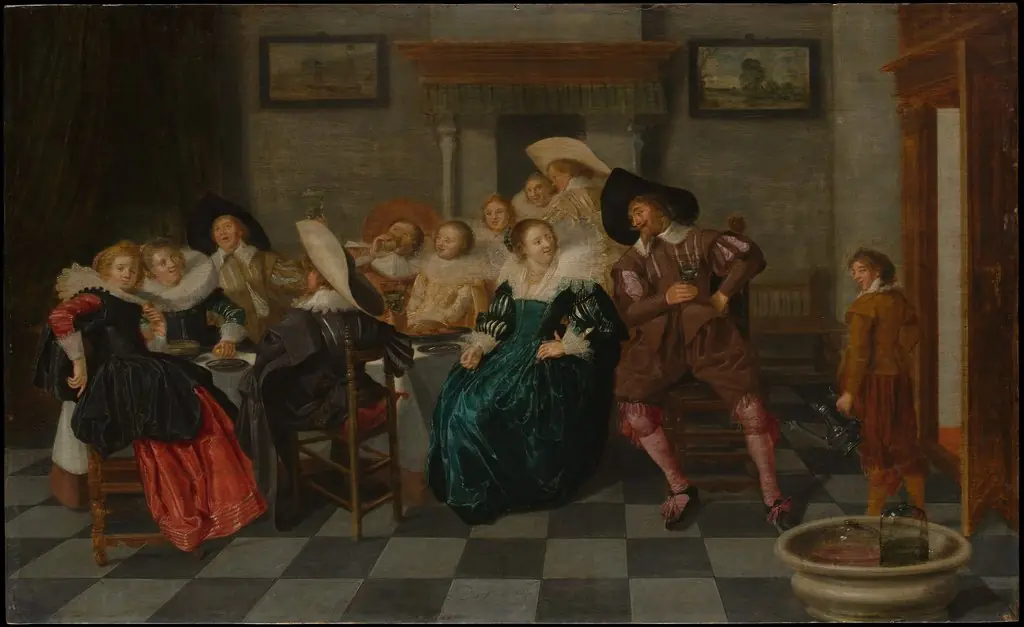
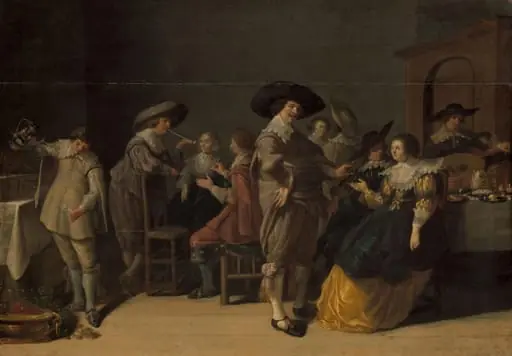 Distinguished Company in a Room
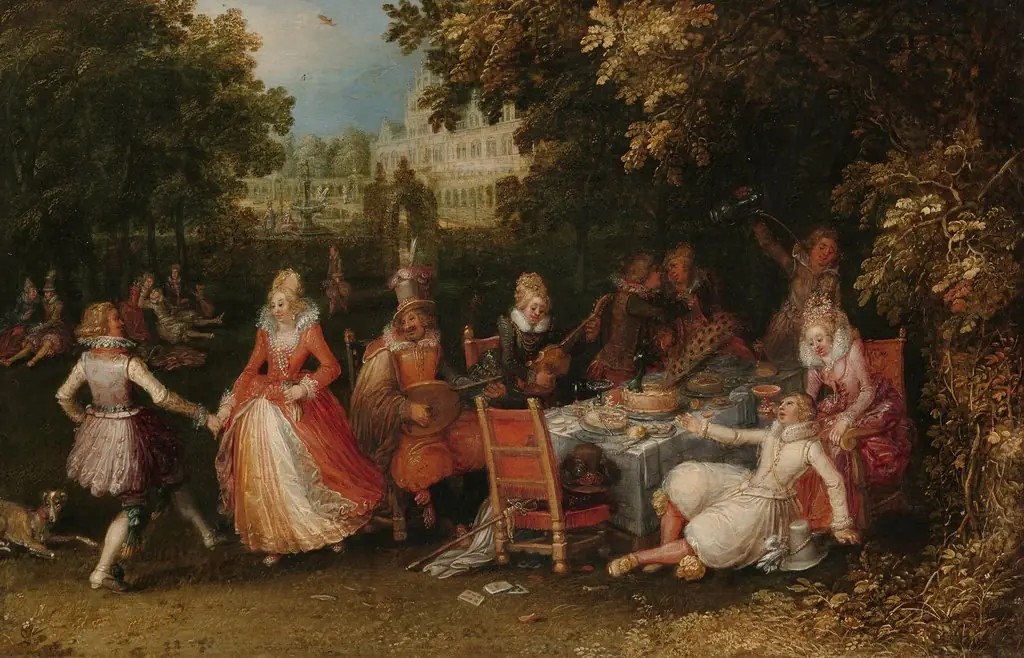 The fête champêtre
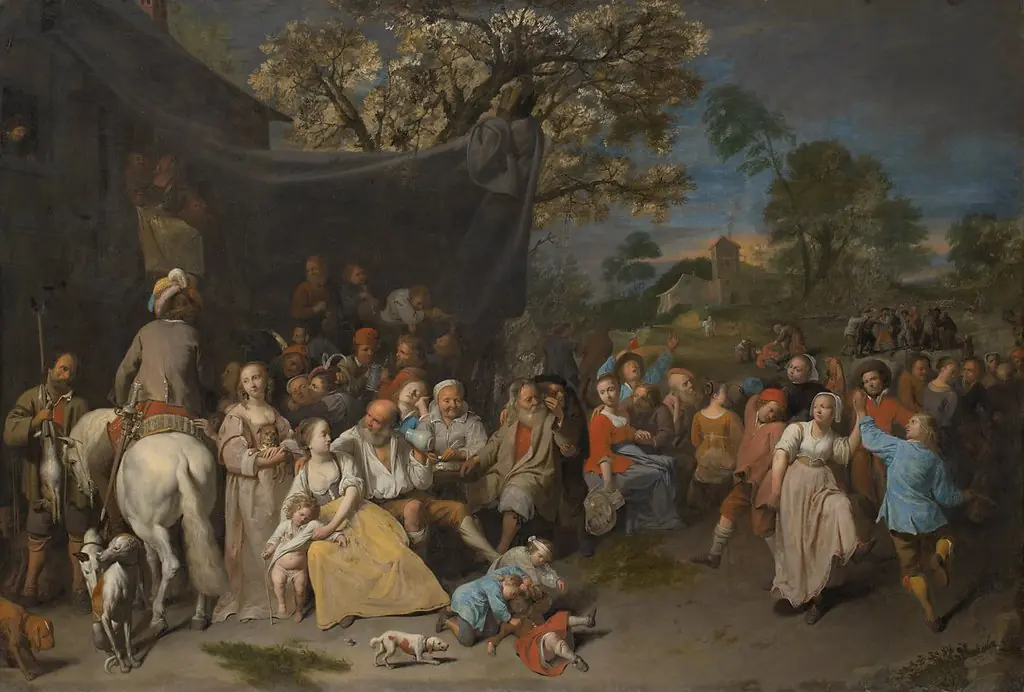 Farmers entertaining themselves (kermess)
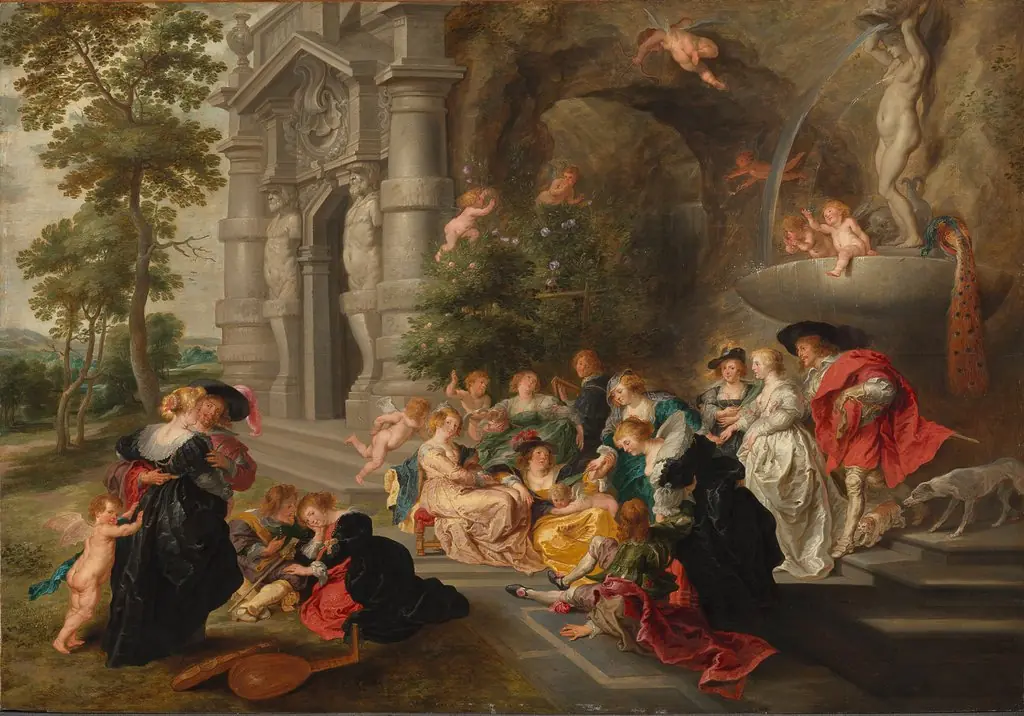 Liebesgarten
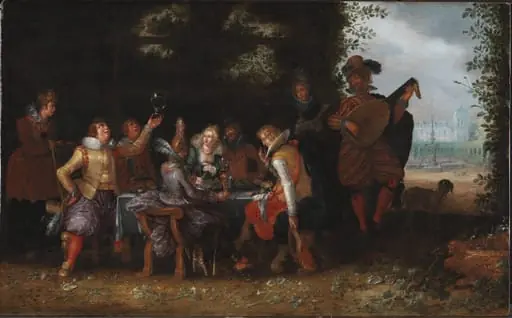 Christ Healing at the Pool of Bethesda
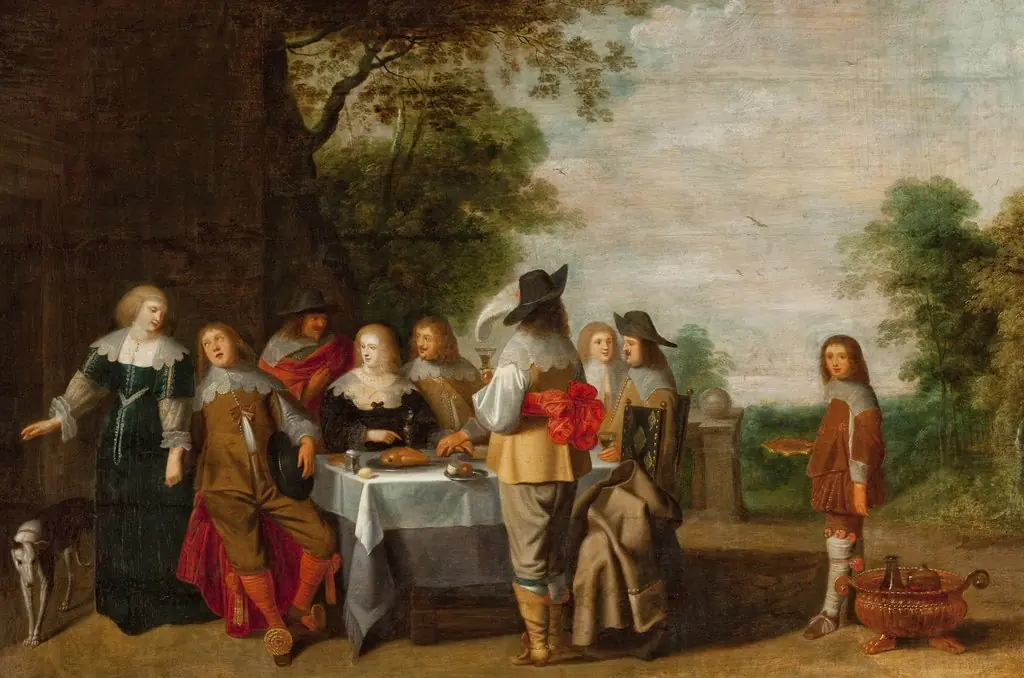 Company at the Table in a Park