Artwork
Church Interior with the Parable of the Pharisee and the Publican (Luke 18:9-14)
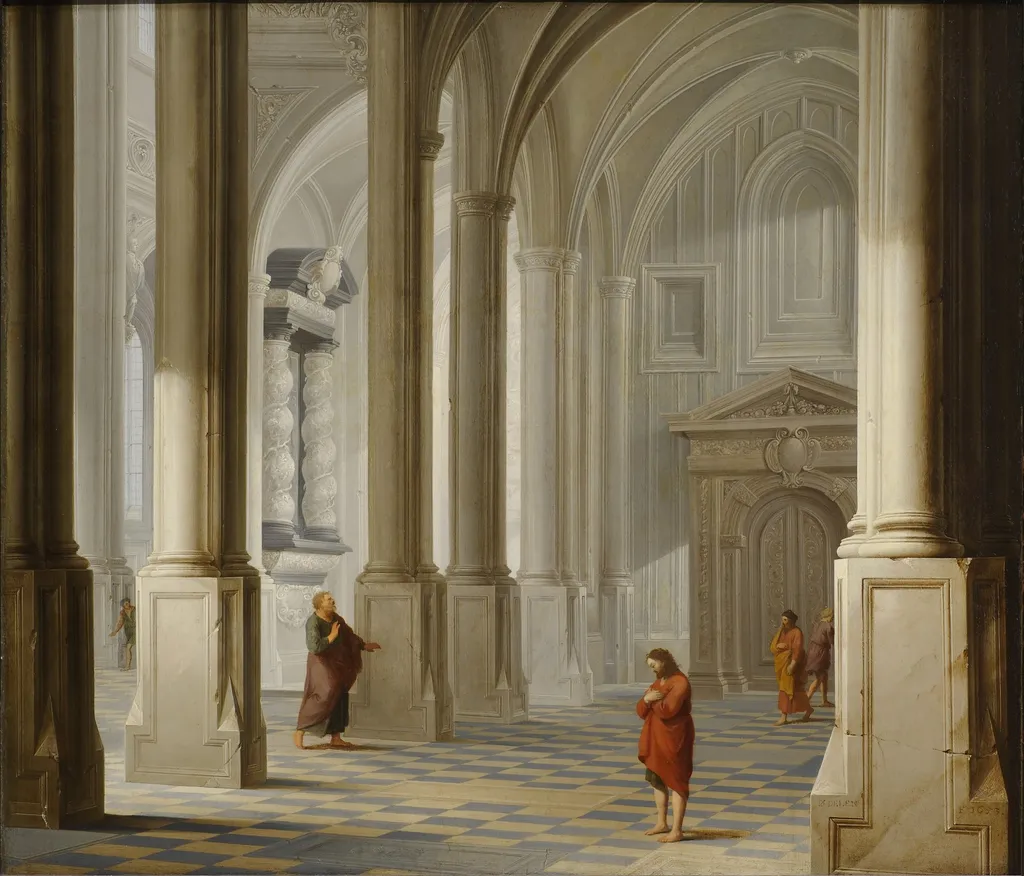
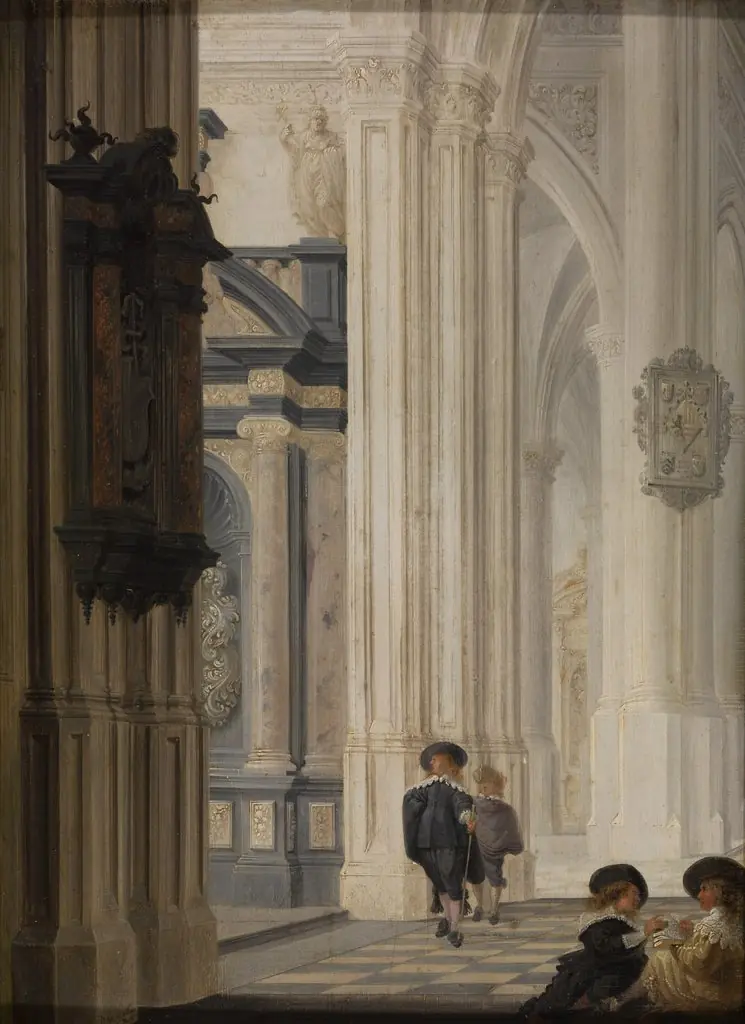
Church Interior with the Parable of the Pharisee and the Publican (Luke 18:9-14) is an oil painting by the Dutch Golden Age artist Dirck van Delen. It dates from 1653 and is held in the collection of the Clark Art Institute.
About this work
Overview
Painted in 1653 by Dirck van Delen, this oil on panel work presents a meticulously rendered church interior as a setting for a biblical narrative.
Painted in 1653 by Dirck van Delen, this oil on panel work presents a meticulously rendered church interior as a setting for a biblical narrative. Van Delen, known for his architectural precision, avoids human drama in favor of spatial clarity, using the church’s structure to frame the parable’s moral contrast. The scene is neither a documentary record nor a devotional altarpiece, but a calculated composition where architecture and scripture intersect.
Subject & Meaning
The painting illustrates Luke’s parable of the Pharisee and the Publican, depicting two men in the foreground: one upright in prayer, the other bowed in humility. Their positioning within the vast nave underscores the contrast between self-righteousness and contrition. The surrounding congregation, partially visible in shadowed aisles, suggests a community witnessing this quiet moral moment. The setting transforms the church into a stage for spiritual judgment, not mere worship.
Technique & Style
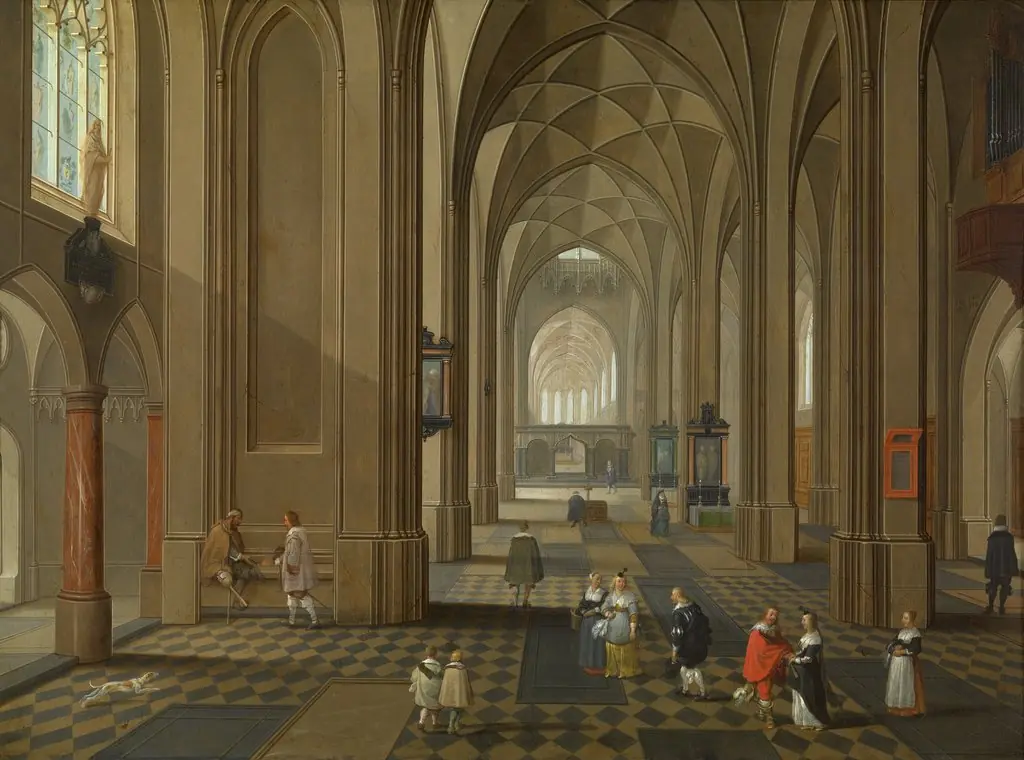
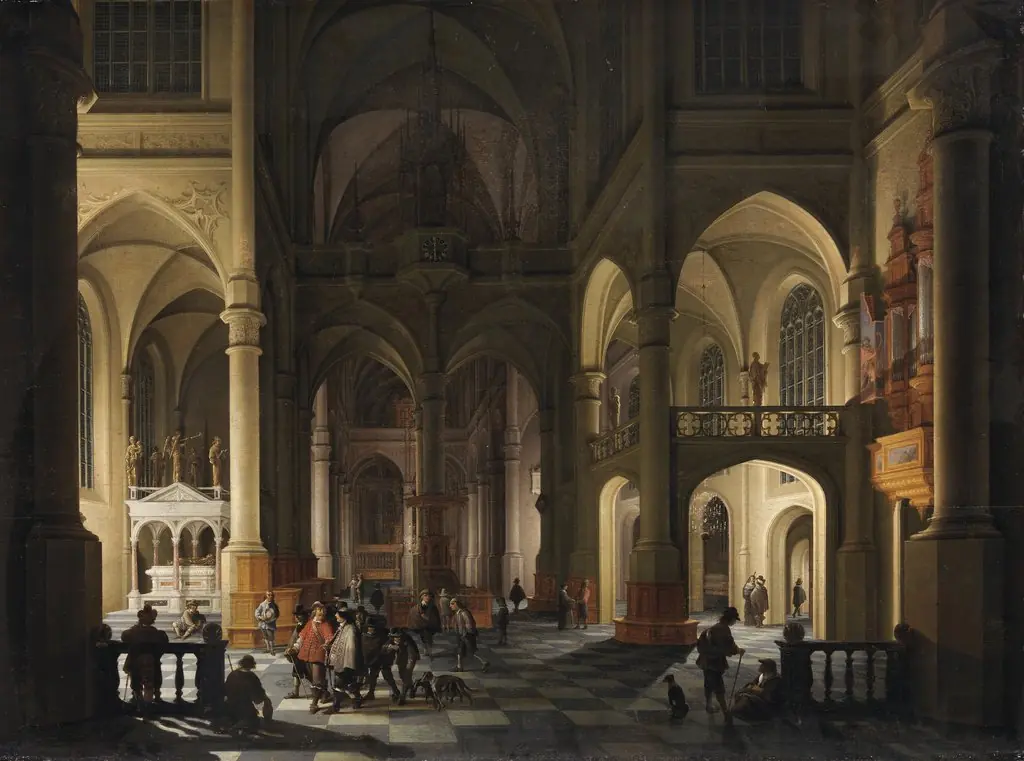
Van Delen employs chiaroscuro to model the stone columns and tiled floor, enhancing the illusion of depth and volume. Light enters from the left, casting sharp shadows that define the architectural geometry and guide the viewer’s eye toward the central figures. The checkerboard tiles, rendered in cool blue and warm yellow, anchor the composition with rhythmic precision. His brushwork is controlled, prioritizing structural accuracy over expressive gesture.
History & Provenance
The painting entered the collection of the Clark Art Institute in the 20th century, having passed through private Dutch collections since its creation. Its survival in relatively intact condition reflects its appeal to collectors drawn to Dutch architectural painting. No documentation links it to a specific church or commission, suggesting it was produced for the open market, likely as a display of technical skill rather than religious devotion.
Context
Created during the Dutch Golden Age, the work reflects a cultural shift away from Catholic iconography toward Protestant-inflected moral narratives. While churches remained popular subjects, they were no longer sites of worship in art but symbolic spaces for ethical reflection. Van Delen’s focus on empty, luminous interiors aligns with broader trends in Dutch painting that favored quiet, contemplative scenes over overt religious spectacle.
Legacy
Van Delen’s work contributed to a niche tradition of architectural painting that emphasized spatial logic over narrative drama. Though less celebrated than contemporaries like Vermeer or de Hooghe, his precise renderings of church interiors influenced later artists interested in perspective and light. This painting endures as a quiet example of how Dutch painters used physical space to convey moral and theological ideas without overt symbolism.
Own this work as a print
Artist & collection
Artist
Dirck van Delen or Dirck Christiaensz van Delen (c. 1605 – 16 May 1671) was a Dutch painter who specialized exclusively in architectural paintings, principally depicting palace perspectives and church interiors.

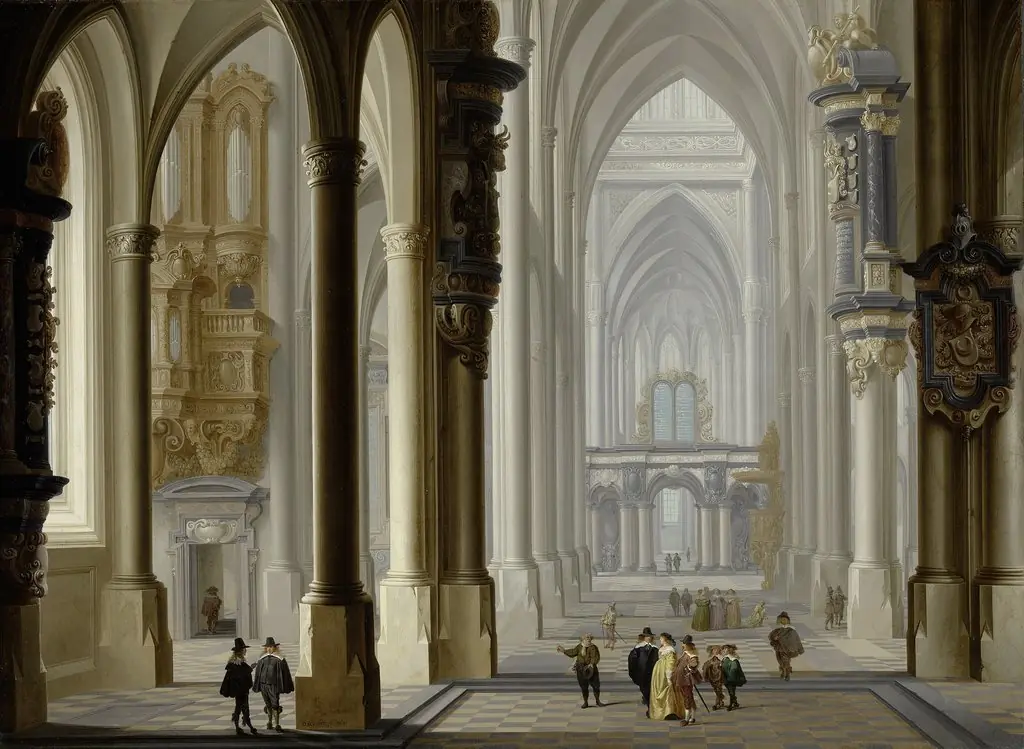 Interior of a Gothic Church
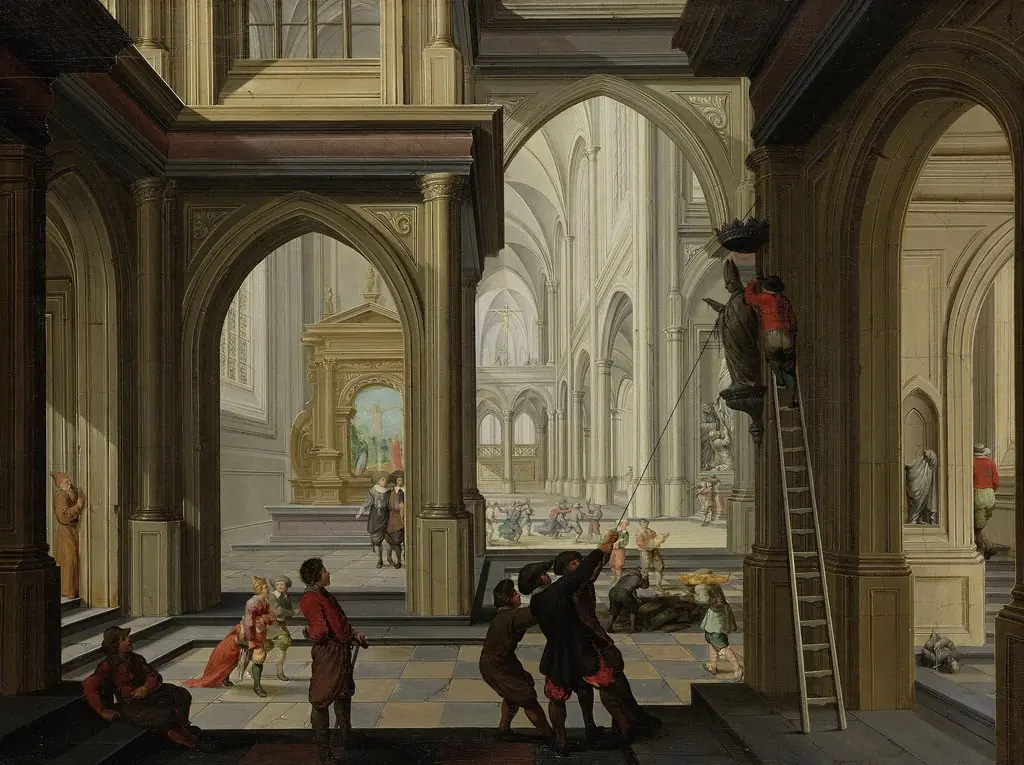 Iconoclasm in a Church
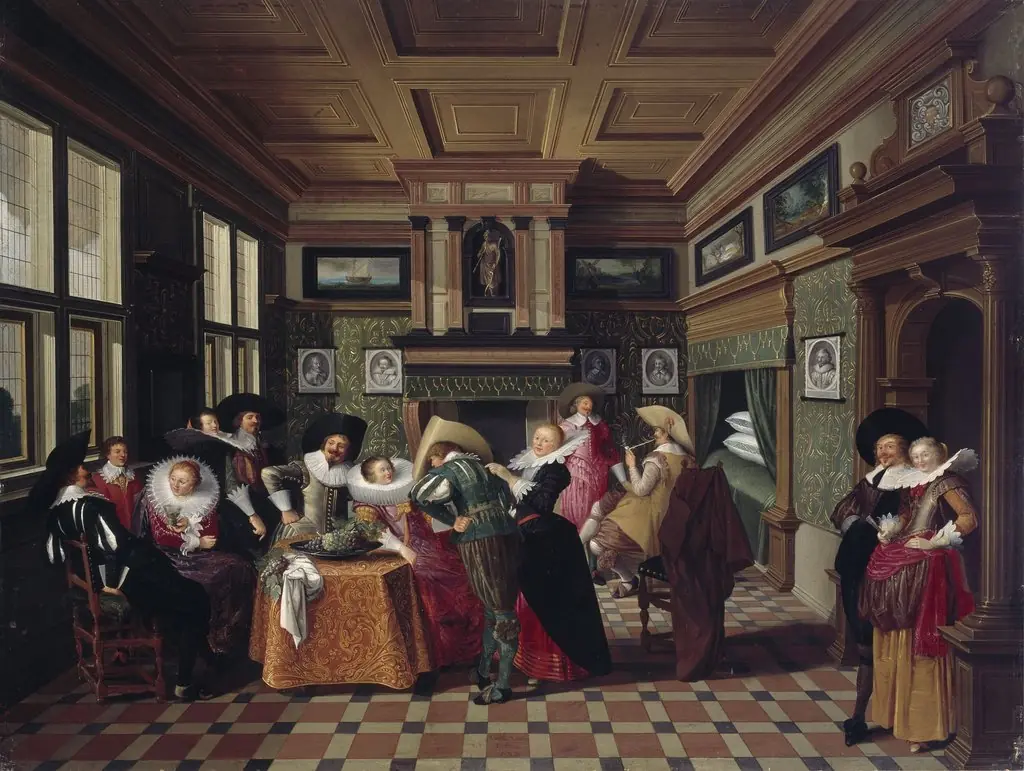 An Interior with Ladies and Cavaliers
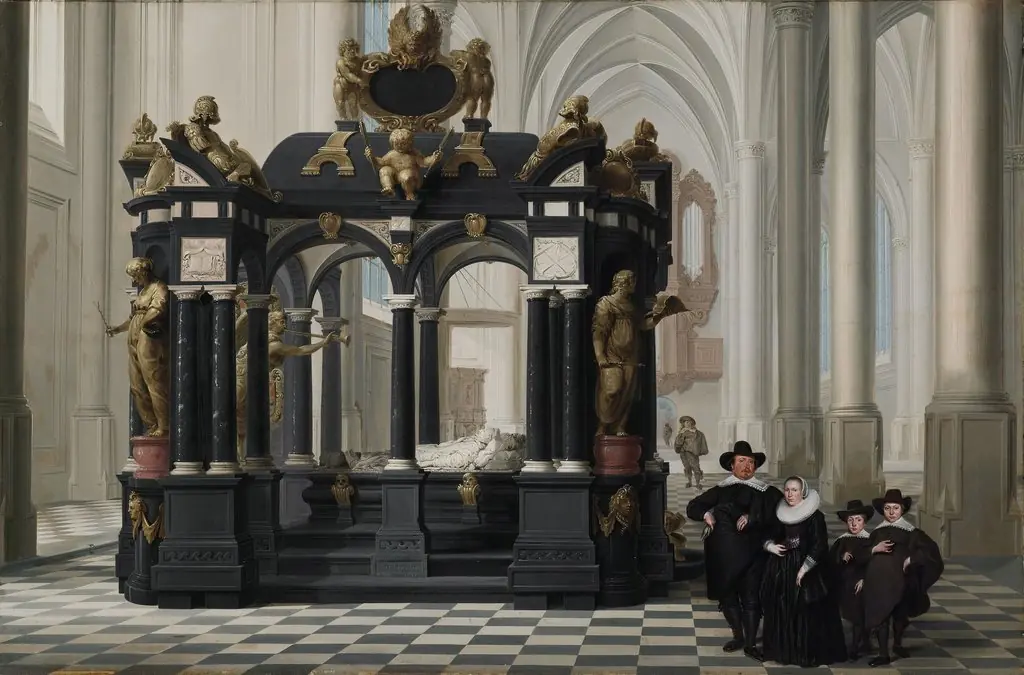 A Family beside the Tomb of Prince William I in the Nieuwe Kerk, Delft
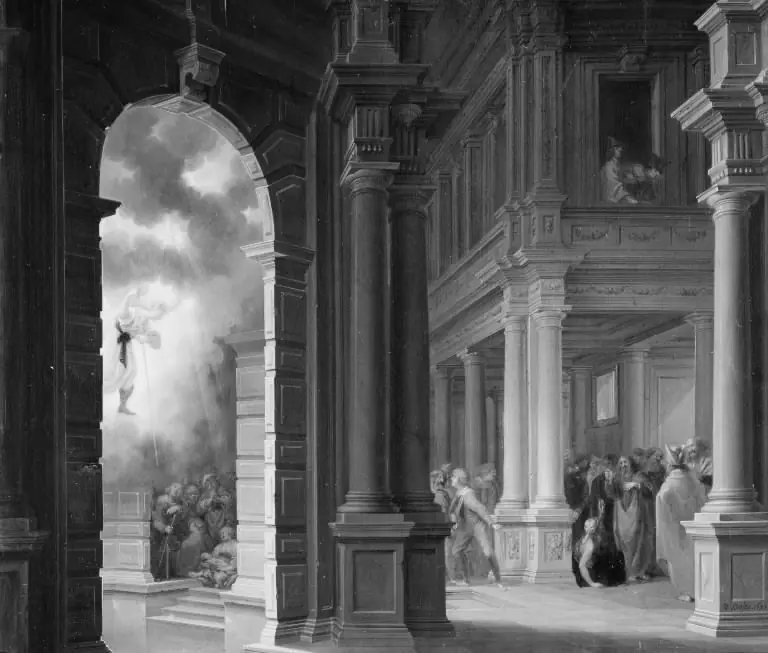 Christ Healing at the Pool of Bethesda
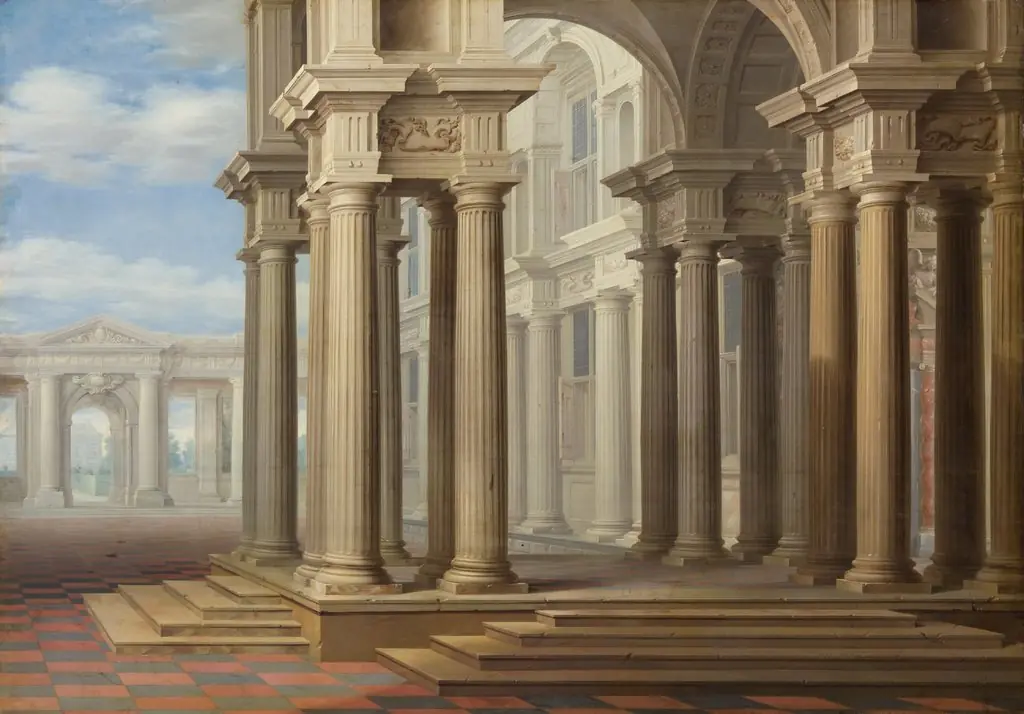 Fantasy architecture with steps and columns
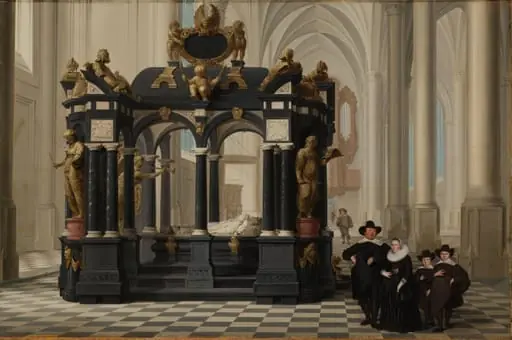 A Family beside the Tomb of Prince William i in the Nieuwe Kerk, Delft
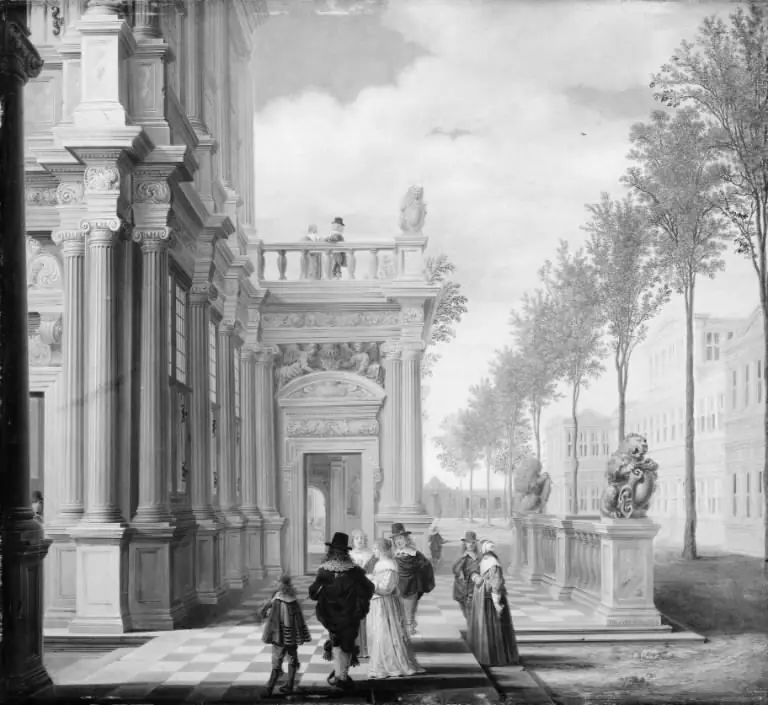 Elegant Company in Front of a Palace