Artwork
Interior of a Church
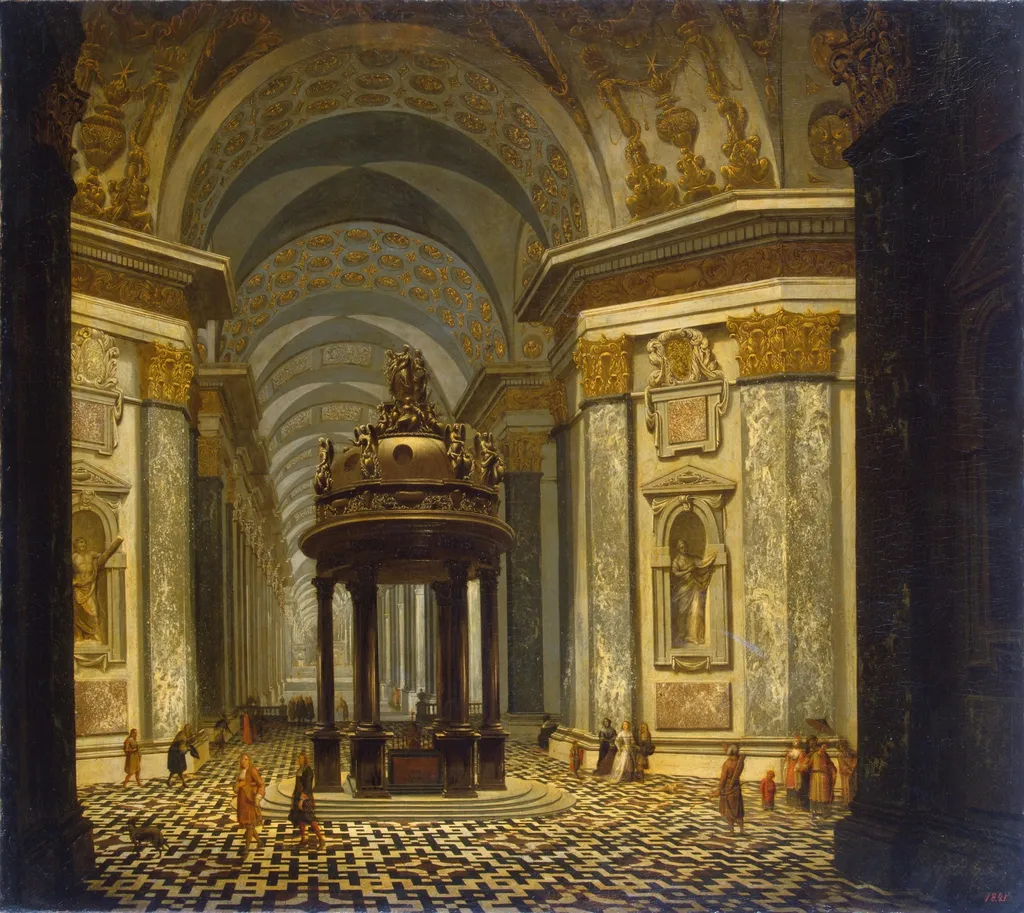
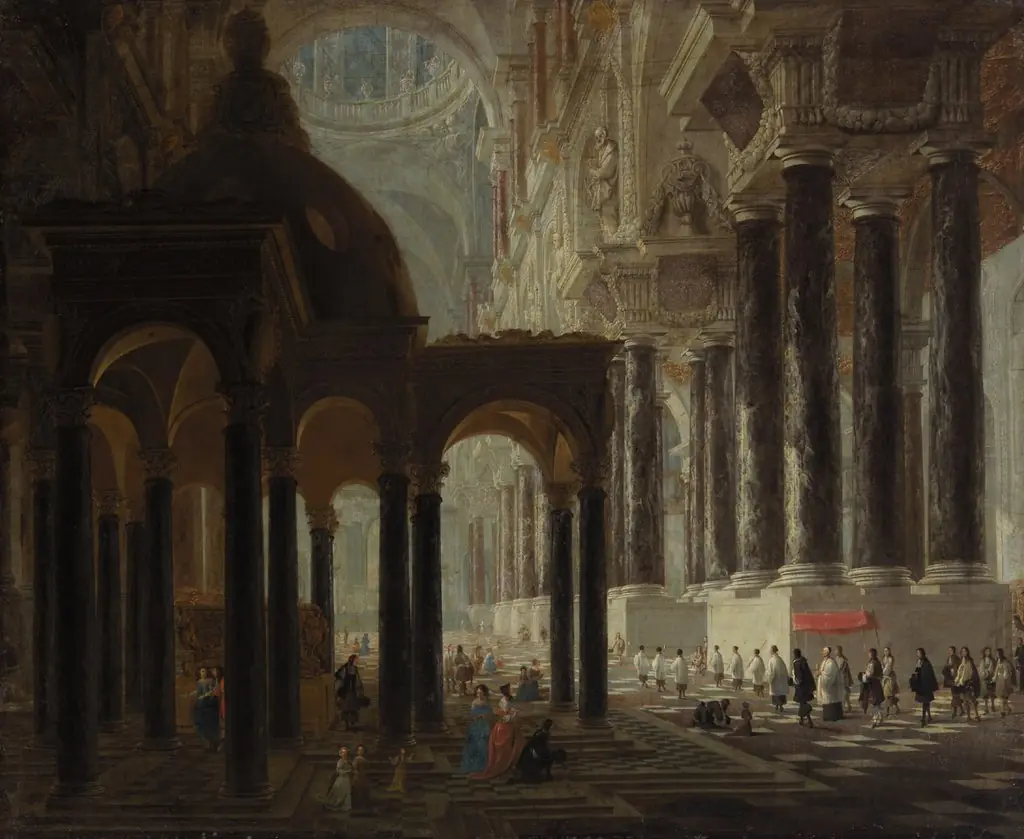
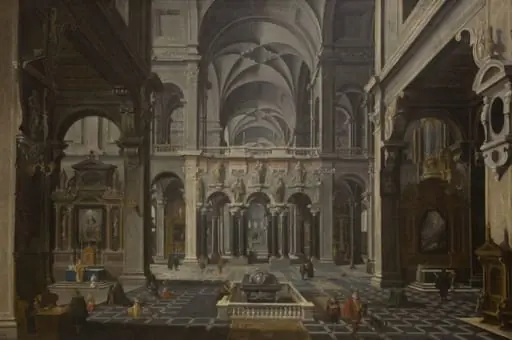
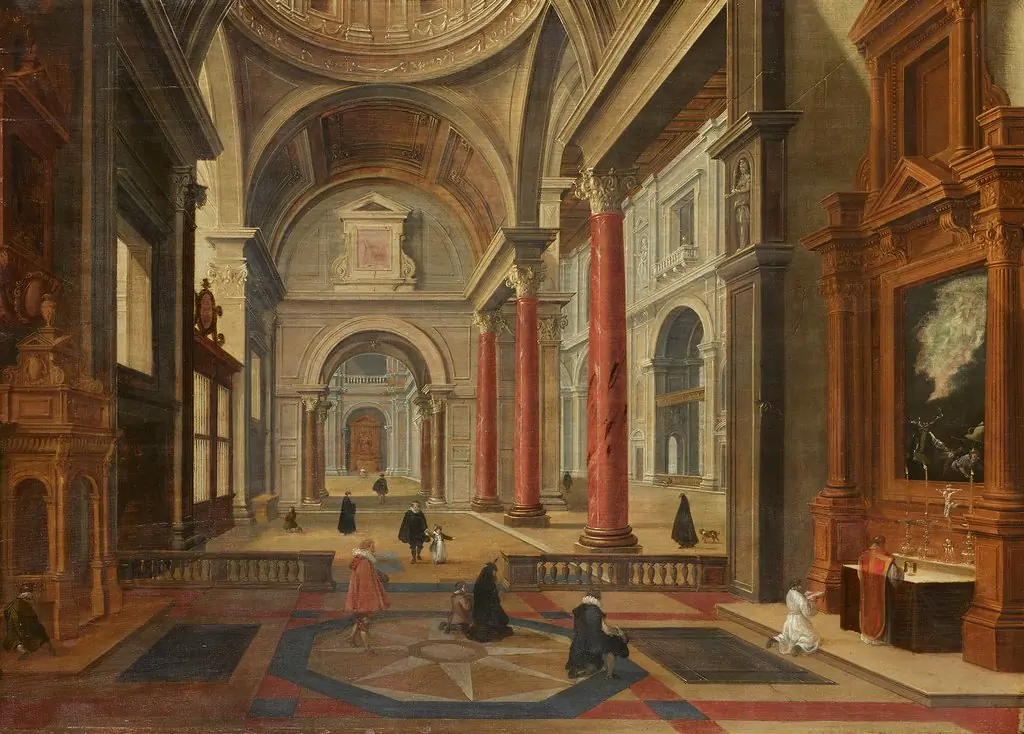
Interior of a Church is an oil painting by the Flemish Baroque painting artist Wilhelm Schubert van Ehrenberg. It dates from 1665 and is held in the collection of the Hermitage Museum.
About this work
Overview
Van Ehrenberg, active in Antwerp, specialized in architectural spaces that blended observed detail with imaginative composition.
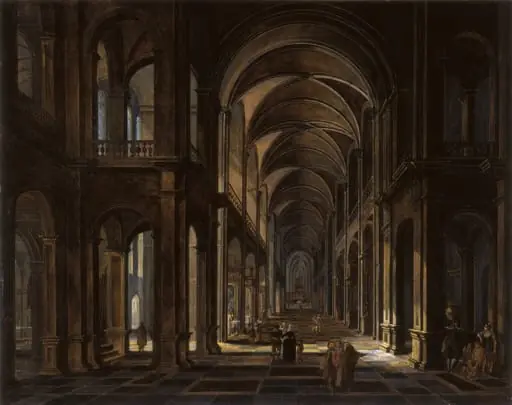
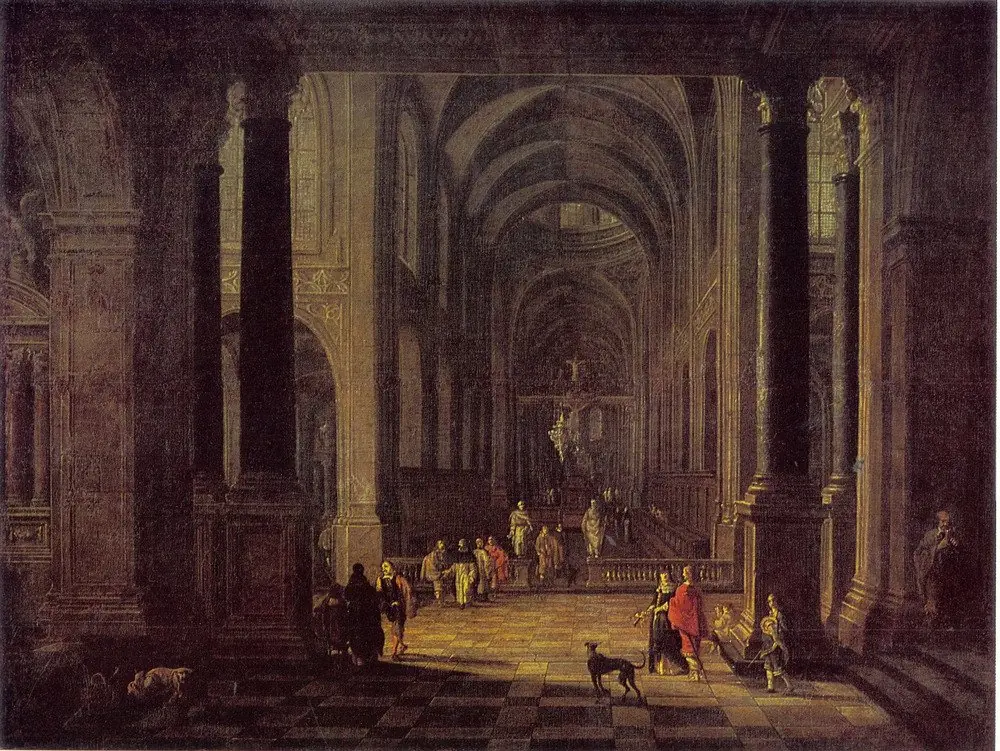
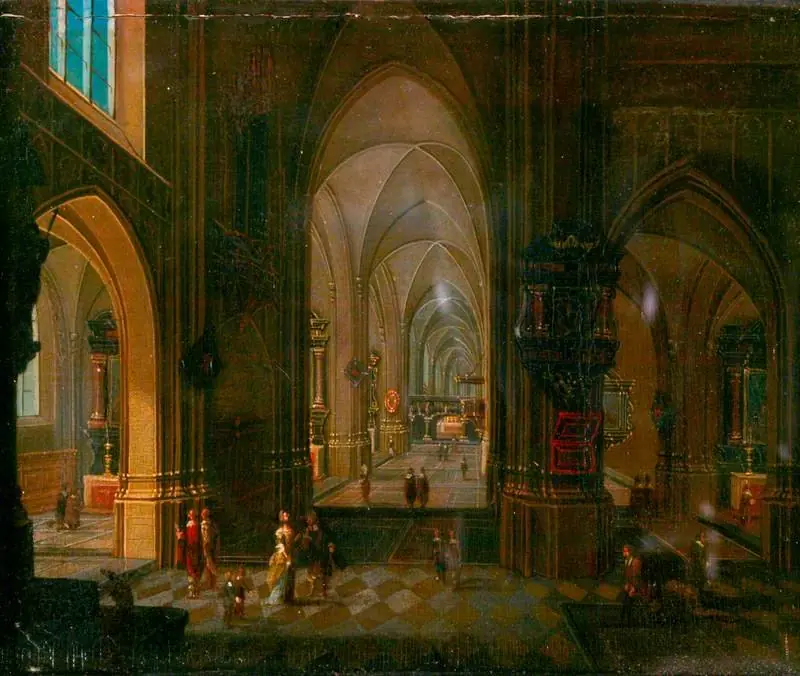
Painted in 1665 by Wilhelm Schubert van Ehrenberg, this oil-on-canvas work presents a meticulously rendered church interior. Van Ehrenberg, active in Antwerp, specialized in architectural spaces that blended observed detail with imaginative composition. The painting exemplifies his mastery in constructing believable spatial depth through precise perspective and controlled lighting, characteristic of Flemish Baroque traditions.
Subject & Meaning
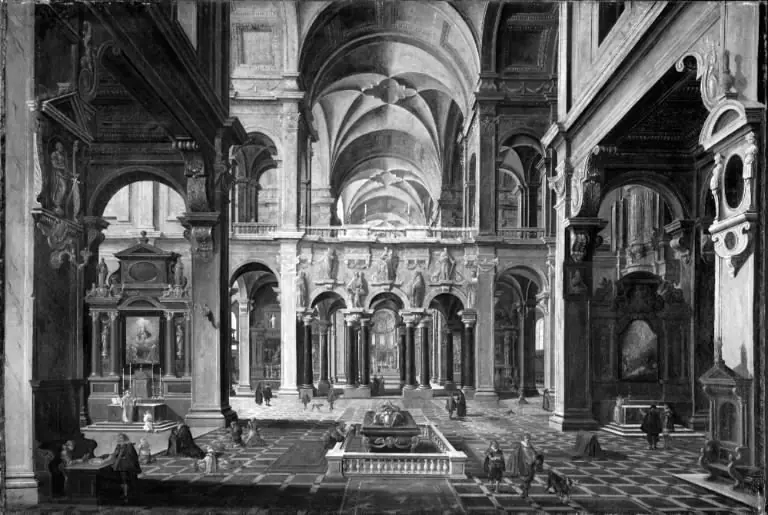
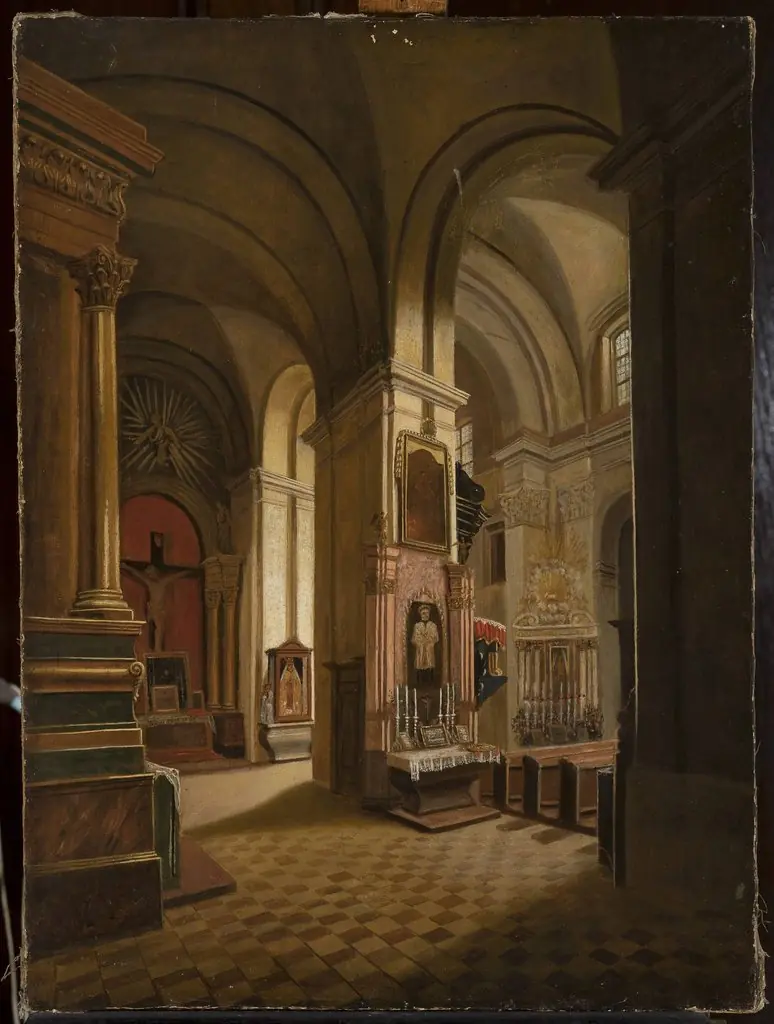
The scene centers on a richly decorated altar, flanked by rows of arches and columns adorned with gilded carvings. The checkerboard floor and soaring vaults suggest a sacred space designed for solemnity and awe. While not depicting a specific known church, the interior reflects idealized ecclesiastical architecture of the period, conveying reverence through order, symmetry, and material luxury rather than narrative.
Technique & Style
Van Ehrenberg employed oil paint to achieve subtle gradations of light and shadow, emphasizing the volume of architectural elements. Chiaroscuro enhances the sense of depth, while fine brushwork renders intricate stonework, gilding, and tile patterns with precision. The palette is restrained, dominated by muted tones that highlight the metallic sheen of decorative details, reinforcing the quiet grandeur of the space.
History & Provenance
The painting entered the collection of the State Hermitage Museum in Saint Petersburg, where it remains today. Its journey from Antwerp to Russia is undocumented, but its presence in the Hermitage suggests acquisition during the 18th or 19th century, possibly through imperial collections expanding under Catherine the Great or her successors.
Context
In mid-17th-century Flanders, church interiors were popular subjects among artists, reflecting both religious devotion and civic pride in architectural achievement. Van Ehrenberg’s works aligned with a broader trend of painting architectural spaces as subjects in their own right, separate from religious narratives, appealing to collectors interested in spatial harmony and craftsmanship.
Legacy
Van Ehrenberg’s interiors influenced later Dutch and Flemish painters who pursued architectural precision and atmospheric lighting. Though less widely known than contemporaries like Vermeer, his disciplined approach to perspective and material detail contributed to a distinct branch of Baroque painting focused on the quiet majesty of built environments.
Own this work as a print
Artist & collection
Artist
Wilhelm Schubert van Ehrenberg
Wilhelm Schubert van Ehrenberg or Willem Schubart van Ehrenberg (also: Wilhem Schubert von Ehrenberg or Wilhem Schubert van Ehrenberg (Antwerp, 1630 or 1637– Antwerp, c.