Artwork
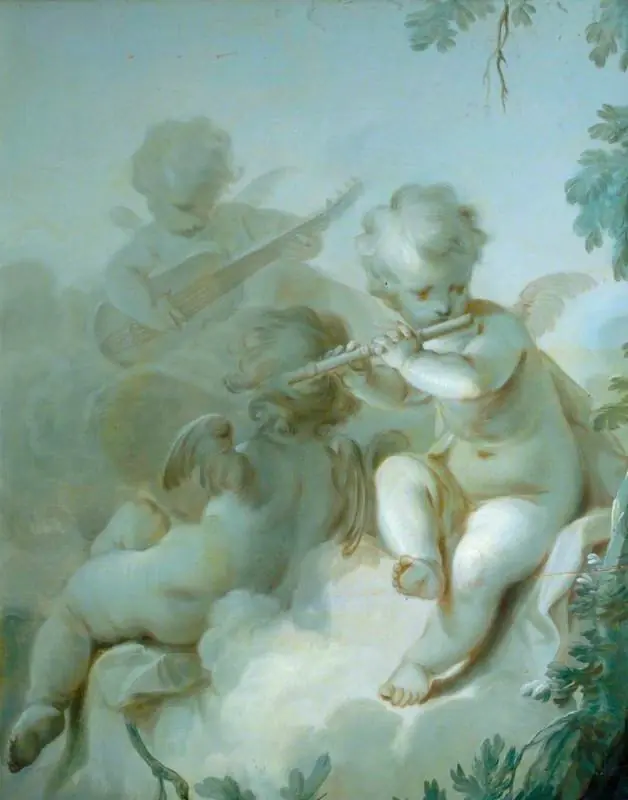
Four Cupids Holding Festoons of Flowers and Foliage
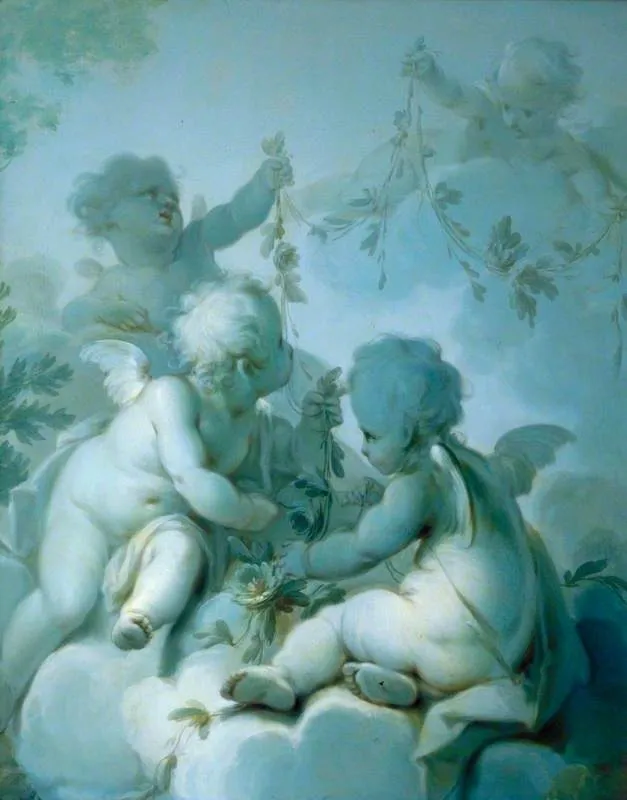
Four Cupids Holding Festoons of Flowers and Foliage is an oil painting by the Rococo painting artist Dirk van der Aa. It dates from 1775 and is held in the collection of the Victoria and Albert Museum.
About this work
Overview
Painted in 1775 by Dutch artist Dirk van der Aa, this oil work depicts four putti engaged in a delicate arrangement of floral garlands. The composition is contained within a muted blue-gray backdrop, emphasizing the figures and their ornamental burden. The painting is part of the Victoria and Albert Museum’s collection, where it is noted for its refined execution and classical allusions.
Subject & Meaning
The four putti, or infantile cherubs, are shown in intimate, interwoven poses, supporting cascading wreaths of blossoms and leaves. Their gentle interactions suggest a quiet celebration of nature’s abundance, common in 18th-century decorative art. The imagery evokes themes of seasonal renewal and tender harmony, aligning with Enlightenment-era ideals of natural beauty and refined sentiment.
Technique & Style
The background’s neutral tone isolates the figures, focusing attention on their delicate interplay and the ornamental drapery.
Van der Aa employs subtle chiaroscuro to model the putti’s forms, lending them a sculptural quality akin to marble. Their pale, luminous skin contrasts with the rich greens and hues of the foliage, enhancing visual depth. The brushwork is precise yet soft, avoiding overt drama in favor of calm elegance. The background’s neutral tone isolates the figures, focusing attention on their delicate interplay and the ornamental drapery.
History & Provenance
The painting entered the Victoria and Albert Museum’s collection in the 19th century, likely acquired as part of a broader interest in decorative arts from the Dutch and Flemish traditions. While little is documented about its early ownership, its presence in the museum reflects its status as an example of late 18th-century Dutch genre painting with mythological undertones.
Context
Created during the height of Neoclassical influence in Europe, the work reflects a trend toward idealized, pastoral subjects in decorative painting. Dutch artists of the period often adapted classical motifs for private interiors, blending mythological elements with domestic charm. Van der Aa’s piece fits within this niche, serving as both ornament and quiet allegory.
Legacy
Though not widely exhibited beyond museum collections, the painting remains a representative example of Dutch decorative painting from the late 1700s. It illustrates how classical iconography was adapted for intimate, non-religious settings, preserving a tradition of allegorical charm that bridged Baroque grandeur and emerging Neoclassical restraint.
Artist & collection

 Mercury Confiding the Infant Bacchus to the Nymphs of Nysa
 Cupids in Conspiracy
 Kolme linnunpesällä leikkivää amoriinia
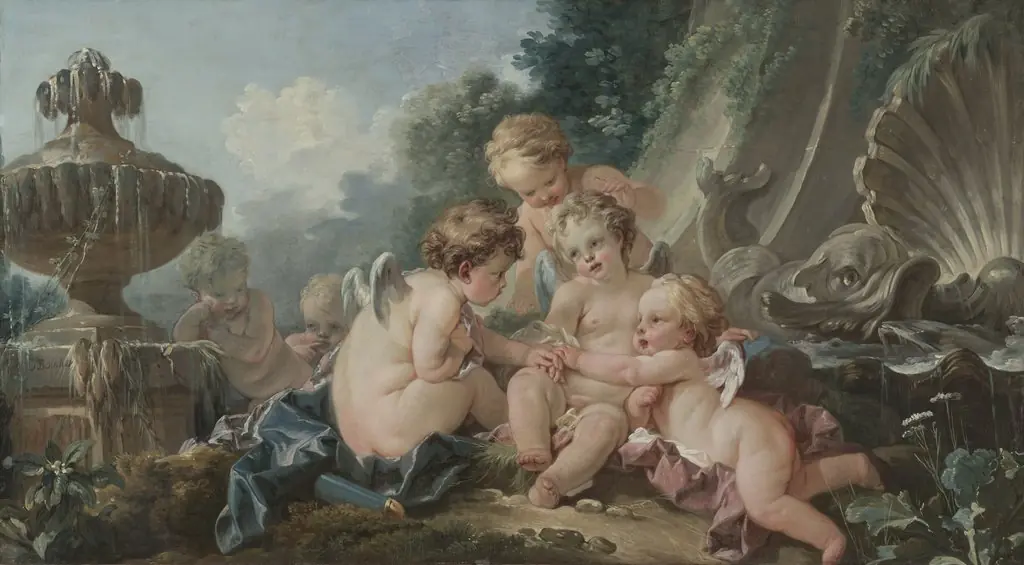 Cupids in Conspiracy
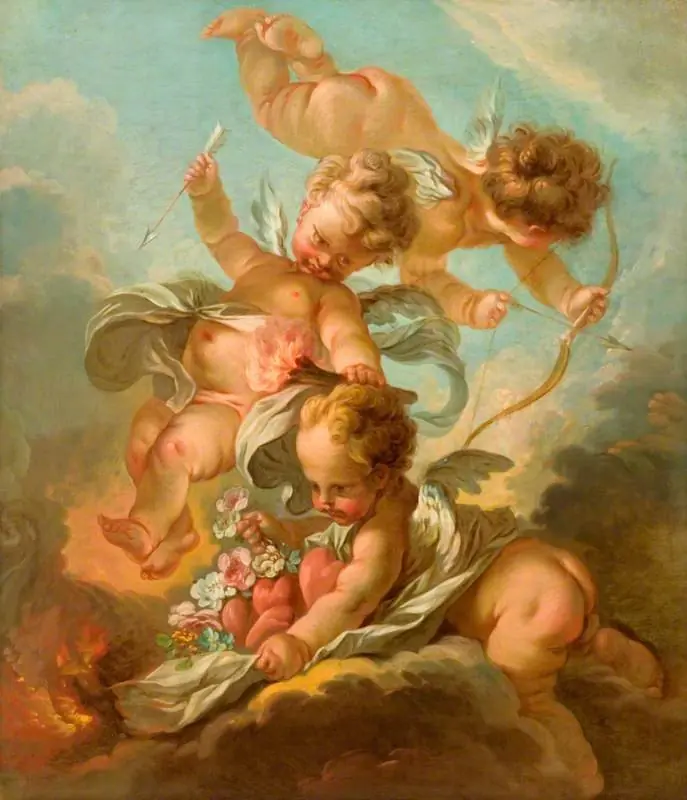 Fire: Three Putti Holding a Bow and Arrow, a Burning Torch, and a Mantle Containing Hearts and Flowers
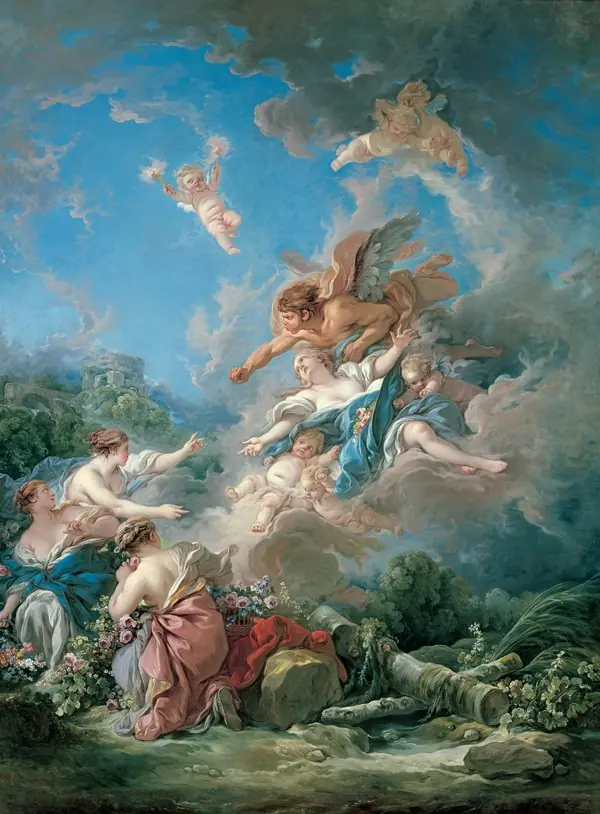 Boreas Abducting Oreithyia
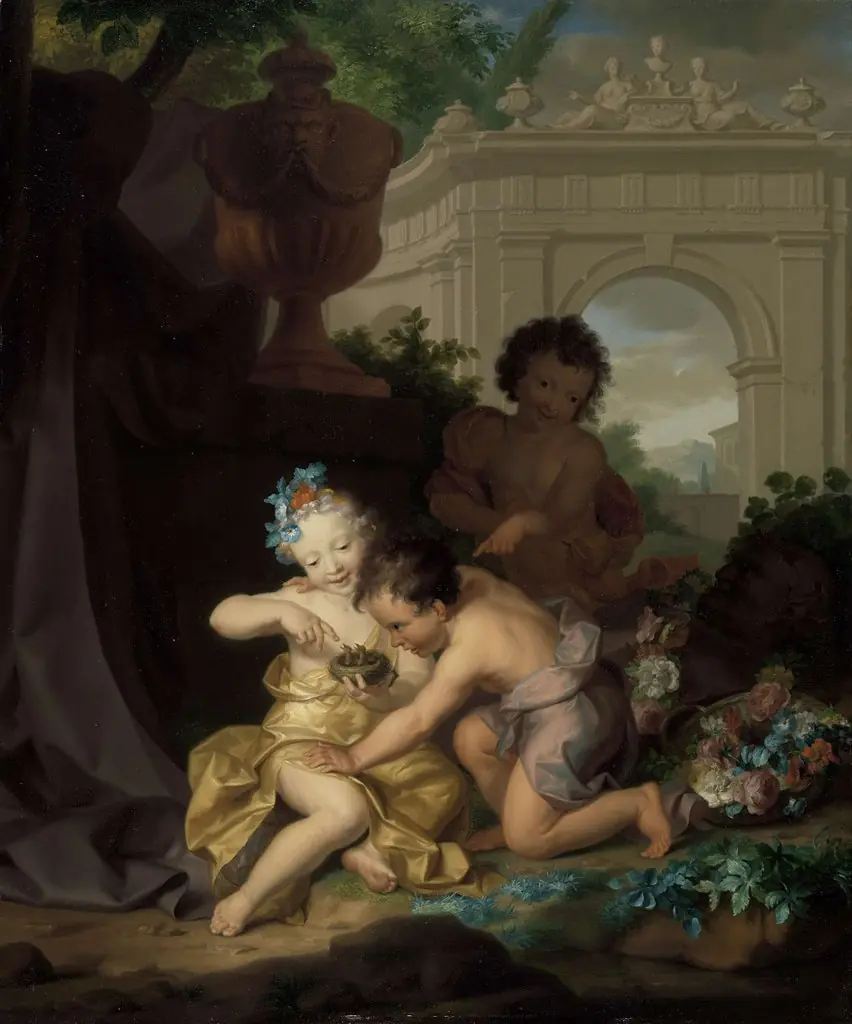 Drie kinderen spelend met een vogelnestje
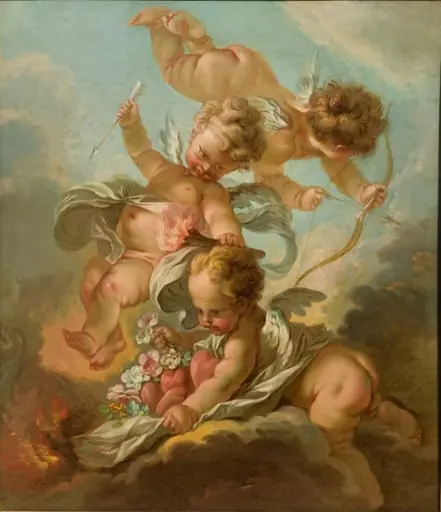 Allegory of Fire
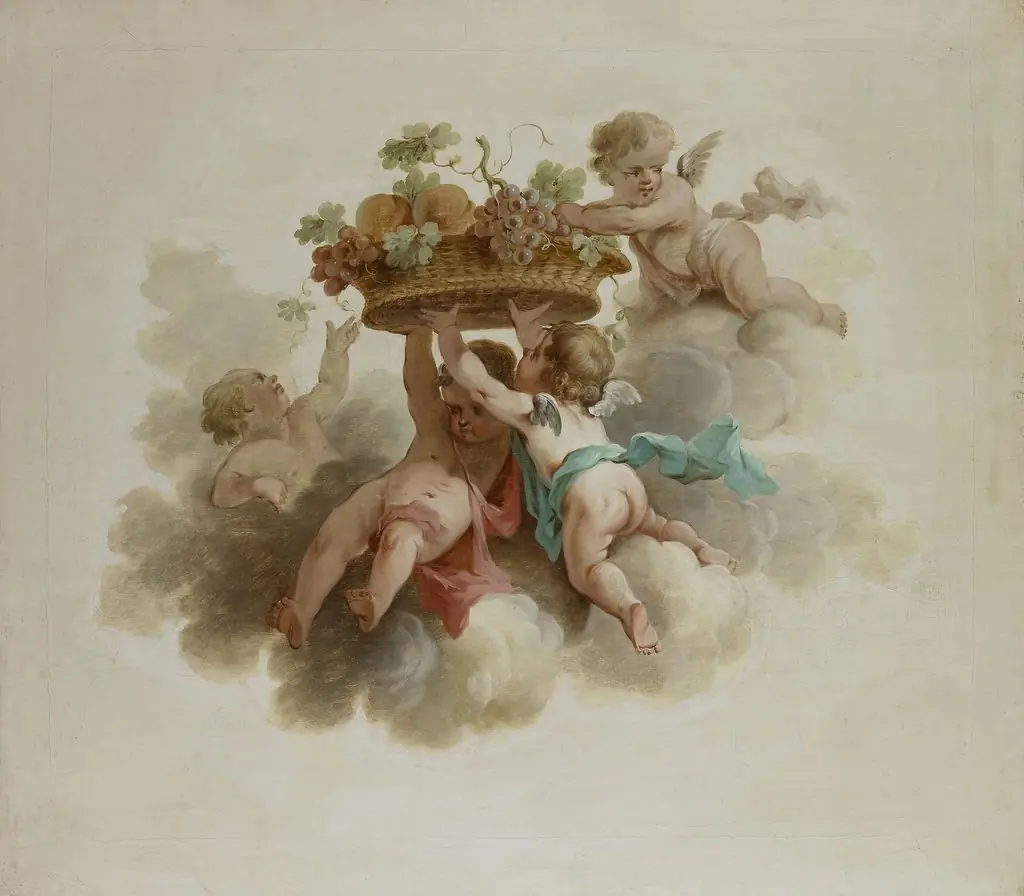 Four Putti Carrying a Fruit Basket
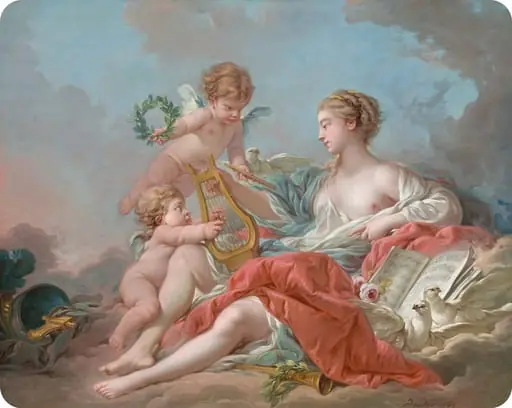 Allegory of Music
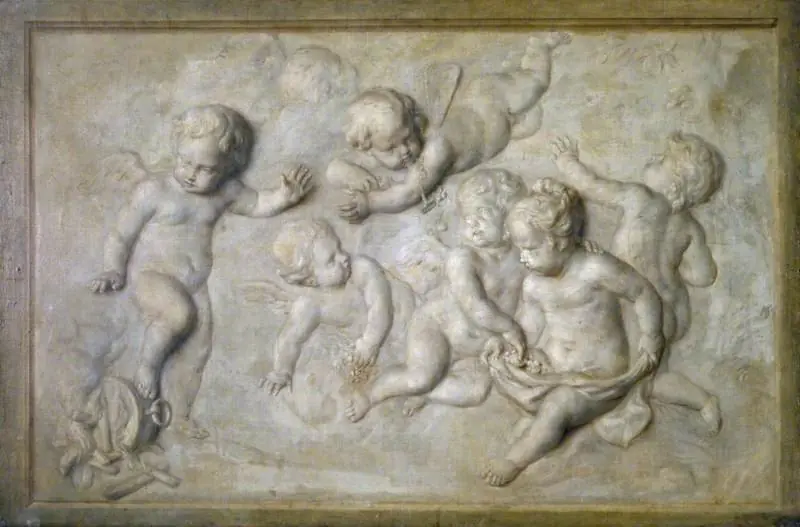 Cupids Playing