Artwork
Drie kinderen spelend met een vogelnestje
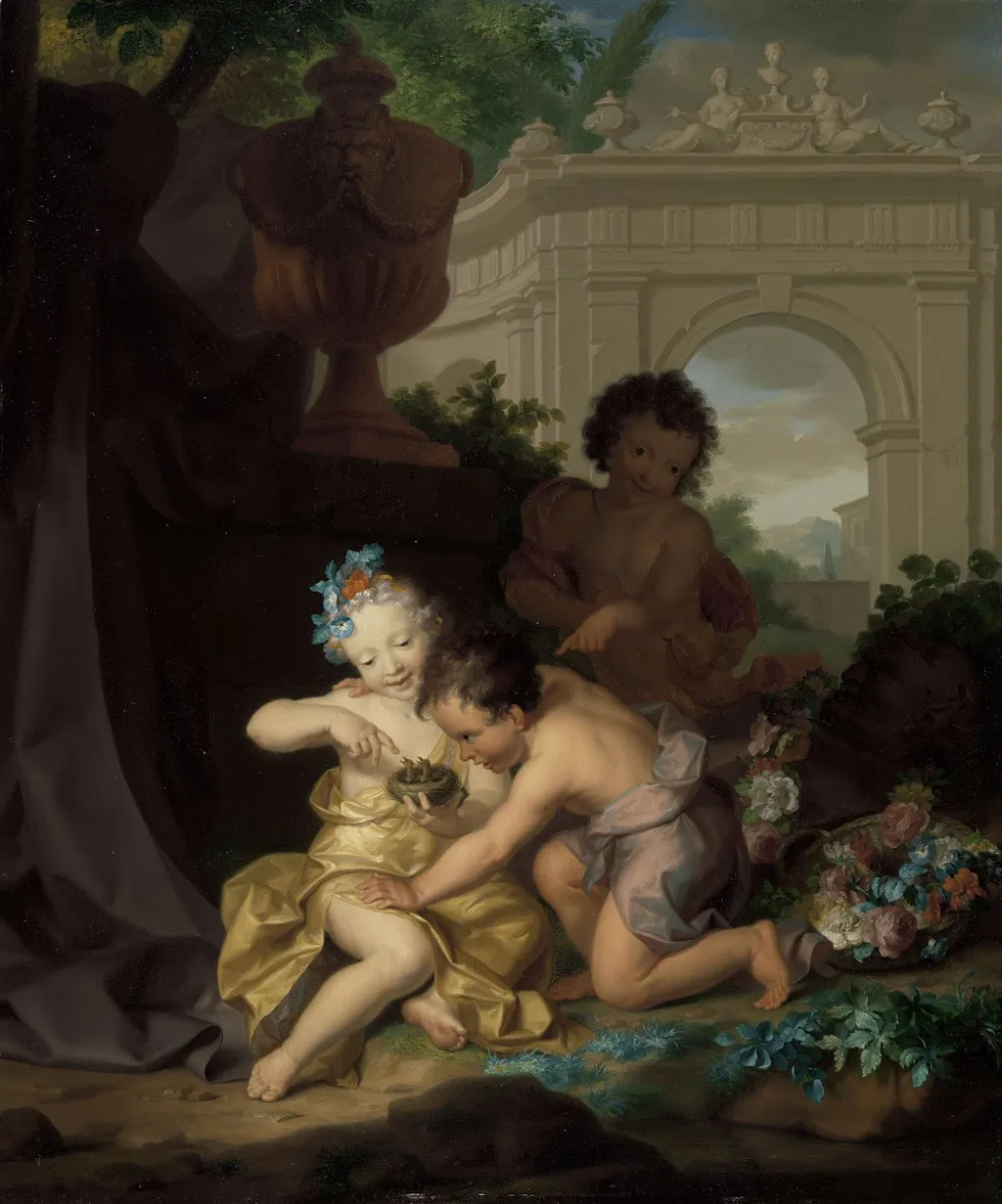
Drie kinderen spelend met een vogelnestje is an oil painting by the Dutch Golden Age artist Isaac Walraven. It dates from 1718 and is held in the collection of the Rijksmuseum.
About this work
Overview
The work is part of the Rijksmuseum’s collection and exemplifies the Dutch tradition of intimate genre scenes rendered on metal supports.
Painted in 1718 by Isaac Walraven, this small copper panel depicts three children engaged in quiet play within an ornamental garden. The work is part of the Rijksmuseum’s collection and exemplifies the Dutch tradition of intimate genre scenes rendered on metal supports. Its compact size and luminous surface reflect the precision valued in 18th-century Dutch painting, where material and subject were carefully balanced to evoke tenderness and observation.
Subject & Meaning
The scene captures children in a moment of innocent curiosity, centered on a bird’s nest held by a girl adorned in a gold dress and floral crown. The two boys, dressed in contrasting garments, lean in with quiet attention, suggesting wonder rather than mischief. The setting—a cultivated garden with classical statuary—hints at aristocratic leisure, yet the children’s bare feet and natural gestures ground the image in everyday humanity, softening its aristocratic backdrop.
Technique & Style
Walraven employed fine brushwork and subtle chiaroscuro to model the children’s forms with lifelike softness, enhancing their three-dimensionality against the copper support. The metal surface, polished to a warm glow, amplifies the play of light across skin, fabric, and foliage. Delicate highlights on the girl’s dress and the boys’ capes draw the eye without overpowering the scene’s quiet intimacy, demonstrating mastery in translating naturalism onto a non-traditional ground.
History & Provenance
The painting has remained in public collection since at least the 19th century, entering the Rijksmuseum’s holdings through established Dutch institutional acquisitions. Its copper support and detailed execution suggest it was commissioned by a wealthy patron, possibly for private contemplation. No records of earlier ownership are widely documented, but its preservation reflects its enduring appeal within Dutch domestic art traditions of the period.
Context
In early 18th-century Holland, small-scale genre scenes on copper were favored by collectors for their detail and durability. Walraven’s work aligns with a broader trend of depicting childhood as a subject worthy of artistic attention, often set within idealized gardens that symbolized both natural harmony and social order. The inclusion of classical architecture subtly connects the scene to humanist ideals, common in Dutch elite culture at the time.
Legacy
Though not widely known outside Dutch art circles, the painting contributes to the understanding of how childhood was visually framed in the early Enlightenment. Its technical finesse and emotional restraint distinguish it from more theatrical contemporaries. Today, it stands as a quiet testament to the value placed on observation, subtlety, and the dignity of ordinary moments in Dutch visual culture.
Artist & collection



 Cupids in Conspiracy
 Kolme linnunpesällä leikkivää amoriinia
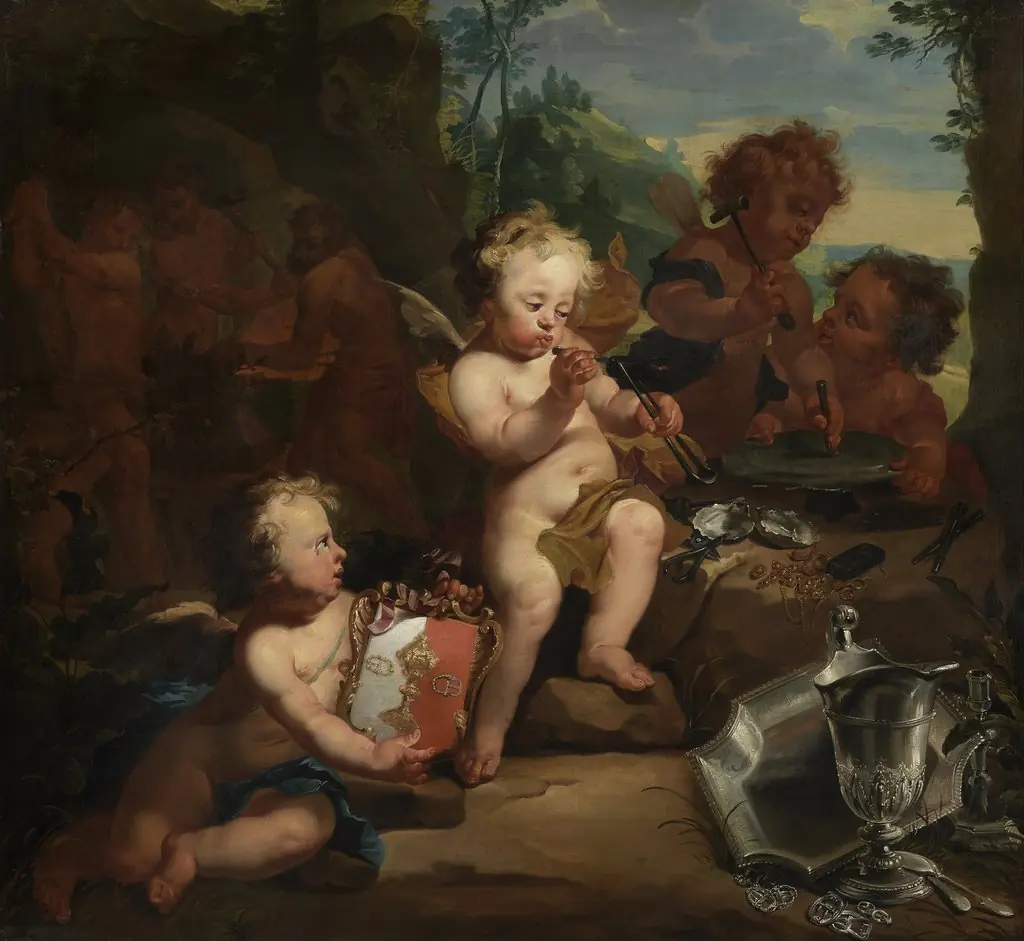 Allegory of the silversmith's trade
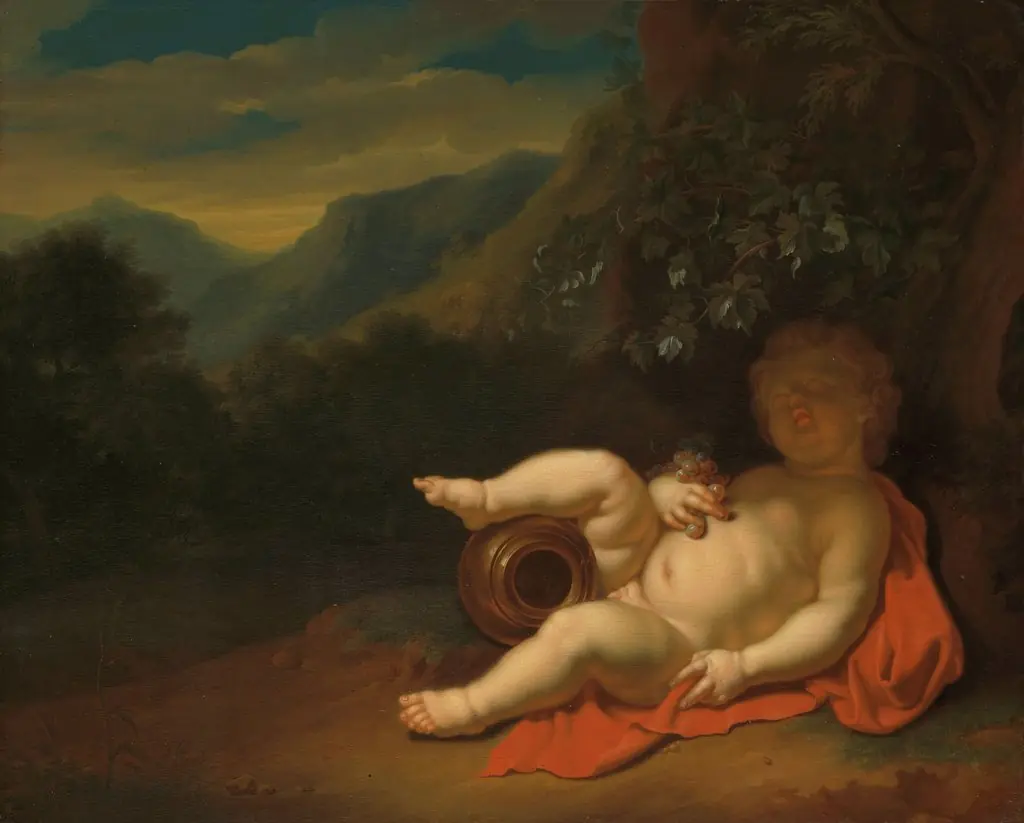 The Infant Bacchus
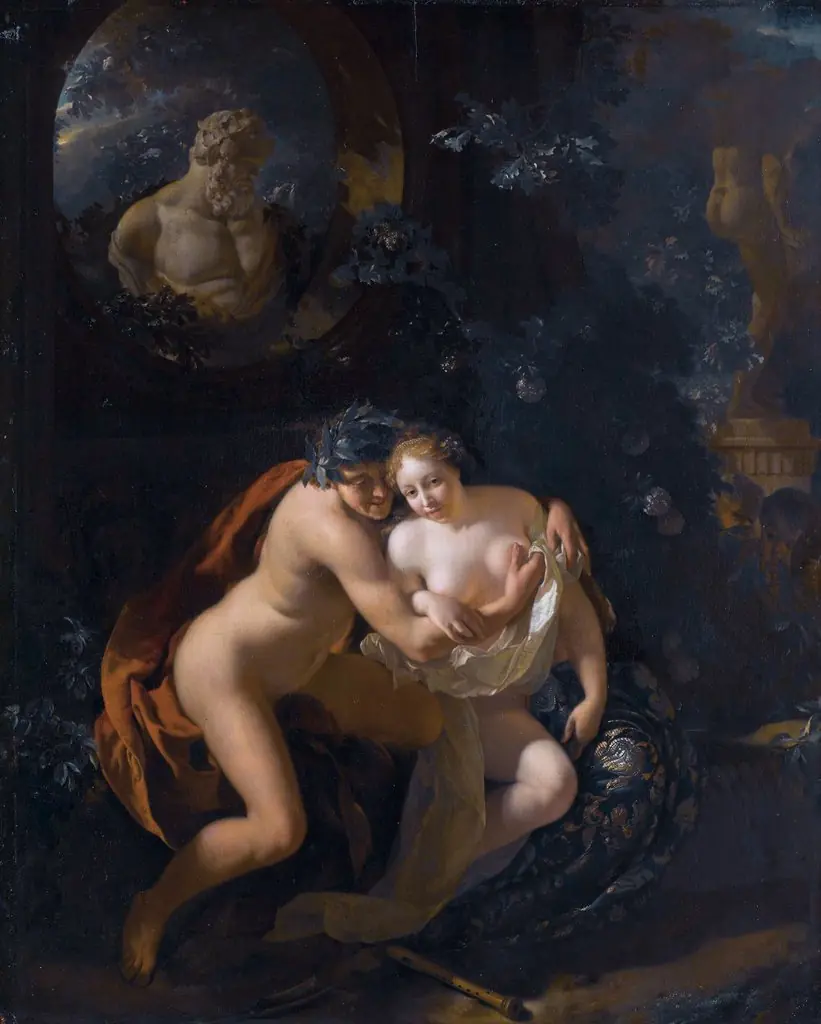 A Couple Making Love in a Park Spied on by Children
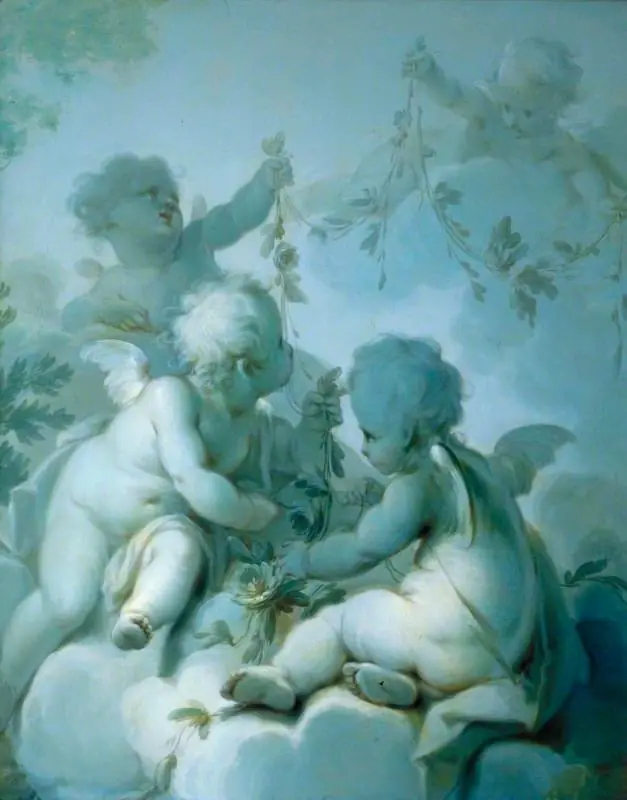 Four Cupids Holding Festoons of Flowers and Foliage
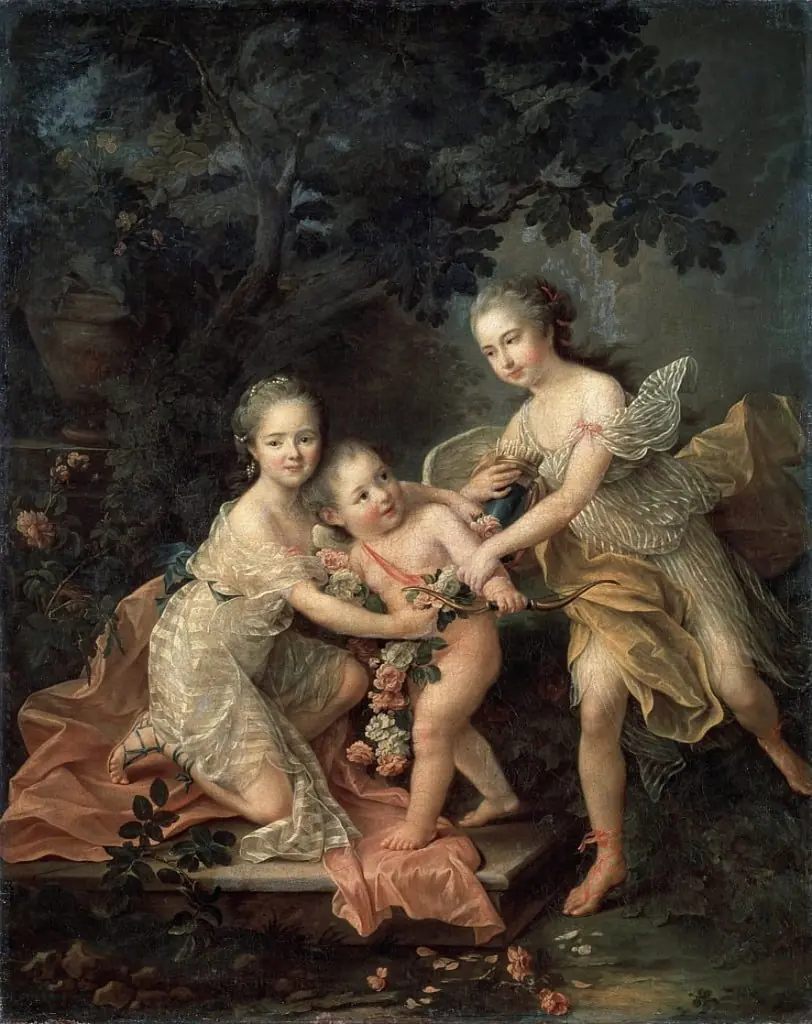 The Children of the Duke of Orleans
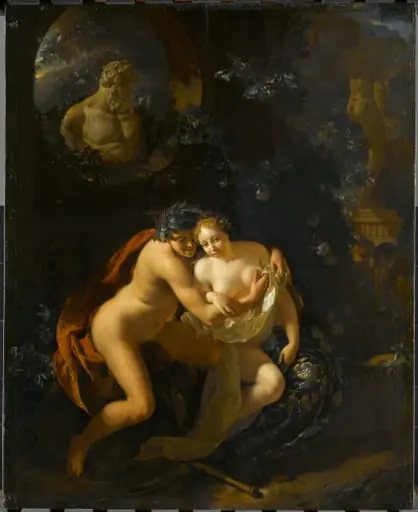 A Couple Making Love in a Park Spied on by Children
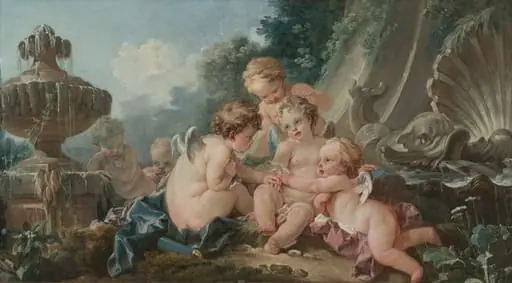 Cupids in Conspiracy
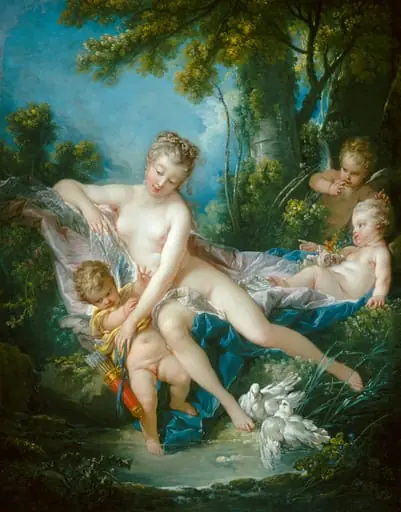 The Bath of Venus
 The Cherub Harvesters
 Music and Dance