Artwork
Self-portrait
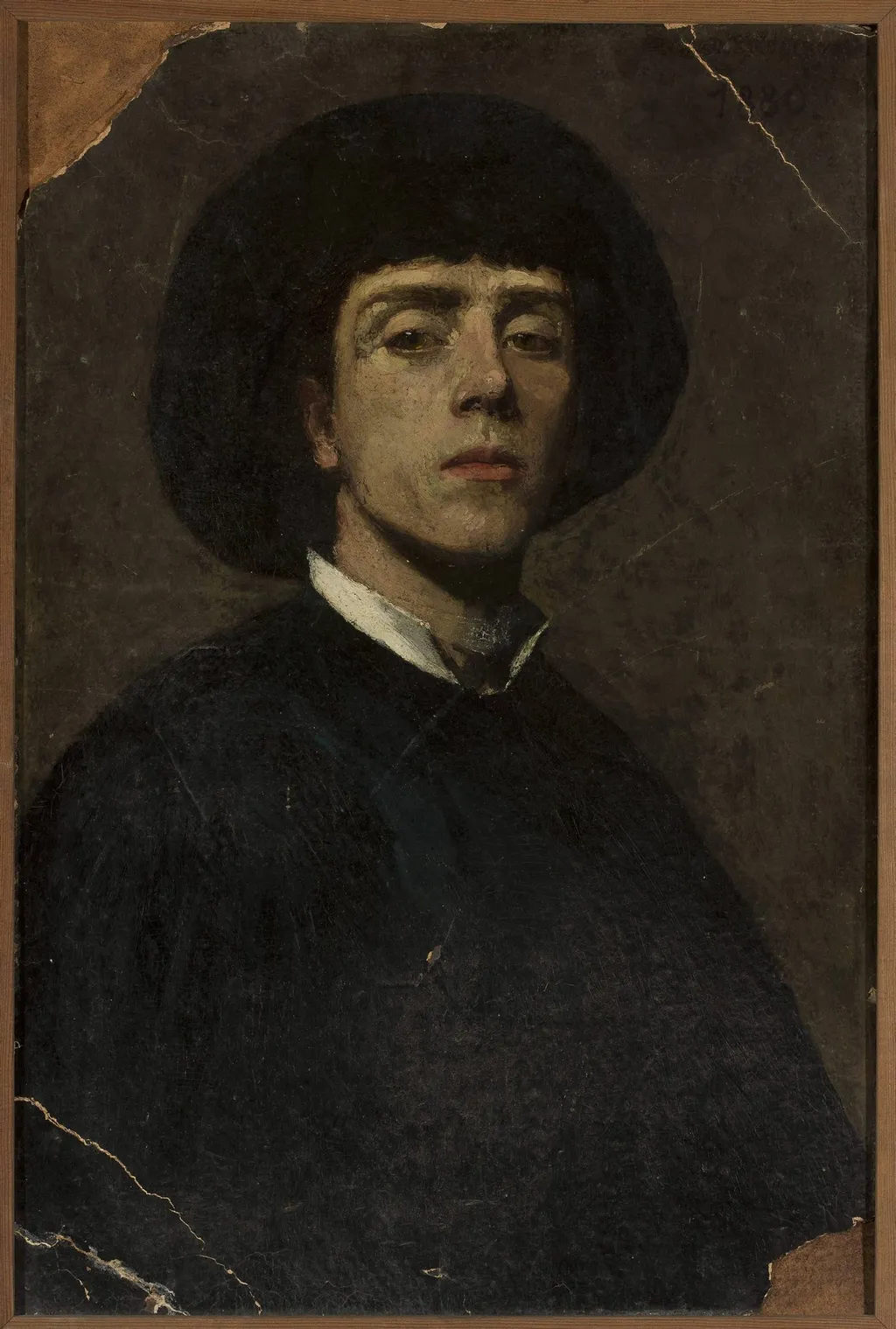
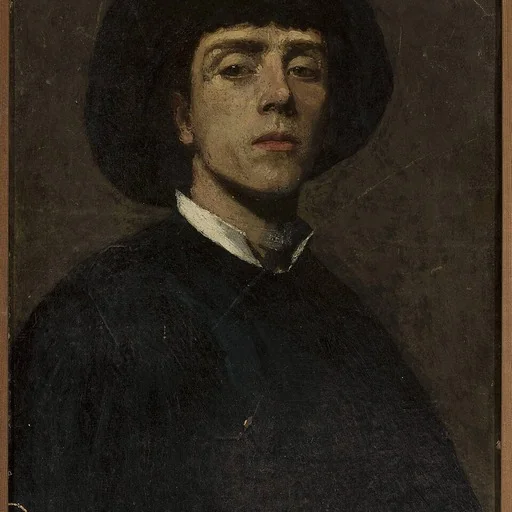
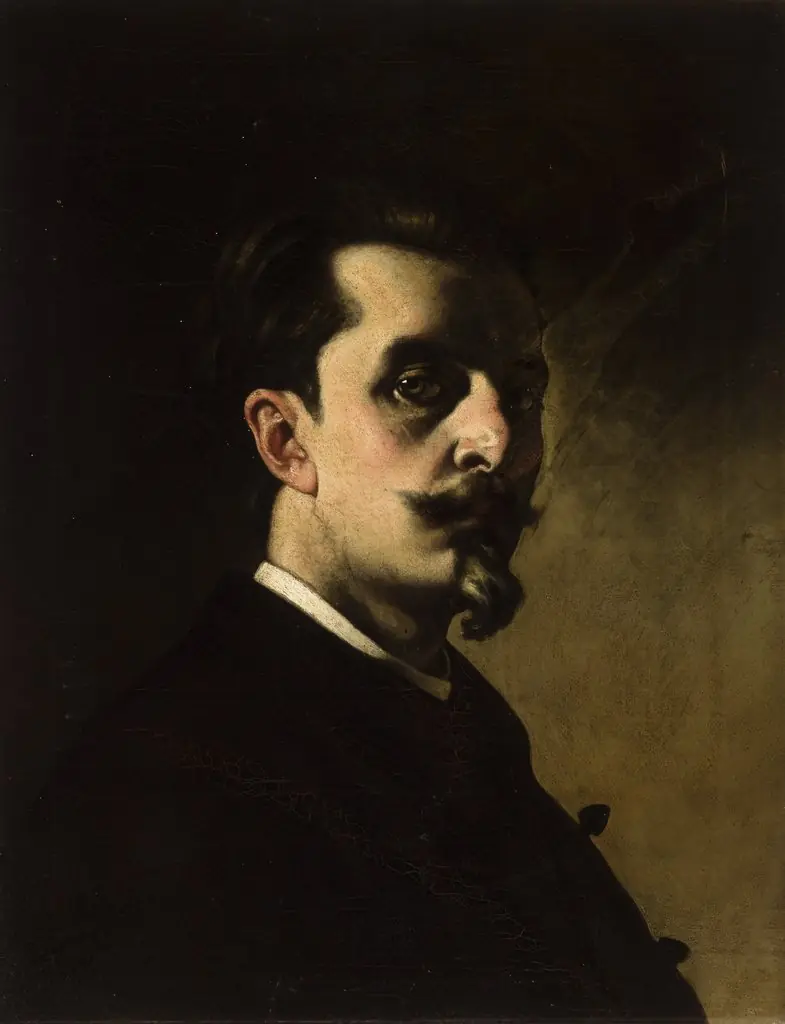
Self-portrait is an oil painting by the Realist artist Dobiesław Królikowski. It dates from 1890 and is held in the collection of the National Museum in Warsaw.
About this work
Overview
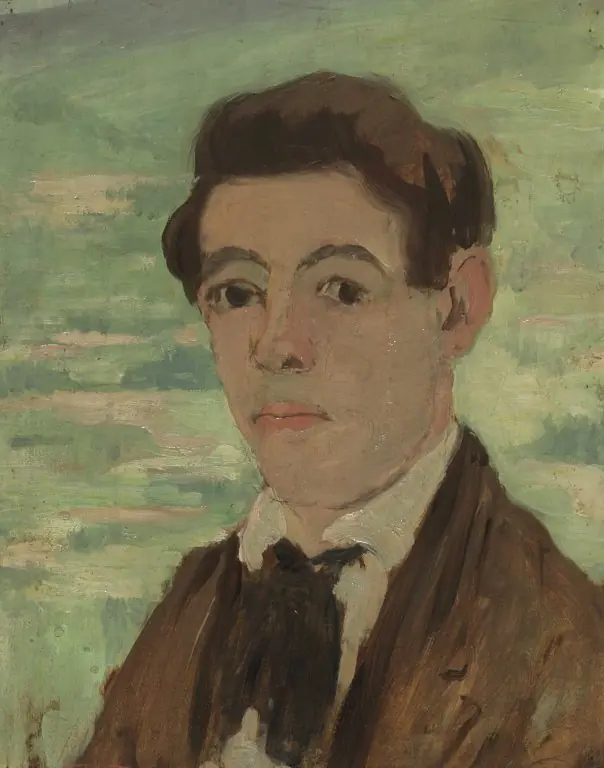
Dobiesław Królikowski’s self‑portrait, executed in oil in 1890, is part of the collection of the National Museum in Warsaw. The work presents the artist in a half‑length pose, his dark, curly hair framing a solemn expression. A stark white collar emerges from a dark jacket, set against an unadorned, shadowy background that isolates the figure.
Subject & Meaning
The painting functions as a personal statement, capturing Królikowski’s own visage and demeanor. The serious gaze and the contrast between the luminous collar and somber attire suggest a contemplation of identity and professional stature, typical of late‑19th‑century self‑portraiture that balances introspection with public presentation.
Technique & Style
Królikowski employed a pronounced impasto technique, laying thick layers of paint especially on the forehead and cheeks, which creates a tactile surface and emphasizes the facial features. The brushwork varies between swift, rough strokes in the background and more controlled application on the clothing, highlighting the contrast between the white collar and the dark fabric.
History & Provenance
Created in 1890, the portrait entered the National Museum in Warsaw’s holdings, where it remains on display. Its acquisition reflects the museum’s commitment to preserving works by Polish artists of the fin de siècle period, offering insight into Królikowski’s artistic practice and self‑representation.
Context
The portrait belongs to a broader European tradition of self‑portraiture in the late nineteenth century, when artists increasingly used the genre to explore personal and professional identities. Królikowski’s approach aligns with contemporary tendencies toward visible brushwork and material emphasis, echoing the emerging modernist sensibilities of the era.
Artist & collection