Artwork
Farms in a Court
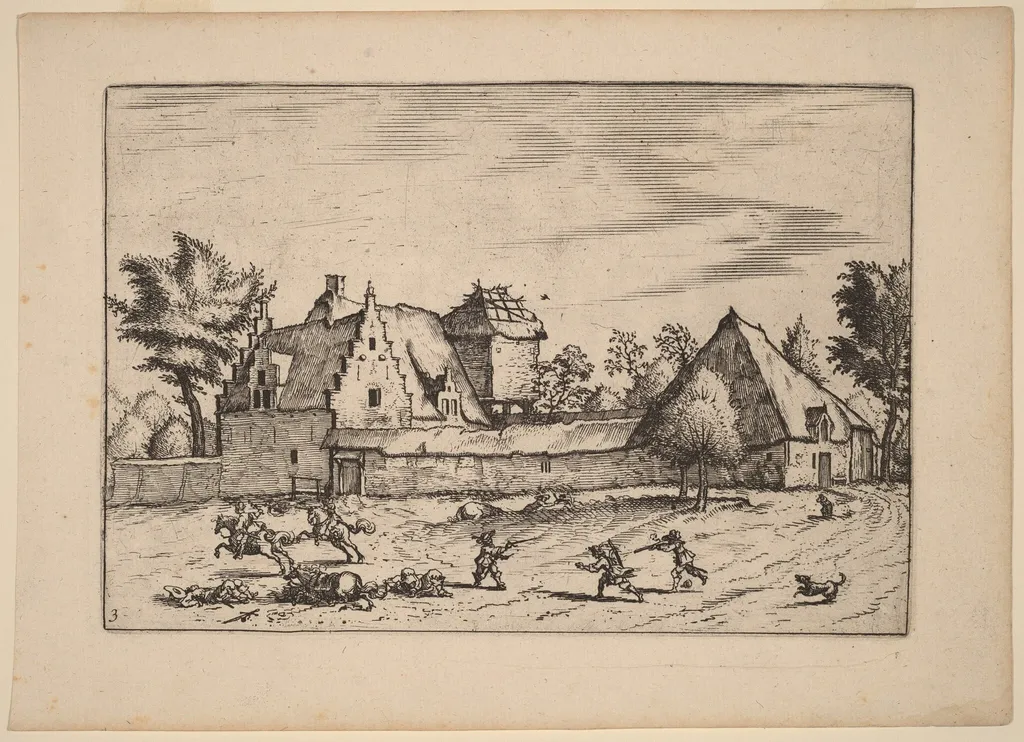
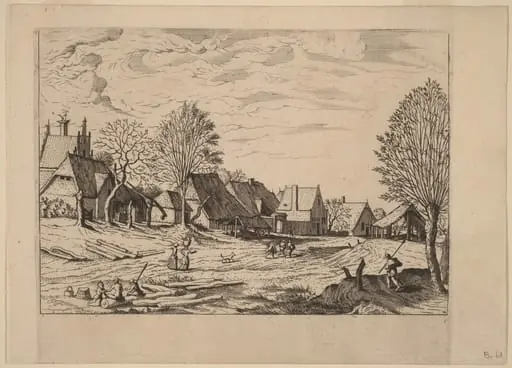
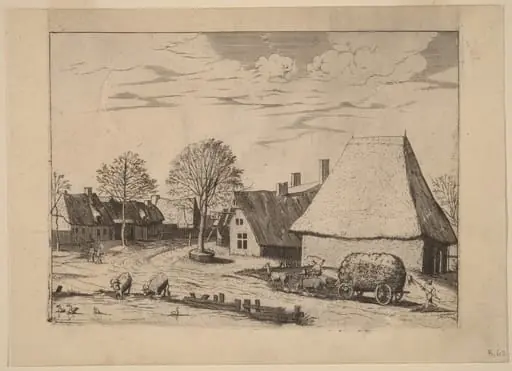
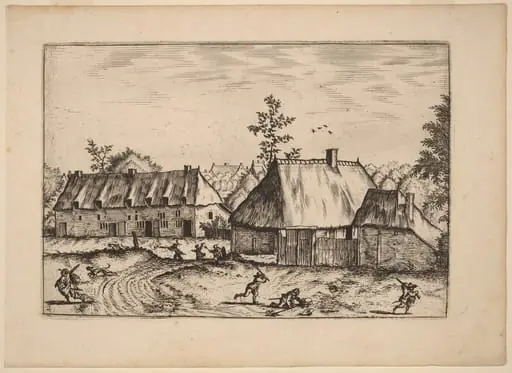
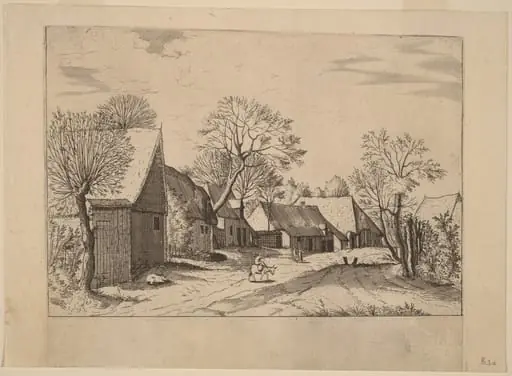
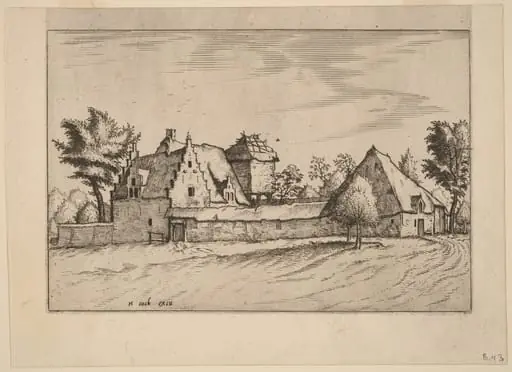
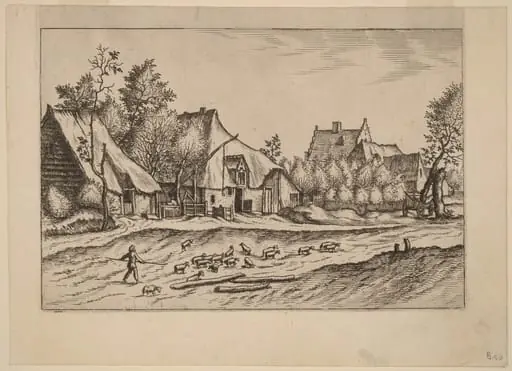
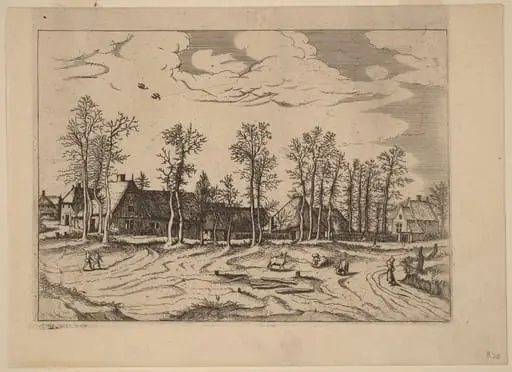
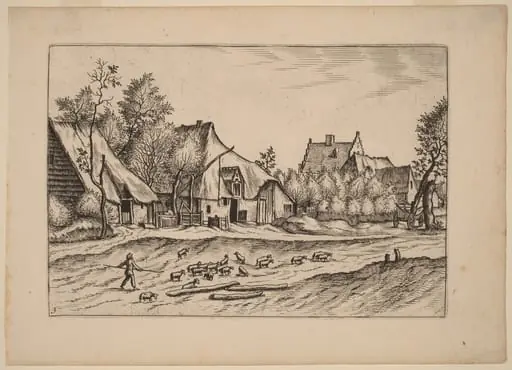
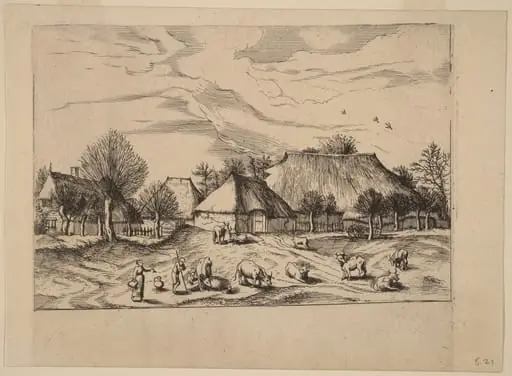
Farms in a Court is an ink print by the Baroque artist Lucas van Doetechum. It is held in the collection of the National Gallery of Art.
About this work
Overview
The technique combines the fluidity of acid-bitten lines with the precision of hand-incised details, characteristic of Dutch printmaking of the period.
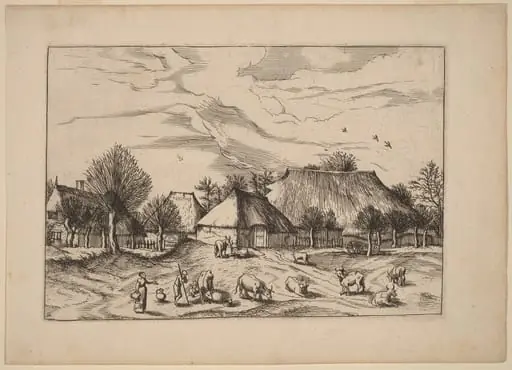
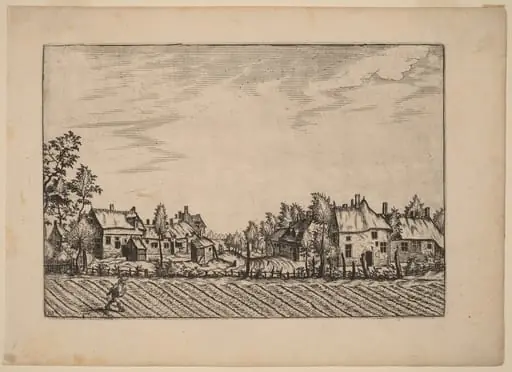
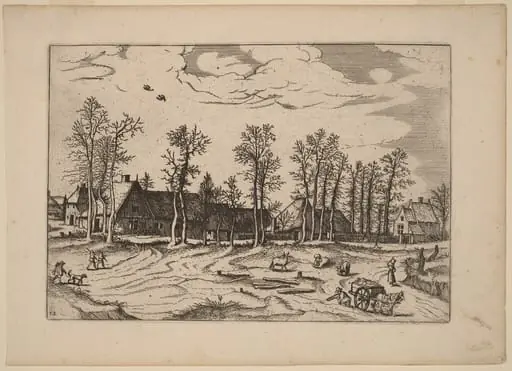
Farms in a Court is a 1676 print by Lucas van Doetechum, executed in etching and enhanced with engraving. The work presents a quiet rural scene rendered in monochrome, capturing the daily rhythms of a small settlement. Its composition centers on a winding river flanked by modest dwellings with thatched roofs, surrounded by trees and figures engaged in ordinary tasks. The technique combines the fluidity of acid-bitten lines with the precision of hand-incised details, characteristic of Dutch printmaking of the period.
Subject & Meaning
The scene depicts a modest agricultural community, where human activity blends seamlessly with the landscape. Figures tend to livestock, walk along paths, or move between homes, suggesting a self-sustaining rural economy. There is no overt narrative or symbolism; instead, the work conveys a sense of quiet continuity, reflecting the unremarkable yet essential rhythms of peasant life in the Dutch countryside during the late 17th century.
Technique & Style
Van Doetechum employed etching to lay down the initial composition, allowing acid to bite fine, flowing lines into a metal plate. He then refined key areas—such as tree bark, fabric folds, and architectural details—with engraved lines, adding contrast and texture. This hybrid method enabled both spontaneity and control, resulting in a delicate interplay of light and shadow that enhances the sense of depth and materiality without color.
History & Provenance
Created in 1676, the print belongs to a period when Dutch artists increasingly turned to everyday landscapes and rural life as subjects. While few records detail its early ownership, it aligns with the broader circulation of prints among middle-class collectors who valued domestic and regional scenes. Its survival in institutional collections suggests it was preserved as an example of skilled printmaking rather than as a work of high monetary value.
Context
In late 17th-century Holland, printmaking flourished as a medium for documenting daily life. Artists like van Doetechum responded to public interest in topographical accuracy and intimate scenes of labor. Farms in a Court reflects this trend, standing apart from grand historical or religious themes. It belongs to a tradition that elevated the ordinary, valuing observation over ornamentation in a society increasingly shaped by commerce and civic identity.
Legacy
The print contributes to a body of Dutch works that documented rural existence with quiet dignity. Though not widely reproduced or celebrated in its time, it remains a representative example of how etching and engraving could capture the texture of everyday life. Its preservation in museum collections underscores its role as a historical record of landscape, labor, and material culture in the Dutch Golden Age.
Artist & collection