Artwork
Farms in a Village
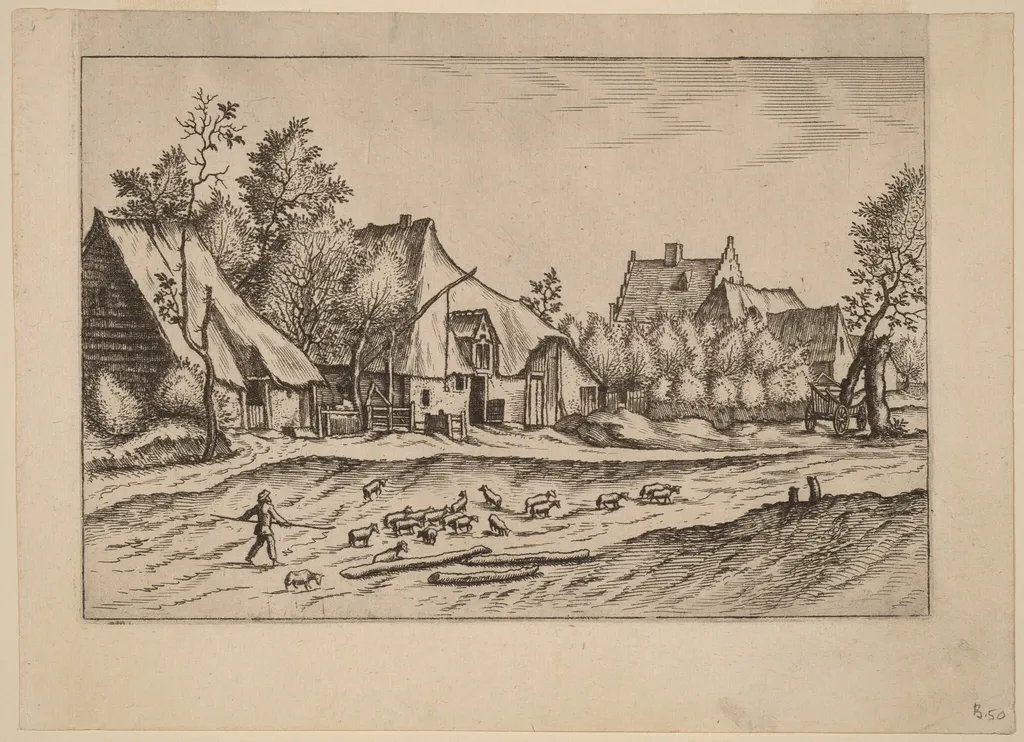
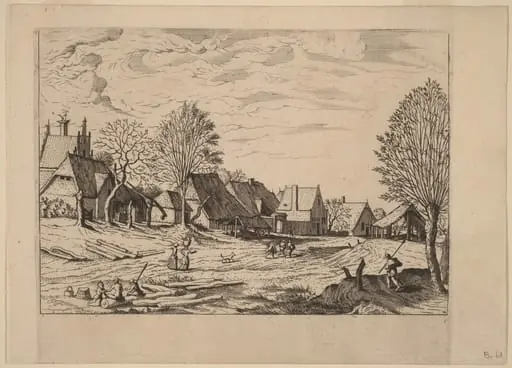
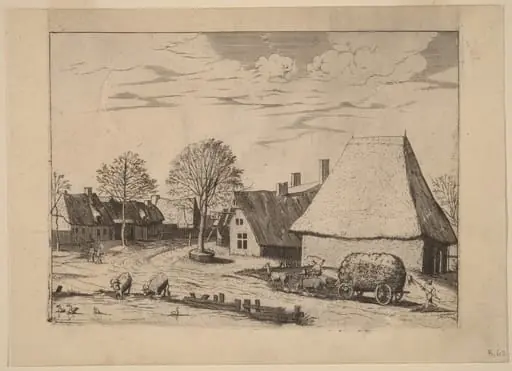
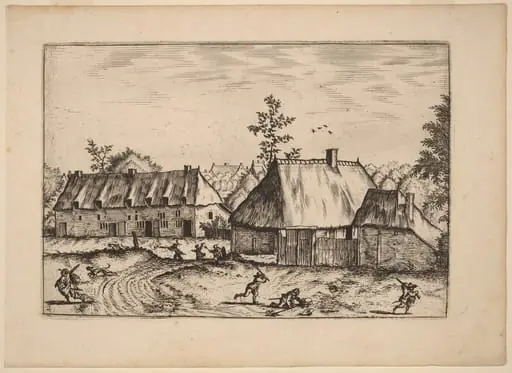
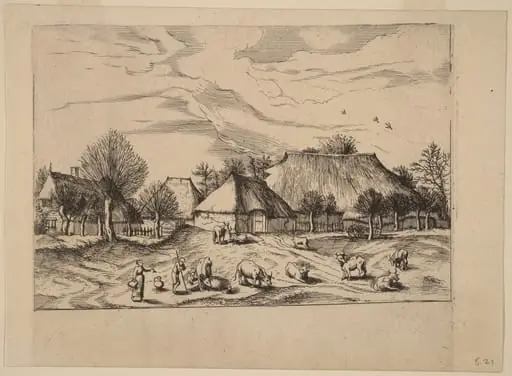
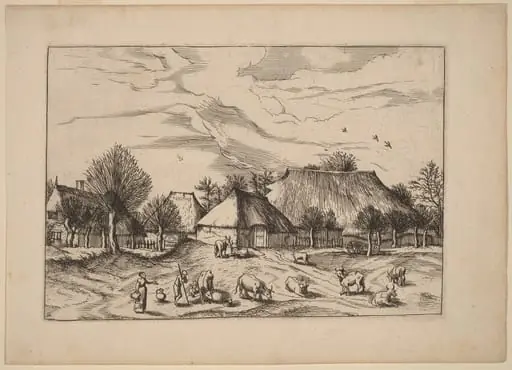
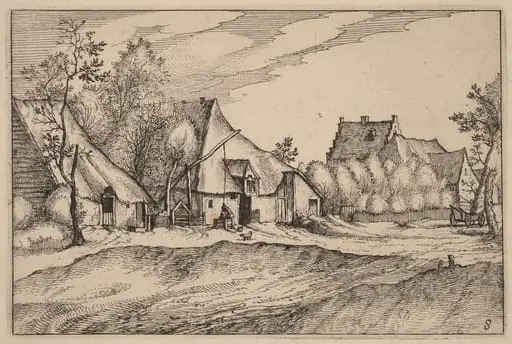
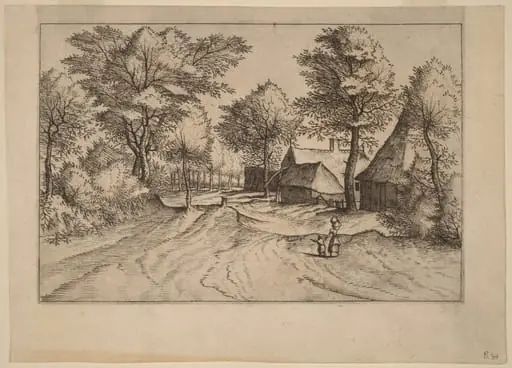
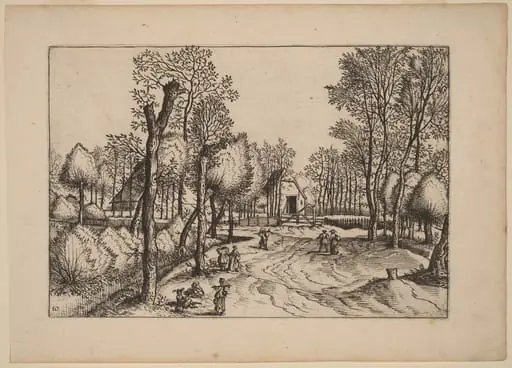
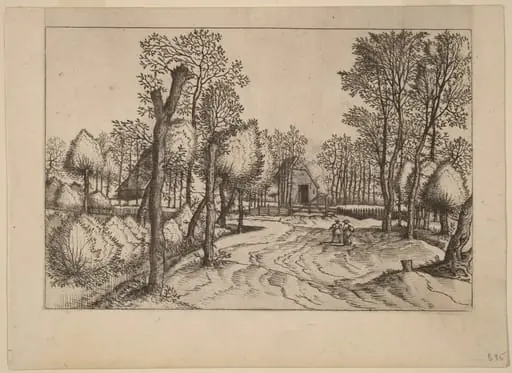
Farms in a Village is an ink print by the Renaissance artist Lucas van Doetechum. It dates from 1561 and is held in the collection of the National Gallery of Art.
About this work
Overview
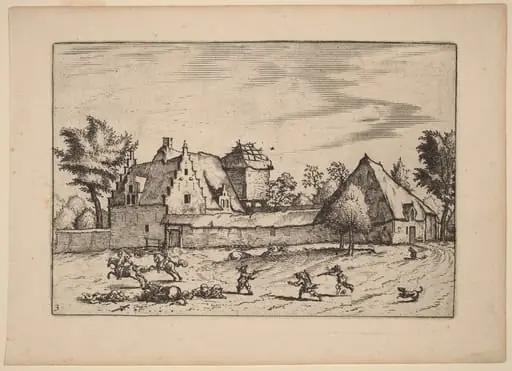
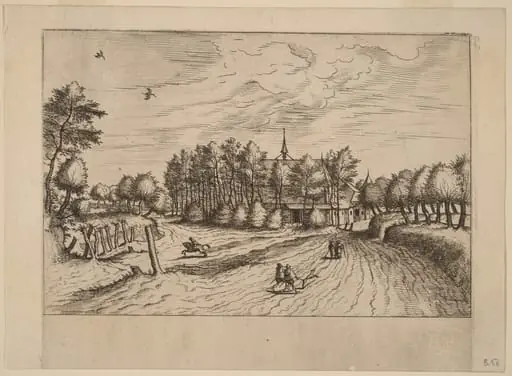
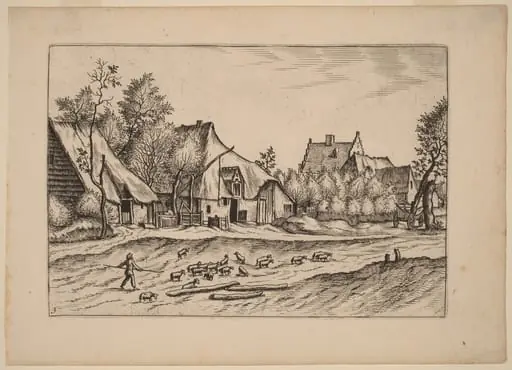
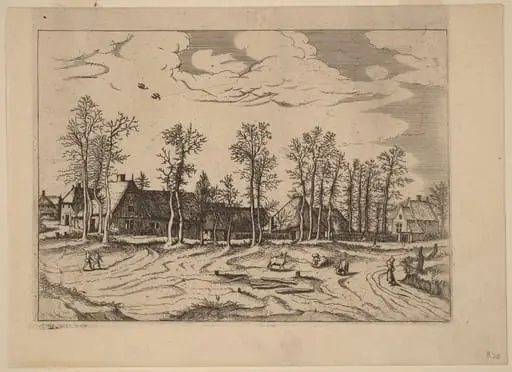
Farms in a Village is a 1561 print created by Lucas van Doetechum, combining etching and engraving techniques. The work depicts a serene rural scene with a man and his herd of animals in the foreground, set against a backdrop of scattered buildings and trees.
Subject & Meaning
The print captures a tranquil moment in a rural village, emphasizing everyday life and the relationship between humans, animals, and their natural surroundings. The composition subtly highlights the interdependence of agricultural activities and village life.
Technique & Style
Executed through a combination of etching and engraving, the piece showcases the Renaissance emphasis on realism and meticulous detail. The etching provides expressive lines, while the engraving adds depth and precision, characteristic of the period's artistic values.
History & Provenance
Created in 1561 by Lucas van Doetechum, the print's historical context and ownership history are not extensively detailed in available records, though its creation date situates it firmly within the Northern Renaissance.
Context
Emerging during the Northern Renaissance, Farms in a Village reflects the era's fascination with depicting everyday life and the natural world with heightened realism, influenced by the broader cultural and artistic movements of 16th-century Europe.
Legacy
While not widely recognized as a singular landmark piece, the print contributes to the broader understanding and appreciation of Northern Renaissance printmaking, highlighting the technical skill and thematic interests of the time.
Own this work as a print
Artist & collection