Artwork
Euntes in Emaus (The Pilgrims to Emmaus)
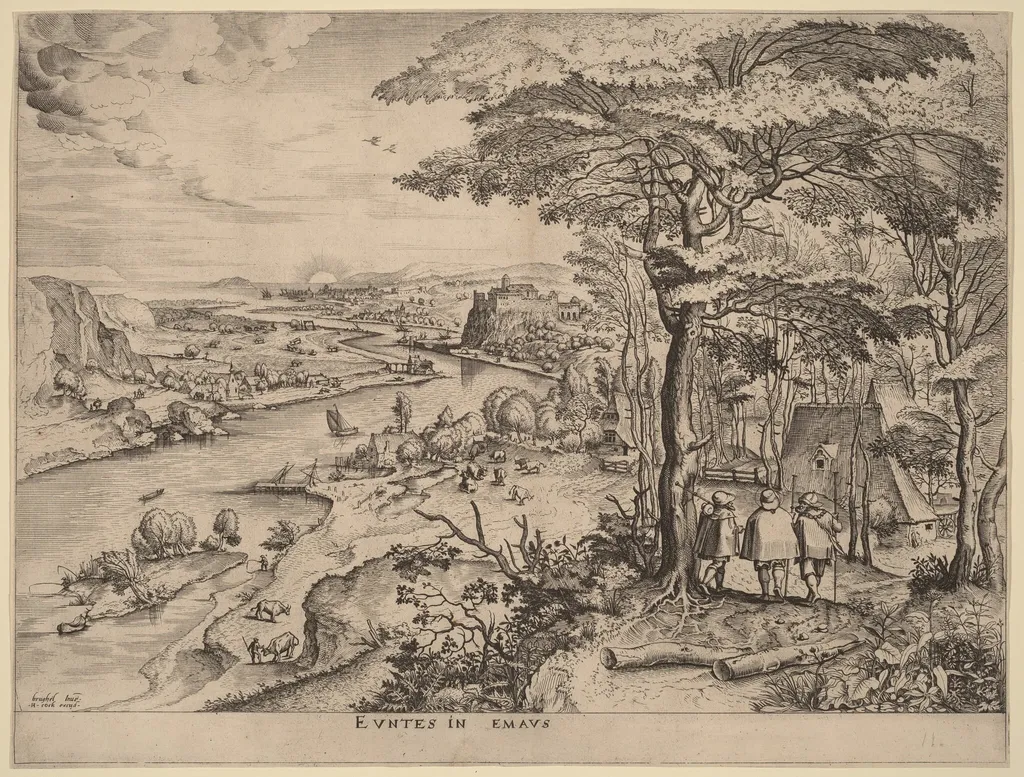
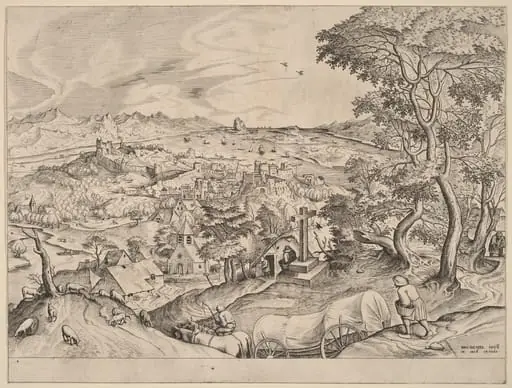
Euntes in Emaus (The Pilgrims to Emmaus) is an ink print by the Renaissance artist Lucas van Doetechum. It dates from 1556 and is held in the collection of the Rosenwald Collection.
About this work
Overview
Lucas van Doetechum’s print, titled *Euntes in Emaus* (The Pilgrims to Emmaus), is an etching‑engraving created around 1556.
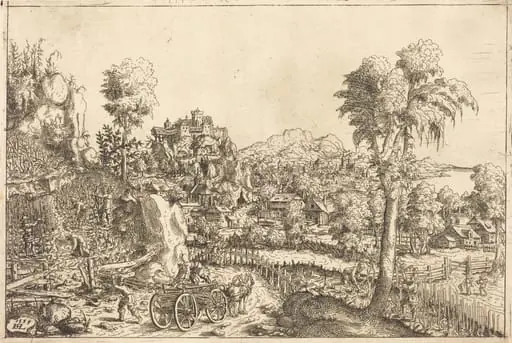
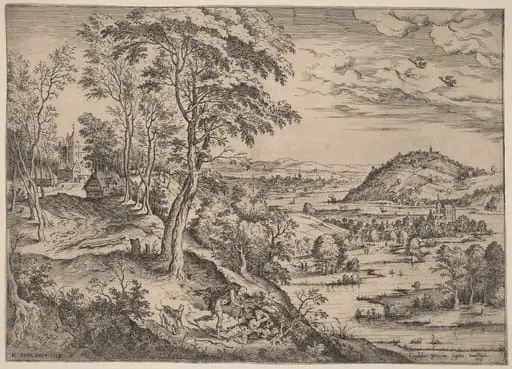
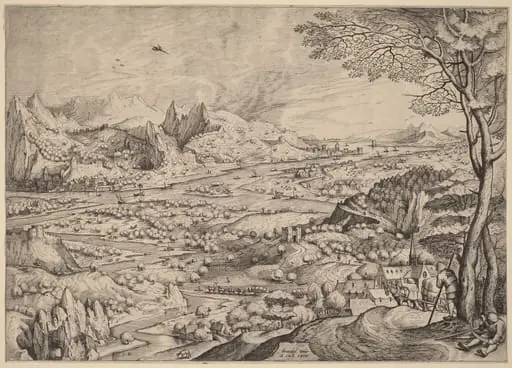
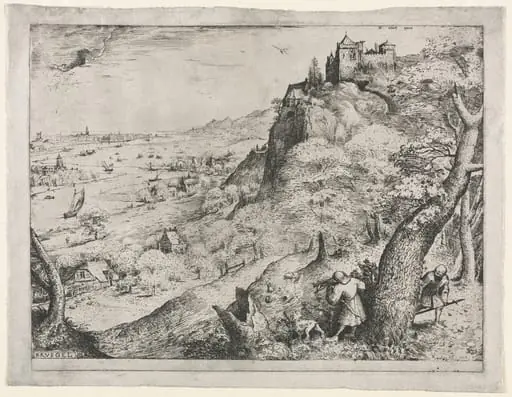
Lucas van Doetechum’s print, titled *Euntes in Emaus* (The Pilgrims to Emmaus), is an etching‑engraving created around 1556. The composition presents a winding river that leads the eye toward a distant settlement nestled among hills, while a large tree dominates the foreground where three figures converse. The work is densely populated with miniature details such as boats, shoreline houses, and a castle perched on a rocky outcrop, all rendered under a light, cloud‑dotted sky.
Subject & Meaning
The Latin title refers to the biblical episode in which two disciples travel to Emmaus and encounter the risen Christ. In the print, the three figures under the tree likely represent the two disciples and the resurrected Jesus, engaged in dialogue that alludes to revelation and recognition. The surrounding landscape, with its tranquil river and distant settlement, frames the spiritual encounter within a serene, everyday setting.
Technique & Style
Van Doetechum employed a combination of etching and engraving, allowing for both broad tonal washes and precise linear detail. Fine, cross‑hatching defines foliage, architecture, and watercraft, while deeper engraved lines emphasize structural elements such as the castle and the tree trunk. This dual approach creates a richly textured surface where minute features remain legible even at a reduced scale.
History & Provenance
The print dates to circa 1556, placing it in the mid‑Sixteenth‑century Northern European printmaking tradition. While specific ownership records are scarce, the work is attributed to Lucas van Doetechum, a lesser‑known practitioner of the period whose prints circulated among collectors of religious imagery. The piece survives in several museum collections, indicating its inclusion in historic print inventories.
Context
During the mid‑1500s, religious subjects dominated print production, serving both devotional and didactic purposes. Van Doetechum’s *Euntes in Emaus* reflects this trend, translating a New Testament narrative into a detailed, accessible visual format. The emphasis on landscape and everyday details aligns with contemporary interests in integrating sacred stories within recognizable, naturalistic environments.
Artist & collection