Artwork
Saint Vincent Ferrer
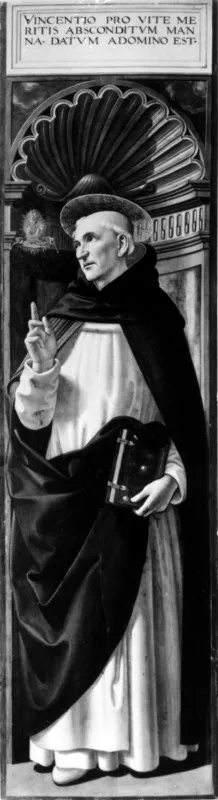
Saint Vincent Ferrer is a paint painting by the Early Renaissance artist Domenico Ghirlandaio. It is held in the collection of the Gemäldegalerie Berlin.
About this work
Overview
Painted in 1498 by Domenico Ghirlandaio, this work portrays Saint Vincent Ferrer, a Dominican preacher canonized in 1455.
Painted in 1498 by Domenico Ghirlandaio, this work portrays Saint Vincent Ferrer, a Dominican preacher canonized in 1455. Executed in tempera or oil on panel, it reflects the mature phase of Florentine Renaissance painting. The piece is part of the collection at the Gemäldegalerie in Berlin, where it has been held since the 19th century. Ghirlandaio, known for his disciplined workshop and narrative clarity, produced this portrait as part of a broader tradition of devotional imagery in late 15th-century Italy.
Subject & Meaning
The figure is Saint Vincent Ferrer, a 14th-century Spanish missionary renowned for his sermons and miracles. He is depicted in the habit of the Dominican Order: a white tunic beneath a black cloak, with a distinctive hooded hat. His raised right hand suggests preaching or blessing, while the book in his left hand signifies scriptural authority. The composition emphasizes his role as a teacher and spiritual guide, aligning with the Church’s emphasis on doctrinal clarity during the late Middle Ages.
Technique & Style
Ghirlandaio employs precise linear modeling and careful attention to fabric texture to render the saint’s robes with tangible weight and volume. The dark, unmodeled background isolates the figure, enhancing its sculptural presence. Architectural elements behind him—columned arches rendered in subtle perspective—add spatial depth without distracting from the central form. The restrained palette and controlled brushwork reflect the Florentine preference for clarity and anatomical accuracy over decorative flourish.
History & Provenance
Commissioned likely for a Dominican church or private chapel, the painting entered the Berlin collection in the 1800s, possibly through the acquisition of Italian works by Prussian collectors. Its attribution to Ghirlandaio has been consistently supported by stylistic analysis and documentary evidence from his workshop records. No major alterations or restorations are recorded, preserving its original surface and tonal harmony.
Context
In the decades before the High Renaissance, Florentine artists like Ghirlandaio focused on religious subjects for both public devotion and civic identity. Dominican saints were popular patrons of art due to their role in preaching and education. Ghirlandaio’s workshop, one of the largest in Florence, produced numerous such portraits, blending individualized likenesses with standardized iconography to meet demand across Tuscany and beyond.
Legacy
This painting exemplifies the transition from late medieval devotional types toward more naturalistic portraiture. While not as widely studied as Ghirlandaio’s frescoes, it remains a representative example of his approach to sacred figures: dignified, grounded in observation, and free from excessive ornament. It influenced later artists in the Northern Italian tradition who sought to merge spiritual gravity with human presence.
Artist & collection
Artist
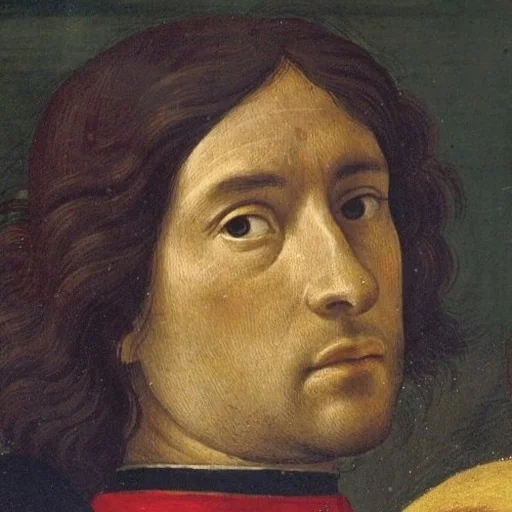
Domenico di Tommaso Curradi di Doffo Bigordi (2 June 1448 – 11 January 1494), professionally known as Domenico Ghirlandaio (also spelt as Ghirlandajo), was an Italian Renaissance painter born in Florence.

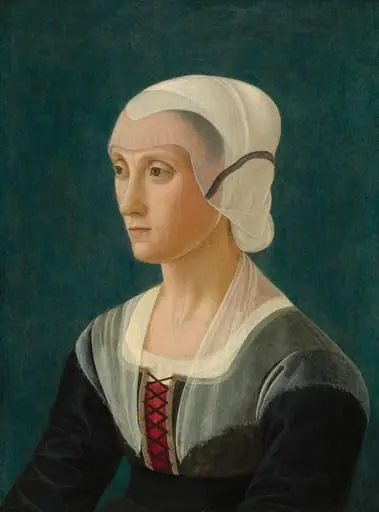
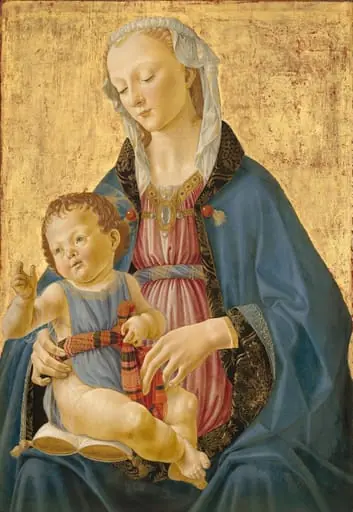
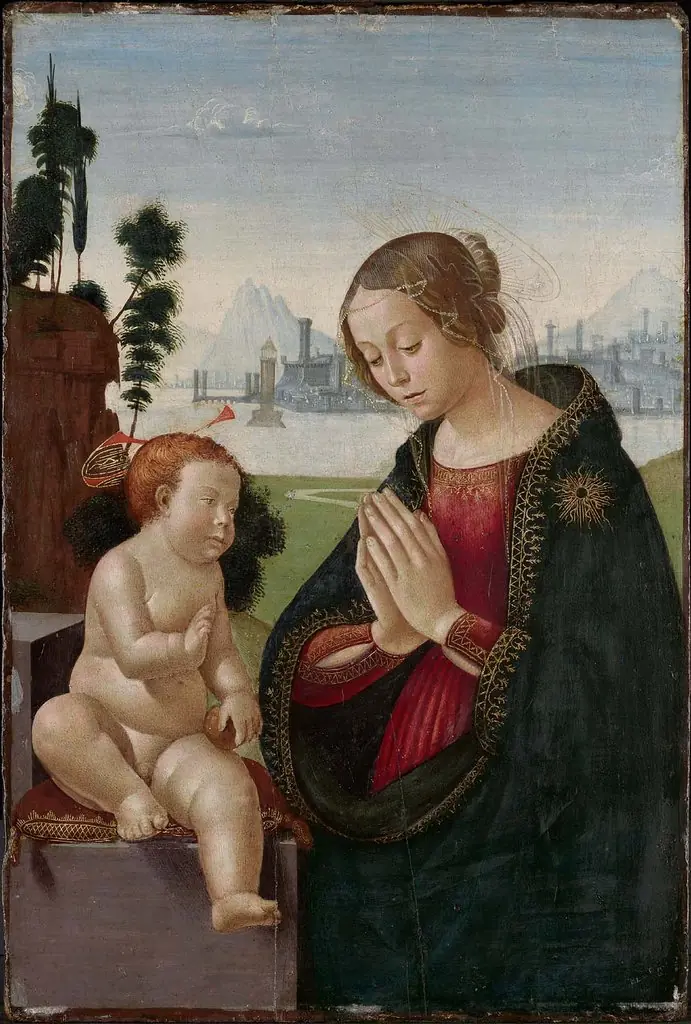
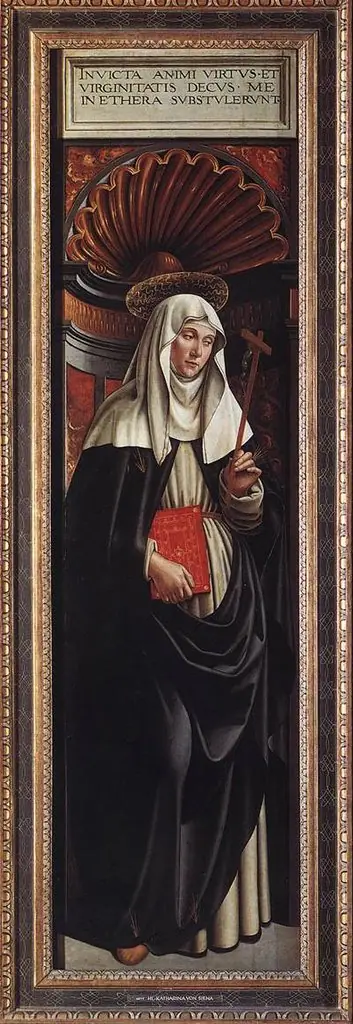
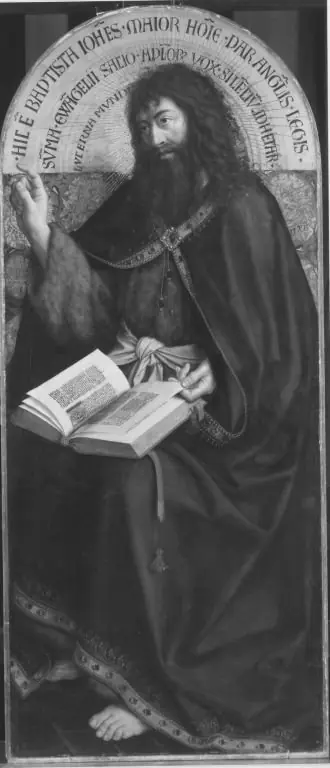 Saint John the Baptist (after The Ghent Altarpiece)
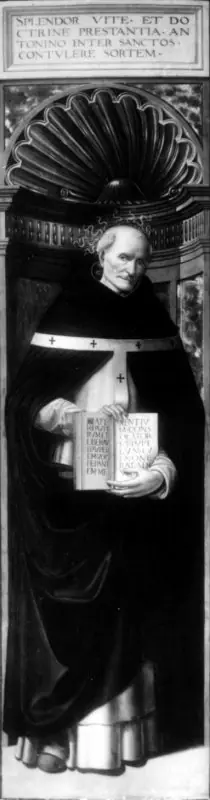 Saint Antoninus Pierozzi
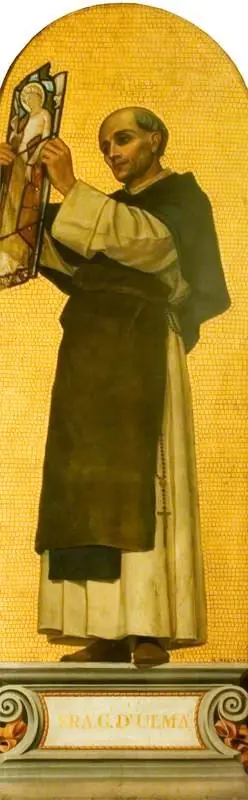 Fra Giacomo da Ulma (design for a mosaic in the Victoria and Albert Museum)
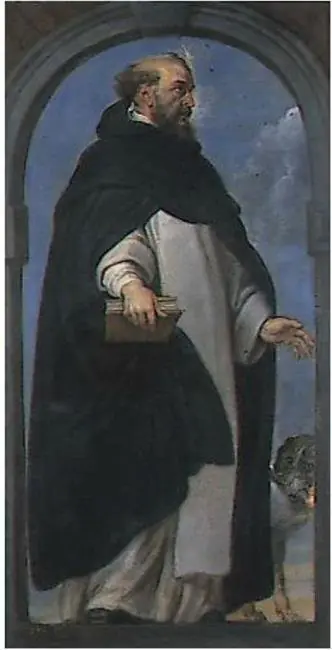 Saint Dominic
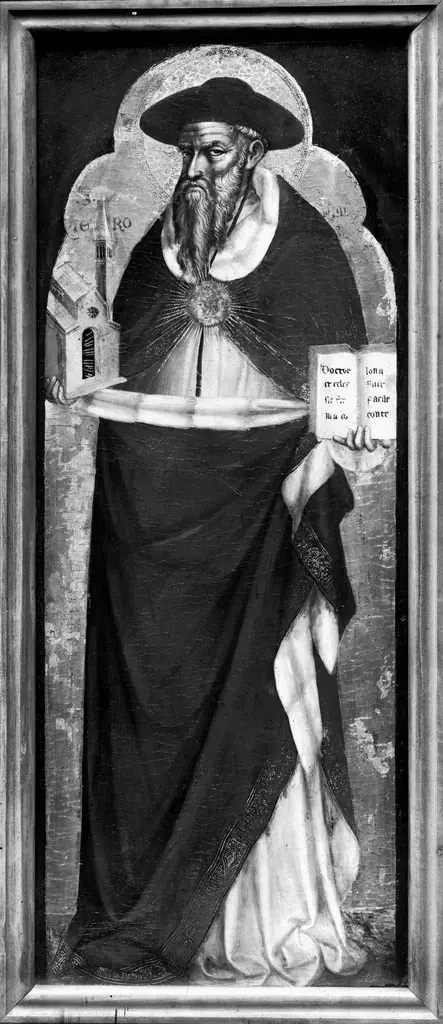 Saint Jerome
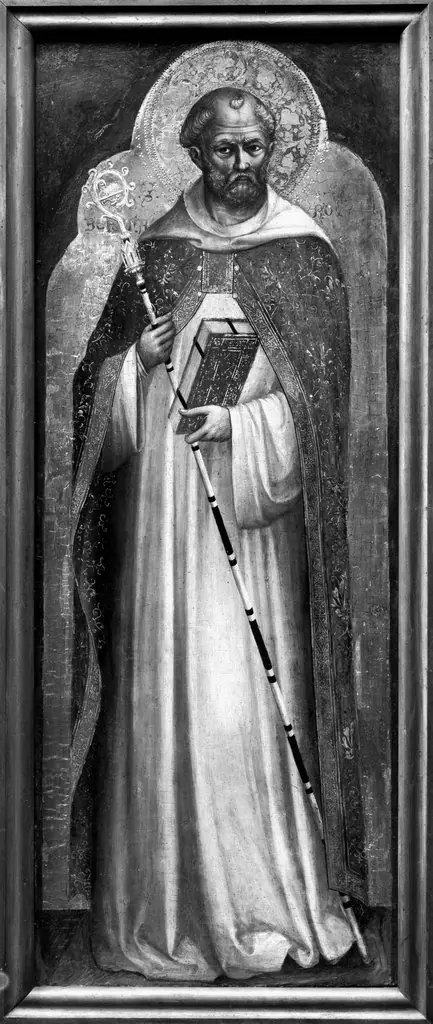 Saint Bernard
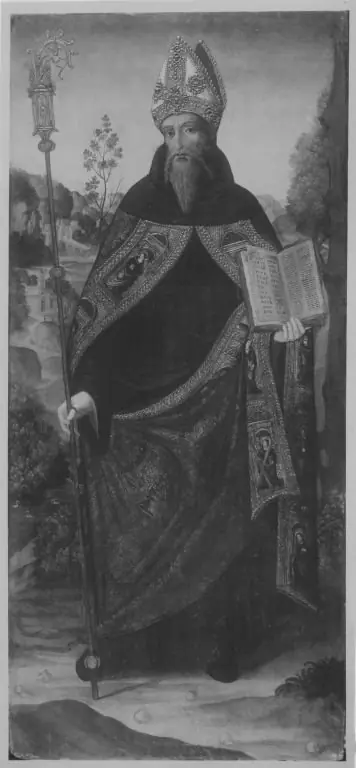 Hl. Augustinus, Bischof von Hippo (?)
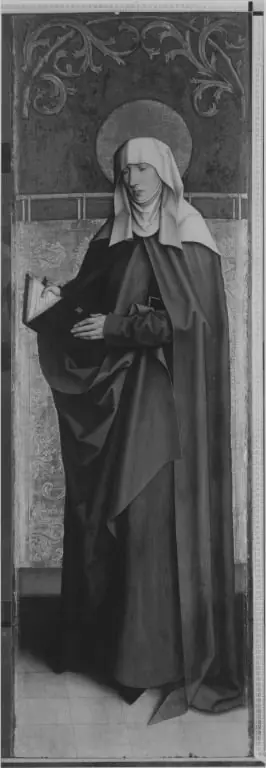 Flügel eines Altares: Hl. Brigitta (abgesägte Rückseite von WAF 1205)
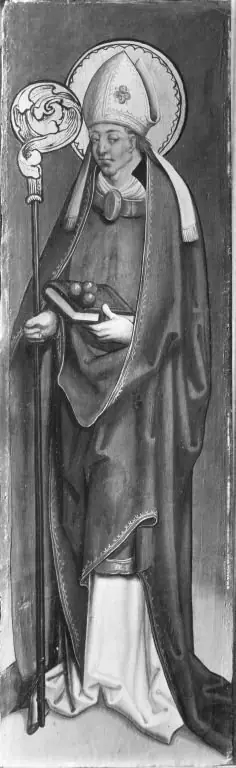 Saint Nicolas
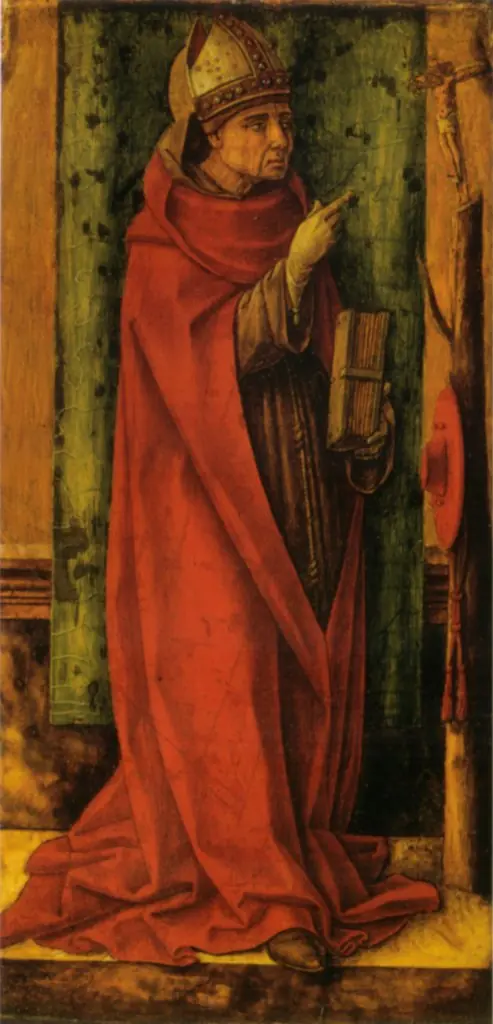 Bonaventure